Author Archives | Karen Wei

In review: Midterm election season at UH

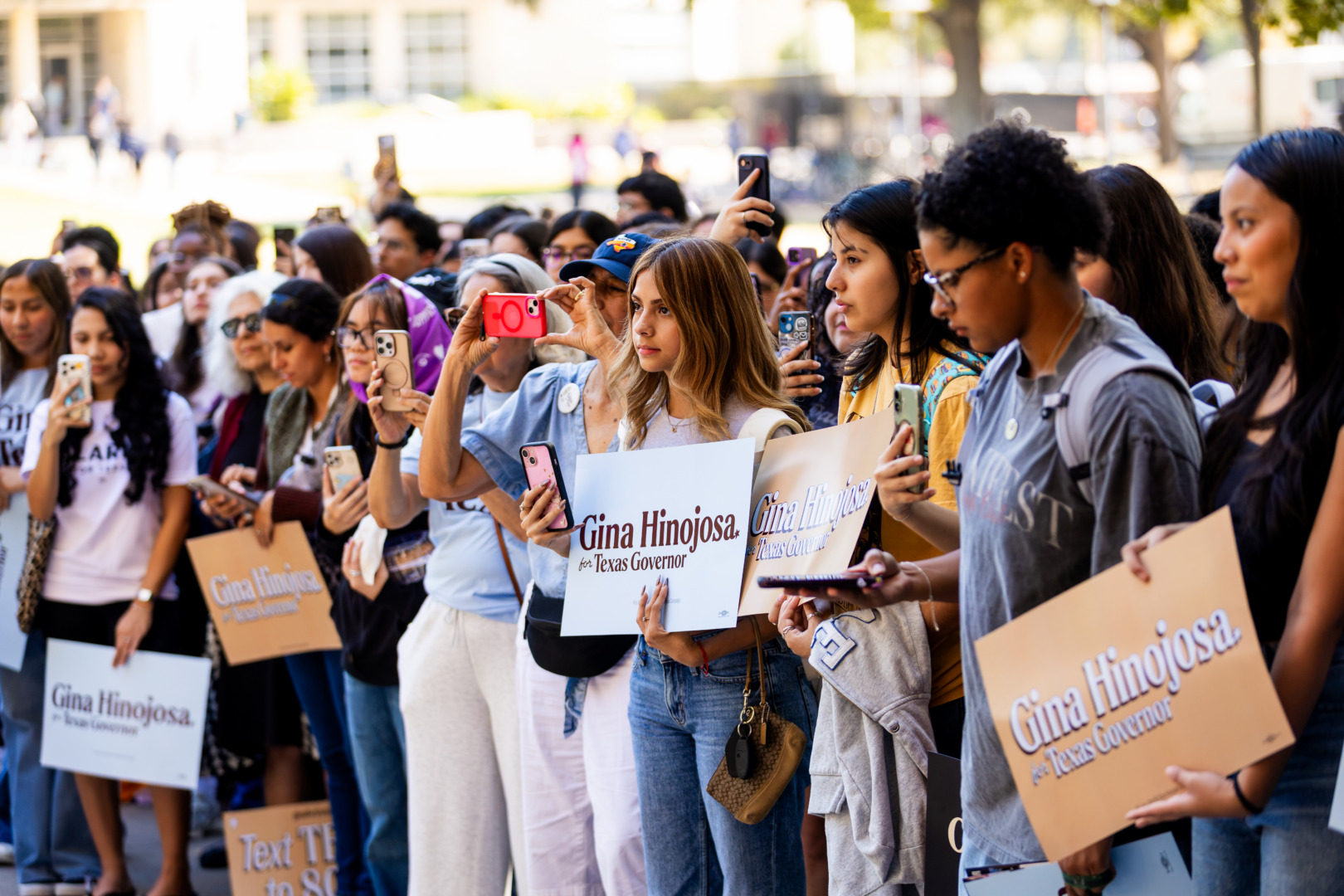
Texas gubernatorial candidate Gina Hinojosa (D-TX) talks to students during an early voting rally at the University of Houston on Thursday, Oct. 22, 2026, in Houston. | Oscar Herrera/The Cougar

Midterm election season began with voter registration tables that popped up in campus walkways and outside University buildings. From there, it quickly accelerated into policy discussions, civic debates and visits by the biggest names in Texas politics, all in the sprint to Nov. 3: Election Day.

This year’s midterm elections brought an unparalleled energy to UH. There was hope, to be sure, but also worry, anger, fear and a stark awareness that eyes across the nation were on the Texas gubernatorial and senatorial races. 

Here’s a recap of a midterm election season on campus.

Hinojosa, Talarico deliver remarks

Democratic gubernatorial candidate Gina Hinojosa and Democratic senatorial candidate James Talarico both visited campus, Talarico on Oct. 21 and Hinojosa the day after.

Talarico, as part of his Clear Eyes Full Hearts Tour, spoke on his politics and hopes for Texas’ future to a crowd of students at the Hilton Hotel. 

“I love his saying that it’s not left or right, it’s us versus the top,” said Chair of the Harris County Democratic Party Tracy Gibson. “He’s going to make sure that we all have affordable prices and that we can all be able to live the American dream.”

Talarico has labeled this election as ‘us versus the billionaires’, centering his campaign on affordability and lowering prices.

Supporters of Talarico voiced their hopes that Texas would turn blue by voting a Democrat into office. Texas has had two Republican senators continuously since 2002, and at least one Republican senator since 1961.

As a result, Talarico has compared blue voters in Texas to David in the Biblical story of David versus Goliath.

Hinojosa’s remarks focused on the importance of the youth vote. Her address at Butler Plaza, which laid out campaign promises around public education, distributing refund checks to Texas households and freezing electricity rates, drew an enthusiastic group of students who were able to meet with her and take photos.

“I’m really grateful she made the time to come out,” said political science sophomore Magen Ali. “I know campus campaigning time is really busy for a lot of politicians, so for her to be able to come out and see students one-on-one and take pictures, it shows her dedication and her care, and like that she’s actually going to fight for the people.”

Former U.S. rep. Beto O’Rourke was also present at the event and emphasized the need for voter turnout.

“When you vote, make sure that you share it on your social media feeds, in the chats, with your roommates, with your friends and with your family,” O’Rourke said. “It is a social habit. When your friends see that you’re voting, they are more likely to vote as well. So let’s make sure that we turn out in record numbers.”

Opposing takes

Contrasting agendas from Democrats and Republicans were met with starkly different student perspectives.

When it comes to the role of religion in education, President of UH Democrats and political science senior Jonathan Alvarenga advocated for inclusion of religions outside of Christianity, whereas president of Texas College of Republicans and political science junior Christian Mandujano said the Bible teaches K-12 students morality at an early age.

“With other cultural diversities, the problem is they also do have their morals, but you’re in the United States and they were founded on Christian morality,” Mandujano said. “There is a benefit to starting teaching the basics at a young level: be careful, be more obedient, less aggressive. The more you educate them on the wrongdoings, the better you can have a good generation and teach them at a young age.” 

Alvarenga and Mandujano also diverge in their thinking on opportunities for undocumented students. Alvarenga argues that the problem is not these students seeking education but the issue Republicans find with students who came to Texas the “wrong way”.

“At the end of the day, it really just shows that it’s not about Dreamers, it’s not about whether they come here, however they want them to come here. It’s just a matter of prejudice against folks that aren’t, in their words, ‘from here’,” Alvarenga said. “If it really was about promoting education, making sure folks go to school, get a job, and contribute to the economy, they’d have no issue with this.”

And while Democrats are advocating for the restoration and protection of reproductive rights for women in Texas, Republicans are urging lawmakers to enact legislation to abolish abortion entirely.

Voting for change

Texas saw above-average voter turnout, surpassing its 2022 numbers by 1.75 million voters. UH voters said their personal investment in policies played a major role in driving them to the ballot box.

“Everything involving ICE, because my family is immigrants, so that’s something that really stands out to me,” said media production sophomore Ye-Jin Lee. 

Young voters saw the midterm elections as an opportunity to correct issues going unresolved, speaking to the need to be aware and actively vote.

“If you don’t vote, you’re not gonna see a change, and a lot of the times the people who say they don’t vote are saying there’s no change,” said communications senior Emilee Gurrola. “So how are you gonna see a change if you don’t vote? Everyone says ‘my vote doesn’t matter’. But it does.”

news@thedailycougar.com

—
“In review: Midterm election season at UH” was originally posted on The Cougar

Posted in UncategorizedComments Off on In review: Midterm election season at UH

Hispanic student voters voice dissatisfaction with Republicans ahead of midterm elections

Elijah Washington/The Cougar

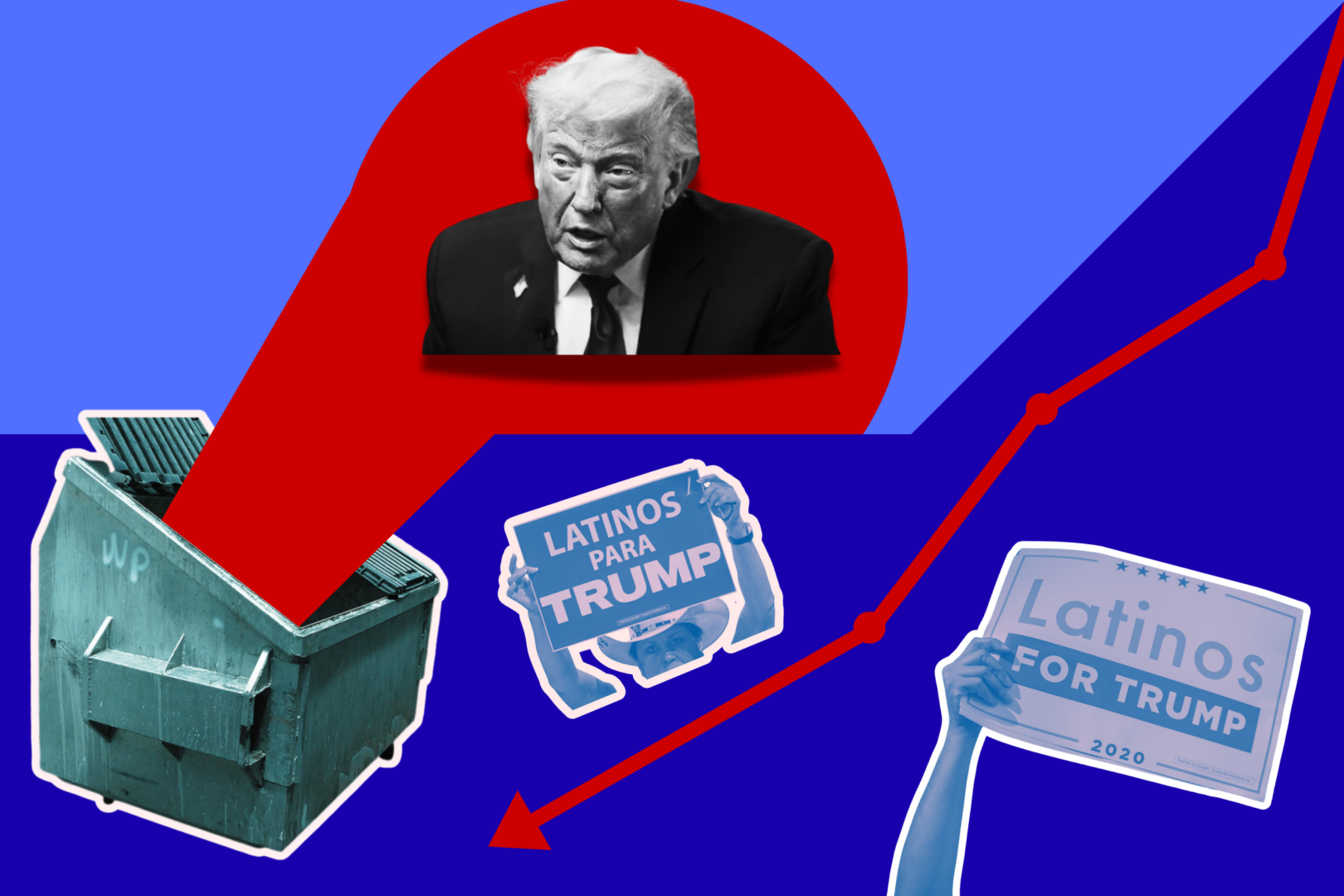
Ahead of the 2026 midterm elections, approval ratings of Trump and the Republican party have reached notable lows among Hispanic voters.

Nearly two-thirds of Hispanic voters disapprove of the job Trump is doing as president, according to September polling from The New York Times/Siena and Fox News.

This decline comes after Trump won 48% of Hispanic voters in 2026. Now, 78% of Hispanic respondents in the Times/Siena poll said they prefer to see the Democratic party in control of Congress after the November midterms.

Hispanic student voters at UH, many of whom will be heading to the ballot boxes in the coming weeks, are also voicing discontent with where two years of Republican governance has left the country.

“How Trump ran things and the things he promised, those things never arrived,” said mechanical engineering sophomore Daniel Molina. “I feel like a lot of Hispanic voters really wanted Trump for the economy. I remember hearing, especially back in high school, the only reason people wanted Trump is because he’ll be better for the economy because he’s a businessman or because he’s a millionaire. Therefore, he has to be good with money.”

But those expectations, Molina reflects, didn’t materialize. The Iran war caused a spike in fuel prices that permeated into consumers’ lives, with one estimate from Moody’s Analytics putting the cost per household at $2,000.

Some retail prices have gone up, as have gas prices, the latter of which is weighing especially heavily on UH’s predominantly commuter student population.

Molina is also worried for his grandma, who is dependent on Medicare and Medicaid. The One Big Beautiful Bill Act, signed into law by Trump in July 2025, cut over $1 trillion from health programs in the largest rollback of federal support for health care in American history. 

“The costs rise up and suddenly it gets harder to buy gas, and I’m supposed to just be okay,” Molina said. “It’s a large chunk of the money that could be used for food, for expenses for my grandma.”

The Times/Siena poll shows that the economy is the single most important issue for the upcoming midterms for 18% of Hispanic respondents, but that’s far from the only matter weighing on the minds of the Hispanic electorate. 

Mechanical engineering freshman Santiago Angel Velasquez emigrated with his family from Venezuela to the U.S. when he was 10.

When it comes to the Trump administration, Velasquez says he has mixed feelings about America’s military intervention in Venezuela, and he’s not a fan of U.S. actions in the Middle East.

His family, feeling the economic ramifications of higher gas prices, had to buy a more fuel-efficient car and are now working extra shifts.

But even more so than the economy, Velasquez is heading into the midterms with ICE front of mind. 

“ICE rates have gone up and it’s more dangerous, because you don’t know what type of ICE you get,” Velasquez said. “You get one that just says “ID”, whatever, you show them, all right, you can go. Or, the more brutal ones that are pointing a gun at you. I think all of that, plus the economy, will make a lot of us Latino voters move to the left again.”

Mere months ago, in Houston, an ICE officer shot and killed Lorenzo Salgado Araujo, a Mexican man who did not have legal status in the U.S. at the time of his death. The news sparked multiple protests in Houston and beyond.

Velasquez said he and his family haven’t been personally affected, but it feels like a lingering threat. The only way he could see a Hispanic voter still going Republican is on the basis of social issues like policies around transgender people or abortion, where Hispanics can lean more conservative. 

Beyond individual issues, though, there is a sense of civic responsibility that Velasquez shares with his family.

“My parents saw what happened in Venezuela in the 80s, 90s, how Venezuela was at the peak financially and politically and then it just all went down when (Nicolas) Maduro and (Hugo) Chavez came in,” Velasquez said. “It helps me think, okay, my parents are seeing that this is happening here. What can I do to steer it the other way around?”

Political awakenings

This year’s midterms will be many students’ first time voting. Marketing sophomore Alyse Arriaga was still in high school during the 2024 presidential election, but the formation of her political views happened much earlier.

In 2018, Arriaga’s school district in Santa Fe had a school shooting in which 10 people were killed: nine students and one teacher. Arriaga’s brother was at the high school when the shooting happened.

“During that moment is when I became very anti-gun,” Arriaga said. “I hate guns. I don’t want anything to do with guns. That’s what kickstarted the shaping of my own political beliefs.”

Nevertheless, in Santa Fe, a rural, predominantly white town where kids miss school for hunting season and people buy milk from the dairy farm instead of H-E-B, Arriaga remembers her classmates celebrating Trump’s 2024 victory.

It was discouraging, says Arriaga, and that was before Trump even took office. 

“What ended up happening was a lot worse than what I anticipated, specifically on my community,” Arriaga said. “I’ve seen ICE take individuals, and knowing that I’m in a family of immigrants, I can’t bring myself to be acquainted with someone who agrees with something like that.”

A couple weeks ago, on her commute to school, Arriaga saw ICE stop a gardening worker — but from her eyes, it could have easily been her dad or someone in her family. It just doesn’t sit right with anyone, Arriaga said.

Later, for her ENGL 1301 class, Arriaga wrote about the experience in a narrative essay. It’s a family tradition to share pan dulce, Mexican sweet bread, on holidays like Thanksgiving or Christmas. Now, though, the gatherings are tainted by fear.

“Cousins of mine are here and they’re scared to go out,” Arriaga said. “They were like ‘we just want bread’. People don’t feel safe enough to just go get bread.”

And Arriaga isn’t the only one with a story about ICE. Journalism senior Gabriela Ramirez says she was terrified of what would happen to her mom in 2024, who was then undocumented and now has a work visa.

Seeing Trump elected into office at that time was awful, Ramirez remembers.

“It felt like the end of my life,” Ramirez said. “I think people forgot how bad Trump was during his first term and just fell for his facade again. It literally felt like people voted for the devil.”

In this year’s midterms, Ramirez plans to vote blue. ICE and deportations are the biggest topics on her mind, in addition to LGBTQ rights because Ramirez herself is lesbian.

Ramirez is especially excited about Democratic congressional candidate James Talarico, whose policies she thinks will better Texas as a whole and potentially even turn the state blue.

“I do have hope that something is going to happen, some change,” Ramirez said. “Even if it doesn’t happen this year, I think it’s the groundwork for it to happen maybe later down the line.”

Outside the box

Hispanic voters, though, are not a monolith.

Even with many opposed to Republican policies on immigration and the economy, the Hispanic vote isn’t guaranteed for Democrats. Take computer science senior Matthew Boodram, who voted third party in 2024, casting his ballot for Green Party nominee Jill Stein.

“I felt like if I voted either side red or blue, I felt like I was betraying my values,” Boodram said. “So I still wanted to vote and be a part of the system. But there was no cookie cutter choice where I could go.”

Boodram’s parents voted for Trump (Borden describes himself as centrist). But having seen the escalation of deportations led by ICE, Boodram’s parents will be voting blue in the upcoming midterms.

“The right-leaning party definitely doesn’t have my best interest for me and my community, Hispanics,” Boodram said. “And I feel like with the whole attack on Venezuela, the way Donald Trump talks down on immigrants, it’s very personal to me. So why would I vote for a party that I’m not welcome to?”

Boodram says he likes what Talarico is doing too, especially because his parents are both educators and Talarico comes from an education background.

But his governor vote isn’t locked in yet. He says he doesn’t know that much about Gina Hinojosa, the Democratic gubernatorial candidate, and needs to see where her policy priorities are. 

“I’m in tune with my Latino culture, but I just see myself as a person, so it’s like, what do I feel would benefit me and my neighbors the most?” Boodram said.

Hispanic voters can choose to vote based on policy rather than party lines, as Boodram intends to. But many times, evolving political views follow generational lines, even within the same family.

Supply chain and logistics freshman Kelly Zelaya, for instance, aligns with the Democratic party except for one issue: gun rights, which Zelaya is a firm believer in. Other than that, though, Zelaya’s views on abortion and environmental policy lean left.

“In the Republican Party, you hear a lot of criticism towards LGBTQ people in general,” Zelaya said. “I stand with Democrats for that, because I don’t care. I don’t care what you are, who you like, what you do, whatever.”

Zelaya said she had to actively convince her dad, a former Republican, to see her stance on abortion, which is that a woman should have the right to choose.

And Zelaya is “a hundred percent” planning to vote in the midterms. She already has a list of pros and cons ready, and says she considers herself privileged.

“Americans are privileged. I’m privileged,” Zelaya said. “I’m Hispanic, but I’m also American. For other Hispanic voters, their priorities are different. There’s people who need papers. There’s people who are trying to get their work permits. Americans are not thinking about that.”

The young vote 

Political promises broken. Families torn apart. Hateful rhetoric, division and polarization.

Young Hispanic voters have seen a lot in the past few years. For communication studies freshman Nick Moreno Torres, the actions of the Trump administration — ICE, Iran, Venezuela — are undeniably wrong.

“It’s been so chaotic and it’s one of those things that I just reflect on, like, what is going on with our country?” Moreno said. “People were promised something and they never delivered. That’s one of the things that people are starting to see, especially young people. They’re starting to see that their government is not working for them.”

But Moreno also believes that young people are getting more politically involved. He sees politicians like Zohran Mamdani and James Talarico as candidates who are qualified as well as genuinely invested in improving government — and that is something that young people will vote for.

“Young people are seeing that the doom and gloom is not going to work,” Moreno said. “We’re going to use our voices and we’re going to use our vote to vote those in power that are capable of doing something right.”

news@thedailycougar.com

—
“Hispanic student voters voice dissatisfaction with Republicans ahead of midterm elections” was originally posted on The Cougar


Posted in UncategorizedComments Off on Hispanic student voters voice dissatisfaction with Republicans ahead of midterm elections

Hispanic student voters voice dissatisfaction with Republicans ahead of midterm elections

Elijah Washington/The Cougar

Ahead of the 2026 midterm elections, approval ratings of Trump and the Republican party have reached notable lows among Hispanic voters.

Nearly two-thirds of Hispanic voters disapprove of the job Trump is doing as president, according to September polling from The New York Times/Siena and Fox News.

This decline comes after Trump won 48% of Hispanic voters in 2026. Now, 78% of Hispanic respondents in the Times/Siena poll said they prefer to see the Democratic party in control of Congress after the November midterms.

Hispanic student voters at UH, many of whom will be heading to the ballot boxes in the coming weeks, are also voicing discontent with where two years of Republican governance has left the country.

“How Trump ran things and the things he promised, those things never arrived,” said mechanical engineering sophomore Daniel Molina. “I feel like a lot of Hispanic voters really wanted Trump for the economy. I remember hearing, especially back in high school, the only reason people wanted Trump is because he’ll be better for the economy because he’s a businessman or because he’s a millionaire. Therefore, he has to be good with money.”

But those expectations, Molina reflects, didn’t materialize. The Iran war caused a spike in fuel prices that permeated into consumers’ lives, with one estimate from Moody’s Analytics putting the cost per household at $2,000.

Some retail prices have gone up, as have gas prices, the latter of which is weighing especially heavily on UH’s predominantly commuter student population.

Molina is also worried for his grandma, who is dependent on Medicare and Medicaid. The One Big Beautiful Bill Act, signed into law by Trump in July 2025, cut over $1 trillion from health programs in the largest rollback of federal support for health care in American history. 

“The costs rise up and suddenly it gets harder to buy gas, and I’m supposed to just be okay,” Molina said. “It’s a large chunk of the money that could be used for food, for expenses for my grandma.”

The Times/Siena poll shows that the economy is the single most important issue for the upcoming midterms for 18% of Hispanic respondents, but that’s far from the only matter weighing on the minds of the Hispanic electorate. 

Mechanical engineering freshman Santiago Angel Velasquez emigrated with his family from Venezuela to the U.S. when he was 10.

When it comes to the Trump administration, Velasquez says he has mixed feelings about America’s military intervention in Venezuela, and he’s not a fan of U.S. actions in the Middle East.

His family, feeling the economic ramifications of higher gas prices, had to buy a more fuel-efficient car and are now working extra shifts.

But even more so than the economy, Velasquez is heading into the midterms with ICE front of mind. 

“ICE rates have gone up and it’s more dangerous, because you don’t know what type of ICE you get,” Velasquez said. “You get one that just says “ID”, whatever, you show them, all right, you can go. Or, the more brutal ones that are pointing a gun at you. I think all of that, plus the economy, will make a lot of us Latino voters move to the left again.”

Mere months ago, in Houston, an ICE officer shot and killed Lorenzo Salgado Araujo, a Mexican man who did not have legal status in the U.S. at the time of his death. The news sparked multiple protests in Houston and beyond.

Velasquez said he and his family haven’t been personally affected, but it feels like a lingering threat. The only way he could see a Hispanic voter still going Republican is on the basis of social issues like policies around transgender people or abortion, where Hispanics can lean more conservative. 

Beyond individual issues, though, there is a sense of civic responsibility that Velasquez shares with his family.

“My parents saw what happened in Venezuela in the 80s, 90s, how Venezuela was at the peak financially and politically and then it just all went down when (Nicolas) Maduro and (Hugo) Chavez came in,” Velasquez said. “It helps me think, okay, my parents are seeing that this is happening here. What can I do to steer it the other way around?”

Political awakenings

This year’s midterms will be many students’ first time voting. Marketing sophomore Alyse Arriaga was still in high school during the 2024 presidential election, but the formation of her political views happened much earlier.

In 2018, Arriaga’s school district in Santa Fe had a school shooting in which 10 people were killed: nine students and one teacher. Arriaga’s brother was at the high school when the shooting happened.

“During that moment is when I became very anti-gun,” Arriaga said. “I hate guns. I don’t want anything to do with guns. That’s what kickstarted the shaping of my own political beliefs.”

Nevertheless, in Santa Fe, a rural, predominantly white town where kids miss school for hunting season and people buy milk from the dairy farm instead of H-E-B, Arriaga remembers her classmates celebrating Trump’s 2024 victory.

It was discouraging, says Arriaga, and that was before Trump even took office. 

“What ended up happening was a lot worse than what I anticipated, specifically on my community,” Arriaga said. “I’ve seen ICE take individuals, and knowing that I’m in a family of immigrants, I can’t bring myself to be acquainted with someone who agrees with something like that.”

A couple weeks ago, on her commute to school, Arriaga saw ICE stop a gardening worker — but from her eyes, it could have easily been her dad or someone in her family. It just doesn’t sit right with anyone, Arriaga said.

Later, for her ENGL 1301 class, Arriaga wrote about the experience in a narrative essay. It’s a family tradition to share pan dulce, Mexican sweet bread, on holidays like Thanksgiving or Christmas. Now, though, the gatherings are tainted by fear.

“Cousins of mine are here and they’re scared to go out,” Arriaga said. “They were like ‘we just want bread’. People don’t feel safe enough to just go get bread.”

And Arriaga isn’t the only one with a story about ICE. Journalism senior Gabriela Ramirez says she was terrified of what would happen to her mom in 2024, who was then undocumented and now has a work visa.

Seeing Trump elected into office at that time was awful, Ramirez remembers.

“It felt like the end of my life,” Ramirez said. “I think people forgot how bad Trump was during his first term and just fell for his facade again. It literally felt like people voted for the devil.”

In this year’s midterms, Ramirez plans to vote blue. ICE and deportations are the biggest topics on her mind, in addition to LGBTQ rights because Ramirez herself is lesbian.

Ramirez is especially excited about Democratic congressional candidate James Talarico, whose policies she thinks will better Texas as a whole and potentially even turn the state blue.

“I do have hope that something is going to happen, some change,” Ramirez said. “Even if it doesn’t happen this year, I think it’s the groundwork for it to happen maybe later down the line.”

Outside the box

Hispanic voters, though, are not a monolith.

Even with many opposed to Republican policies on immigration and the economy, the Hispanic vote isn’t guaranteed for Democrats. Take computer science senior Matthew Boodram, who voted third party in 2024, casting his ballot for Green Party nominee Jill Stein.

“I felt like if I voted either side red or blue, I felt like I was betraying my values,” Boodram said. “So I still wanted to vote and be a part of the system. But there was no cookie cutter choice where I could go.”

Boodram’s parents voted for Trump (Borden describes himself as centrist). But having seen the escalation of deportations led by ICE, Boodram’s parents will be voting blue in the upcoming midterms.

“The right-leaning party definitely doesn’t have my best interest for me and my community, Hispanics,” Boodram said. “And I feel like with the whole attack on Venezuela, the way Donald Trump talks down on immigrants, it’s very personal to me. So why would I vote for a party that I’m not welcome to?”

Boodram says he likes what Talarico is doing too, especially because his parents are both educators and Talarico comes from an education background.

But his governor vote isn’t locked in yet. He says he doesn’t know that much about Gina Hinojosa, the Democratic gubernatorial candidate, and needs to see where her policy priorities are. 

“I’m in tune with my Latino culture, but I just see myself as a person, so it’s like, what do I feel would benefit me and my neighbors the most?” Boodram said.

Hispanic voters can choose to vote based on policy rather than party lines, as Boodram intends to. But many times, evolving political views follow generational lines, even within the same family.

Supply chain and logistics freshman Kelly Zelaya, for instance, aligns with the Democratic party except for one issue: gun rights, which Zelaya is a firm believer in. Other than that, though, Zelaya’s views on abortion and environmental policy lean left.

“In the Republican Party, you hear a lot of criticism towards LGBTQ people in general,” Zelaya said. “I stand with Democrats for that, because I don’t care. I don’t care what you are, who you like, what you do, whatever.”

Zelaya said she had to actively convince her dad, a former Republican, to see her stance on abortion, which is that a woman should have the right to choose.

And Zelaya is “a hundred percent” planning to vote in the midterms. She already has a list of pros and cons ready, and says she considers herself privileged.

“Americans are privileged. I’m privileged,” Zelaya said. “I’m Hispanic, but I’m also American. For other Hispanic voters, their priorities are different. There’s people who need papers. There’s people who are trying to get their work permits. Americans are not thinking about that.”

The young vote 

Political promises broken. Families torn apart. Hateful rhetoric, division and polarization.

Young Hispanic voters have seen a lot in the past few years. For communication studies freshman Nick Moreno Torres, the actions of the Trump administration — ICE, Iran, Venezuela — are undeniably wrong.

“It’s been so chaotic and it’s one of those things that I just reflect on, like, what is going on with our country?” Moreno said. “People were promised something and they never delivered. That’s one of the things that people are starting to see, especially young people. They’re starting to see that their government is not working for them.”

But Moreno also believes that young people are getting more politically involved. He sees politicians like Zohran Mamdani and James Talarico as candidates who are qualified as well as genuinely invested in improving government — and that is something that young people will vote for.

“Young people are seeing that the doom and gloom is not going to work,” Moreno said. “We’re going to use our voices and we’re going to use our vote to vote those in power that are capable of doing something right.”

news@thedailycougar.com

—
“Hispanic student voters voice dissatisfaction with Republicans ahead of midterm elections” was originally posted on The Cougar
Posted in UncategorizedComments Off on Hispanic student voters voice dissatisfaction with Republicans ahead of midterm elections

Hispanic student voters voice dissatisfaction with Republicans ahead of midterm elections

Elijah Washington/The Cougar

Ahead of the 2026 midterm elections, approval ratings of Trump and the Republican party have reached notable lows among Hispanic voters.

Nearly two-thirds of Hispanic voters disapprove of the job Trump is doing as president, according to September polling from The New York Times/Siena and Fox News.

This decline comes after Trump won 48% of Hispanic voters in 2026. Now, 78% of Hispanic respondents in the Times/Siena poll said they prefer to see the Democratic party in control of Congress after the November midterms.

Hispanic student voters at UH, many of whom will be heading to the ballot boxes in the coming weeks, are also voicing discontent with where two years of Republican governance has left the country.

“How Trump ran things and the things he promised, those things never arrived,” said mechanical engineering sophomore Daniel Molina. “I feel like a lot of Hispanic voters really wanted Trump for the economy. I remember hearing, especially back in high school, the only reason people wanted Trump is because he’ll be better for the economy because he’s a businessman or because he’s a millionaire. Therefore, he has to be good with money.”

But those expectations, Molina reflects, didn’t materialize. The Iran war caused a spike in fuel prices that permeated into consumers’ lives, with one estimate from Moody’s Analytics putting the cost per household at $2,000.

Some retail prices have gone up, as have gas prices, the latter of which is weighing especially heavily on UH’s predominantly commuter student population.

Molina is also worried for his grandma, who is dependent on Medicare and Medicaid. The One Big Beautiful Bill Act, signed into law by Trump in July 2025, cut over $1 trillion from health programs in the largest rollback of federal support for health care in American history. 

“The costs rise up and suddenly it gets harder to buy gas, and I’m supposed to just be okay,” Molina said. “It’s a large chunk of the money that could be used for food, for expenses for my grandma.”

The Times/Siena poll shows that the economy is the single most important issue for the upcoming midterms for 18% of Hispanic respondents, but that’s far from the only matter weighing on the minds of the Hispanic electorate. 

Mechanical engineering freshman Santiago Angel Velasquez emigrated with his family from Venezuela to the U.S. when he was 10.

When it comes to the Trump administration, Velasquez says he has mixed feelings about America’s military intervention in Venezuela, and he’s not a fan of U.S. actions in the Middle East.

His family, feeling the economic ramifications of higher gas prices, had to buy a more fuel-efficient car and are now working extra shifts.

But even more so than the economy, Velasquez is heading into the midterms with ICE front of mind. 

“ICE rates have gone up and it’s more dangerous, because you don’t know what type of ICE you get,” Velasquez said. “You get one that just says “ID”, whatever, you show them, all right, you can go. Or, the more brutal ones that are pointing a gun at you. I think all of that, plus the economy, will make a lot of us Latino voters move to the left again.”

Mere months ago, in Houston, an ICE officer shot and killed Lorenzo Salgado Araujo, a Mexican man who did not have legal status in the U.S. at the time of his death. The news sparked multiple protests in Houston and beyond.

Velasquez said he and his family haven’t been personally affected, but it feels like a lingering threat. The only way he could see a Hispanic voter still going Republican is on the basis of social issues like policies around transgender people or abortion, where Hispanics can lean more conservative. 

Beyond individual issues, though, there is a sense of civic responsibility that Velasquez shares with his family.

“My parents saw what happened in Venezuela in the 80s, 90s, how Venezuela was at the peak financially and politically and then it just all went down when (Nicolas) Maduro and (Hugo) Chavez came in,” Velasquez said. “It helps me think, okay, my parents are seeing that this is happening here. What can I do to steer it the other way around?”

Political awakenings

This year’s midterms will be many students’ first time voting. Marketing sophomore Alyse Arriaga was still in high school during the 2024 presidential election, but the formation of her political views happened much earlier.

In 2018, Arriaga’s school district in Santa Fe had a school shooting in which 10 people were killed: nine students and one teacher. Arriaga’s brother was at the high school when the shooting happened.

“During that moment is when I became very anti-gun,” Arriaga said. “I hate guns. I don’t want anything to do with guns. That’s what kickstarted the shaping of my own political beliefs.”

Nevertheless, in Santa Fe, a rural, predominantly white town where kids miss school for hunting season and people buy milk from the dairy farm instead of H-E-B, Arriaga remembers her classmates celebrating Trump’s 2024 victory.

It was discouraging, says Arriaga, and that was before Trump even took office. 

“What ended up happening was a lot worse than what I anticipated, specifically on my community,” Arriaga said. “I’ve seen ICE take individuals, and knowing that I’m in a family of immigrants, I can’t bring myself to be acquainted with someone who agrees with something like that.”

A couple weeks ago, on her commute to school, Arriaga saw ICE stop a gardening worker — but from her eyes, it could have easily been her dad or someone in her family. It just doesn’t sit right with anyone, Arriaga said.

Later, for her ENGL 1301 class, Arriaga wrote about the experience in a narrative essay. It’s a family tradition to share pan dulce, Mexican sweet bread, on holidays like Thanksgiving or Christmas. Now, though, the gatherings are tainted by fear.

“Cousins of mine are here and they’re scared to go out,” Arriaga said. “They were like ‘we just want bread’. People don’t feel safe enough to just go get bread.”

And Arriaga isn’t the only one with a story about ICE. Journalism senior Gabriela Ramirez says she was terrified of what would happen to her mom in 2024, who was then undocumented and now has a work visa.

Seeing Trump elected into office at that time was awful, Ramirez remembers.

“It felt like the end of my life,” Ramirez said. “I think people forgot how bad Trump was during his first term and just fell for his facade again. It literally felt like people voted for the devil.”

In this year’s midterms, Ramirez plans to vote blue. ICE and deportations are the biggest topics on her mind, in addition to LGBTQ rights because Ramirez herself is lesbian.

Ramirez is especially excited about Democratic congressional candidate James Talarico, whose policies she thinks will better Texas as a whole and potentially even turn the state blue.

“I do have hope that something is going to happen, some change,” Ramirez said. “Even if it doesn’t happen this year, I think it’s the groundwork for it to happen maybe later down the line.”

Outside the box

Hispanic voters, though, are not a monolith.

Even with many opposed to Republican policies on immigration and the economy, the Hispanic vote isn’t guaranteed for Democrats. Take computer science senior Matthew Boodram, who voted third party in 2024, casting his ballot for Green Party nominee Jill Stein.

“I felt like if I voted either side red or blue, I felt like I was betraying my values,” Boodram said. “So I still wanted to vote and be a part of the system. But there was no cookie cutter choice where I could go.”

Boodram’s parents voted for Trump (Borden describes himself as centrist). But having seen the escalation of deportations led by ICE, Boodram’s parents will be voting blue in the upcoming midterms.

“The right-leaning party definitely doesn’t have my best interest for me and my community, Hispanics,” Boodram said. “And I feel like with the whole attack on Venezuela, the way Donald Trump talks down on immigrants, it’s very personal to me. So why would I vote for a party that I’m not welcome to?”

Boodram says he likes what Talarico is doing too, especially because his parents are both educators and Talarico comes from an education background.

But his governor vote isn’t locked in yet. He says he doesn’t know that much about Gina Hinojosa, the Democratic gubernatorial candidate, and needs to see where her policy priorities are. 

“I’m in tune with my Latino culture, but I just see myself as a person, so it’s like, what do I feel would benefit me and my neighbors the most?” Boodram said.

Hispanic voters can choose to vote based on policy rather than party lines, as Boodram intends to. But many times, evolving political views follow generational lines, even within the same family.

Supply chain and logistics freshman Kelly Zelaya, for instance, aligns with the Democratic party except for one issue: gun rights, which Zelaya is a firm believer in. Other than that, though, Zelaya’s views on abortion and environmental policy lean left.

“In the Republican Party, you hear a lot of criticism towards LGBTQ people in general,” Zelaya said. “I stand with Democrats for that, because I don’t care. I don’t care what you are, who you like, what you do, whatever.”

Zelaya said she had to actively convince her dad, a former Republican, to see her stance on abortion, which is that a woman should have the right to choose.

And Zelaya is “a hundred percent” planning to vote in the midterms. She already has a list of pros and cons ready, and says she considers herself privileged.

“Americans are privileged. I’m privileged,” Zelaya said. “I’m Hispanic, but I’m also American. For other Hispanic voters, their priorities are different. There’s people who need papers. There’s people who are trying to get their work permits. Americans are not thinking about that.”

The young vote 

Political promises broken. Families torn apart. Hateful rhetoric, division and polarization.

Young Hispanic voters have seen a lot in the past few years. For communication studies freshman Nick Moreno Torres, the actions of the Trump administration — ICE, Iran, Venezuela — are undeniably wrong.

“It’s been so chaotic and it’s one of those things that I just reflect on, like, what is going on with our country?” Moreno said. “People were promised something and they never delivered. That’s one of the things that people are starting to see, especially young people. They’re starting to see that their government is not working for them.”

But Moreno also believes that young people are getting more politically involved. He sees politicians like Zohran Mamdani and James Talarico as candidates who are qualified as well as genuinely invested in improving government — and that is something that young people will vote for.

“Young people are seeing that the doom and gloom is not going to work,” Moreno said. “We’re going to use our voices and we’re going to use our vote to vote those in power that are capable of doing something right.”

news@thedailycougar.com

—
“Hispanic student voters voice dissatisfaction with Republicans ahead of midterm elections” was originally posted on The Cougar

Posted in UncategorizedComments Off on Hispanic student voters voice dissatisfaction with Republicans ahead of midterm elections