
Author Archives | Kaia Monaco, Opinion Editor

Pop music is good again. Is the flailing economy to thank?

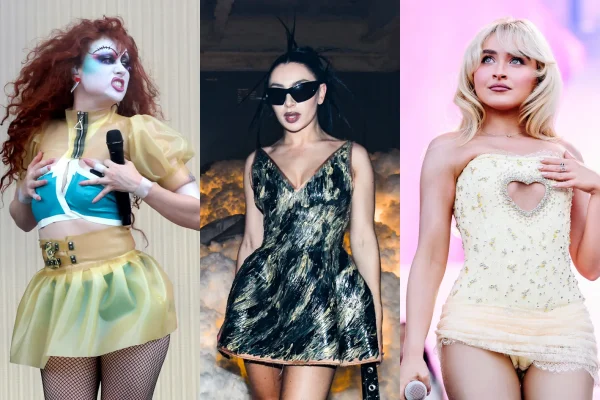
Chappell Roan, Charli XCX and Sabrina Carpenter are pictured performing at their respective concerts, side by side.

Chappell Roan’s “The Rise and Fall of a Midwest Princess,” Sabrina Carpenter’s “Short n’ Sweet” and Charli XCX’s “BRAT” dominated the charts in 2024, breathing new life into pop music. These influential albums and a new wave of pop artists combined to accomplish a goal previously thought unachievable: the revival of “recession pop.”


“Recession pop” is the buzzword used to describe the music released during and soon after the Great Recession, which lasted from December 2007 to June 2009. This music was upbeat, with an electronic influence and plenty of bass, encouraging listeners to get up and dance.


Artists like Kesha, Timbaland, Nelly Furtado, David Guetta and Pitbull were wildly popular during this time. Albums such as Britney Spears’s “Blackout,” Lady Gaga’s “The Fame Monster” and the Black Eyed Peas’ “THE E.N.D.” defined the era.


This music is so closely intertwined with the Great Recession thanks to its shared theme — not worrying about paying bills and, instead, dancing the stress away. The housing market was crashing, and unemployment was rising, so, as LMFAO put it in their song “Party Rock Anthem,” people had one goal: “Everybody just have a good time.”


Interestingly, this is not the first time this phenomenon has happened. Dance music has typically gained popularity during economic recessions; in fact, two of the genres most influential to recession pop — disco and house — came about during recessions of their own.


Disco is often synonymous with the 70s, a time when Diana Ross’s popularity was soaring and the economy was not. In 1973, the Organization of Petroleum Exporting Countries (OPEC) imposed a total oil embargo against any country supporting the Israeli army at the time, including the United States. This caused oil and gas prices to surge, with inflation and unemployment following soon after, sending the country into a recession from November 1973 to March 1975.


People sought a way to escape this discouraging economic landscape, so they ran from their problems to the disco. The genre is known for its up-tempo blend of funk, jazz and soul music. Similar to the recession pop of the early 2010s, disco lyrics center around dancing stress away, often featuring terms like “let loose” or “groove.”


House music was born from the disco club scene, with a stronger electronic influence. It gained popularity in the early ‘80s when the United States was sent into another recession due to tight economic policy and an oil crisis. Once again, dance music was an escape.


This history lesson begs the question: Why do people believe recession pop is back in pop music today?


Ever since the COVID-19 pandemic, the economy has been a constant point of concern. The cost of living keeps rising, the job and housing markets are nearly impossible to break into, and President Donald Trump’s economic policies have people stressed out.


Another recession pop era is on the rise as people seek an escape from reality. Yet, is today’s music up to the challenge?


While the pop music of the 2020s is not creating a new genre like disco or house, it is adding a new element to recession pop’s theme of having fun despite how bad things may be. Pop artists today are unapologetically embracing themselves and begging their listeners to do the same.


“BRAT” centers around embracing your fun and crazy side, with Charli XCX crowning herself as the “365, party girl.” Chappell Roan proudly embraces her sexuality, saying “Good luck, babe!” to anyone who refuses to do so.


Rising pop stars like Sabrina Carpenter, Tate McRae and Addison Rae are establishing themselves as the next big names in music. Big names from the early 2010s have come back, with Kesha releasing “JOYRIDE.” in July 2024 and Lady Gaga releasing “MAYHEM” in March 2025.


It is safe to say that a new, bold era in pop music is here, even if it doesn’t seem as nostalgic as the recession pop of the 2010s. Perhaps, though, as the economy worsens, pop music will get even better.
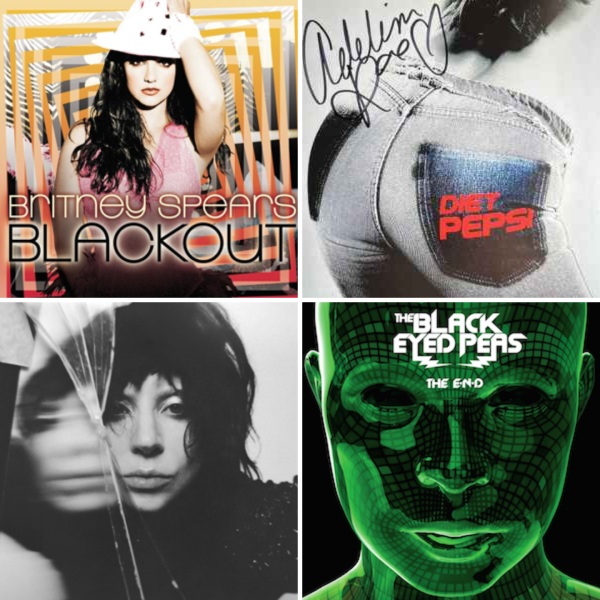
A graphic depicts, from top left to bottom right, the cover of Britney Spears’”Blackout,” Addison Rae’s “Diet Pepsi,” Lady Gaga’s “MAYHEM” and Black Eyed Peas’ “The E.N.D.”

Posted in UncategorizedComments Off on Pop music is good again. Is the flailing economy to thank?

Pop music is good again. Is the flailing economy to thank?

Chappell Roan, Charli XCX and Sabrina Carpenter are pictured performing at their respective concerts, side by side.

Chappell Roan’s “The Rise and Fall of a Midwest Princess,” Sabrina Carpenter’s “Short n’ Sweet” and Charli XCX’s “BRAT” dominated the charts in 2024, breathing new life into pop music. These influential albums and a new wave of pop artists combined to accomplish a goal previously thought unachievable: the revival of “recession pop.”


“Recession pop” is the buzzword used to describe the music released during and soon after the Great Recession, which lasted from December 2007 to June 2009. This music was upbeat, with an electronic influence and plenty of bass, encouraging listeners to get up and dance.


Artists like Kesha, Timbaland, Nelly Furtado, David Guetta and Pitbull were wildly popular during this time. Albums such as Britney Spears’s “Blackout,” Lady Gaga’s “The Fame Monster” and the Black Eyed Peas’ “THE E.N.D.” defined the era.


This music is so closely intertwined with the Great Recession thanks to its shared theme — not worrying about paying bills and, instead, dancing the stress away. The housing market was crashing, and unemployment was rising, so, as LMFAO put it in their song “Party Rock Anthem,” people had one goal: “Everybody just have a good time.”


Interestingly, this is not the first time this phenomenon has happened. Dance music has typically gained popularity during economic recessions; in fact, two of the genres most influential to recession pop — disco and house — came about during recessions of their own.


Disco is often synonymous with the 70s, a time when Diana Ross’s popularity was soaring and the economy was not. In 1973, the Organization of Petroleum Exporting Countries (OPEC) imposed a total oil embargo against any country supporting the Israeli army at the time, including the United States. This caused oil and gas prices to surge, with inflation and unemployment following soon after, sending the country into a recession from November 1973 to March 1975.


People sought a way to escape this discouraging economic landscape, so they ran from their problems to the disco. The genre is known for its up-tempo blend of funk, jazz and soul music. Similar to the recession pop of the early 2010s, disco lyrics center around dancing stress away, often featuring terms like “let loose” or “groove.”


House music was born from the disco club scene, with a stronger electronic influence. It gained popularity in the early ‘80s when the United States was sent into another recession due to tight economic policy and an oil crisis. Once again, dance music was an escape.


This history lesson begs the question: Why do people believe recession pop is back in pop music today?


Ever since the COVID-19 pandemic, the economy has been a constant point of concern. The cost of living keeps rising, the job and housing markets are nearly impossible to break into, and President Donald Trump’s economic policies have people stressed out.


Another recession pop era is on the rise as people seek an escape from reality. Yet, is today’s music up to the challenge?


While the pop music of the 2020s is not creating a new genre like disco or house, it is adding a new element to recession pop’s theme of having fun despite how bad things may be. Pop artists today are unapologetically embracing themselves and begging their listeners to do the same.


“BRAT” centers around embracing your fun and crazy side, with Charli XCX crowning herself as the “365, party girl.” Chappell Roan proudly embraces her sexuality, saying “Good luck, babe!” to anyone who refuses to do so.


Rising pop stars like Sabrina Carpenter, Tate McRae and Addison Rae are establishing themselves as the next big names in music. Big names from the early 2010s have come back, with Kesha releasing “JOYRIDE.” in July 2024 and Lady Gaga releasing “MAYHEM” in March 2025.


It is safe to say that a new, bold era in pop music is here, even if it doesn’t seem as nostalgic as the recession pop of the 2010s. Perhaps, though, as the economy worsens, pop music will get even better.

A graphic depicts, from top left to bottom right, the cover of Britney Spears’”Blackout,” Addison Rae’s “Diet Pepsi,” Lady Gaga’s “MAYHEM” and Black Eyed Peas’ “The E.N.D.”

Posted in UncategorizedComments Off on Pop music is good again. Is the flailing economy to thank?

Land of the free or land of the fascist?

Restoring the country to its “previous greatness,” purging the nation of those who undermine its “traditional values” and encouraging discrimination and hate speech — all tenets of both fascism and President Donald Trump’s current agenda. 

The overlaps are concerning, but a movement so antithetical to democracy could not possibly happen here in the United States, could it? It already is. 

I once believed that fascist takeovers were inherently violent and blatantly obvious. While, typically, these takeovers do involve violence, they are not always obvious. They arise subtly, through existing political systems, and are only noticed once it is too late. 

This happens because fascist dictators are experts in appealing to the common man. They emerge at a time when the people are deeply dissatisfied with their weak, unstable and broken country. Two of the most well-known fascist dictators of all time — Benito Mussolini and Adolf Hitler — capitalized on this dissatisfaction, making it the center of their campaigns. 

Mussolini recognized the economic disparity overtaking Italy as a result of World War I and promised to fix it. Hitler saw how angry the German people were with the government for their handling of the war and assured them he could be the leader they needed. 

Romanticizing the past and promising to make the country great again is a common tactic used by fascists. They claim they are the only person who can save the rapidly declining nation. This decline is attributed to new ideas and certain groups, making the already privileged believe they are now the victim. 

In the 1930s, Hitler reduced the new forces overtaking Europe — capitalism and communism — to nothing but “Jewish conspiracies” and scapegoated the Jewish people as the root of all the problems Germany was facing. The Christians then believed they were victims of the Jews. 

As an American, this strategy of campaigning on people’s dissatisfaction, claiming you are the only one who can fix it, and otherizing certain minority groups feels all too familiar. This is exactly how Trump gained his following. 

I hesitate to outright call him a fascist, as that is a dangerous word to throw around, but he has shown fascist tendencies. Trump is reaching the height of his popularity at a time when the U.S.’ economy has been down and bigotry is up. 

Hatred toward nearly every minority group has been running rampant. Trump and his administration have labeled the LGBTQ+ community as “dangerous to children,” Muslims have been branded as “terrorists” and Latino immigrants “criminals.” This has effectively duped the white, straight Christians into believing they are victims. 

Americans have been deeply divided and dissatisfied, so Trump painted himself as the only person who could save them by ending inflation, enacting mass deportations and “making America great again” — similar to promises both Hitler and Mussolini made. 

Fascist leaders are also known for the cult-like loyalty they inspire among their followers. Supported by this devotion, fascists deem themselves the ultimate authority: they must always be right, control everything and never lose. 

Mussolini cultivated this devotion through his dramatic character. His mannerisms, bold claims, and facial expressions riled people up, encouraging them to take rash actions on his behalf, like marching on Rome, Italy’s capital, in 1922. 

Trump, likewise, has a characteristic way of speaking that has become a major facet of his public identity, often inspiring parodies and impressions. He can be so animated in this way of speaking that he has also incited violent marches on the nation’s capital. 

Hitler grew his followers’ faith by asserting himself as a man of power, never admitting defeat. When he lost the presidential election in 1932, he blamed it on voter fraud. When, in 1942, his troops were decimated in the Battle of Stalingrad, he refused to surrender. Even after his defeat in World War II, he continued to blame everything that went wrong on “the Jewish-international global conspiracy,” never on his actions. 

Both Mussolini’s and Hitler’s regimes relentlessly pushed their ideologies on their citizens, limiting research in schools, discrediting any institution that challenged them and firing anyone who criticized them. By putting their friends and followers in political positions, they were rarely challenged. Their word became gospel.  

Trump, to this day, swears he won the presidential election in 2020. He claims the “woke liberal agenda” is ruining the U.S. He appointed his highly underqualified, but loyal, friends as cabinet members. He constantly challenges intellectuals and professionals, stating he knows best. 

His administration aims to limit what is taught in schools. Classes on critical race theory, gender theory and other identity studies have disappeared across the country, as this knowledge challenges their ideology. Right-wing educational content, such as that made by PragerU, is starting to be pushed in public elementary schools in red states. 

One could say that connecting Trump to men who committed some of the worst atrocities in human history is extreme, but the similarities are too glaring to ignore. His campaign, administration and actions toward minority groups echo theirs completely. This cannot be overlooked. 

Despite the similarities, I do not mean to be insensitive in comparing these two dark times in history. This summary is, at times, oversimplified, as there are substantial differences between 1920s Europe and the modern U.S. Hitler’s regime took their hatred to a point of no return, which the U.S. has not reached, and hopefully never will. Mass deportations and the establishment of immigrant detainment camps are not good signs, though. 

Each tragedy is its own. However, there are warning signs before great tragedies happen, and we are at a time where, if we paid attention, we could stop another atrocity. 

My intention with this piece was not to compare or spew hate, but to raise awareness, using history as a guide. Remaining aware is the greatest power we have as individual citizens. We must recognize the path we are going down and actively educate those around us, rather than turn a blind eye and cross our fingers hoping everything will work out. 

We must understand that this election did not only determine the next four years, but the fate of the country. Those creating the laws have known what is at stake for years. It is time those of us living under the laws understand the stakes, as well.

All content under the opinion section is not a direct reflection of The University News, but expresses the opinion of the writer, not necessarily the organization as a whole.

Posted in UncategorizedComments Off on Land of the free or land of the fascist?