Author Archives | Jessamyn Lockett

Juneteenth at Tech

Even though Juneteenth only became a federal holiday in 2021, it has been celebrated in African American communities since 1865. The commemoration has roots in Galveston, Texas, where on June 19, 1865, federal troops stormed the town and freed enslaved African Americans across the state, marking the beginning of the end of 246 years of American chattel slavery.

This year, the Institute’s Juneteenth celebration was hosted by the new Black Culture, Innovation and Technology (BCIT) department and featured both a lecture for academic discourse and a reception. The lecture portion began with a land acknowledgment by Meligha Garfield, BCIT Director, which served to honor the Muscogee Native American tribe who originally owned the land.

“It is important with every Juneteenth celebration that you pay homage to your ancestors. So whether that be our ancestors that are African Americans or Black from the African diaspora, but also the people that have had land here before any of Atlanta was even here and [in this case,] that is with the Muscogee tribe,” Garfield said.

Garfield also displayed and explained the significance behind the Juneteenth flag. The flag has two curved horizontal stripes, one blue and one red, and features two stars in the middle, with the date “June 19, 1865” printed on the side.

“The Juneteenth flag features a white star at the center, representing both Texas, the Lone Star State, and the freedom of African Americans in all 50 states. The star is surrounded by a movement, inspired by a bursting outline, symbolizing a new star. Supernovas are awe-inspiring cosmic events, metaphorically representing the profile, struggles and inner strength of African Americans,” Garfield said.

Garfield continued to explain that the curved angle of the stripes represents a new horizon and opportunity for African Americans. Finally, the flag’s red, white and blue colors serve as a reminder that “the formerly enslaved and their descendants are free Americans too,” Garfield said.

The keynote speech was delivered by  Maurice Hobson, Associate Professor of Africana Studies and Historian at Georgia State University. Hobson provided a general overview into the history of Juneteenth and American history through an Afrocentric lens.

Hobson closed his speech by tracing the history of education and marginalized groups. He stated that, currently, professors in Georgia are facing censorship of their curriculum from the state.

“We have been told that you can’t teach social justice,” Hobson said. 

“I want to say [around] 2020… 2021, particularly after the unrest that took place in the summer of 2020, a call came in from the state legislature to try to see which professors were teaching critical race theory,” he said. “We got a mandate that we had to submit all of our syllabi, and they combed through to see who was teaching critical race theory,” Hobson said.

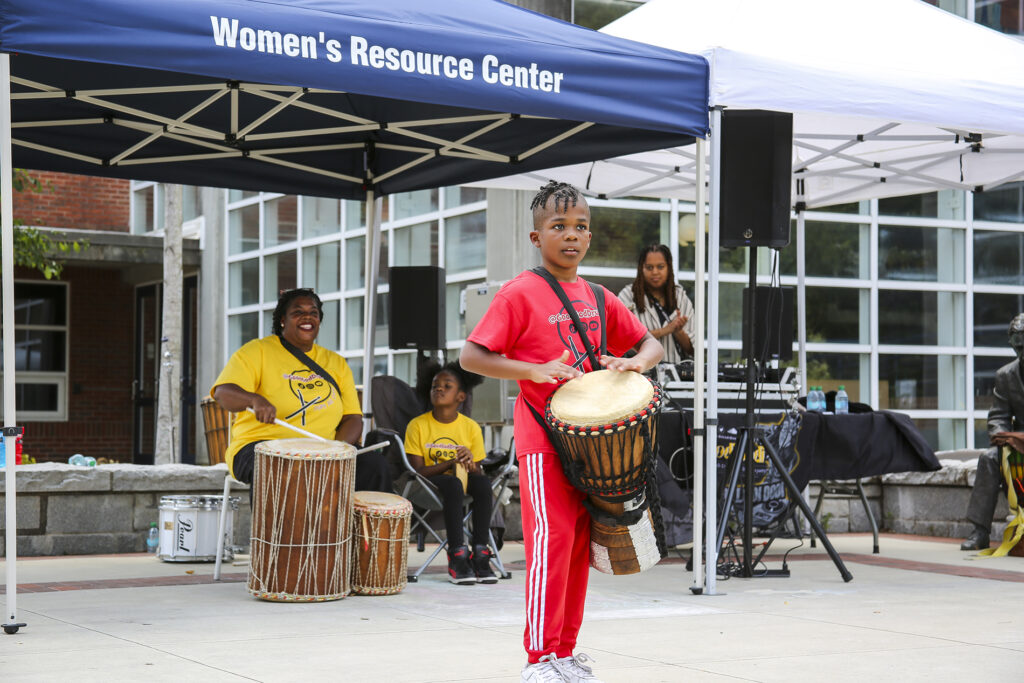
The celebration portion was held in the Ferst Center plaza and provided music, dance, food, community and a showcase of culture for all in attendance. Garfield, who led the event’s planning, explained that Tech was looking to provide a space of understanding and recognition in its Juneteenth celebration for both Black and non-Black attendees.

“How do we recognize [Juneteenth] here on campus and understand the rich legacy of African Americans? And their place both here in the city of Atlanta, but also here at Georgia Tech … even today, we’re having over 2,000 plus Black students that are attending. How do we make sure that they feel like they belong, but also understand that rich history? But then also that the larger campus community understands the rich history of Juneteenth as well,” Garfield said on the framework for the planning process.

While the event was hosted by the BCIT, other campus organizations such as the Office of Minority Educational Development, Veterans Resource Center, LGBTQIA+ Resource Center, Housing and Residence Life and the Women’s Resource Center, were either present at the event or had members on the planning committee. Garfield stressed this cross-collaboration as crucial to supporting Black students, “I would say the most important [consideration] is that Black is not a monolith. And so there are several identities that intersect with Blackness.”

Students in attendance like Kofi Agyei, third-year BA explained what the holiday meant to them.

“To me, Juneteenth symbolizes a day of celebration for African American people around the country in recognition of the day the enslaved were freed. I feel like that’s a huge milestone for us, even though we still suffer today with all these injustices, I feel like we can still celebrate that there’s hope for us — that for African Americans, we have a better future,” Agyei said.

Dancers and musicians were present to showcase different aspects of Black American culture. One such performance group was the family band, Good God Drums, composed of mother Ayanna Narcisse-Williams, father Asim Narcisse-Williams, son Chioma Narcisse-Williams and daughter Chione Narcisse-Williams. Their music emphasized the tradition of rhythm and sound through West African drums.

“West African drums is absolutely important to us. We understand it to be that which allowed us to communicate with each other when our languages were mixed and when we were pulled away from our families and friends and community, when we were going through transatlantic slave trade,” Ayanna Narcisse-Williams said.

She continued, detailing the role West African drums played as a humanizing element amidst the depravity of the slave trade.

“And so when we got here, we used rhythm, we used festivals, we used rites of passages. We used our drums and those rites and it reminded us of what it was like to be free to be on our continent. And so we take that, we understand it as the first voice of the ancestors for us. And so it’s something that we can never disconnect from,” Ayanna Narcisse-Williams said.

The self-described musical family explained that they use music on a regular basis in the home to connect within their family unit and community.

“We might start with music in the morning, we might end with music at night … like my wife said, it [music] is our oldest ancestor, and we keep that going through our family line,” Asim Narcisse-Williams said.

In line with Garfield’s stated mission for the event, such performances were well received by both Black Americans and those looking to learn more about other cultures.

“This event enlightens people about and celebrates Juneteenth by just being around the things that are close to our culture like drums, the music, the food, all those things that are a part of African American culture and this event,” said Fallon Burgess, a Client Relations Manager at the Institute.

The post Juneteenth at Tech appeared first on Technique.

Posted in UncategorizedComments Off on Juneteenth at Tech

Bill Nelson of NASA speaks at commencement

On Dec. 15, the Institute welcomed Bill Nelson, Administrator of the National Aeronautics and Space Administration (NASA), on its campus to speak at the Fall 2023 commencement.

After serving during the war in Vietnam, Nelson’s political career began in 1972 as a representative in the Fla. state congress. He eventually transitioned to a national role, serving as both a senator and representative in the U.S. Congress for over two decades. 

A fifth-generation Floridian, Nelson served on and chaired the House Space Subcommittee for six years and was an influential member of the House Committee on Science, Space and Technology.

Starting in 2019, Nelson transitioned from his role as a congressman to assist on NASA’s advisory counsel, and in 2021, he was nominated by President Biden and unanimously confirmed by the Senate for the position of NASA administrator.

During his stay on campus, Nelson interviewed with the Technique to reflect on his life’s work, NASA as an organization and provide some encouragement to aspiring dreamers.

“My involvement with NASA over the years, first from the standpoint of being a part of the [space]crew and flying and then over the years handling the technical and legislative details,” Nelson said on his unique career path that allowed him to experience the logistics of space exploration from both a liberal arts and STEM perspective. “Most administrators are technical folks … I think almost all the others were either PhDs or [academics],” Nelson said.

However, Nelson felt it was his staff’s inclusive and family-like nature that set it apart from previous administrations. 

Nelson explained that, when he was initially nominated, he took a proactive stance on having a woman considered for the Deputy Administrator position, refusing his nomination unless the request was met.

Pamela Melroy, Air Force colonel and astronaut commander currently serves as the Deputy Administrator, effectively second-in-command at NASA after the Administrator. Nelson added that Jim Free, another astronaut commander, was his direct selection for Associate Administrator, the third most senior position within the organization.

“So it ends up that the three of us at the top of the structure of NASA have all flown in space and we operate as a crew. A crew looks out after each other, and each has its own specialty, but each of us looks out for each other. That’s what’s been unique about this particular administration,” Nelson said.

On NASA’s future, Nelson explained that while the organization is open to many different pathways and journeys, ultimately, “our goals are to explore and try to understand who we are, where we are, what we are in this vastness of the universe,” Nelson said.

Transitioning to his personal experience, Nelson recalled a memorable moment with the organization and the impact it had on his legacy as a congressman and NASA Administrator.

“My all time favorite memory is looking out the window of the spacecraft back at our planet. It is so beautiful and colorful and creative, and yet, it looks fragile. I decided I wanted to be a better steward of our planet when I came back, so that has informed a lot of my public service as an environmentalist,” Nelson said.

In his closing remarks, Nelson spoke briefly on his interactions with Tech’s students. “Their enthusiasm and their obvious brilliance just really gives me a great deal of hope and confidence,” Nelson said.

During his commencement speech, Nelson called upon the graduating class to answer the question “what is your moon shot?” According to Nelson, the moon shot comes down to “accomplishing big things, hard things.”

The Technique reached out to a few students to ask about their moon shots and how the Institute is helping them achieve them.

“My moon shot has been to further the Clean Energy Initiative of the United States. Ever since I had a school project in middle school where we had to research a [form of] energy, I’ve been really into solar energy,” said Abhinav Iyer, third-year ME.

Iyer explained that outside of relevant courses, the Institute has provided him with the opportunity to “creatively” learn through resources such as campus hack-a-thons, access to professors, solar industry professionals and cutting edge research at the forefront of the field.

“[These are] opportunities that I wouldn’t have necessarily gotten had it not been for the college that I’d been at,” Iyer concluded.

Bryn Merrell, MS AE, told the Technique that her moon shot is to become an astronaut. In reflecting on how the Institute is helping her achieve that goal, she spoke on the notable challenges that prospective astronauts face.

“[Being an astronaut] requires that you be really good at math and science and engineering, so I figured going to one of the best schools in the country for aerospace engineering would be a great place to start,” Merrell said.

Merrell continued, speaking on the resources she has benefited from outside of her coursework.

“I have gotten a chance to do research and intern at the Johnson Space Center [at NASA] since I’ve been here. Obviously, there’s no guarantee; you’re rolling the dice because it’s really hard to become an astronaut but Georgia Tech has helped in my education, and I’m really grateful for these opportunities and the amazing people I’ve met here,” Merrell said.

Whether their moon shot is to revolutionize how the sun is brought to the earth or to actually travel on the moon, Jackets can take pride in their hard work as they continue to strive towards their goals with enthusiasm and brilliance.


The post Bill Nelson of NASA speaks at commencement appeared first on Technique.

Posted in UncategorizedComments Off on Bill Nelson of NASA speaks at commencement

15th Annual Divine Nine Homecoming Step Show

By 7 p.m. on Oct. 26, the Ferst Center of the Arts was full; The National Panhellenic Council’s (NPHC) 15th annual Homecoming Step Show was in full swing. The competitive event gives teams a chance to win $1,000 for their individual organization.

A panel of judges awards one winner for each of the men’s and women’s divisions based on factors such as creativity, precision, unity and showmanship.

This year’s show featured performances from the eight active Divine Nine organizations on Tech’s campus (Alpha Phi Alpha Fraternity, Inc., Alpha Kappa Alpha Sorority, Inc., Kappa Alpha Psi Fraternity, Inc., Psi Phi Fraternity, Inc., Delta Sigma Theta Sorority, Inc., Phi Beta Sigma Fraternity, Inc., Zeta Phi Beta Sorority, Inc. Sigma Gamma Rho Sorority, Inc.). Each with their own distinct theme ranging from Scooby Doo to Jumanji, the event itself was a beacon of cultural representation for African Americans at the Institute, drawing out an audience of current students, alumni and members from other chapters.

“Steps shows in general are a way for NPHC organizations to showcase their talent [and] their culture as well as a little bit of history and everything that we are about. With this [Tech] being a PWI [Predominantly White Institution] this is a really good way to create Black spaces and showcase a little bit of Black pride,” said Amari Murry, fifth-year CHBE and a member of Alpha Kappa Alpha Sorority, Inc.

Stepping is an art form that relies on rhythmic arrangements of body percussion: clapping, stomping and slapping different parts of the body to produce a unified sound. Performers often wear heavy boots to maximize the sound of their powerful movements. Some groups, such as Kappa Alpha Psi Fraternity, Inc., are known for using props such as canes to add to the acapella style beats, occasionally accompanied by vocal chants unique to each organization, similar to a military-style cadence. Other groups are known for using props such as canes to add to their acapella-style beats and some steps are accompanied by additional vocal chants that are unique to each organization, similar to a military-style cadence.

The event provides an opportunity for organizations to show off their unique skills and hallmark characteristics, with groups like Phi Beta Sigma Fraternity, Inc., who worked their infamous “Sigma wiggle” into their routine.

Each routine’s theme and contents are decided by their organization and take months to prepare. As a step show is a sound-oriented event, performers must be in sync with each others’ movements. This emphasis on collective action is present from the very beginning of the process to the end.

“Our theme for the year was Scooby Doo, and we had a mystery where we were trying to show the missing steppers. We come together during the summer time or spring semester, and everybody throws out ideas. We vote on what we think is going to be the best idea once we finally flesh them out and develop them,” Murry said.

Janna Stewartson, third-year ME and a member of Delta Sigma Theta Sorority, Inc. echoed this sentiment, explaining the evolution of the team’s theme.

“It was a whole lot of collaboration. Initially, we started out with a time machine, but then after we went through it and saw what fit, the theme of a genie with three wishes really set in. So that was our theme … we were looking through old Xi Alpha [chapter] history, looking back from [19]70s all the way to now and they unearthed the genie which gave them three wishes and took them on a journey,” Stewartson said.

Stewartson continued, elaborating on her opinion on what role the Step Show holds at the Institute, placing an emphasis on continuing community.

“This has to be not just one of the biggest NPHC events, but one of the biggest Black events on campus every single year. It’s definitely not just a place for current Georgia Tech students to show what we have going on … but at least for the Xi Alpha chapter of Delta Sigma Theta Sorority Inc. I can see at least 15 different lines coming back to support the current students,” Stewartson said.

Each “line” is comprised of that year’s new members into a Greek organization. In line with Stewartson’s statement, the front third of the auditorium was packed with alumni flashing their organizational garb and calling out unified chants in support of their brothers and sisters as they performed throughout the night.

One such attendee Milan Johnson, BMED ‘19, explained that for her, the Step Show and membership with Delta Sigma Theta Sorority Inc. is deeper than just a one evening event.

“[My sorority] played a major role in my student life. My mother actually pledged through Xi Alpha, so I grew up around the chapter and it showed me what sisterhood and giving back to the community looked like from a young age. So, when I came to Georgia Tech and got the opportunity to pledge and be a part of this chapter and sorority, it meant a big deal to me following that legacy one, but two to show and prove what a community of Black sisterhood looks like that makes an impact [and] that’s devoted to social justice and maintaining that peace in the Black community,” Johnson said.

Ultimately, Johnson had a simple and straightforward reason for returning to the event, nearly half a decade after her graduation,“I came back because people poured into me when I was in this chapter, so I would like to do the same now that I’ve graduated. Continue to see the younger members … to show up and show out for our chapter.”

Attendee Sharon Daniels of the Chi Tau Omega chapter of Alpha Kappa Alpha Sorority. Inc., who had no direct connection to the Institute came out simply to “support one of our sorority sisters … one of our church members, who is very near and dear to our heart,” Daniels said.

Others like Eric Lee ISyE ‘02 and a member of Phi Beta Sigma Fraternity, Inc., traveled out of state from Charlotte, North Carolina to be in attendance.

As the Step Show is only in its 15th year at the Institute, Lee reflected on how the tradition was carried out before it was officially hosted by NPHC.

“There was a step show, it was usually in the spring. But it wasn’t a whole lot of stuff for Black alumni, so when homecoming happened it never really felt like it was for us. Sometimes we would have a little something or

tailgate around OMED [Office of Minority Educational Development]. This feels different though, because this feels like it’s made specifically for us,” Lee said.

With the night coming to an end, the DJ played early 2000s classics, and the different sorority and fraternity lines were allowed on stage to step and stroll to the music, many of whom simply did so by dancing throughout the crowd in single-file lines as the crowd waited for the judges to tally the winner’s scores.

Ultimately Alpha Phi Alpha Fraternity, Inc. and Delta Sigma

Theta Sorority, Inc. emerged victorious, claiming the jumbo-sized check and the bragging rights that accompany first place.

Even amidst the stiff competition, Stewartson acknowledged the show’s ultimate role, “to continue to show that the family is here, the family is always going to be here. We have a long history, although we may be a PWI, we are here and we are present.”

Those looking for more information on the annual Homecoming Step Show and NPHC’s upcoming events can visit their Instagram @gt_nphc.

The post 15th Annual Divine Nine Homecoming Step Show appeared first on Technique.

Posted in UncategorizedComments Off on 15th Annual Divine Nine Homecoming Step Show

Biles becomes most awarded gymnast of all time

Simone Biles has made history yet again, claiming her sixth World’s title, officially making her the most decorated artistic gymnast of all time — male or female.

Biles has made an explosive comeback to gymnastics following her retirement. She stepped away from the sport after a tumultuous Tokyo 2020 Olympics.

On her second Olympic tour, Biles developed the twisties — a condition where a gymnast loses their “air sense” or ability to tell where they are at any given time in the air. This was critical for Biles as her routines often center around physics-defying moves, like The Biles II; a high-flying stunt that consists of a backward  triple-twisting and double-tucked salto that is nearly impossible.

Jamie Shapiro, a certified mental performance consultant and co-director of the sport and performance master’s program at the University of Denver, explained the science behind the innocuously named phenomenon.

“When you get the twisties, there is a disconnect between the brain and body. The body knows what to do, and motor programs are stored in the brain, but the brain is having trouble accessing and executing those rehearsed motor programs,” Shapiro said.

As a result, Biles temporarily withdrew from the individual all-around final and the vault, floor and bars finals. Although she eventually returned with a modified beam routine that did not require any twisting, claiming a bronze medal in the process, the decision to withdraw drew widespread criticism and sparked a conversation on the consideration of the mental health of athletes.

Taking the last two years to focus on her mental health and well-being, Biles made her long-awaited return to the sport earlier this year on Aug. 5 at the 2023 U.S. Classic in Chicago, Illinois. 

Competing in all four events, Biles dominated the Classic, winning the all-around title – covering the vault, bars, beam and floor events – with a five-point lead (59.100) over talented gymnasts in silver medalist Leanne Wong (54.100) and bronze medalist Joscelyn Roberson (54.050).

Going on to compete in the 2023 U.S. Gymnastics Championships, Biles continued the momentum, winning her eighth consecutive national title, posting an all-around two-day score of 118.40, four points ahead of silver medalist Shilese Jones (114.550) and breaking the previous record for most national titles held by Alfred Jochim, who had seven. At 26, Biles became the oldest woman to win a national title, displacing Linda Metheny-Mulvihill’s 1971 title at 24 years of age.

Despite the historic win, Biles seemed to be unaware of the precedent, “I don’t think about numbers … I think about my performance. And I think overall, I hit 8 for 8. I guess it’s a lucky number this year,” Biles said after the win.

In her most recent and first international competition since the Olympics, Biles traveled to Antwerp, Belgium for the 2023 World Gymnastics Championship. At the meet, Biles claimed two gold medals in the beam and floor events and landed the notorious Yurchenko double pike on the vault in a stunning display of skill. 

As the first woman and one of the few people to ever compete the skill, Biles’ accomplishment is even more impressive consdering the difficulty of the manuever. It requires the gymnast to perform a round-off to the springboard, a back handspring onto the table and a backwards double salto with the legs held straight in a pike position smoothly transitioning off the vault table to the mat below.

The skill has no bailout, meaning a performer could easily land on their head or neck if they underrotate as there is no chance to self-correct once they have left the vault table. “It’s a very difficult vault, and one mistake can have serious consequences,” said U.S gymnastics coach Laurent Landi. Biles opted to compete the skill with Landi on the mat for a spot in case anything went wrong, resulting in a significant half-point deduction. However, she was able to place second with a score of 14.549, a narrow two-tenths behind Rebeca Andrade of Brazil. 

Finishing with a team score of 167.729, the U.S. team won gold, followed by Brazil with 165.530 and France with 164.064. This victory was historic for the U.S. women’s team, who have now surpassed the Chinese men’s team for most consecutive global titles with seven. Biles now has a total of 37 world championships and Olympic medals, making her the most decorated gymnast of all time. The 2023 Worlds Championship was significant for Biles as Antwerp was where she won her first world title a full decade ago. 

Whether she will compete in the 2024 Paris Olympics is yet to be announced. Despite her continuous pushing the boundary of what is considered humanly possible, Biles takes a lighthearted approach to the infamously grueling sport, “I’m just here along for the ride and to contribute to the U.S. and just have fun,” said Biles.

The post Biles becomes most awarded gymnast of all time appeared first on Technique.

Posted in UncategorizedComments Off on Biles becomes most awarded gymnast of all time

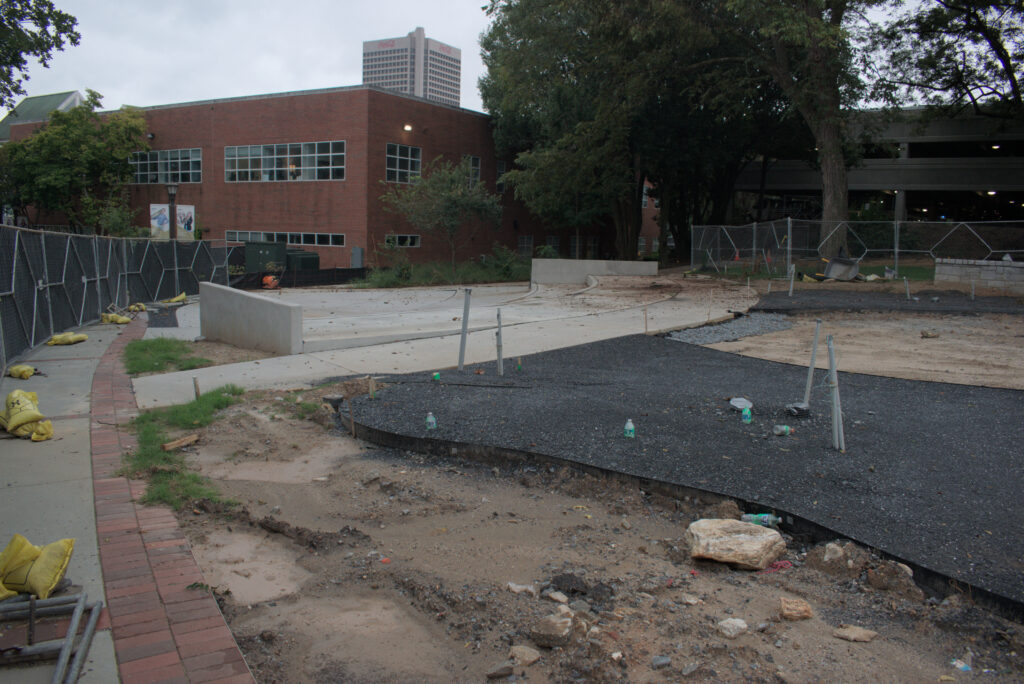
Divine Nine Plaza construction wraps up work

The Divine Nine Plaza installation is set to open this fall and will be the first of its type at the Institute. Originally announced earlier this year in April, the installation will be located between the Smithgall Student Services Building and the Student Center Plaza.

Intended to honor the nine Black Greek organizations, the space will comprise nine plots and have an amphitheater for performances. According to Tech’s website, the plaza “will offer an opportunity for NPHC [National Pan-Hellenic Council] organizations to gather and foster community engagement and programming.”

According to Clark Atlanta University, a Historically Black College or University (HBCU). the legacy of the Divine Nine dates back to “a period when African Americans were being denied essential rights and privileges afforded others. Racial isolation on predominantly white campuses and social barriers of class on all campuses created a need for African Americans to align themselves with other individuals sharing common goals and ideals.”

In order to meet this need, Alpha Phi Alpha Fraternity, Inc. was first established Dec. 4, 1906 at Cornell University in Ithaca, New York, “by seven college men who recognized the need for a strong bond of brotherhood among African descendants in this country,” according to the official Alpha Phi Alpha Fraternity, Inc. website.

Since then, eight other organizations, Alpha Kappa Alpha Sorority, Inc., Kappa Alpha Psi Fraternity, Inc., Omega Psi Phi Fraternity, Inc., Delta Sigma Theta Sorority, Inc., Phi Beta Sigma Fraternity, Inc., Zeta Phi Beta Sorority, Inc., Sigma Gamma Rho Sorority, Inc. and Iota Phi Theta Fraternity, Inc., were created with an emphasis on community empowerment and service.

In response to the historic installment, the Technique reached out to the eight active chapters on campus to hear the community’s perspective. A representative from Kappa Alpha Psi, Inc., Alpha Phi Alpha, Inc., Sigma Gamma Rho, Inc., Alpha Kappa Alpha, Inc., Delta Sigma Theta, Inc. and Phi Beta Sigma, Inc. were present during the discussion.

“Being at Georgia Tech, especially as a [predominantly white institution, or] PWI, I feel like we [NPHC organizations] try to cater to spaces where students … just have a safe space where people can really come together,” said Raphael Parent, third-year CS and a representative of Alpha Phi Alpha, Inc.

Echoing this  sentiment, the other members of the panel expressed unity, service and brother and sisterhood as core values integral to their organization.

“So coming here [to Georgia Tech] and having that environment of the Nine where you can be yourself, you can talk to people who look like you, it’s extremely important. On the national level, it’s like never being alone, no matter where you go. For example, I had to move to Texas and I already knew I had a chapter there that could support me,” said Kiera Lewis, sixth-year dual degree Chem/ChBE and a representative of Sigma Gamma Rho, Inc. Members reported feeling community input was considered throughout the process, although the installment will differ from a traditional plot, a process Parent described as “detail-oriented.”

“They will ask about, like, what type of space do students want? What type of space do organizations want for this? And so it was kind of difficult at first because I think everybody who was representing their chapter on there was expecting just a basic plot that is traditional at other schools,” Parent  said.

The process was fairly long and went through multiple rigorous rounds of approval.

“So when we realized [a traditional plot] wasn’t what we were getting , we had an initial meeting, and then they came back with like six different design plans. And so they asked us like, which design plans we liked the most,” Parent said.

Janna Stewartson, 3rd-year ME and a representative of Delta Sigma Theta, Inc., added that she appreciated the Institute’s “effort to bridge the cultural gap between itself as a PWI and the historically Black organizations.”

While representatives expressed their gratitude, there was also concern about whether the non-traditional space would truly accommodate the organizations’ needs.

“I feel like we bring out a lot more people [to our events] than there’s space for unless just NPHC is present, which is never going to be just us. I don’t know any performance that could happen there,” said Justin Buckles, fourth-year ME and a representative of Kappa Alpha Psi, Inc.

Buckles cited the BioQuad as a location that would provide an adequate amount of space.

Ashley Smith, fifth-year CS and a representative of Alpha Kappa Alpha, Inc., and Parent both shared this concern, noting that organization-wide events like probation ceremonies regularly bring in crowds of over 200.

Stewartson also voiced worries over member’s access to the space, which will be available to the general student population for booking, when plot benches are traditionally held as a space for members only.

“I’m just thinking about how hard it is to reserve rooms for our two meetings every week. And I’m not saying that students are going to mass flock the plots to reserve them, but just think about the 36,000 students that are on campus every day,” Stewartson said.

All representatives expressed gratitude for what Stewartson described as the Institute’s “first step” but look forward to continued progress.

“If  Georgia Tech continues to teach the cultural importance of what the plots are, what these social spaces are, who is allowed there, who’s not allowed there, that, to me, will then allow this to be a monument to respect of our organizations and all the things that our student leaders have done on campus,” Stewartson said.

Representatives  also listed many  factors like on-campus housing, Institute promotion, cross collaboration with non-NPHC organizations and visibility on campus as issues to be addressed.

Parent stated that he was looking forward to continuing to work with the Institute to support NPHC organizations the near future.

“Regardless, we’ll [be making] it work,” Parent said.

Smith described her overall feelings as “cautiously optimistic.”

As the campus eagerly anticipates the official completion and unveiling, the final word of the interview fell to Stewartson, who spoke of not just the installment but the steps to follow.

Posted in UncategorizedComments Off on Divine Nine Plaza construction wraps up work

A full layout of on-campus dining at Tech

Welcome to the Institute, Jackets! As new students, you’ll be needing food to fuel your many endeavors — academic and otherwise. Fear not, here is the Technique’s beginner’s guide to on-campus dining.

The Institute has three official dining halls: two on East Campus — Brittain and North Avenue  — and one on West — West Village (affectionately known by students as Willage). You may find yourself looking for something quick to eat between classes. In this case, you might want to grab something from the Tech Green area, located in the heart of campus by the Clough Undergraduate Learning Commons (CULC). The CULC itself has a coffee shop and cafe, Kaldi’s Coffee, located on the second floor of the building. Outside the CULC, students can find various food trucks offering a wide range of cuisines by Tech Green. Located in the same area, the John Lewis Student Center also has retail locations such as Chick-fil-A, Twisted Taco and Panda Express.Located behind Harrison Square, Whistle Bistro, known for their made-to-order and specialty sandwiches and soups and salads, is another East Campus dining option for students on the go. In addition to Willage, students on West Campus can also dine at Wreck Stop for grab-and-go sandwiches, along with indulging in some milkshakes at Cluck-N-Mooh.

Lastly, Tech is home to several coffee shops, including the Starbucks in the Barnes and Noble at Georgia Tech located in Tech Square and the Blue Donkeys on the ground floor of Price-Gilbert Library and the second floor of the Student Center. Additionally, students can find two Gold and Bold Coffee Roaster locations in the Krone Engineered Biosystems Building and the Parker H. Petit Institute for Bioengineering and Biosciences Building. Students frequently ask what the difference between Dining Dollars, Buzzcard Funds and meal swipes is. If you’re eating on campus, you’ll probably find yourself asking this question as well, so here is a beginner’s guide to where each can be used, what they are and when they expire.

Dining Dollars, Buzzcard Funds and meal swipes are all forms of credit that can be used to purchase food at different areas around campus. Meal swipes can be used at any of the three dining halls on campus; they may not be used at retail locations such as the Panda Express or Chick-fil-A in the Student Center and expire at the end of every semester.

Dining Dollars can be used at all campus dining halls and retail locations including food trucks, however, Bonus Dining Dollars are not accepted at food truck locations or vending machines. All Dining Dollars expire at the end of the semester. BuzzCard Funds can be used to purchase goods and services at Buzz Around Town campus merchant locations and never expire. The full list of participating merchants can be found at www.buzzcard.gatech.edu/use-your-buzzcard/#campus-service.

Posted in UncategorizedComments Off on A full layout of on-campus dining at Tech

Sumer 2023 list of events at the Institute

As the hustle and bustle of the Institute slows during the summer,  campus life quietsdown in comparison to the hectic academic year. However, for students living on-campus during the summer months, it is important to find activities to avoid boredom. Here are some campus events for those still in the Atlanta area.

NBA game 4 watch party

The Student Center Programs Council (SCPC) will be hosting a watch party for Game 4 of the NBA Finals (Denver Nuggets vs Miami Heat) on Friday, June 9 from 8:30-11 p.m. Hosted in Tech Rec on the first floor of the Student Center, the free event is open to all and no tickets are required.  Free food and beverage will be provided as well as a raffle give away for 2 tickets to Six Flags that can be used for SCPC’s Georgia Tech Night at Six Flags event in the fall. For further information, those interested can message SCPC on their Instagram account @gtscpc.

pride rally

Celebrate Pride Month this year with the Georgia Tech Pride Alliance and Atlanta Pride on Saturday,  June 17. The Pride Rally will be held on Tech Green from 1-3 p.m. This free, community-oriented event will be hosted to honor the legacy of those involved in the Stonewall Riots of 1969 that marked the first Pride. Various speakers will present during the rally. This event is open to members of the LGBTQIA+ community seeking community and for allies looking to celebrate and help amplify voices. For further information, those interested can email the Georgia Tech Pride Alliance at pride@gatech.edu.

queer coffeehouse

To close out the month of June, the LGBTQIA+ Resource Center will be hosting a Queer Coffeehouse  on Thursday, June 29 from 11 a.m.-12 p.m. in Smithgall 140 . This meeting’s prompt is “What were some of your takeaways? Come discuss what you learned this pride month. All perspectives are welcome!” 

 A recurring event hosted by the Center, the Queer Coffeehouse is a safe space for queer Jackets looking for solace and community and covers a range  of topics at the intersection of queerness, academics, identity, dating and politics. The event will be hosted and moderated by assistant director William Britto. For further information, those interested can email wbritto3@gatech.edu.

sky happiness retreat

The SKY Happiness Retreat will be held from Friday, June 23 to Sunday, June 25 in the Centennial Suite (120 North Avenue NW, Atlanta, GA) and is a well-being training offered to  students, faculty and staff. The retreat offers visitors the chance to gain “foundational stress-management skills, develop a personal evidence-based breathing and meditation practice, learn a short personal yoga practice and increase social connection and leadership skills” and can be a great way for students to learn relaxation techniques.

While the event is normally $125 for students, a limited number of students will be able to register for $65 on a first-come-first-served basis, which includes lunch and yoga mats provided.  Recommended attire is comfortable clothing. For further information, those interested can reach out to deepali.kundnani@gatech.edu or call 832-787-2815 upon registration.

tech topology

For  those interested in math and science, the Institute is hosting its second annual topology summer school from Saturday, June 24 to Wednesday, June 28. Mini-courses will be taught by Adam Clay (University of Manitoba), Sarah Rasmussen (University of Cambridge) and Rachel Roberts (Washington University in St. Louis). In addition to the mini-courses, there will be research presentations and a round of lightning talks on this year’s theme of the L-space conjecture by a range of professors from around the nation.

Those looking for further information or to register for the event in advance can do so at sites.gatech.edu/ttss23/registration.

PACE PYTHON 101

Georgia Tech’s Partnership for an Advanced Computing Environment (PACE) is offering to teach Python coding skills for free. The event, hosted online on July 20 from 10:30 a.m. to 12:15 p.m., is a beginner friendly “101” course that “introduces PACE users to analyzing scientific and engineering data using Python in a Hands-On course. Instruction focuses on basic Python skills and key features of the NumPy and Matplotlib libraries through a data analysis example.”

No prior knowledge of Python is expected or assumed, however, registration by 11:59 p.m. on the evening prior is required. Those interested can reach out to Michael Weiner at mweiner3@gatech.edu for more information. Those wishing to register can do so at b.gatech.edu/3o3mj7F. 

Posted in UncategorizedComments Off on Sumer 2023 list of events at the Institute

In response to “Pancakes versus waffles”

Here at the Technique, I respect all my fellow editors, writers and photographers alike. We are a talented and intelligent group of young journalists — however, even amongst the best of us, sometimes our opinions are just wrong.

Last semester, Technique staff photographer Tyler Parker published an editorial piece weighing the merits of pancakes vs. waffles, ultimately crowning the waffle as the breakfast king.

Now while I do enjoy a good waffle, and I appreciate his methodical approach, ultimately, I cannot condone his conclusion. It is the pancake, not the waffle, that reigns supreme.

I would first like to call into question the reliability of the author himself, who begins his piece by claiming that he personally believes that “waffles taste better than pancakes.” However, how can this be so when the batters for both dishes are identical? It is well known that many top breakfast brands including Krusteaz and Maple Grove Farms of Vermont sell one powder that can then be used to make pancakes or waffles depending on what apparatus is used to cook them. 

No, Parker does not include this in his final analysis, but this is a point of distinction to note, as it is a clear identification of bias. In this fashion, the categories Parker uses to judge the two: versatility, reliability and customizability, paired with the perspective he takes on them, are inherently biased in favor of waffles. Let us now address these so-called “merits.” 

On versatility, Parker points to the fact that there are more forms of waffles, and while I disagree with his analysis that a waffle cone should be counted as a true waffle, I agree with this point. Aside from the french crêpe, there really are not too many versions of the pancake. 

And ask yourself why is this? In this great country of capitalist innovation, there is an adaptation of nearly everything. 

A simple walk down even the most mundane of aisles in the grocery store will reveal a plethora of “takes” and “reinventions” of the wheel. Why then, has the pancake remained relegated to its initial form? 

The answer is simple: the pancake does not need any adaptations. Its perfectly golden, fluffy center and crispy edges are all we could ever ask for. There have been no “upgrades’’ because there are none to be made, the pancake’s simplest form is also its highest form.

Conversely, the waffle finds so many versions of itself smothered in various fruits, proteins, ice creams, jams and the like  because it cannot stand alone. While the neat “cubbies” are convenient for holding whatever you so choose, the structural integrity of the waffle itself is often called into question for this very reason. 

How many times have you found yourself sat at the table with an unreasonably thick waffle? The only way to take down such a behemoth is to lob it on with as many toppings as one can handle.

The pancake calls for a simpler set of adaptations, if any at all — a delicate sprinkling of chocolate chips here, a dash of blueberries there, topped off with a pad of butter and light pouring of any syrup of choice is all one needs to reach nirvana. 

And we all know that the star of chicken and waffles is that juicy-on-the-inside, crispy-on-the-outside chicken! Waffles make a cute side though.

Striking again in the vein of simplicity and on the side of the common man is the technology required to make the pancake, which only relies on a hot surface, any pan and any flipping tool. 

Whereas, the waffle requires an entirely separate apparatus and power source that can be used almost exclusively for waffle making. 

In line with this sentiment, there is no way to choose what size (or thickness) waffle you want, unless you are going to purchase and operate several separate waffle makers of different sizes. 

And we’ve all been there when you don’t have quite enough batter to make another full waffle, but also have too much to wash down the drain. The only alternative is to make a wimpy quarter-waffle or shallow half-waffle. 

Either solution leaves you unsatisfied and yearning for more. The pancake on the other hand, can be customized to be any thickness or size the maker so chooses — simply pour more or less batter.

Onto Parker’s point of reliability, while it may be true that due to the waffle maker, there has been a greater standardization of the waffle than the pancake, I would like to argue that pancake making is an art, a sport, a craft. 

One does not simply, haphazardly sling batter to be crushed between two metal plates, wait for the tell-tale beep and expect mastery. 

No — one must learn the way of the pancake! Anything worth having is worth a little effort. 

At the end of the day, this is a relatively small learning curve to overcome. And be honest here — has a rotation of the waffle machine ever been as oddly satisfying as the perfect pancake flip? 

Now more than ever, it is vital that we engage thoroughly and think critically about the type of society we desire to be — one that succumbs to the gaudy but short-lived promise of the waffle? 

Or one that secures and upholds the blessings of the pancake to ourselves and our posterity?

Posted in UncategorizedComments Off on In response to “Pancakes versus waffles”

Comparing off-campus Housing options

Historically, Institute on-campus housing has been a central part of the college experience for many Tech students. However, as traditions change, more and more students are considering living off campus.

As students weigh their options, we, at the Technique, spoke to a few students about their housing experiences, each of which provided a different perspective. 

Here are interviews with Iman Emdad, fourth-year PUBP, and Madeleine Paulsen and Tymirra Smith, both HCI graduate students, on their off-campus arrangements.

Technique: Why did you choose to live off campus?

Emdad: There was literally no space left on campus. As someone who was trying to get on campus housing the previous year, I was pushed off the waitlist and told to re-apply when they opened the application to people who hadn’t lived in GT Housing during the pandemic. 

I really didn’t have much of a choice unless I wanted to live in one of the women’s dorms, or to pay extra and join an LLC like WST [Women, Science and Technology]. 

Paulsen: Living off campus helped me separate school from everything else going on in my life. I lived on campus for two years and had difficulty feeling like I could fully unwind.

For my mental health, I realized I needed to have a physical separation to help my mental one.

Smith: I chose to live off campus, in a suburb of Atlanta with my parents  because it was the most affordable option for me. 

My parents live close enough to Georgia Tech for the drive to not be too long.

Technique: Where have you lived off campus?

Emdad: I live at Atlantic Station.

Paulson: Broadstone Apartments in Midtown. I have lived in apartment-style housing with a shared living room and kitchen with one roommate.

I don’t think there are any undergrads living in the facility, it’s mostly adults with full-time jobs and a few grad students like myself.

Technique: Any tips to finding roommates?

Emdad: I got lucky with what the leasing office assigned me. I would say that it’s not so much who you live, with but your ability to communicate what you need … having a rich inner dimension to your life whether it’s hobbies or friends will help making college feel like home.

Paulsen: Be up front with your preferences — both your needs and your flaws. Owning who you are as a roommate will help manage expectations and start to create a safe space where they feel comfortable sharing more about themselves. 

Communicate with your roommate about how you are feeling — don’t be passive with how you express appreciation or frustration. People don’t know how you feel if you don’t tell them.

Technique: Do you have a favorite place you’ve lived during your time at Tech?

Emdad: Atlantic Station! Feels way more residential than the high-rises and you don’t get nearly as much noise/light pollution. 

Paulsen: I like where I am living now in Midtown because it is walking distance from campus. I can balance my focus and be intentional with my space. 

When I am walking to campus, I am in a school-centered mindset. When I am home, I am in a self-care mindset. 

Technique: What has been your experience commuting?

Emdad: It’s hard if you don’t have your own car. As someone lucky enough to have a car, I would say that I mostly enjoy commuting … so long as no one else is on the road! 

Atlanta traffic is horrendous, and you should mentally prepare yourself for rude drivers.

Paulsen: I really enjoy walking and getting a little exercise. During my walk, I usually call my family and check-in with what they are up to.

Smith: It can be really rough commuting, especially when it’s raining or there are lots of accidents which can double the length of the drive. So, I try to schedule my classes around rush hour so I can avoid it.

Technique: Pros to living on campus versus off?

Emdad: On-campus makes you feel like your campus is the whole world. It’s good for freshmen, and I would say integral to school spirit and culture. 

I have never felt more loved than in the dorm hall of my first year, and I feel like the physical proximity to my peers did that. 

Paulsen: Off campus, I feel I can more fully unplug from the academic side of things. I can go home and think more about taking care of myself outside classes, assignments and deadlines.

Smith: Your mom isn’t on campus, so that little bit of distance is always a plus. 

But on a more serious note, having your own space and also being able to easily walk to campus is a plus — especially if you have a lot of lab-based classes! It also makes it easier to make friends and connect with other students.

Technique: Cons of living on campus versus off?

Emdad: You don’t share the camaraderie of going to the same school. I would say that practically everyone is a stranger — which might be empowering if you want to walk around in your pajamas and feel confident that no one in your “real life” would see you. But I would say it gets balanced out by the number of things you get to do outside of school.

Paulsen: Not a whole lot here — sometimes I need to wake up earlier and manage my schedule to include travel time, but I am more used to this now.

Technique: What was the process of signing your lease like?

Emdad: Entirely online. After we toured, she walked us through signing a lease online, which was intimidating to read through as it’s super legally binding and can affect your credit score! But thankfully, we did get pre-approved. 

I am curious to see what that process looks like for low-income folks and if they have more trouble signing the lease.

Paulsen: The process was straightforward. The leasing office was very helpful in explaining the process and the components needed to get approved. 

My biggest advice is to ask questions when you are confused. Even if the person you are asking does not know the answer, they will likely know where to point you who can.

Making decisions about where to live can be challenging. A common thread between all three interviewees is taking note of your unique wants and needs and working from there. 

Asking for assistance from someone who’s been through the process is always a good idea, and can provide an extra level of understanding to help you get through the process. 

Ultimately, your living space will be where you carry out many of your day-to-day tasks, so make sure your decision is one that you are comfortable with for the long run.

Posted in UncategorizedComments Off on Comparing off-campus Housing options

What to wear to the Career Fair… and what to avoid

So there you are, the morning of the Career Fair, prepared with ample cover letters and carefully crafted, one-page resumes printed well in advance documenting your years of meticulous work. 

You have researched the hundreds of attending companies, narrowed them to a few key targets and have rehearsed your pitch thousands of times to any and all that would allow. Perfection.

But as you catch yourself in front of the mirror, you realize you overlooked one thing: your outfit.

Worry not Jackets, here are some general rules and tips to follow that will help your attire become as polished as your resume.

DO plan to wear business professional attire. 

In the same way that you worked to showcase your best on your resume, you want to do the same with your clothing. 

Your goal is to effectively present how you would appear, in your place of employment, in the position you are applying for. You want recruiters to be able to clearly and confidently visualize you in the role. 

You will not only fit the part, but look the part.

DO iron clothes out the night before. Chances are, the fine china of your wardrobe has been sitting there for a while, so make sure to press out any wrinkles or fine lines that may have formed. If you really want to show an attention to detail, a soft crease where natural could help go the extra mile, just be mindful to not overdo it.

DO dress for function. Wear clothing you are comfortable in and can actively wear for several hours. For women especially, there is often a push to wear articles of clothing, such as high heeled shoes, that are long held conventions but horrible for function.

At the Career Fair, you will likely be walking around and waiting in lines for several hours. 

Your focus should be on making your best presentation, not any discomfort your clothes may cause you.

In line with this sentiment, presentation is not only limited to what you wear, but how you wear it. Constant fidgeting with an ill-fitting tie or an itchy jacket will distract from your otherwise competent appearance.

DON’T add anything “extra.” The goal here is to present as clean, practical and capable. Stay away from loud, eye-catching colors and zany patterns. 

Your outfit should allow the attention to be on your specific skills, talents and qualifications relative to your career field.

You will want the main colors of your outfit to match and be neutral. Example include a black or navy blue blazer and slacks paired with a white button down shirt and brown or black closed toe shoes. Accents should be used sparingly and to compliment.

DON’T get caught up in brand names. What matters most is the presentation of what you have, not where it comes from. 

You are much better off in a sharp ensemble of blazers, button downs and loafers from Marshalls, than an ill-fitting suit from Ralph Lauren.

Now that you have the proper knowledge to look, feel and showcase your best, you can focus on what matters most: pitching your hard earned accolaes and experience to the company of your dreams. 

Most of all, remember confidence is key — good luck Jackets!

Posted in UncategorizedComments Off on What to wear to the Career Fair… and what to avoid