Author Archives | Jason Sobieski

Pho & Philadelphia: a historical bowl of Vietnamese food

Pho, the heartwarming Vietnamese noodle dish, is traditionally chock-full of a simmered broth, banh pho noodles, thinly-sliced beef and with sides of bean sprouts and herbs to add into your bowl. (Photograph courtesy of Deashoot at Flickr.)

In The Triangle’s last issue, the food that was discussed was ramen, the beloved classic dish that began in China before becoming a Japanese staple. And while ramen deserves the love it gets, I mentioned that there is a close relative in terms of noodle soups to ramen. You may know it, you may love it, you may worship it or you may be blind to it, but now it is time to give the proper respect to a Vietnamese dish: pho.

Pho isn’t talked about as much as ramen, but the “hangover cure from heaven” should get the recognition it deserves. This noodle soup is full of delicious broth, wide noodles, many different meats and tons of other additions. If you take a look around Philadelphia, you will realize that pho is a much bigger deal in this city than ramen. Why, you may ask? There is a simple answer: late 20th century Vietnamese migration.

Before the influx of Mexican immigration that has occurred in the 21st century, there were the Vietnamese refugees of the 1970s looking for a more prosperous life overseas. The escape from communism and a reclining economy meant a westward shift, and the United States seemed like the most viable option. A large population of those refugees made their homes in Philly, leading to many Vietnamese people being given the opportunity to start a business and a new life for themselves in the City of Brotherly Love.

According to the website PhoForever and other historical accounts, pho began in Northern Vietnam in the 1880s from a combination of Chinese and French influences, due to France beginning to turn Vietnam into French Indochina in the late 1800s. After the split into North and South Vietnam in 1954, the dish began to gain popularity in Southern Vietnam and started including the accoutrements that are normally found in pho today.

Speaking of pho today, where can you find good pho in Philadelphia? But honestly, to better pose that question: where can’t you find good pho in Philadelphia?

Vietnam Restaurant. Pho 75. Cafe Pho Ga Thanh Thanh. Pho Saigon. Pho Ha Saigon. Le Viet. Cafe Viet Huong. Pho Xe Lua. Vietnam Pho. Ngon Ngon Restaurant. Huong Tram. The list could go on for days. But this is what you need to know.

The benchmark for quality Vietnamese pho in Philadelphia is Vietnam Restaurant. The Lai family opened it in 1984, and this restaurant is where it really all began. While that may be the benchmark, some pho spots hold the titles of top pho in Philadelphia. Pho 75 seems to be the general consensus winner, as the cash-only South Philly spot on 11th and Washington doles out amazing pho and nothing else. The only other things you can buy on the menu are dessert and drinks, all of which are $2 or cheaper.

Another real deal spot is Le Viet. This modern yet traditional, upscale restaurant is serving up pho dac biet, which is the pho equivalent of a meat lovers’ pizza. Le Viet’s pho dac biet includes flank steak, brisket, meatballs, tendon, tripe and sliced steak in the broth. In contrast to Pho 75’s style, Le Viet has a huge menu with countless Vietnamese classics.

While beef pho is the traditional way, chicken pho also has its place in the debate. The ideal spots to go are Cafe Pho Ga Thanh Thanh and Thang Long, as these Kensington spots are dishing out delicious chicken pho for great prices. At Pho Ga Thanh Thanh, the elusive chicken pho is ordered by getting the broth, a half or whole chicken and the accompanying dipping sauce to combine all of the flavors. All that’s really needed is a lime. And while the pho ga is also a staple at Thang Long, the real winner is shrimp wonton, roast pork and roast duck pho. The kicker? It’s only $9. Talk about value. But, not to be forgotten, Thang Long is also home to quality vegan pho options! They offer tofu, meat-free meatball and chicken pho.

Another Kensington joint is Cafe Mi Quang, which is doing pho and everything Vietnamese for under $10. However, their special is their namesake, the mi quang! This noodle soup features a turmeric broth, fresh herbs and spices, ground peanuts and toasted sesame crackers.

Moving over to the Fishtown area, Stock Fishtown does proper pho, especially their chicken & vegan mushroom pho. This is not to be confused with their Stock Rittenhouse location, which does mostly Vietnamese and Southeastern Asian cuisine but not pho. Another sister soup of pho is the bun bo hue, which is made with a lemongrass broth and a lot of chilis, filled with thick noodles, beef, tendon, pig feet and ham slices. This can be found at Cafe Diem in the heart of the Little Saigon neighborhood of South Philly.

A few more spots worth mentioning are Ngon Ngon Restaurant and Pho Xe Lua. Ngon Ngon has a 16-hour simmer period for their broth, with their bone-in brisket and marrow and split meatballs creating a combination of flavors in their already rich broth. If you find yourself overwhelmed by the hustle and bustle of Chinatown, the hidden gem in the sea of neon signs is Pho Xe Lua, which is nestled on 9th and Race streets. The secret form of Vietnamese escapism is loved by many and cherished by all.

Aside from pho spots, there are a host of many Vietnamese restaurants in Philadelphia that are serving up high-quality fare. Banh Mi and Bottles is a new combo eatery, offering over 200 craft beers with their authentic banh mi sandwiches. They also have real deal cocktails, tamarind wings and scallion corn to bat. Nam Phuong has killer broken rice, vermicelli with pork chops and a straight-out-of-Ho Chi Minh lotus root salad. Their clay pot fish dish is as traditional as you can get.

However, the true dark horse of the Philadelphia pho scene (and this week’s hidden gem) is Cafe Viet Huong. This big dining room on 11th and Washington offers a warm embrace every single time. It’s reliable, it’s fast, it almost always has seating and it will never fail to warm you up from the inside out. Their absurdly large menu offers something for everyone in the entire family tree, but their real winner is their classic pho. Cafe Viet Huong, thank you for being a failsafe.

Philadelphia is full of Vietnamese culture, mixed with rich history and a Vietnamese population big enough to warrant some serious respect for the communities that have formed in this northeast city. If you haven’t tried pho yet, I highly suggest taking a trip to one of these spots. If you’re already a fan and I missed one of your favorites, feel free to write in to The Triangle! See you next Friday, folks!
Posted in UncategorizedComments Off on Pho & Philadelphia: a historical bowl of Vietnamese food

Mayor Kenney keeps food trucks on campus with veto

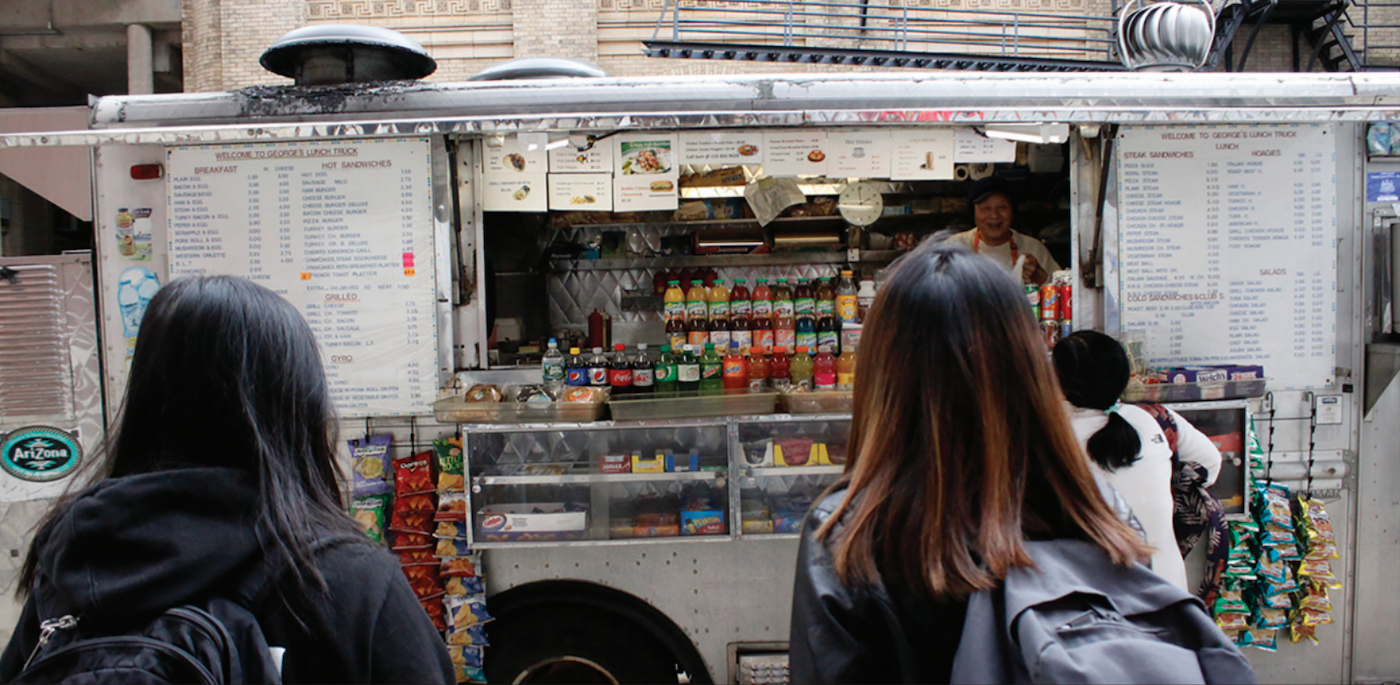
Food trucks are an integral part of Drexel’s campus. From the rows of them on Market Street to the iconic Food Truck Alley behind Main Building, food trucks make Drexel what it is. (Photograph by Casey Wood for The Triangle.)

For the third time in the past five years, Drexel has tried to restrict food trucks on campus with the help of Philadelphia’s City Council. Right before the end of Fall Quarter in 2019, West Philadelphia Councilmember Jannie Blackwell introduced a bill at the request of Drexel that would ban the vendors on Market St. between 33rd and 34th streets. The university proposed removing food trucks from that location in order to improve public safety conditions and issues with high volumes of traffic. As compensation, the university would relocate these food trucks closer to the residence halls, where safer business could be conducted.

The requests to restrict food trucks has become a citywide movement over the years, which is especially encouraged by larger businesses that are feeling threatened. In 2019 alone, City Council passed two bills that banned street vendors on Spring Garden St. between Broad and 16th streets right on the Community College of Philadelphia’s campus as well as in the far northeast region of the city. As food truck vendors have noticed, the locations they are banned from are often highly frequented areas that guarantee successful business. By moving the vendors farther away from these areas, their profits dramatically decrease, threatening their businesses.

As a result of the previous bans, it did not take long for food truck vendors to react to the new legislation. On Dec. 10, the Philadelphia Mobile Food Association (PMFA) posted a petition on change.org titled “Tell Drexel and Philadelphia City Council to keep food trucks!” The petition stated, “This is one of the last open vending locations in the city of Philadelphia and it needs to be preserved.” The petition almost immediately caught the eye of the Drexel community as thousands started signing their names in solidarity with the vendors. When explaining why they signed the petition, one student stated, “In addition to being an important part of the local culture of Philadelphia, food trucks are an essential low-cost food option for not just undergraduates but also graduate students, staff and faculty.”

On Dec. 12, the PMFA showed up to the City Council session with the petition. Regardless, Blackwell decided to continue with the vote for the bill. Everyone but one councilwoman, Helen Gym, voted for the food truck ban. “Today’s city council session didn’t work in our favor,” reported the vendors on the online petition that day. The only thing that would be able to stop the bill from being executed was Mayor Jim Kenney.

Since Mayor Kenney was at the end of his four-year term, he was able to take advantage of the pocket veto. This trick basically allows the mayor to not sign bills he does not support at the end of his term, thus leaving them void at the start of the new year. The mayor pocket vetoed six bills, among them being the controversial food truck ban in University City. These were the first pieces of legislation passed through City Council that the mayor has rejected during his first term. In his letter to city legislators, Kenney wrote, “There has been a significant outcry against this bill from the affected community […] further discussion is warranted before imposing such a sweeping ban.”

In response to the mayor’s decision, the PMFA declared their petition a success, exclaiming “Thank you to everyone who supported our fight! You’ll continue to see trucks on 3300 Market into 2020!” The mayor’s unexpected decision was a victory for Philly food truck vendors and will possibly discourage the wave of street vendor bans in the city, at least for a little while.

Posted in UncategorizedComments Off on Mayor Kenney keeps food trucks on campus with veto

Philadelphia is chock-full of authentic ramen spots to try

The signature broth at Terakawa Ramen is notorious for its 48-hour simmer period, making it a rich, deep and layered flavor. (Photograph courtesy of Wikipedia Commons.)

Last week’s article for this column hit on all the soup destinations here in Philadelphia, but there were two powerhouse soup dishes that were purposefully left out: pho and ramen. As a lover of food and culture, I felt it unjust to group those two dishes into the same article about so many other fantastic soups. These bowls of broths, noodles, meats and more are not just a soup — but rather, a craft. The first of the two will be broken down in this week’s article: the well-known and forever loved ramen.

Where do you begin to look for ramen in Philadelphia? Most folks would ask a local expert or turn to the world wide web, both of which are viable options in the 21st century. If you phone a friend, odds are you’ll be sent to the Fishtown area to find a good bowl of happiness on your own terms. There are simply too many good spots.

If you decide to go the sprawling expanse of the Internet, there is a general consensus on which ramen joint reigns supreme here in Philly. You will be sent to a simple website with a bountiful bowl of ramen pictured sitting right in front of you. Written around the inside curvature of the bowl are two words: Neighborhood Ramen. This Queen Village spot is where the search for authentic Philadelphia ramen begins.

Given the honor of Best Ramen by Best of Philly 2019, Neighborhood Ramen is a 20-seat, cash-only BYOB with nine items on their menu. They have five different styles of ramen, one brothless ramen and three sides — gyoza, a sesame salad and oshinko. Their ramen styles range from their shio — a chicken broth with straight noodles, dashi, Japanese roasted salt, niboshi oil and a lot more — to their yasai — a vegetable dashi broth filled with wavy noodles, roasted mushrooms, menma, shiso oil and ajitama. Their brothless noodles may lack a hearty foundation, but that is made up for with a jidori egg yolk to serve as a binder. They’ve thought things through.

If a hole-in-the-wall spot isn’t where you prefer to dine, the next name should ring a few bells: Cheu Noodle Bar in Fishtown. The reason Cheu should sound familiar is because Philadelphia’s infamous anonymous food critic, Craig LaBan, gave it two bells (out of his four bell rating system) when Cheu opened in 2013.

Cheu does small plates along with their main six styles of bowls. Their namesake ramen are their matzo ball brisket ramen (wild, right?) and their miso ramen with pork shoulder and a soy egg. While Cheu only has two types of ramen on the menu, they are drastically different bowls that each offer an entirely different experience.

If high quality food isn’t enough, Cheu also serves beers — including Ardmore’s own Tired Hands Brewing on tap — wine, cocktails, tea and sake by the glass or carafe. This is a place that is not only embracing the culture of the food it prepares, but also the alcohol-infused food scene of Philadelphia.

If you get off the SEPTA at the Girard stop in Olde Kensington and Fishtown, you’ll have to only walk mere feet to find the next location: Da-Wa Sushi and Ramen. Tourists come for the sushi, regulars come for the sushi, locals come for the sushi. But the real star of this place? Their ramen. Da-Wa opened in Dec. 2018 by a husband-wife team: Joe and Ellie Kim.

Joe Kim spent over two decades of working in the restaurant industry after moving to New Jersey from South Korea at age twelve, and he finally decided to open up Da-Wa. He has perfected his sushi techniques, and while articles have been written about the prowess of Kim’s sushi, his shoyu, cha shu and veggie ramen are also the real deal. And they’re only $10 or $12 a bowl.

Moving west across the city, the next up is Morimoto at 723 Chestnut Street. This is Stephen Starr’s flagship Japanese restaurant, and while the Philadelphia food savant owns a host of restaurants, this one is a little different. It takes Japanese cuisine and puts it on a pedestal. Their prizewinner is the Morimoto Omakase: a $125 prix fare tasting to fully experience “the essence of Morimoto’s cuisine.”

In a menu full of hefty price tags, there must at least a few outliers that stick out, and that’s where Morimoto’s ramen comes into play. The Morimoto ramen soup is only $14, and the Iron Chef’s chicken noodle soup coming in at under the price of a large portion of dinner entrees in the city is mildly astounding. If not the Morimoto ramen soup, there is the miso soup or the yasai ramen, which both serve as viable and delicious vegetarian options.

Next up is Hiro Ramen House on 11th and Chestnut. They are a no-frills ramen spot doing absurdly good ramen. To many, this may very well be the best ramen. Hiro Ramen House is getting the “Ramen Hidden Gem” award here. If you’re a local with insider knowledge, odds are you’re making your way to Hiro. And if you want your tastebuds to feel the wrath of intense chili oil, try Hiro’s own “Gates of Hell” ramen, which is sure to pack a punch.

The last two spots to mention are Nom Nom Ramen and Terakawa Ramen. Nom Nom, located on 18th and South, is the proprietor of bringing authentic Hakata-style tonkotsu ramen to the Rittenhouse Square area. A 24-hour plus process goes into making each bowl, starting from pork bones and ending with the assorted accompanying flavors that go on top to create a beautiful bowl of ramen. The biggest difference of Nom Nom has to be their noodles — Hakata-style and boiled to your liking. The customer’s needs are taken very seriously at Nom Nom.

The final spot is a friendly and familiar name: Terakawa Ramen. While their original location is in Chinatown, Terakawa also has a location in University City, just feet from the Fresh Grocer on Penn’s campus. To outdo Nom Nom, Terakawa’s broth has a two-day simmer period before being served to customers. This method is followed by their head chefs, whose recipes hail from the Kumamoto region of Japan. These cultural differences between distinct regions highlight just how different ramen is.

As for the noodles, they make traditional Kyushu noodles — a lighter-colored noodle that are actually egg noodles. And unlike most ramen spots, the noodles are cooked al dente while they are boiled, allowing them to finish in the broth once they are added. But here’s the kicker: almost every bowl of ramen is around $11. A 48-hour simmer process of a traditional Japanese recipe for $11 almost seems too good not to try at least once. From their signature Terakawa ramen to their mayu ramen (made with mayu oil, coming from a dark leek with crushed garlic oil), Terakawa offers probably the most expansive ramen menu to bat. This may be the way to go for your first time trying real-deal ramen.

Of course, what’s a ramen list without Drexel’s own Ramen Bar? It may not be out of this world good, but it sure as heck delivers. That place makes authentic, quality ramen and is consistently a good place to go. Never take Ramen Bar out of your rotation, folks.

That’s the lowdown on the ramen scene here in Philly — and that’s barely scratching the surface — but tune in next time for info on the lesser-known but equally delicious noodle bowl: pho!

Posted in UncategorizedComments Off on Philadelphia is chock-full of authentic ramen spots to try

With winter comes frostbite, frostnip and hypothermia

Hiding from the harsh winds with lots of layers is always the proper move for dodging the worst cold in the winter. (Photograph courtesy of Maz Piel.)

Don’t be fooled by the holiday carols singing praises of Jack Frost — frostbite is a very real winter danger. As the days grow shorter and winds grow stronger, chances of frostbite can increase significantly, along with other seasonal illnesses.

What is frostbite? Frostbite occurs when skin is exposed to extreme cold for elongated periods and it starts to freeze. Penn Medicine lists frostbite as “the most common freezing injury.” Extremities, such as fingers and toes, are more at risk, so remember to wear your gloves when traveling to and from classes or other outdoor activities.

What may be referred to as frostbite in day-to-day life is often more likely to be frostnip, commonly experienced during the winter months — especially here in Philly. Frostnip is when the skin turns cold, red and tingly but can quickly be reversed and raises little concern.

In terms of time and temperature, frostbite likelihood is at it its highest when the temperature drops below zero — with or without windchill —and can also be a risk when temperatures reside around 10 degrees Fahrenheit.

Bob McNamara, chair of emergency medicine at Temple University’s Lewis Katz School of Medicine, attested in a Philadelphia Inquirer article earlier this year that there are rare cases where individuals may lose a limb to frostbite.

In addition to frostbite and frostnip, hypothermia is an even more severe winter malady. Extreme physical activity and loss of body heat exceeding the speed of body heat generated can lead to a significant drop of body temperature. If the normal body temperature (98.6 degrees Fahrenheit) drops below 95 degrees, the medical emergency known as hypothermia can occur and quickly become life-threatening.

Hypothermia occurs most frequently when an individual finds themself in bodies of cold water — think Jack Dawson in “Titanic.” Victims of hypothermia are in deadly need of medical attention, and frostbite often follows hypothermia as the body begins to shut down.

More at risk than the average student traveling relatively quickly through the winter conditions are those forced to live on the streets. The 2018 Annual Homelessness Assessment Report claimed over 552,800 individuals were homeless during January 2018, 35 percent of which (over 193,000 people) were unsheltered. During the same time, Project HOME, a nonprofit aiding persons in need of a safe haven in Philadelphia, reported 834 individuals on the streets during January 2018.

Unfortunately, not everyone has the ability to go indoors and avoid the brutal attacks of Jack Frost. Appropriate layered outdoor wear, shortened time spent outdoors and avoidance in general can aid the fight in preventing frostbite. It’s time to trade in fall gloves for winter mittens, which are said to keep hands warmer due to the fingers all together maintaining heat instead of separated by fabrics.

Take care of your body this winter, but also be on the lookout for your friends. It’s worth taking care of everyone in this weather.

Posted in UncategorizedComments Off on With winter comes frostbite, frostnip and hypothermia

Boyle & Lambrinidis discuss transatlantic relations

At the historic Philadelphia’s Independence Visitor Center, Congressman Brendan F. Boyle met with Stavros Lambrinidis — the European Union Ambassador to the U.S. — to discuss transatlantic relations. The discussion was moderated by Ronald Granieri, the executive director of the Center for the Study of American and the West Foreign Policy Research Institute. The event lasted from 4 to 5:30 p.m., and guests could only attend if they received an invitation.

Congressman Boyle represents Pennsylvania’s second Congressional District, which covers Philadelphia east of Broad Street, north of Vine Street and into the far northeast of the county. He is currently serving his third term in Congress but served three terms in the Pennsylvania House of Representatives before, representing the 170th District. The congressman formerly served on the House Foreign Affairs committee and, according to govtrack.us, 27 percent of bills that he sponsors relate to international affairs.

Ambassador Lambridinis has an abundance of diplomatic experience and has been a strong voice in European politics. After he completed high school in Greece, he studied at Amherst College in Massachusetts, receiving his law degree from Yale Law School. Afterwards he practiced law in Washington D.C., where he then served as president of the Committee for Human Rights in the Bar Association of D.C.

Lambrinidis became a member of the European Parliament in 2004, representing the Panhellenic Socialist Movement party. He was the third Vice President of the European Parliament before returning to his native Greece to serve as their Foreign Minister. In 2012, he was appointed as the first European Union’s Special Representative for Human Rights.

Before the event, the congressman took the ambassador on a private tour of Independence Hall and the surrounding area at 2 p.m. Once the event started, both men gave their opening speeches. Lambridinis continued by dismissing the myth that Europe is huge regulator and very bureaucratic. He said, “We took the laws of 28 countries and created one free market.” Lambridinis concluded by acknowledging that both the U.S. and E.U. recognize Russia and China as common economic threats.

Both men were asked by Granieri if Americans take the relationship we have with the EU for granted. Boyle said that if someone were to run on being either pro or anti-EU, it would not gain them political currency because it’s not an issue Americans vote on. He stressed the importance of our leaders not taking that relationship for granted and having them always maintain a strong alliance with the EU.

Both men had a humorous interpretation of the United Kingdom’s issue of Brexit. The ambassador said that the U.K. cannot expect to trade with the U.S. after leaving the EU if they break the Good Friday Agreement of 1998, which was a peace agreement in which both the British and Irish governments agreed on how Northern Ireland would be governed.

Boyle recounted when he took part in a congressional delegation, led by House Speaker Nancy Pelosi, that went to both the U.K. and Ireland to deliver the message that no matter the final outcome of Brexit, it must not harm the Good Friday Agreement. The ambassador spoke on the idea of the EU as a nanny state and stated that he is bracing himself ahead of the next election for all of the times the word “socialist” will be thrown around.

Lambrinidis touched the issue of healthcare, which he said was “a politically loaded topic in the U.S.” and said, “In Europe, it cost us $10,000 per person to cover fully the health of everyone in the European Union. In the U.S., it takes you, the government, $15,000 per person to cover not everyone. So you tell me who’s the best capitalist. We don’t waste or throw our money around.”

After the event concluded, the congressman gave the ambassador a miniature Liberty Bell as a gift and reminder of his visit to Philadelphia. Events like these are especially necessary at a time when the United States is attempting to deal with its adversaries, like China, Russia and North Korea. It is good for the American public to reaffirm who has our backs on the world stage.

Posted in UncategorizedComments Off on Boyle & Lambrinidis discuss transatlantic relations

Philly set to strike back with another youth climate protest

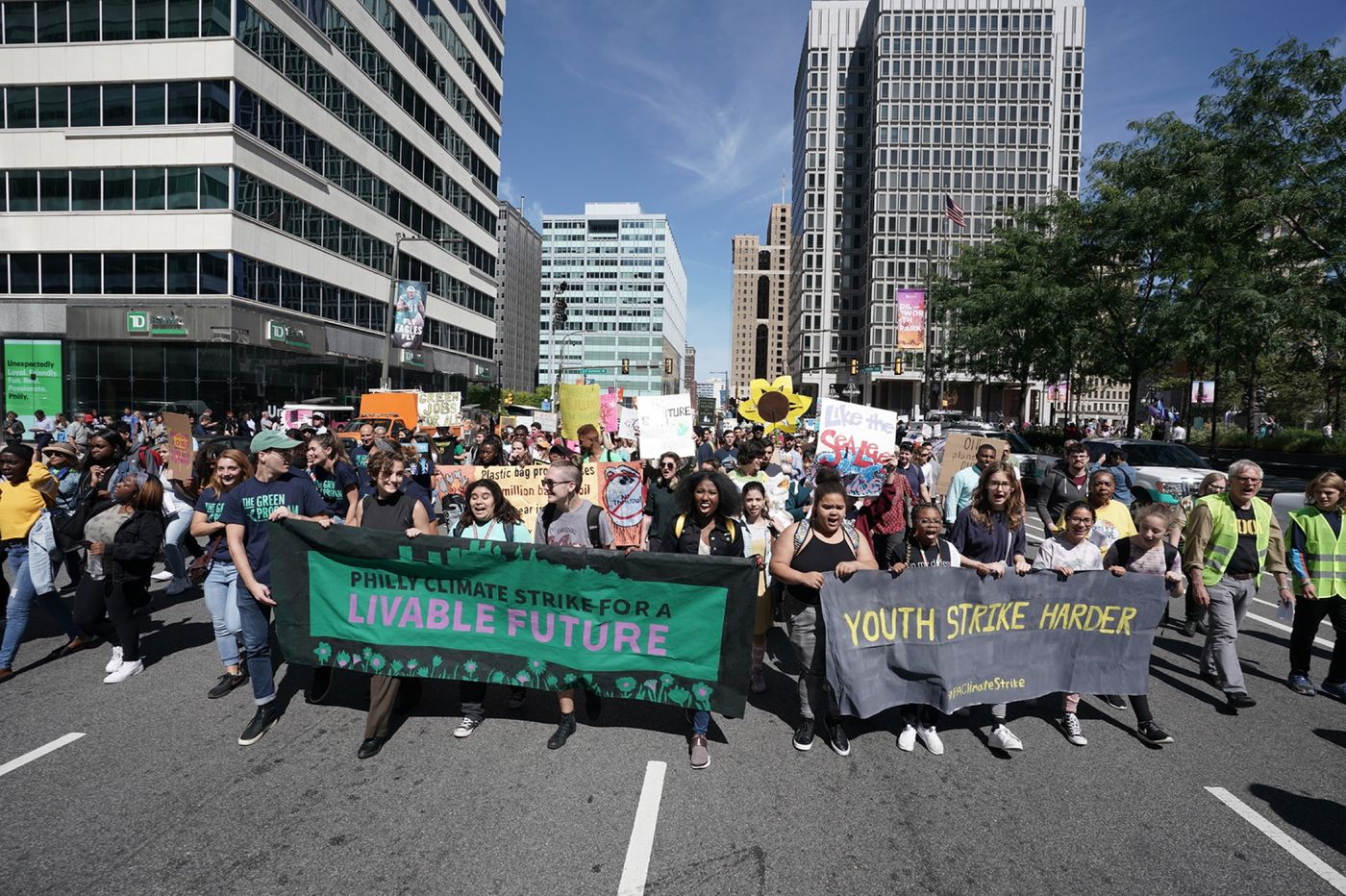
The first climate strike march in September had very different weather conditions than Friday’s protest will, as shown above with this powerful marching snapshot. (Photograph courtesy of Julian Meehan at Flickr.)

On Sept. 20, 2019, over 3 million people worldwide participated in the Global Climate Strike, making it the largest day of action for addressing climate change. The historic strike served as a message: increasing numbers of people want to see world leaders doing more than simply sharing words of sympathy for climate tragedies. While the protest gained social media praise from various politicians, it was not enough to pass a Green New Deal. For this reason, the primary organizers of the previous climate strike, Sunrise Movement, have been pushing for another large-scale day of action on Dec. 6.

The city of Philadelphia will be having their own youth protest on Friday, organized by Sunrise Philly, 350 Philly and Climate Strike PA. Set for 11 a.m. to 2 p.m. at City Hall, the event is expected to be just as popular as the previous one. The list of speakers features a wide array of perspectives, from Philadelphia public school students to a Pennsylvania State House Representative.

During Philadelphia’s last climate strike, thousands showed up, marching up and down the streets of Center City demanding change. A large portion of the demonstrators were high school and college students. For those attending public school, their attendance at the strike meant an unexcused absence, a decision that led to public criticism of the School District of Philadelphia.

This time around, SDP Superintendent Dr. William Hite released a statement that excused absences for the climate strike as long as students brought in a note of approval from their parents or guardians. In a letter directed to parents, Hite stated, “As a school district, we encourage our students to be actively engaged citizens who are knowledgeable about current events… Above all, we want them to know we value their voices and their right to self-expression.”

Hite’s letter further formally addresses climate change as an issue that has “very real consequences on people’s lives.” This decision has received praise from students and faculty alike, both groups agreeing that it is a great first step towards getting leaders to at least acknowledge the legitimate threat climate change poses.

However, skeptics of this statement remain, as does doubt on the true effectiveness of youth-driven protests like the climate strike. President of Drexel Democrats Rudi Weinberg commented on the drawbacks of youth-organized efforts, stating, “I do not think that our protests are as effective as they could be because we are not yet as organized as older generations. We do not have the money to properly lobby our government, which sadly is what is required with many lawmakers to be taken seriously.”

Sunrise Drexel HUB Coordinator Melanie Attieh, on the other hand, feels no reluctance on the power of these movements. In an interview, Attieh stated, “Looking back, history shows us that societal transformation only comes when millions of people take to the streets to demand it. The fact that we have about 10 years to change doesn’t give me hope, but seeing our youth skip school to protest for their lives and futures really puts everything in perspective, and not just for me but for the city.” As a member of Sunrise, Attieh helped organize a strike in her hometown of Bethlehem, PA for the September day of action and is excited to spread the Sunrise legacy to Drexel as a new student organization.

Aside from Drexel, our UPenn neighbors on the other side of University City have been working closely with climate change related issues through various student organizations, one of them being Fossil Free Penn. The organization’s main mission is to get answers on the nature of Penn’s endowment funds from the fossil fuel industry. Ultimately, students and faculty want their concerns addressed through a town hall on where this money is going and what the university is doing to lower carbon emissions. So far, students have been holding weekly sit-ins called Fossil Free Fridays to raise awareness.

As club member Clare Epstein put it, “It’s the most accessible way for students to get involved in activism because you literally only need to go to College Hall and sit. By way of just being there, you’re supporting Fossil Free’s demands.” Fossil Free Penn has recently escalated their strategy, ultimately shutting down a Board of Trustees meeting on Nov. 9.

When asked about the importance of attending the climate strike, Epstein stated, “Student activism is crucial to getting our goals across, including this Friday. I think missing class is only a slight inconvenience in terms of showing your support for the climate justice movement.”

Whether or not these strikes will be critical in bringing about a new age of climate justice reform is too challenging to tell now. However, it seems that students and young people across the world are ready for the challenge of advocating for their future regardless. As climate change is rising as one of the top issues that American voters care about, perhaps the topic will become too mainstream for politicians to ignore.

Posted in UncategorizedComments Off on Philly set to strike back with another youth climate protest

Crime Report: November 12 — November 27

The following crimes occurred on or near campus and were reported to The Triangle by the Drexel University Department of Public Safety between Nov. 12 and Nov. 27. All information included in this report is taken from law enforcement or Division of Public Safety incident reports.

ROBBERY (1)

Nov. 18, 7:30 p.m., 3400 Market Street

A Drexel student and Drexel Staff member reported that on while on the subway platform, a group of juveniles ran past and took their cell phones from their possession.

BURGLARY (1)

Nov. 22 to Nov. 25, 3200 Cherry Street

A Drexel Staff member reports that an unknown person(s) entered a woodshop (no sign of force) and took several power tools.

ASSAULT (1)

Nov. 14, 9:00 p.m., 3200 Arch Street

A Drexel student stated that, after a football game, a physical altercation occurred between the teams and they was assaulted by an unknown male. Complainant received a minor injury to their mouth.

THEFT (14)

Nov. 12, 200 North 34th Street

A Drexel student reported that an unknown person(s) removed their fraternity sign from the front railing of their fraternity house.

Nov. 14, 12:00 p.m. to 12:30 p.m., 3600 Powelton Avenue

A non-Drexel complainant reported that an unknown person(s) entered their unlocked vehicle and took their wallet that was left on the front seat.

Nov. 14, 2900 Chestnut Street

A Drexel student reported that an unknown person(s) entered their apartment (no force) and took a gaming system.

Nov. 15 to Nov. 18, 3200 Chestnut Street

A Drexel student reported that an unknownn person(s) took their laptop computer that was left in an unlocked classroom.

Nov. 19, 3300 Market Street

The complainant, Wawa, reported that a group of juveniles entered the store, took food items and fled the store into the subway without paying for the items.

Nov. 19 to Nov. 20, 200 North 35th Street

A non-Drexel complainant reported that between an unknown person(s) removed a delivered package from their front porch.

Nov. 21, 4:30 p.m. to 9:00 p.m., 3200 Arch Street

A Drexel affiliate reported that an unknown person(s) removed an ornamental barrel from a common area.

Nov. 21, 3000 Market Street

A non-Drexel complainant reported that an unknown male grabbed their cell phone from their hand and fled on foot.

Nov. 21, 6:00 p.m. to 7:00 p.m., 3300 Market Street

A Drexel student reported that an unknown person(s) took their bicycle that was secured to a bike rack with a cable lock.

Nov. 21, 300 North 32nd Street

A Drexel student reported that an unknown person(s) removed a delivered package from their front porch.

Nov. 24, 3300 Market St.

Drexel Police apprehended five juveniles after they took food items without paying from Wawa and fled into the subway.

Nov. 25, 3300 Market Street

A non-Drexel complainant, Wawa, reported that an unknown male took several items of food and fled the store without paying.

Nov. 26, 3300 Market St.

A non-Drexel complainant, Wawa, reported that a group of eight to 10 juveniles entered the store took several items of food and fled the store without paying for the items.

Nov. 26, 3300 Market Street

A Non-Drexel complainant, Wawa, reported that four juvenile males entered the store, took food items and fled the store without paying for the items.

VANDALISM (6)

Nov. 12, 3600 Powelton Avenue

A Drexel student reported that the glass to their front door was broken in an unknown manner.

Nov. 15, 3200 Chestnut Street

A Drexel staff member reported that they discovered that an unknown person(s) placed graffiti on a clock inside a classroom.

Nov. 17, 3500 Powelton Avenue

A non-Drexel complainant reported that an unknown person(s) damaged the doorknob to their apartment.

Nov. 19, 3100 Chestnut Street

A Drexel affiliate reported that an unknown person(s) placed graffiti on a wall inside of the building.

Nov. 22, 3100 Market Street

A Drexel staff member reported that they discovered graffiti written on a stairway wall.

Nov. 27, 1100 Poplar Street

A security officer reported that they discovered graffiti written on the wall of the parking lot of the clinic.

POLICY VIOLATIONS (25)

During the period from Nov. 12 to Nov. 27, there were eighteen policy violations for alcohol and seven policy violations for drugs. The reports were sent to the Office of Student Conduct for review.

Posted in UncategorizedComments Off on Crime Report: November 12 — November 27

Ice skating in Philadelphia: where to go and have some fun!

Yes, this is A Charlie Brown Christmas. Yes, it is the Winter Edition of The Triangle. Yes, this has been done on purpose. (Photograph courtesy of 22860 at Flickr.)

Temperatures are dropping, which means it’s time for cold weather activities like ice skating — and there are many places throughout Philadelphia to have fun on the ice this winter.

The obvious choice is the Rothman Orthopaedics Ice Rink located in Dilworth Park just outside Philadelphia’s city hall. The Center City ice skating rink opened Nov. 8 for the season and will remain open until Feb. 23, 2020.

Admission to the Rothman rink this season is $5 for adults and $3 for children ages 10 and under. Rental skates are offered for $10 and are available in a children’s size 9 to a men’s size 14. Visitors who show a current SEPTA pass or SEPTA Key Card will receive $1 off admission, except on Fridays, Saturdays and holidays.

The Rothman Orthopaedics Ice Rink also offers Learn to Skate lessons for children and adults. Each lesson is 30 minutes long and led by professional skate instructors. Lessons are held in five weekly sessions beginning Jan. 7 and ending Feb. 4.

The rink has also partnered with Magee Rehabilitation Hospital to offer accessible skating for all. From Jan. 6 to Feb. 23, adults and children with disabilities can reserve a sled to use — free of charge — as well as receive free admission. One adult accompanying the sled user can ice skate free of charge, including a free skate rental. Reservations are required.

In the month of February, skaters can stop by the Capital One Cafe in Rittenhouse to receive a free admission ticket to the Rothman Orthopaedics Ice Rink.

Find a bunch of your friends and go ice skating, and maybe you’ll end up accidentally recreating the scene from A Charlie Brown Christmas! No skating dogs, though. (Photograph courtesy of Lee Mendelson Films)

A popular alternative is the Blue Cross RiverRink, located along the Delaware River at Penn’s Landing. Skaters can enjoy the regulation-sized rink, which offers skate rentals, skating lessons, a sharpening service for skates and free events and entertainment.

The rink first opened in 1994 and is now celebrating 26 years of the winter tradition, according to the Delaware River Waterfront website.

“Blue Cross RiverRink is the centerpiece of this magical winter wonderland,” the Delaware River Waterfront wrote on its website. “[The rink is] open to the public … seven days a week, including holidays. The seasonal winter park includes a fairytale winter landscape, world-class ice skating rink, beautiful lighting, outdoor seating area with fire pits, newly-decorated warming cabins, … a Kids Lodge and arcade and chalet-inspired Lodge with festive decor, as well as food and beverages from Garces and Chickie’s and Pete’s.”

Those interested in skating at the Blue Cross RiverRink can find more about the food and beverage menu, which includes allergy-friendly and gluten-free options, on the Delaware River Waterfront website. Skaters can also take a break from the ice and enjoy the multiple warming cabins, outfitted with warm blankets, soft pillows, holiday greens, fireplaces and games. Cabins can be rented online for as low as $75 for a 90-minute window.

Regular admission for ice skating costs $4, while a pair of rental skates costs $10. Skate helpers for children are available for $5. Discounted group skating rates are available for 15 or more people.

And while the Rothman Orthopaedics Ice Rink and the Blue Cross RiverRink steal the show, there are many lesser-known ice rinks open to the public throughout the city.

The Laura Sims Skate House on 63rd Street in West Philadelphia is open to the public every day of the week except Tuesdays and Thursdays. Regular admission is free and rental skates cost $3. The rink also offers open hockey, sled hockey and skating lessons regularly, as well as special events, like Skate with Santa, a Christmas Eve event, Kwanza Trip, Disney on Ice and a New Year’s Eve event.

The Penn Ice Rink at the University of Pennsylvania is also open to the public — except for Tuesdays and Thursdays — for certain periods during the day. Admission is $6 and rental skates cost $3. Group rates are available for 10 or more people.

Philadelphia offers many options for those looking to enjoy some time on the ice this winter. The Rothman Orthopaedics Ice Rink and the Blue Cross RiverRink are the fan favorites. Both have a lot to offer on and off the ice. But for those looking for a quieter skating experience, two local ice rinks (Laura Sims Skate House and the Penn Ice Rink) also have a lot to offer.

Posted in UncategorizedComments Off on Ice skating in Philadelphia: where to go and have some fun!

Drexel Police doing No-Shave November for cancer

(L-R) Drexel police officers Ardary, Quigley and Freedman are all participating in the No-Shave November campaign. (Photograph courtesy of Drexel Police Officer Jonathan Freeman.)

Students might have noticed that some officers in the Drexel University police department look a little bit different recently. This month, Drexel Police has participated in the nationwide No-Shave November campaign to help raise money and awareness for cancer research.

“No Shave November is a month-long journey during which participants forgo shaving and grooming in order to evoke conversation and raise cancer awareness,” according to the No-Shave November website.

Giving back to the community by being involved in the No-Shave November cause is an important part of being a police officer, according to Officer Jonathan Freeman.

“After researching several [websites] that participate in the event, we as the Drexel police department elected to participate with no-shave.org,” Freeman said. “This [website] donates to three organizations — Prevent Cancer Foundation, Fight Colorectal Cancer and St. Jude’s Children’s Research Hospital. This is one of our ways to get involved with the community as a department, humanizing the badge.”

At the end of the No-Shave November campaign, all of the donations will be evenly split among the three organizations.

No-Shave November is about creating awareness in a fun way. Participants can grow a beard, experiment with a mustache, let normally-shaven legs go natural, skip a wax appointment and so on, according to the No-Shave November website. Grooming and trimming are perfectly acceptable, especially for those needing to meet dress-code requirements, like Drexel Police.

“The concept of No Shave November is to grow awareness by embracing our hair, which many cancer patients lose, and let it grow wild and free,” Freeman said. “[You are encouraged] to donate the money you typically spend on shaving and grooming to educate about cancer prevention, save lives and aid those fighting the battle [against cancer].”

Aside from fundraising, the main goal of the No-Shave November campaign is to educate. Freeman has taken an active role in educating others through the cancer awareness event.

Freeman championed the No-Shave November effort alongside Officer Seth Kanner. He said that choosing to take initiative to head the event for Drexel Police was an easy decision.

“Taking the lead in this project was a ‘no-brainer,’” Freeman said, “As well as creating a fun event for our officers, [this project] has also increased morale amongst the ranks by allowing us to step outside the normal policy by growing facial hair — which is typically not allowed.”

Drexel police policy requires officers to remain clean-shaven to maintain a professional appearance, according to Freeman. However, the department adopted the rules allowing police officers to grow facial hair for the event, provided they keep it neatly groomed and trimmed.

Freeman explained that participation in the No-Shave November event was voluntary for Drexel police officers. In total, 26 officers stepped up to grow out their facial hair and raised over $750 toward cancer research.

“Drexel encourages its employees to donate to charities and this was a fun way for our officers to donate,” Officer Freeman said. “Whether it’s in the Drexel, Philadelphia or nationwide setting, raising awareness and money for cancer research needs to continue until there is a cure.”

Supporting the cancer cause as a Drexel community is so important, Freeman explained. As one of the leading causes of death in America, cancer has touched the lives of so many — including Drexel police officers.

“A handful of our officers have had loved ones in a battle with cancer,” Freeman said, “Some of those have survived, while others, unfortunately, have passed away. This event is a way that we can assist in the ongoing campaign to find a cure for cancer.”

According to the No-Shave November website, over $925,000 has been raised this year for cancer research. The funds come from 13,177 members, 1,131 teams and 250 organizations.

More information about the national effort and how to get involved with the cause can be found at no-shave.org.

Posted in UncategorizedComments Off on Drexel Police doing No-Shave November for cancer

Student unions do Transgender Day of Remembrance work

The Transgender Day of Remembrance is both a somber and reverent day, as the focus goes to honoring many lives lost. (Photograph courtesy of Francis Perez at Flickr.)

Wednesday, November 20 was the Transgender Day of Rememberance. This day is dedicated to honoring those who were lost due to hate crimes related to transphobia.

A vigil was held Wednesday morning in the Paul Peck Alumni Center and was followed by a flag raising on the University City, Center City, and Queen Lane campuses of Drexel University. The flags honored the 22 domestic deaths of trans and gender non-conforming people that occurred in the United States in 2019. A majority of these deaths were those of young, African American women. These flags will remain raised throughout the rest of the week.

The President of the Drexel Queer Student Union, Violet Rose Collins, delivered a speech about this respected day: “Today is a rallying cry. Today is about making sure that trans kids can wear whatever the hell they want!” said Collins.

While Drexel University did hold the vigil in Paul Peck and raised flags, there was only a single email sent out to students regarding the importance of a day of remembrance. Overall, the leadership of events and resources falls on Drexel student unions more than the administrative staff at Drexel.

The Drexel Queer Student Union, Out in STEM and the Queer People of Color are all coming together and hosting a bake sale fundraiser following Transgender Remembrance Day. Students can purchase baked goods at the Creese Student Center Friday, November 22 from 11a.m. to 5 p.m.

The Drexel Queer Student Union has social and educational meetings every Thursday from 7-8 p.m. in the Student Center for Diversity and Inclusion located in the basement of the Creese Center. This week’s theme is “Self Care” and will include warm drinks, music, face masks, and coloring pages.

Posted in UncategorizedComments Off on Student unions do Transgender Day of Remembrance work