Author Archives | Jason Sobieski

Crime Report: January 14 — January 27

The following crimes occurred on or near campus and were reported to The Triangle by the Drexel University Department of Public Safety between Jan. 14 and Jan. 27. All information included in this report is taken from law enforcement or Division of Public Safety incident reports.

BURGLARY (2)

Jan. 14, 1:54 a.m. 3100 Market Street

Drexel Police arrested a non-Drexel male after he entered a secured area in a Drexel building and took food and drink items.

Jan. 25, between 6:30 and 7:35 p.m., Off Campus Location

Two Drexel students reported unknown person(s) entered their apartment through a front door left unlocked and took two laptop computers from their bedrooms.

THEFT (23)

Jan. 14, 400 N. 32nd St.

Drexel Police arrested a non-Drexel male after he was observed taking a delivered package from the front steps of a property.

Jan. 14, 3500 block of Hamilton Street

Drexel Police arrested a non-Drexel male after he was observed taking a delivered package from that property.

Jan.3 11-14, 1000 Chestnut Street

A complainant reported that between an unknown person(s) removed a generator from a secured facilities lot.

Jan. 14, 400 block N. 32nd St.

Drexel Police arrested a non-Drexel male after he was observed taking packages from a porch of a residence.

Jan. 16, 3400 Lancaster Ave

A Drexel student reported that they were contacted by phone from and unknown person who requested a large sum of money from them to avoid an arrest. The complainant paid money through Bitcoin and learned it was a scam.

Jan. 16, 3300 Market Street Wawa

Store personnel reported that two juvenile males entered the store, took an unknown amount of candy and fled the store without paying for the items.

Jan. 17, 3300 Market St. Wawa

Drexel Police arrested a non-Drexel male after he attempted to flee the store without paying for food items found on his person.

Jan. 18, 3300 Market Street Wawa

Store personnel reported three males took food items from the store and fled the store without paying .

Jan. 19, 3400 Market Street

Drexel Police arrested two juvenile males after they took $42.00 worth of food items and fled the store without paying.

Jan. 12-16, 2900 Queen Lane

A Drexel affiliate reported an unknown person(s) removed the catalytic converter from their vehicle.

Jan. 20, 200 N. 34th Street

A Drexel affiliate reported three juvenile males took food items and fled the store without paying.

Jan. 16-21, 3100 Market St.

A Drexel staff member reported that unknown person(s) took cash that was left in an unlocked drawer in an open office.

Jan. 16-20, 100 N. 34th Street

A Drexel student reported unknown person(s) took their bicycle that was secured to the bike rack with a cable lock.

Jan. 20-21, 3200 Summer Street

A Drexel student reported unknown person(s) took their bike that was left unsecured in the rear of their apartment.

Jan. 23, 3300 Market Street Wawa

Store personnel reported that four subjects entered the store, took food items and fled the store without paying.

Jan. 19-23, 3400 Chestnut Street

A Drexel student reported between that unknown person(s) took cash from their wallet that was left unattended in their room.

Jan. 24-25, 200 block N. 34th Street

A Drexel student reported that unknown person(s) entered their residence through an unlocked propped basement door and took a speaker.

Jan. 25, 3400 Market Street, 7-11

A non-Drexel affiliate reported that an unknown male took food items and fled the store without paying.

Jan. 26, 200 block N. 34th Street

A non-Drexel affiliate reported that unknown person(s) took their iPhone after they fell asleep in a chair and left the phone unattended.

Jan. 26, 3300 Market St. Wawa

Store personnel reported that two juvenile males entered the store, took boxes of candy and fled the store without paying.

Jan. 26, 3300 Market Street Wawa

Store personnel reported that three juvenile males took boxes of candy and food items and fled the store without paying.

Jan. 27, 3200 Chestnut Street

A Drexel student reported they lost their wallet in Chestnut Square, and when it was returned to them, their cash was missing.

Jan. 27, 3300 Powelton Avenue

A Drexel student reported  unknown person(s) took their wallet that was left on the roof of their car for a short period of time.

VANDALISM (2)

Jan. 18, 3100 Chestnut Street

A Drexel employee reported that they discovered unknown person(s) placed graffiti on the wall of a classroom.

Jan. 27, 3200 Market Street

A Drexel student reported an unknown person(s) shattered the window of their auto and ransacked the interior.

DRUGS (2)

Jan. 14, Off Campus Location

Philadelphia Police Narcotic Unit arrested two Drexel students for sale and possession of illegal drugs.

Jan. 17, 3100 Powelton Avenue

Two Drexel students were cited for smoking marijuana in the park.

During the period covered in this report there were 12 Policy Violations for Alcohol and two Policy Violations for Drugs. The reports were sent to the Office of Student Conduct for review.
Posted in UncategorizedComments Off on Crime Report: January 14 — January 27

Vedge is the champion of the Philly vegan scene

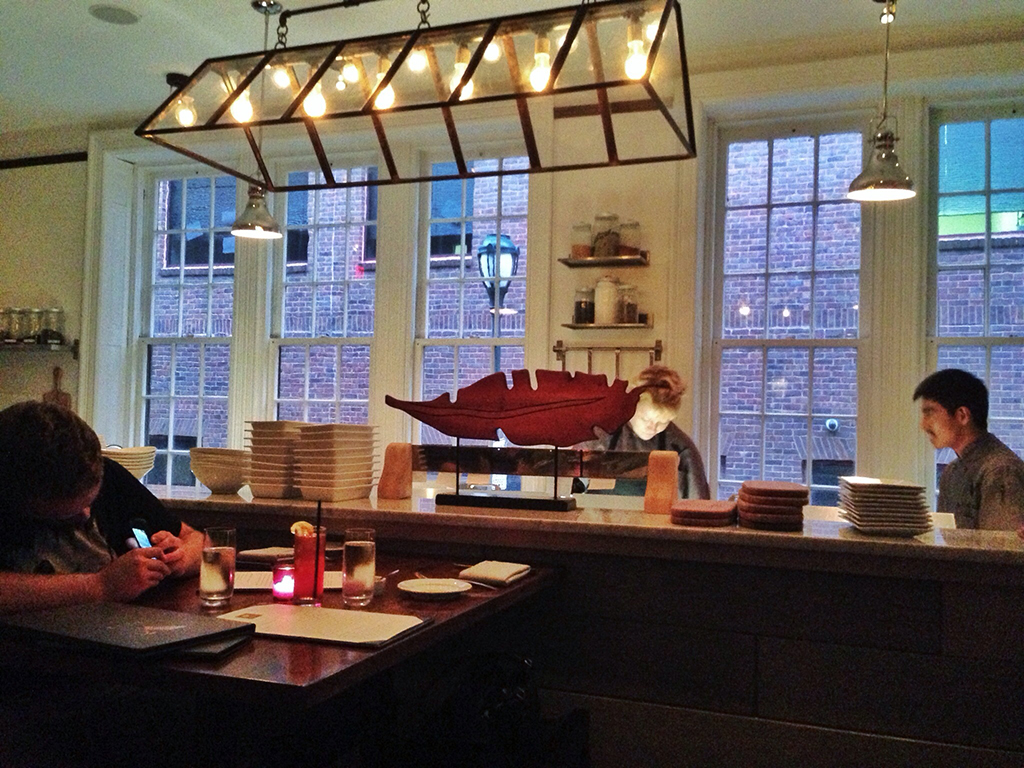
Even the inside of Vedge is as focused towards sustainable eating at the restaurant itself is, as the shelves are lined with reusable mason jars and full of locally-sourced spices. (Photograph courtesy of T.Tseng at Flickr.)

Last week’s article focused on the restaurants in Philadelphia that were elevating the game without alcohol on the menu to bolster it. The food and non-alcoholic beverages had to be top-notch for the restaurants to make up for absence of that popular consumer choice. As promised, this week’s article will touch on vegetarian — and in this case, actually, vegan — cuisine. Transitioning into this week’s theme, the same rule of curiosity applies, only this time on a plant-based level. Which restaurants in Philadelphia are cranking out legit vegan food, where are they found, and what’s there to try?

While these are all valid questions, the general overview of vegan restaurants will have to wait. For the first time, this week’s food column is focusing on a single restaurant. It still follows the focus of vegan food in Philadelphia, as this restaurant is a vegan mecca in not only the city but the country as well. The restaurant in question is Vedge, the vegetable restaurant with a menu that changes with the seasons and that caters to the palates of seasoned carnivores, herbivores and omnivores alike.

Kate Jacoby and Rich Landau are pioneers in the realm of vegan cuisine. Landau began when he opened his first restaurant Horizons back in 1994 to showcase vegetables to the culinary world, and after winning Chopped and getting the prowess of Kate Jacoby working with him, the plant-based culinary duo made history. They were the first chefs to serve an all-vegan meal at the James Beard House — located in Manhattan — back in 2009. But they still weren’t satisfied, so Vedge was born.

Since 2011, Rich Landau and Kate Jacoby have been doing seasonal vegetables the right way on Locust Street in Center City Philadelphia. Located just two blocks away from the famous Walnut Street Theatre and just a stone’s throw away from chef Marc Vetri’s flagship Vetri Cucina, Vedge moved into a very highly regarded part of town. Suffice to say, Vedge is living up to the high expectations.

This James Beard Nominated husband/wife team has been mentioned in just about every food magazine and publication under the sun, and clearly for good reason. They even were awarded the hallowed “Four Bell” review by the notoriously anonymous Philly food critic Craig LaBan back in 2017. Landau has twice been named “Best Chef in Philadelphia” by Philadelphia Magazine, and in December 2019, Food & Wine Magazine named Vedge as one of the 13 “Most Important Restaurants of the Decade.”

While both are chefs, Landau deals more with the main cooking at Vedge as Jacoby bolsters the culinary ground covered by the two of them. As a James Beard Nominated Pastry Chef and Certified Sommelier, Jacoby has taken on more roles than just being a chef within Vedge: this includes overseeing the Beverage Program that exists there while also being in charge of desserts.

Vedge is very much pro-alcohol, and they are consistently known for the prestige and quality of their bar along with their food. Josh Einbinder-Schatz, a young but very experienced bartender, has been there since March of 2019 after being the lead bartender at Hungry Pigeon for two years and a bartender at Brigantessa for 18 months before that.

On their Drinks Menu, Vedge offers five cocktails, 14 different wines, five beers and a pet nat rose on tap, along with a sweet chai, pickpocket soda and a ginger beer for the non-alcoholic options. Their cocktails contain anything from gin with matcha and yuzu to mezcal mixed with fig, beet, mustard and black walnut. Their beers are all from the Northeast region, with two PA brews — shoutout to Tired Hands Brewing — next to New York, Maryland, Vermont and New Hampshire products. When it comes to wine there is a variety of options, but the focus seems to sit with European imports — France especially. This may tie into the fact that Jacoby studied French in college, but I digress.

When you take a gander at the bottle wine list at Vedge, expect to be blown away. Their wines can have origins that trace back anywhere from Oregon and California, to France and Italy and Spain, to even Lebanon and the Canary Islands. According to their website, the least expensive bottle of wine they offer is a Mestres 1312 Reserva Brut sparkling wine from the Altiplano de Sierra Nevada wine region of southeastern Spain. The price tag? This bottle will run you $55. But that pales in comparison to the most expensive bottle Vedge boasts: a 2000 Emidio Pepe Montepulciano d’Abruzzo from the city of Teramo in the Abruzzo region of Italy that will set you back $750. And, to top it all off, they are all-natural wines. Talk about dedication to the craft.

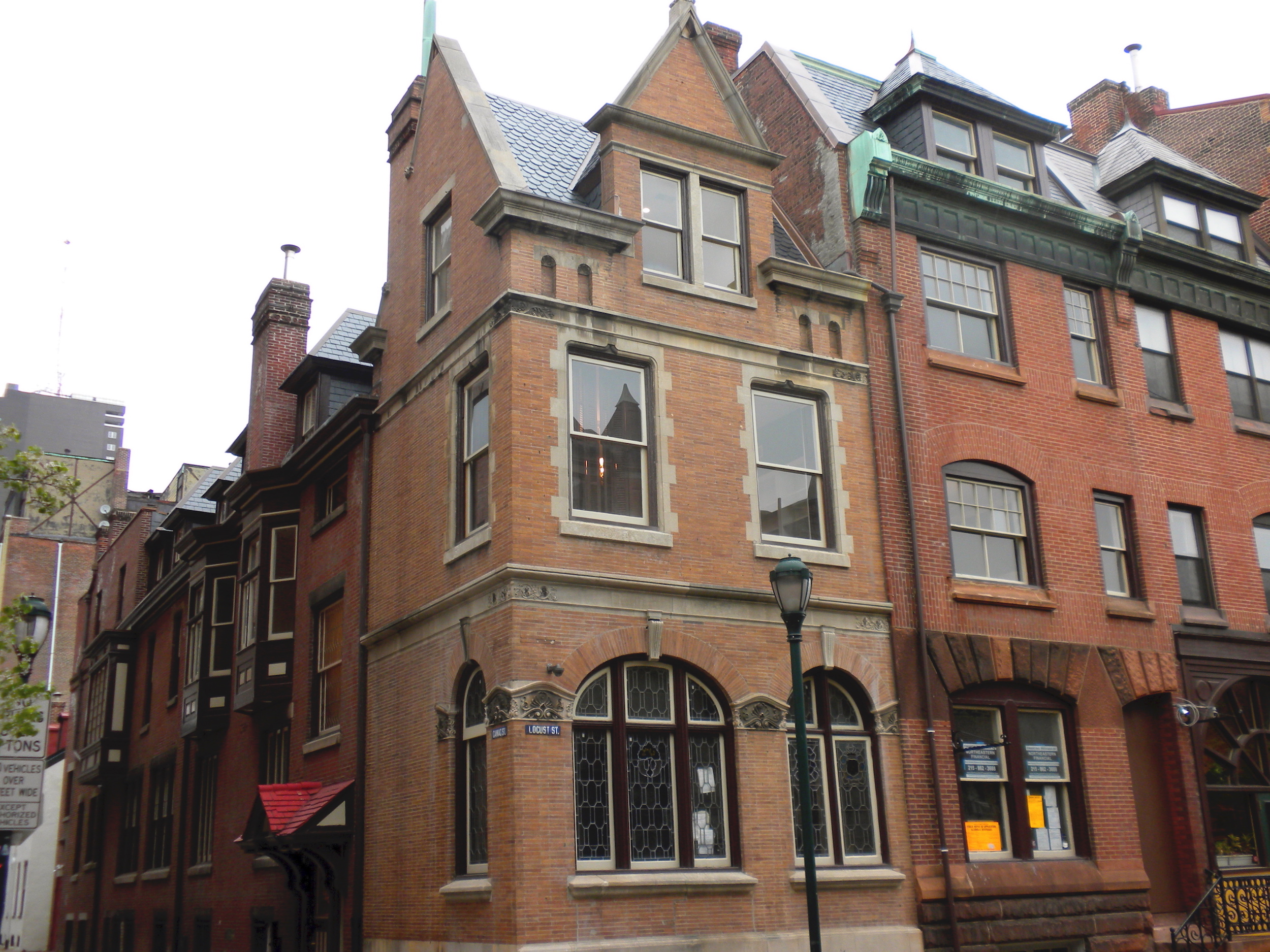
The Princeton Club of Philadelphia, seen above, is the old-school building that lays host to Vedge. (Photograph courtesy of Smallbones at Wikipedia Commons.)

Vedge believes that great food and great alcohol deserve to be paired together, and that good alcohol is worth bringing in from around the world to pair with your dining experience.

While their menu is definitely varied from season to season, they are known for a few staples. From their smaller plates, their rutabaga fondue that comes with a house-made soft pretzel, house-made pickles and charred onion is definitely an essential. If you’re feeling something more filling, dive into their smoked potato crepe that is accompanied by buckwheat; with a turnip bechamel and horseradish, or their all-too-picturesque wood-grilled carrot with pumpernickel, crushed chickpeas, carrot mustard and carrot kraut. Vedge is taking upscale dining and putting it on its plant-based head.

However, don’t be fooled — this isn’t going to destroy your wallet. Well, as long as you steer clear of that Emidio Pepe, that is. All of their dishes come in under $20, and while it is normal to order many dishes — the portions are not the largest — your bill will not be as sky-high as you might expect, say, in comparison to an upscale steakhouse. If you are really looking for a drop in any prices at Vedge, keep in mind their Happy Hour. If you get to Vedge on Sunday-Friday from 5-7 p.m. at the bar, it means $7 cocktails and glasses of wine and only $4 draft beers.

Circling back to portion sizes, Jacoby, Landau and company are both implicitly and explicitly hinting that you will not be too stuffed to skip out on dessert. Trust a man with a sweet tooth when I say you will want to read the dessert menu. Their desserts also change with the seasons, so right now they are hearty and warm and full of cold-weather flavors. From their sticky toffee pudding with cardamom ice cream to their caramel apple cheesecake that comes topped with a cherry wishniak jam and accompanied by shoo fly ice cream and honey mustard pretzels, Vedge holds nothing back to end the meal on a high note. But lest you forget, their desserts are also 100% dairy-free. But with ice creams and cheesecakes as heavenly as any other you’ve had before, you’ll find yourself not noticing its gone, and soon realizing that dairy’s not always needed.

But the ultimate touch of class and grace — which was reported in LaBan’s thorough review of Vedge — is what the restaurant does when you arrive: a soup shooter is sent to your table. According to the faceless critic, the soup varies by season but is equal parts heartwarming and delicious. In the summer, expect a cold soup like gazpacho or vichyssoise. In the fall and winter, expect a hearty and hot soup like sunchoke bisque or borscht.

It’s the little things that Vedge seems to nail so perfectly that makes it so highly acclaimed: the restaurant’s attention to detail is remarkable. Jacoby and Landau are catering to every food need that could possibly be needed, and with the edition of a high-level bartender, there is the food, the desserts, the wine and the booze to bat.

Vedge has it all, just hold the meat. Trust me, you won’t miss it.

Posted in UncategorizedComments Off on Vedge is the champion of the Philly vegan scene

The Warriors were quietly in the DAC on Monday

Unbeknownst to many in University City, The Golden State Warriors practiced at the Daskalakis Athletic Center on Monday, Jan. 27 in preparation for their game against the Philadelphia 76ers. Word quickly spread to many Drexel students and flocks of undergraduates raced to line up outside next to the Warriors’ bus to get a glimpse of the NBA team as they headed out.

However, the Warriors were popular with people other than just students, as faculty and many other passersby wanted to get a glimpse of six-time NBA All-Star Stephen Curry. The popularity of the Warriors precedes them, as they were the most popular NBA team of the previous decade. But then why would the most popular NBA team of the 2010s choose to practice at Drexel of all places? Well, it comes down to one alumnus and his strong love for the Philly school: Damion Lee.

From 2011 to 2015, Lee played for Drexel University’s varsity basketball before transferring to the University of Louisville. In an interview with the San Francisco Chronicle earlier this month the professional basketball player said that although he did not finish his college years at Drexel he still holds his roots in Philadelphia and is appreciative of his time spent at this University.

While at Drexel, Lee was named the Colonial Athletic Association’s Rookie of the Year and in the following year, he was the Second Team All-District pick. By the end of his three years at Drexel, he had scored 960 points in just 68 games and 131 career three-pointers. Lee was ranked fourteenth based on his overall points scored throughout his time with the Dragons.

Lee is now in his second season as a shooting guard for the Golden State Warriors. The team currently has a 10-37 record.

Posted in UncategorizedComments Off on The Warriors were quietly in the DAC on Monday

Senior project spotlight: POPinions

The logo for POPinions, seen above, is the perfect indicator for what it’s all about: music at the core. (Photograph courtesy of Abbey Solomon.)

POPinions, a new podcast created by Abbey Solomon and Nicole Weinstein, breaks down pop music news and drama. This podcast is their senior project that has finally come to life after months of planning and devising. During these roughly hour long podcasts, Abbey and Nicole essentially have a recorded conversation that’s  broadcasted every Wednesday morning!

So far, they have recorded four podcasts about the latest trends in the pop industry. Since the name “POPinions” is a portmanteau of “pop” and “opinions”, it does feature both Abbey and Nicole’s perspective but is usually backed by reason and facts. Currently, POPinions is streaming on Spotify, Apple Podcasts, Instagram and Anchor.fm.

Abbey and Nicole decided to start this podcast because of their shared love for all things pop music. As seniors in the music industry program at Drexel, they started to learn about the intersection of music and podcasting which then led them to their senior project.

Not only did they learn about the technicalities of producing a podcast but also the history and the research that supports the medium. Next, they got into the legalities and monetization of an episode. After a ton of research and brainstorming later, they ended up with a research paper that also served as a plan to record and publish their own podcast. And so POPinions was born!

Their second episode, “Putting the TEA in Taylor Swift,” follows the drama surrounding the pop artist and Scooter Braun, Ariana Grande’s manager. Aside from opinions about Swift, the episode explains some of the intricacies of signing with a company. There are different types of rights an artist have, such as writing the actual content of their music, and some power that the record company holds for “taking a chance” on the artist.

Nicole and Abbey explain these concepts in a way that’s engaging for music and non-music folks alike for the whole hour. POPinions helps provide functional music education for people of all backgrounds.

In the most recent episode, Nicole and Abbey pick out their Grammy favorites from the nominees. The casual tone of this episode helps a listener who doesn’t know the details of every category and artist feel comfortable. Nicole and Abbey casually look up facts they don’t know while still being informative. To learn more about their Grammy picks, find POPinions on Spotify, Apple Podcasts, Instagram or Anchor.fm to give the episode a listen!

Posted in UncategorizedComments Off on Senior project spotlight: POPinions

Anti-semitism still alive and well at Drexel

President John Fry sent an email to students on Thursday afternoon that reported a swastika was drawn on a chair in a Drexel classroom.

The message was addressed to the Drexel Community and was titled “No Room for Hate at Drexel.” The email elaborated on what is expected of the Drexel community to combat such an event. “Let me be clear: There is no room for such symbols of hate anywhere on Drexel’s campus,” Fry wrote.

Fry went on to describe how important it is that Drexel is a hate-free environment, and any such behavior is not tolerated whatsoever. He said that harboring diverse backgrounds is detrimental to enriching classroom discussions. Fry also specifies that free speech and “robust dialogue,” is encouraged, but there is a line that should not be crossed when dealing with antisemitism, racism, harassment, or violence.

As Fry exhorted in the email, “Drexel is stronger when we are all working and learning together and from one another in a safe and educational environment.”

He included that Kim Gholston, Drexel’s Chief Diversity Officer, is working to encourage the raising of voices across Drexel’s staff and student body.

The symbol has since been removed and the Office of Equality and Diversity (OED) has been corresponding with students and faculty about the incident. The Drexel University Police Department is currently conducting an investigation. The email did not include whether or not a suspect is in question.

The student body will be waiting to hear further about this investigation and the repercussions involved, and there will be expected responses from the Drexel community — especially from the Perelman Center for Jewish Life on 34th Street.

Students are encouraged to contact OED by calling 215-895-1405 or email them at oed@drexel.edu to report any acts or incidents of discrimination, harassment, or biased incident, including graffiti.

Posted in UncategorizedComments Off on Anti-semitism still alive and well at Drexel

West & shut Down: what we know

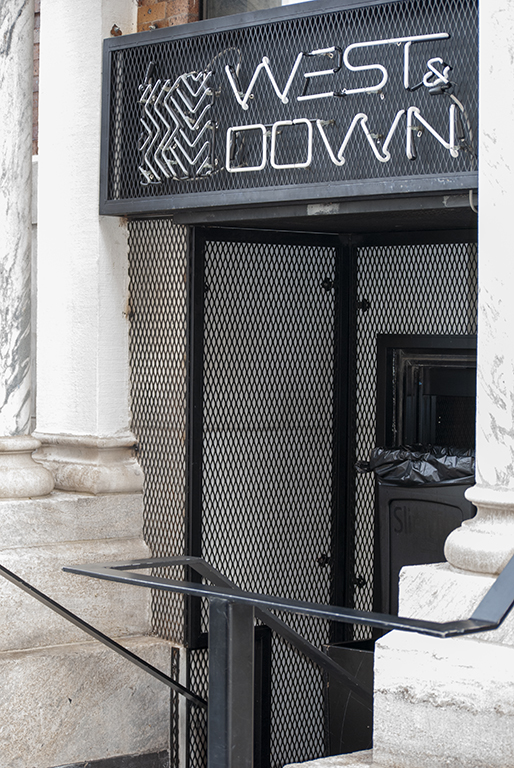
The neon sign of Chestnut Street’s West & Down will be turned off, but maybe only for a little while. (Photograph by Ben Ahrens for The Triangle.)

The local University City bar, West and Down, recently closed down after a police posting was displayed in their window.

On Saturday, Jan. 25 the eighteenth Police District left a notice for the night club located on 3816 Chestnut Street to cease all operations and vacate the building. This is a direct result of the night club’s use of the lower level of the space without the proper license to host live entertainment. Additionally, the notice mentioned that West and Down must have a certificate of occupancy to use the lower level as a nightclub.

Rudi Goldberg, a writer for The Triangle, reported that “I had been planning on going there that night and when I got there I was told it had been shut down for letting minors in and someone else said they didn’t have a proper nightclub license.”

The recently popular bar and nightclub was a very large attraction for the University City area. Both during weeknights and weekends West and Down hosted themed nights, which drew in mass amounts of college students. These themed nights, paired with their extremely active social media postings, put West and Down at the top of the agenda for many students in the area.

Some popular themes included White Claw Wednesdays — which included a discount on the hard seltzers. They also included a “Purge” night, where the bartenders turned off all the lights, put on light-up masks, and poured shots into club-goers mouths while standing on top of the bars.

According to an article published by The Daily Pennsylvanian, many college students are reluctant to see West and Down close, but many nearby residents are relieved that there will be a break from the noise.

Chris Moon, a senior at Drexel, was neutral with the closing, saying “It was a cool spot, I’ll still go to BonChon on the top floor.” The South-Korean based fried chicken restaurant is located above where West and Down operated.

This wild atmosphere drew a large crowd that would often have a line that led down the block. Although this was a popular nightlife spot, not everyone was as impressed with the establishment.

Garrett Miades, a junior at Drexel, believed that it was time for West & Down to be closed. “The floor was covered in a graveyard of $11 cocktails that were constantly getting knocked out of your hand by Pauly D-esque guys trying to impress uninterested girls. If you like black-lights and low visibility, this was your place. If not, it felt like a mistake that smelled of high tabs on a Wednesday night,”

Further questions have been arising as to exactly why the bar shut down. The closing was very abrupt, most people finding out through social media and word of mouth. West and Down was fully functioning up until the notice was posted on the bar’s door.

West and Down’s closing may have an effect on the nightlife in University City, considering another popular bar, Wahoo’s has also closed down recently. Students are now on the search for a replacement nightlife destination, hoping to find another dimly-lit place to party soon.

Posted in UncategorizedComments Off on West & shut Down: what we know

*Sponsored*: Technology Innovation Co-Major

As one of LeBow College’s newest co-majors, the co-major/minor in “Technology Innovation Management” has been designed for students with varied backgrounds who seek to understand the strategic implications of new technologies, develop skills in innovative thinking and identify new opportunities concomitant with technological advancement.

The TIM co-major/minor revolves around four core courses coupled with the flexibility to mix and match two electives from a wide variety of cross-listed courses across various disciplines at LeBow. For accounting majors, the TIM co-major specifically helps in developing a fine-grained understanding of how the technological landscape of business is rapidly impacting all aspects of accounting and auditing operations.

For business and engineering majors who want to maximize their dual advantage, the TIM minor is a natural choice. The strategic acumen delivered through the TIM minor is applicable to virtually any area of engineering, because the analytical capability and strategic thinking embedded in all TIM core courses and suggested electives are highly complementary to the B&E curriculum.

Most finance majors know that fintech is one of the fastest growing sectors today and this space is demanding professionals who are not only strong in finance-related skills but also technologically savvy. To complement core knowledge and skills in finance, the TIM co-major can develop deep understanding of how technology plays an integral role in the development and management of financial services and investment products.

A student majoring in legal studies who wants to advance into a career in intellectual property management or IP-based entrepreneurship needs to not only master related laws but also have a deep understanding of technology management and skills in projecting technological and innovation trajectories into the future. The TIM co-major and its curriculum of diverse courses can offer students majoring in legal studies a powerful set of competencies in applying current legal frameworks to emergent technological developments.

It is well accepted that most products and services these days have a strong technological component. The TIM co-major is designed to provide marketing majors with the knowledge and skills to combine technology with all aspects of new product and service development and effective marketing, sales, distribution and customer experience management.

Although the management and information systems major by itself provides a student with a rich grounding in understanding and managing data, the TIM co-major can provide a student majoring in MIS frameworks and techniques to generate rich strategic and operational insights from the data within the broader context of the company and the industry.

Furthermore, rapid progress in technology has already changed — and will continue to change — processes in sourcing, procurement and distribution within and across companies, all of which are areas within operations and supply chain management. The TIM co-major and its rigorous and flexible curriculum will help OSCM major better understand how technology may impact all areas of operations and supply chain management.

Last but not least, for students majoring in sports management, the TIM co-major and its diverse course offerings will prepare students to develop into professionals who can harness the power of technology in the ever-changing landscape of the sports industry.

There is hardly any career or functional specialization that has not been fundamentally altered by technology. The TIM co-major/minor develops the strategic, analytical, behavioral and organizational skills required to lead effectively with technology.

This is a sponsored article. Dr. Rajiv Nag is Clinical Professor of Management in LeBow College of Business.

Posted in UncategorizedComments Off on *Sponsored*: Technology Innovation Co-Major

No bar, no problem for the best of Philly’s BYOs

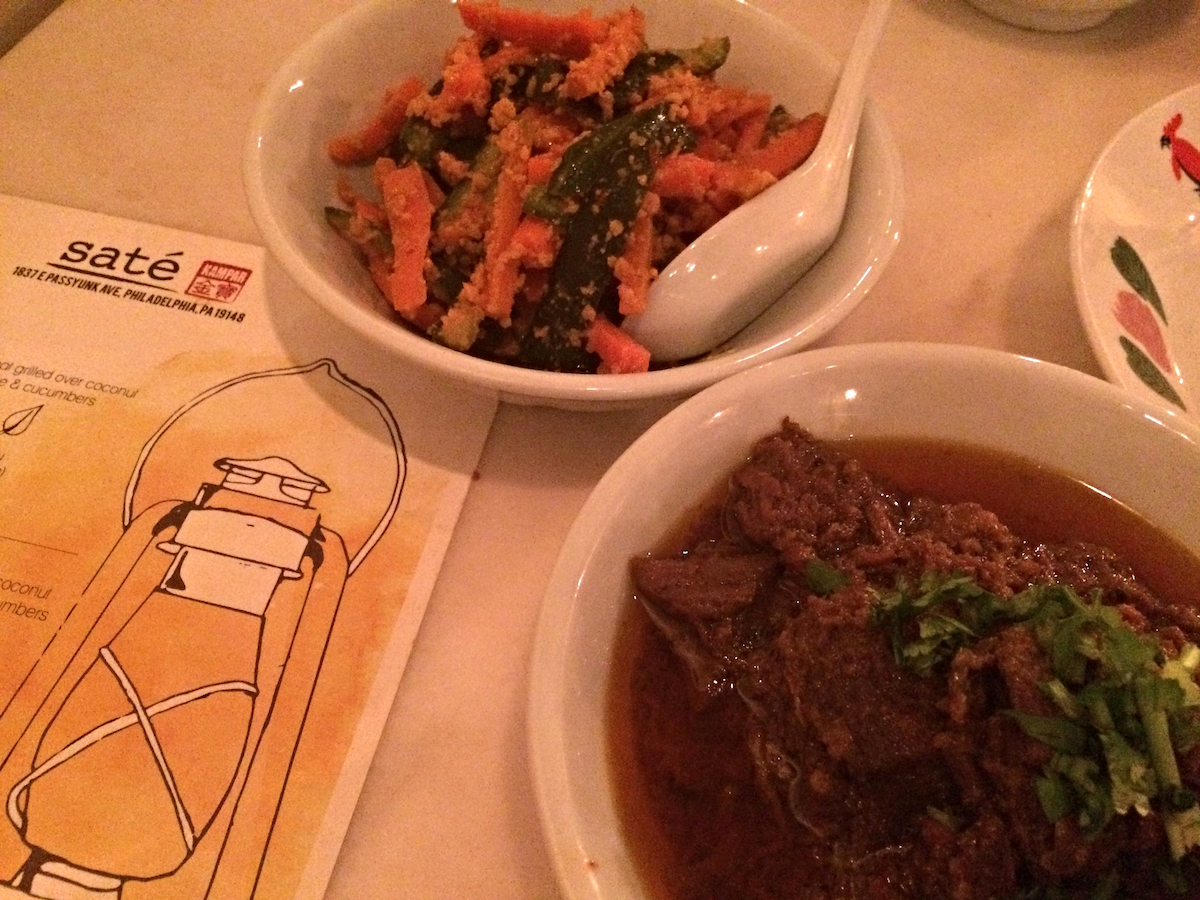
Sate Kampar on East Passyunk Avenue is serving up street-food inspired dishes like sate kajang, nasi lemak, mee hoon goreng and a whole lot more. (Photograph courtesy of htomren at Flickr.)

Over the summer, I was in Portland, Maine with my brother and one of my best friends, and we stopped at a 7-Eleven to pick out some snacks only to stumble upon an absurdly large selection of craft beers in the local convenience store. I was so taken aback, I couldn’t stop thinking about it. In comparison to many other states, Pennsylvania’s alcohol laws seem outrageously bad. This is why many restaurants in Philadelphia — and frankly, all across the Keystone State — are BYOB (the acronym used to represent “Bring Your Own Bottle”) and love to announce it to their customers. With “dry January” in effect for many, a place without any temptations may be really inviting. But which places are really worth going to, with or without the alcohol?

While the semantics can be argued that the choice of what to take to a BYO* determines the restaurant, there is a lot to be said about eating at an amazing restaurant only to later discover that it is, in fact, alcohol-free. (*Common usage of the acronym dictates that the second “B” in BYOB be dropped, due to the rise in craft beers being served in cans.) In Philadelphia, there seems to be at least one top-notch BYO in every neighborhood, so to refrain from this article becoming a veritable Philly BYO index, this is merely the low-down on where to go for the best food that Philly BYOs have to offer. While the food will be figured out after reading this, the drinks will inevitably be up to you!

The first place that folks turn to in Philadelphia when it comes to BYO places seems to depend on cuisine, price range and simply what you’re in the mood for. So let’s start with the winners, shall we?

Back in 2015, Helm won The Thrillist Awards: Philadelphia’s Best Food & Drink of 2015 award for Best Restaurant. Out of all the restaurants with highly lauded cocktails, craft beer and natural wine lists, a place such as Helm won with the experience and the food carrying the load. But after you take a look at the cozy Olde Kensington spot, you realize how special it is. Their menu is so local and frequently updated that it is written on a blackboard in the restaurant itself. They only use locally raised vegetables and properly raised meats.

Chefs Kevin D’Egidio and Michael Griffiths choose to showcase the harvests of local farmers while bringing a high-quality dining experience to their customers. It’s hard not to love a place like this, when literally everything they serve at Helm will be as good as it possibly can be.

Another award-winning spot is Philly Magazine’s Best New BYO of 2019: Sarvida. This Fishtown spot is helping the rise in Filipino food and culture that is appearing in and around Philadelphia. They offer three categories of dishes: Pulutan, the snacks; Salo Salo, the sharable small plates and La Mesa, the large entrees. However, while the dishes are broken up into these categories, they are all meant to be shared. Everything ordered — from the lumpiang shanghai to the inasal na manok to the escabeche — is meant for the table, for everyone’s enjoyment. And according to all of the Philly food critics, every dish that Sarvida puts out is something you want to eat.

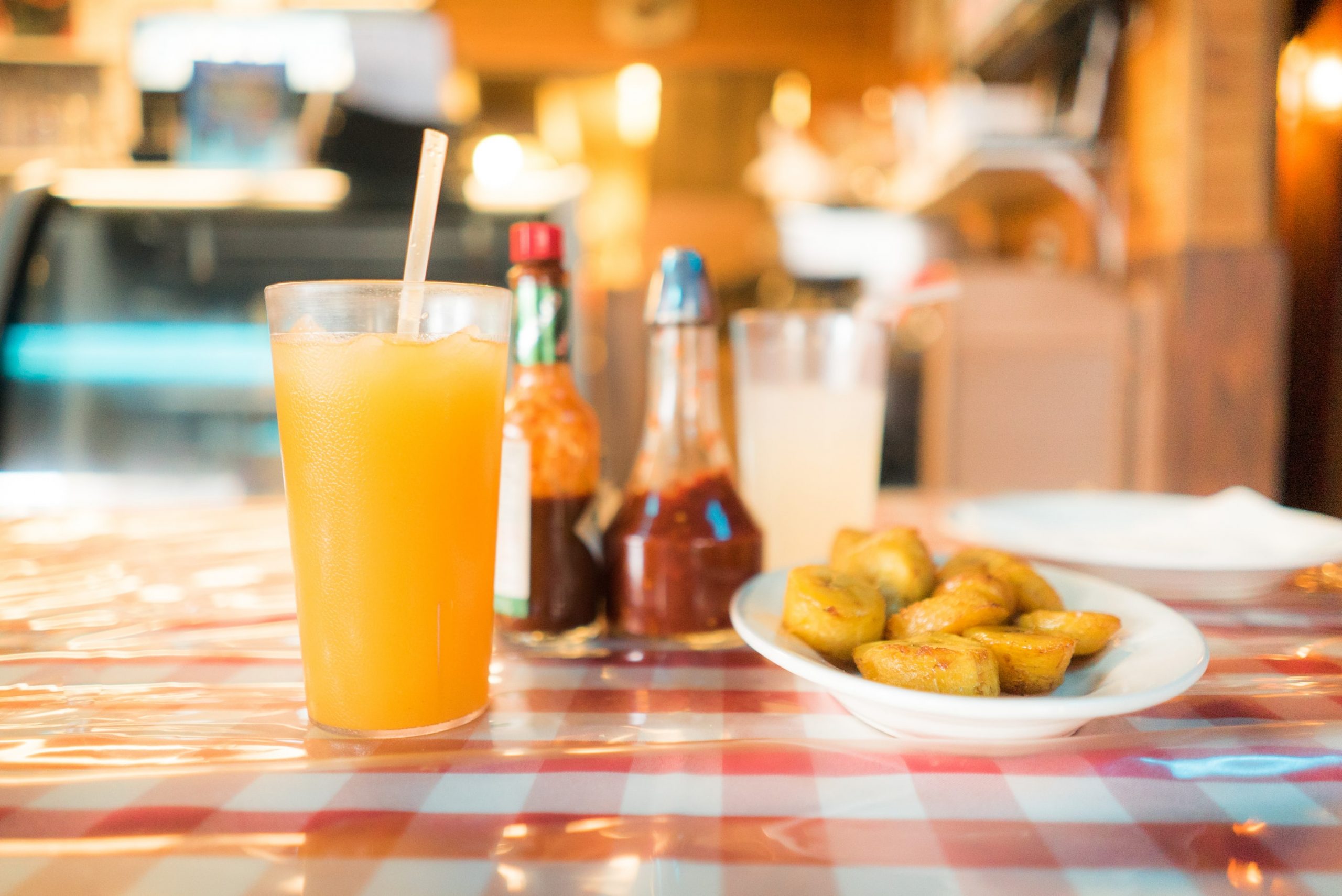
If you want fresh juices and authentic Dominican cuisine — with or without a beverage — head on over to Parada Maimon for the real deal. (Photograph courtesy of Helio Ha on Unsplash.)

Following the Filipino BYO trend, another highly regarded spot is Perla. This spot located on East Passyunk Ave is open five days a week, with three of those days — Thursday, Friday and Saturday — being dedicated to their “A la Carte Menu.” On Wednesdays and Sundays, however, they offer their $40 per person Kamayan Family Style Menu. On Wednesdays, a minimum of two people is needed for an order; on Sundays, a minimum of four people is needed! The food is eaten with your hands and ordered for the table, as you share the beverages you may or may not have brought to accompany the six dishes and dessert.

Another East Passyunk Ave gem is Sate Kampar, which won Philly Magazine’s Best New BYO Award back in 2016. This spot hones its menu around its namesake, the popular Malaysian street food sate. Not only does Sate Kampar’s food menu cover sides, shareables and a few more staple Malaysian dishes, but it also boasts one of the best non-alcoholic drink menus in Philly. From drinking out of a coconut to Malaysian cold drinks to a bountiful list of coffees and teas, there is no shortage of an out of the ordinary drink choice here. Just hold the alcohol.

The final Asian-forward BYO is Vientiane. Vientiane Bistro is tucked away in Kensington while Vientiane Cafe is nestled in West Philly, but both of their outposts are bringing Laotian food to Philadelphia! For those who aren’t familiar, it is quite similar to Isan, or northeastern Thai food. You’ll find many familiar dishes on the menus, but there will also be options like sai-gawk (homemade Laotian sausages), gang-naw-mai (bamboo stew) and more.

Moving across the globe in terms of cuisine, there are a couple Mediterranean BYOs that Philly openly welcomes. The first is Audrey Claire in Rittenhouse Square, as this cash-only spot on 20th and Spruce Streets is famous for its open-kitchen experience and their $45 prix fare meal is known as one of Philly’s best. They’ve been around the neighborhood for 24 years now, and residents of Rittenhouse never want it to leave. If you don’t go for the prix fare, their swordfish kebab and hummus with laffa never fail.

The second spot is Apricot Stone, a Northern Liberties place firing on all cylinders with their execution of authentic Syrian food. While the dishes are very similar in preparation to most Mediterranean cultures, there is a level of touch and spice needed to showcase the cooking of Syria. Thankfully, Chef Fimy  Ishkhanian learned from watching her mother cook in Aleppo as she grew up and is now passing on what she learned to the people of Philadelphia. While this restaurant has been open for only three and change years, Chef Fimy has created an immediate favorite with Apricot Stone.

It would be sacrilegious to not talk about Italian spots in Philly, right? Thankfully, there are a few Italian BYOs here, too. The first is A Mano, the Fairmount spot that is doing just about everything right. They offer family-sized portions for a very reasonable price or a personal portion of all their pastas and entrees to better suit the mood. The go-to? Their four-course, $65 per person family-style dinner that changes with the seasons.

Or you could head down to Melograno on 20th and Sansom Streets, and get yourself some outrageously good ossobuco, with pappardelle, wild mushrooms, a wild boar ragu and polenta to bat. But when they have branzino as their daily fish, it’s too good to pass up.

One of the final two BYOs to talk about is Little Fish. Little Fish is a Queen Village favorite since 2016, where the seafood-oriented chef Alex Yoon has been rotating his menu to accommodate the fresh foods he gets in his kitchen. There are almost always fresh oysters, and you’ll start every meal at Little Fish with some insanely good bread. You just have to go to find out what’s the catch of the day!

While there are Asian and European BYOs galore in Philadelphia, this week’s “Hidden Gem” winner is none of those. In fact, it is a Dominican spot, located just a few blocks north of the Reading Terminal Market, called Parada Maimon. With a menu that spans longer than some city blocks, out of this world mofongo and a list of fresh juices that render alcoholic beverages practically moot, Parada Maimon invites you to sit down and try a taste of old-school Dominican cooking. Try anything from the pasteles en hoja de cerdo to the chicharron de pollo sin hueso, to ending your meal with flan or tres leches. Anything you get will be made with love and full of flavor, and unlike many BYOs, Parada Maimon fits into your budget almost too easily. This spot takes it.

Now that you know where to go for places without any alcohol, next week’s topic will be where to go without any meats! Check in next Friday to read about the best vegetarian spots Philly has to offer!

Posted in UncategorizedComments Off on No bar, no problem for the best of Philly’s BYOs

A future for environmental agriculture in reach

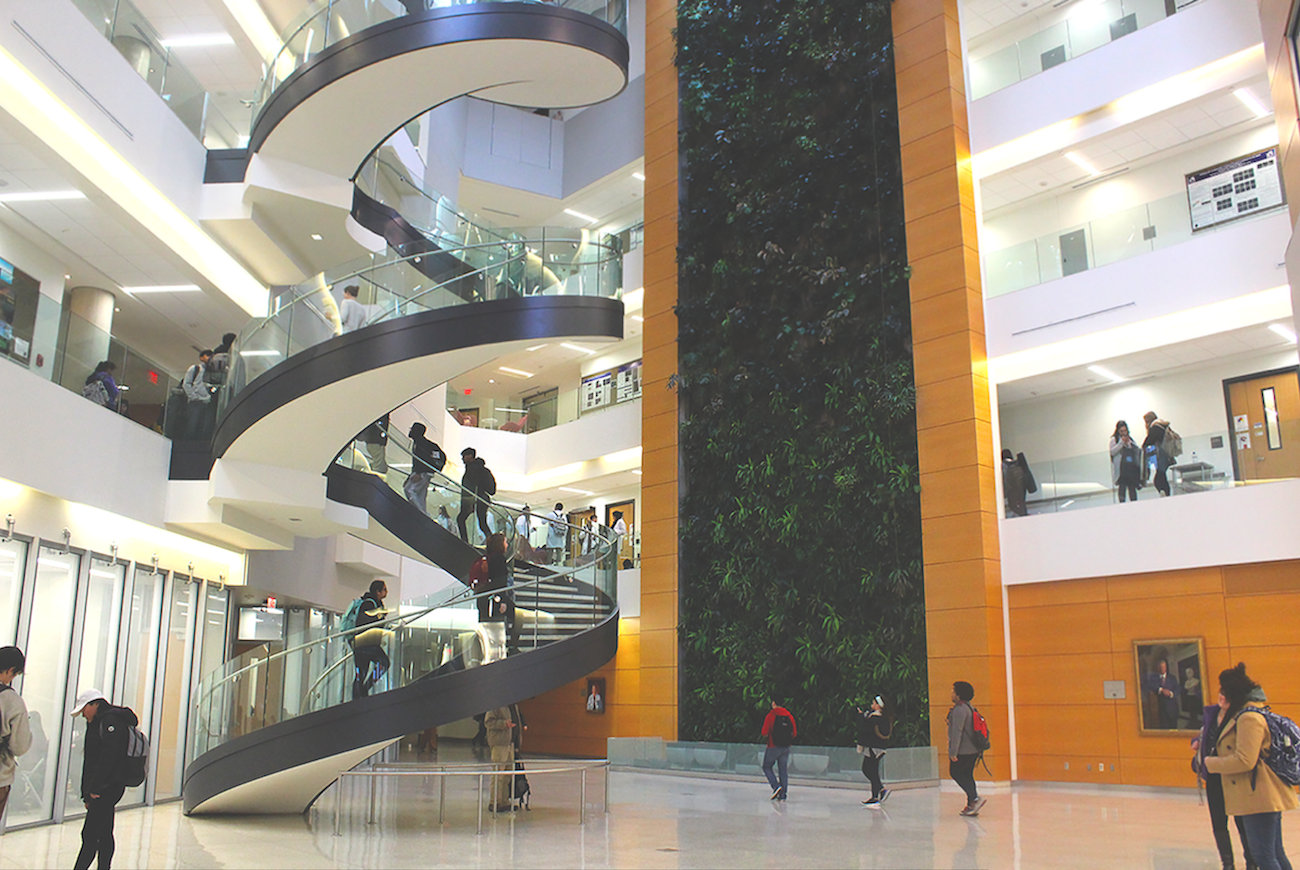
The biodiversity, earth, and environmental science department seminar was held in the Papadakis Integrated Sciences Building, which is home to the iconic Drexel spiral staircase.

Have you ever wondered if there are two sides to the agricultural sector’s story? Or what the inherent trade-offs are with farming to feed a country like the U.S.? To address these questions, the BEES (Biodiversity, Earth, and Environmental Science) Department held a graduate research seminar on Toxiculture and Symbioculture on Jan. 16 in PISB. The seminar was meant to better educate students and faculty on how food is and should be sourced to symbiotically benefit us as well as the environment. Toxiculture, also known as agro-industrialism, describes our current relationship with agriculture and the environment and how it harms not only the ecosystems around agriculture, but ourselves as well. The speaker, Andrew F. Smith, Ph.D., started the presentation by explaining the difference between toxiculture and symbioculture.

Our current model of generating food focuses on monocultures, which are growing operations that consist of a single crop. This method makes it easy to tend to the crops, but it can be detrimental due to the pesticides that have to be used and the vulnerability of the entire harvest to pathogens. Smith stated during his presentation that “there are problems with the appeal to efficiency.” Symbioculture might be the solution to this global problem.

Our farmland has had its nutrients sucked dry by these crops for decades, and without the green revolution of industrial fertilizers, our planet would have likely succumbed to famine by now. Symbioculture would enhance our affinity with the land, as well as the living communities functioning in the proximate ecosystems. This would allow for more small-scale farming operations to support proximate communities rather than our current system of global exports and imports around the world.

A shift like this would mean that crop failures and geopolitical conflict would not have as big an overarching effect on the global population. While this sounds like a great idea, how do we overcome the system that’s already in place, especially if our farmland no longer has the nutrients to sustain crops naturally?

Smith wasn’t going to hold back the truth, saying that “infrastructures are going to be forced to change.” Our current system has created a positive feedback loop, leading to greater demand for food until we reach the Earth’s human carrying capacity. On the soil side of things, Smith stated, “Soil can be rebuilt. Nitrogen fixing cover crops and introducing livestock correctly into the system can restart the cycle of nutrients.” Crop rotation, leader-follower grazing systems, cover and intercropping and even just relying on contemporary sunlight are all ways to increase biodiversity within the soil and in the ecosystems around farmsteads. Diversifying the crops being grown on agricultural land is also an important way to ensure the security of harvests by making them less susceptible to pathogens and other pests that would decimate mono-cropping operations.

Now, how do we make farmers willing to put in the extra work to make sustainable farming operations? Surely they would prefer the efficiency and simplicity of our current system, right? Wrong. Smith actually confided that one of the most common things he had heard from farmers across the U.S. was “I didn’t want to have to do this.” Smith used that powerful line for a soapbox moment, saying “The desire is there. Give farmers the option to not have to buy these fertilizers and pesticides. If local farmers knew there was a market for people who want sustainably sourced food, they would find places that are already doing it and replicate the process themselves. The desire is out there.”

The big question is, what can we do? If this is important to us, where do we start? Smith was ready for that question by giving a very logical answer: “Start by looking into what localized eco-agriculture looks like.” There are people in other places carrying out the systems spoken about, and it works.

Posted in UncategorizedComments Off on A future for environmental agriculture in reach

Picking up the pieces of a destroyed neighborhood

This shot looking at both the Philadelphia’s largest oil refinery and the city skyline shows just how close the disaster this summer’s explosion was for the entire metro area. (Photograph courtesy of DCEirca at Flickr.)

Remember when the largest oil refinery on the East Coast exploded? It’s been just over seven months since the June 21 explosion in Philadelphia, but the refinery is finally being dealt with in the aftermath of the blast. Supposedly caused by leaky pipes, the Philadelphia Energy Solutions refining complex released over 5,000 pounds of toxic hydrofluoric acid right into the heart of South Philly’s Grays Ferry neighborhood. In the days following the incident, the refinery closed down. Almost exactly a month later, the company filed for bankruptcy, raising questions about whether the refinery would be reopened, repurposed or remain closed. As of Jan. 22, a Chicago Hilco development company won the $240 million auction bid for the rights to acquire the former refinery and hopefully transform it into a renewable energy facility.

The PES complex originally served a bulk petroleum storage facility in 1866. By 1870, the facility started oil refinery operations, becoming a significant contributor to Philadelphia’s economic activity since. It should be no surprise that the economic benefits of such a large refinery came with its own environmental consequences, 150 years in the making.

“The refinery is the single largest source of particulate emissions in the city,” according to a 2017 report issued by Philadelphia’s Office of Sustainability, “and alone accounts for nearly 16 percent of Philadelphia’s carbon footprint, not including the fossil fuel products exported off-site.” There are even more environmental concerns about the grounds beneath the refinery itself. Over the years, toxic chemicals (including lead, gasoline and benzene) have contaminated the 1300-acre land the refinery occupies, making it difficult to repurpose the area for more heavy industry work.

As the threat of rising water levels increases, climate scientists fear that the area is also vulnerable to future flooding, meaning that those toxic chemicals will likely end up contaminating the Delaware River if not treated.

Aside from environmental concerns, the refinery’s continuous release of toxins had and continues to have a direct impact on the people living in the surrounding neighborhoods. A 2017 report released by activist group Philly Thrive states, “52.6 percent out of 314 respondents living near the refinery had one or more of the following health conditions: asthma, heart disease, cancer or another respiratory condition.” Moreover, the report also states that, of the 45,000 people living within one mile from the refinery, “71 percent were people of color and 32 percent were below the poverty line,” making the issue of the refinery future’s also a question of environmental justice.

Philly Thrive member Rodney Ray and former PES worker commented on his story to the Inquirer, stating, “My grandfather passed away from lung cancer. My grandmom, who lived three blocks from the refinery, passed away from cancer. My neighbor Ms. Sylvia has two daughters with cancer and she talks about the ‘silent killer’ creating an epidemic in our community. That is why the refinery needs to stay shut down. It had 150 years. We had to breathe this bad air for so long while the owners turned a profit — but nothing lasting for the community.”

Groups such as Philly Thrive and the city’s chapter of the Sunrise Movement have mobilized in recent months to fight against the reopening of the refinery by proposing “Right to Breathe” legislation to Mayor Kenney, as well as organizing citywide strikes and rallies to raise attention to the issue.

As much as the closing of the refinery was a temporary sigh of relief for the surrounding community and environmental groups, it caused a job crisis for over 1,000 Philadelphians laid off by the PES. In a shrinking oil refining market, these workers have struggled to find new well-paying jobs.

To reduce bankruptcy costs, the company also unfortunately dissolved its group health care plan. According to an article published by Reuters, liquidating the plan prevented workers from qualifying for temporary health coverage through the Consolidated Omnibus Budget Reconciliation Act (COBRA). The search for new jobs has become even more critical as the former workers find themselves without health care, especially as the majority of them are growing older in their fifties.

However, city officials expect that there will be more jobs and opportunities for these displaced workers as Hilco plans to remediate and repurpose the land for a potential renewable gas mission. Mayor Kenney said in a statement on Jan. 22, “[We] welcome the selection of Hilco Redevelopment Partners as the winning bidder for the refinery site. Though many challenges and years of work lie ahead, we are optimistic that the firm can develop this site in a way… that puts the public’s safety as a top priority, has a more positive impact on the environment, engages meaningfully with the surrounding communities, and contributes significantly to the region’s economy.”

In response to the refinery auction results, Philly Thrive released their own statement saying, “We claim this outcome as a partial victory, and yet Philly Thrive has no plans to scale down our organizing as the sale of PES is finalized. Our initial list of requests for Hilco Redevelopment Partners includes: no leasing land for refining operations, funding to assist the public with technical participation in clean up plans, active public involvement in plans for redevelopment, and a quota for quality, union jobs to surrounding neighborhoods.”

Based on the statements given by both the mayor and activist groups, it is highly likely that companies like Helco will be held accountable for their effects on the surrounding community and the environment. The chain of events since the refinery explosion demonstrate a new, unprecedented wave of resistance and activism towards the fossil fuel industry as climate change becomes more relevant in everyday lives.

Posted in UncategorizedComments Off on Picking up the pieces of a destroyed neighborhood