Author Archives | Jason Sobieski

Professors voice thoughts on teaching hands-on courses virtually

Many instructors are utilizing Zoom, a popular video conferencing platform, to conduct class meetings during remote learning. (Photograph by Jason Sobieski for The Triangle.)

The transition to online learning for Drexel’s spring quarter was a fast decision. Students are trying to make the most of this unprecedented digital learning experience – and instructors are, too.

Hands-on courses, like dance in the Westphal College of Media Arts and Design, chemistry in the College of Arts and Sciences and computer science in the College of Computing and Informatics, are all particularly challenging to transition to an online format.

“The transition [to online learning] was somewhere in between [smooth and abrupt],” Dr. Craig McClure, who currently teaches Chemistry II and Health Chemistry I, said in an email statement. “It was a steep learning curve to figure out how to restructure courses … and figure out [alternative] modes for instruction for the spring quarter.”

McClure explained that it was near impossible for all instructors to be fully prepared for online teaching in the short time frame. Although preparation began full-time during finals week of winter term and continued through the beginning of spring term, he said that professors would have needed at least two months to adequately prepare.

The University provided detailed online teaching seminars, and discussions with colleagues to compare ideas were particularly helpful during the transition, McClure said. Some instructors are using their own previous experience to aid others in teaching online.

Dance program director Sandra Parks currently teaches the practice-based courses Ballet II, Dance Practicum and Senior Project in the Westphal College. Parks is using her online teaching experience to make her classes engaging, inspiring and innovative.

“Before I came to Drexel, I had developed and taught multiple online classes for three universities,” Parks said in an email statement. “When I learned about the transition [to] remote learning for Drexel, I was confident [in developing] my courses, as well as supporting all dance faculty on how to structure their courses.”

Dr. Matthew Burlick currently teaches Introduction to Programming II and Deep Learning courses in the College of Computing and Informatics. Burlick said his lab-based classes are difficult to adapt digitally, but over eight years of experience teaching online has him feeling prepared.

Graduate-level computer science courses at the last university Burlick worked at were taught entirely online, he said in an email statement. At Drexel, they are normally “hybrid” classes, with both face-to-face meetings and an online component.

Burlick is confident in his preparation for online instruction. His biggest concern is whether or not students are prepared for an entire term of it.

“Obviously, [online learning] is a different experience, although that’s not to say that it is necessarily better or worse,” Burlick said. “I think online courses do require an additional element of discipline on [the part] of the students. It is nice to be able to watch lectures asynchronously, in case you missed something.”

McClure said that it is very difficult to replicate the traditional in-person experience, but he is hopeful that the synchronous learning activities for his chemistry classes have been a close second.

Parks is of the same opinion and says it is difficult to replace the simultaneous effort typically achieved in her in-person dance courses.

“It is important for dance students to work in a space that is safe for them, be able to practice locomotor movements and collaborate with each other simultaneously,” Parks said. “The in-person experience will never be replaced by remote learning for many dance classes [that] need the facility that the University can provide … and the collaboration.”

Parks says the goals of her practice-based classes are to safely develop dance skills while critically reflecting and exploring innovative ways to move and create. Her strategy during remote learning has been to focus on the learning objectives and find ways that her students can accomplish them from home.

Parks utilizes digital face-to-face meetings with students regularly, has students record themselves, provides individual feedback and assigns small creative projects and reflective journals. For Parks, some of these strategies are new, some are classics.

Other hands-on activities, like chemistry and computer science labs, have been among the hardest to replicate digitally. Fortunately, instructors are finding creative solutions.

“Most of the [chemistry] labs have been replaced by ‘first-person experimenter’ activities,” McClure said. “Students direct an experimenter in a lab to complete the lab activity.”

“Labs are definitely difficult,” Burlick said about his computer science classes. “Historically, we had students work in pairs. Now, we’re letting them work together without any real constraints. These are almost collaborative weekly assignments.”

Communication and collaboration have been the biggest challenges, McClure said. Through the changes in grading breakdowns, activities and structure for his classes, he is hopeful that communication has remained sufficient enough that his students understand the expectations and will ultimately succeed.

Burlick said he utilizes Slack (a popular communication platform) for discussions, Blackboard Collaborate for lectures and Zoom for digital office hours. He said office hours have been extremely helpful and serve as a great line of communication for the students who have taken advantage of them.

He also noted that, during synchronous digital lectures, students have used the messaging feature to ask questions. Burlick believes students feel more comfortable asking questions in a digital setting than they might in a traditional face-to-face lecture.

The entire University community is working to make the most of remote learning. Taking their varying levels of previous experience and preparation, instructors are finding ways to maximize learning, with the success of students as their biggest focus.

“It is important to look at remote learning as a separate entity instead of comparing it to in-person learning,” Parks said. “These are different experiences. It is too early to assess the effectiveness [of remote learning], but I am looking forward to receiving feedback from students at the end of the term. [For now], I am checking in with students to discuss any particular challenges, and [they] have been extremely open and creative [in working] with me to find solutions.”

Posted in UncategorizedComments Off on Professors voice thoughts on teaching hands-on courses virtually

Penn Relays weekend sits quiet in University City for the first time

For the first year since its beginning in 1895, the Penn Relays weekend was quiet at Franklin Field. (Photograph courtesy of Pennsylvania University Archives at Wikimedia Commons.)

This weekend was set to be one of the busiest of the year for the city of Philadelphia, where thousands of high school, college and professional athletes would descend onto the University of Pennsylvania campus and head into the hallowed stadium of Franklin Field.

The reason for such an occasion? The historic and prestigious Penn Relays. The three-day spectacle of a track & field meet dates back to the 19th century, beginning with the first-ever Penn Relays in the year 1895.

Last year marked the 125th anniversary of the Penn Relays, and now, for the first time in its (almost) 126-year history, the Penn Relays are canceled amid the coronavirus pandemic. Rather than risking the health and safety of the hordes of athletes, spectators, officials, volunteers and staff, Penn Relays officials canceled the meet on March 16.

In its 125-year history, the Penn Relays have seen three different centuries’ worth of history. The Penn Relays still occurred during both world wars. There were Penn Relays all throughout the Korean and Vietnam Wars, and even during the Great Depression. The University of Pennsylvania had its famous weekend of races every year.

Found on the Penn Relays website, an article regarding the cancelation went into more detail about how the Penn Relays has always been flexible to change and continues to do so.

“The Penn Relays has adapted to worldwide conditions in the past. The meet was altered in 1917 and 1918 when several colleges, including most Ivy League institutions, curtailed their track programs during World War I. During World War II, travel restrictions reduced participation and spectator attendance while gas rationing was in effect in 1943 and 1944.”

It took a worldwide pandemic and a swift national mandate for proper social distancing to actually cancel the Penn Relays, but even still, race organizers are doing what they can to have the event this year.

The goal, according to the University of Pennsylvania — as reported by NBC Sports Philadelphia’s Adam Hermann — is as follows: “If the school is able to plan a substitute track meet, it would be a one-day event rather than the Penn Relays’ normal three-day schedule.”

The plan would be for a single-day event in the summer, presuming large gatherings will be allowed to reopen at that point. The odds of that happening still seem to be low at this point in time, but there is still plenty of wishful thinking to be had.

Aside from planning the shortened Penn Relays later in 2020, the race organizers also provided the option of redirecting your 2020 Penn Relays ticket to the 2021 running. There was also the option of getting this year’s ticket entirely refunded, but the window to choose has since passed back in March. If you were hesitant about your decision, odds are it has already been made for you.

The University City section of Philadelphia will remain quiet this weekend instead of filled with the raucous and joyful sounds of a collective track community screaming their hearts out for each other. However, the history and countless years of memories from previous runnings of the Penn Relays are sure to be remembered with an even greater fondness.

The same way that this past Monday brought about nostalgic feelings of the Boston Marathon, this weekend’s wave of remembrance and joyous photo album retrievals of the Penn Relays will be sure to hit home just as strongly for the track and field community.

Posted in UncategorizedComments Off on Penn Relays weekend sits quiet in University City for the first time

Fighting food insecurity in Philadelphia amid coronavirus pandemic

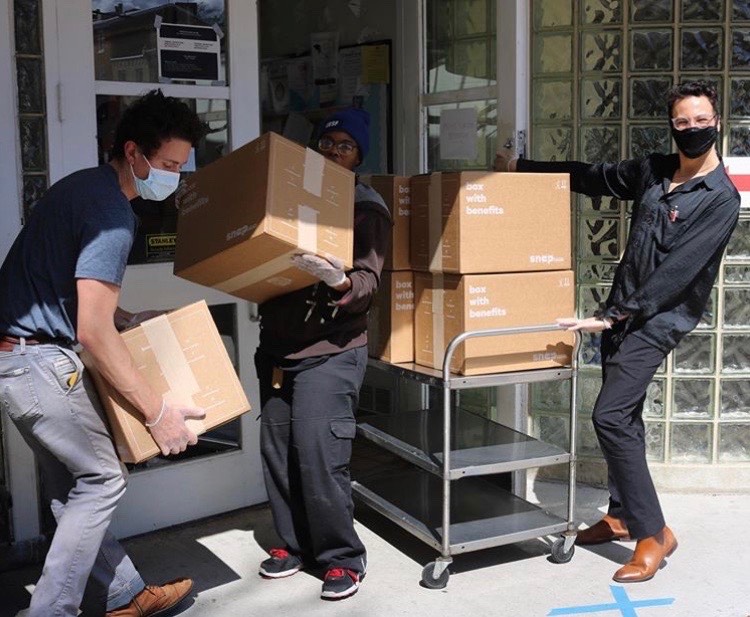
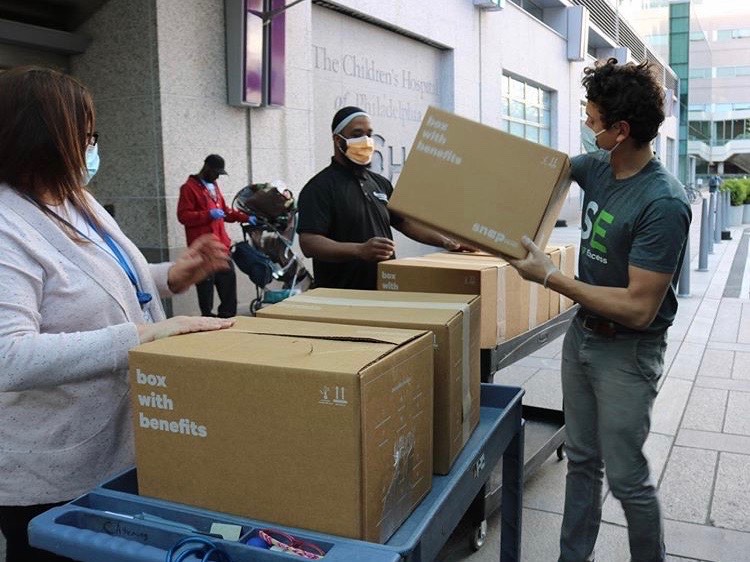
The non-profit Sharing Excess is donating food to different hunger-relief organizations and homeless shelters throughout Philadelphia. (Photograph courtesy of Evan Ehlers.)

Philadelphia Mayor Jim Kenney ordered all restaurants and bars in the city to restrict operations to pick-up and delivery March 16 to prevent the spread of COVID-19. While some establishments were able to continue their services through delivery options, others had to temporarily close — leaving behind a large excess of food.

Philadelphians then found out that organizations fighting food insecurity and relocating food are essential for the city’s survival, in this situation more than ever.

One of these organizations is Sharing Excess, a food recovery nonprofit born in Drexel. Sharing Excess’ president Evan Ehlers said they have seen an increase in calls from their partners since the closure of dine-in establishments. Outside of their usual network, other restaurants, hotels and food chains with leftover food at risk of becoming waste reached out.

Currently, Sharing Excess has collected over 47,000 pounds of food from companies like Saxbys, Hotel Sheraton, White Dog Cafe, Fresco Juices, Snap Kitchen, Einstein Bros. Bagels, Lavazza Coffee, Giant Heirloom, Shoprite and Trader Joe’s.

After the nonprofit collects the food, they deliver it to hunger relief organizations, homeless shelters, food pantries and soup kitchens within their network.

“We prefer to deliver this food to organizations that are really doing more than feeding people — places that are proving rehabilitation activities or workforce training opportunities,” Ehlers said.

Because of the global crisis, about 50 percent of their patron organizations have closed or stopped accepting donations. The largest, Sunday Breakfast Rescue Mission, where Sharing Excess used to deliver 30 percent of their food, stopped accepting donations for health safety reasons, Ehlers shared. This gap was refilled with new partnerships established during the pandemic.

The City of Philadelphia gathered with the main hunger relief organizations of the area, including Sharing Excess.

“Philadelphia is a very grassroots city, but the nonprofit scene is equally grassroots and also very collaborative,” Ehlers said. “So when all of this happened, the city kind of put it in our hands to work together to come up with a plan of how we are going to support people over the next few months with each organization playing their own pivotal role.”

With the help of these organizations, Philadelphia has been able to coordinate 40 meal sites in the area every Monday and Thursday morning. Each site gives two weeks worth of food to around 400 people daily. Philabundance and The Share Food Program are two of the main providers for this program.

Sharing Excess is also packing groceries and sending them to Philadelphia seniors who are unable to visit the meal sites, as they are part of the vulnerable population.

The nonprofit is sending produce boxes to college students who are struggling with food. The effort is called the Food Scholarship Program and was established with the Misfits Market.

“Over 50 percent of college students are considered food-insecure [and] can’t afford three meals per day according to national averages, but Philadelphia tends to be a little higher than that,” Ehlers said.

Ehlers assured that Sharing Excess’ drives, some paid and some volunteer, are taking appropriate health safety measures.

“They have to [use] masks, gloves, bottles of hand sanitizer and they have to wipe down their cars every time they complete a delivery,” Ehlers said.

They are utilizing a new “stock, drop and roll” protocol, where drivers pick up the deliveries and drop them off at their destination without human interaction.

“In normal circumstances, we usually have the courtesy of helping our partners take the boxes inside their establishments and help them open the boxes so they know what’s inside, but right now, it is not really safe to do that,” Ehlers said.

Photograph courtesy of Evan Ehlers.

Aside from food donations, volunteers also skyrocketed for Sharing Excess, which received over 100 applications last month. Ehlers said they limited the number of volunteers they accepted to avoid exposing more people than necessary.

One of the food organizations that receives food from Sharing Excess is The Sunday Love Project, a mission to share food with the homeless and build a community. Many Drexel students volunteer there to fulfill their civic engagement requirements.

The Sunday Love Project, which is located in the basement of the Church of the Holy Trinity in Rittenhouse Square, usually serves dinner every Sunday and Tuesday and brunch every Monday. Margaux Murphy, the founder of the Sunday Love Project, said they had to change their structure amid the pandemic.

The Sunday Love Project is still hosting services at the church by providing pick-up meals on Sundays and Tuesdays. In addition, they travel to Kensington — the neighborhood where Murphy lives, which has some of the highest heroin use rates in the nation — to distribute meals.

They have also had to increase the number of meals as more homeless come to their doors. Murphy says this is because numerous shelters have closed, and many people have lost their jobs and are relying on these meals.

“Since this started, we have gotten an insane amount of generous donations and we are very, very grateful,” Murphy said.

In the last month, the Sunday Love Project was able to collect around $30,000, and two-thirds of that was donated by Philadelphians. They also started a weekly “sandwich sign-up” online and have received around 4,100 sandwiches in the first month. Murphy said that people want to help from home, and this is a good, safe project for families.

Murphy said that they are also preparing a project with their chef Lauren Hooks and the nonprofit Sharing Excess to launch a feeding point at South Street. It would serve 300 boxes of food twice a week.

The Sunday Love team has maintained the guidelines set by the Centers for Disease Control and Prevention while preparing their meals. They also try to maintain social distancing when distributing meals.

“The people who came to pick up meals for the church service used to sit distantly in Rittenhouse Park while they waited for their meals, but we got complaints … because they broke into fights, so now they just line outside the church and … that has worked out,” Murphy said. “Last service, we were able to do it in just 15 minutes — they just wait and, as soon as they have their food, they leave. They understand that if they can’t keep it under control, then we’re going to lose the privilege to serve them.”

This is not the situation in Kensington, though.

“In Kensington, they don’t understand the severity of the situation, they’re still clustered together,” Murphy said. “We have a hard enough time with the people not sharing needles, so with social distancing, it’s really complicated for them to [understand]. If you don’t have access to the news and you just live in the streets, you don’t understand the gravity of the situation because you’re not seeing anything different.”

Murphy said she has seen other organizations, like Philabundance and the Share Project, distributing food boxes in the neighborhood, but she has also noticed other critical services that have stopped amid the pandemic. McPherson Square Library in Kensington, known to locals as “needle park,” is usually cleaned on a regular basis — now, it is littered with needles and people are walking their dogs there.

“We are doing what we can, but we can only do so much,” Murphy said.

Correction: Evan Ehlers was mistakenly misquoted in last week’s issue as saying Sunday Breakfast Rescue Mission was closed. The organization is open but stopped receiving donations for health safety reasons. The Triangle regrets this error.

Posted in UncategorizedComments Off on Fighting food insecurity in Philadelphia amid coronavirus pandemic

April is still Sexual Assault Awareness Month, even now

Every 73 seconds, an American is sexually assaulted, according to the Rape, Abuse and Incest National Network.

April is Sexual Assault Awareness Month, and awareness is important for everyone, but especially for undergraduate students, a population that is at a higher risk of sexual assault in the United States.

According to RAINN, sexual assault “refers to sexual contact or behavior without explicit consent of the victims.” Forms of sexual assault include attempted or completed rape, unwanted touching and coercion of sexual acts.

Understanding explicit consent is very important in fully defining sexual assault. Explicit consent is when both parties express an uncoerced “yes,” which means that there was no persuasion, verbal or physical, involved in convincing someone to consent. British police even compared sexual consent to drinking tea in this video.

According to RAINN, eight out of 10 sexual assaults are committed by someone the victim knows. 33 percent of those assaults are committed by a current or former spouse or partner. It is important to know that even if a person has had consensual sex with a perpetrator before, any non-consensual act can be considered assault or rape in the future.

One in six American women has experienced sexual assault, and one out of every 10 rape victims is male. For college students, these numbers are even higher.

Of sexual assault victims, 54 percent are between the ages of 18 and 34. College women aged 18 to 24 are three times more likely than all women to experience sexual assault, and only 20 percent of those women assaulted report it to law enforcement.

Male college students in the same age range are five times more likely to be sexually assaulted than male non-students.

Transgender, genderqueer and non-conforming college students face an even higher rate of sexual assault at 21 percent, compared to the 18 percent of non-TGQN women and 4 percent of non-TGQN men, according to RAINN.

Specifically in college communities, there is an increased risk of sexual assault for the first few months of a school year. More than 50 percent of college sexual assaults occur from August to November, according to RAINN.

Sexual assault survivors suffer from distress at a much higher rate than victims from any other violent crime. In addition, sexual assault survivors are at risk of pregnancy and STIs and are more likely to use drugs and experience negative impacts on personal relationships.

Drexel student organizations like the Drexel Student Anti-Violence Educators, the Good Idea Fund, Student Center for Diversity and Inclusion and ROTC Sexual Assault Prevention Task Force all work to spread awareness and end sexual assault and other violence on campus.

Club and national SAAM events, like Take Back the Night, have been canceled due to the coronavirus outbreak, but there are still things that can be done. #MeToo, one of the most well-known international movements combatting sexual assault against women, was started on and continues via social media. This movement brought sexual assault and harassment survivors together, forcing coverage and a real discussion about sexual assault.

Honoring the last week of SAAM, supporters can wear teal to represent sexual assault awareness, as well as conduct research, share statistics and services with friends and family and use social media as a powerful tool to bring people together during this time of social isolation.

RAINN offers a National Sexual Assault Hotline at (800) 656-HOPE to connect survivors with trained staff members who can offer confidential advice and support.

Posted in UncategorizedComments Off on April is still Sexual Assault Awareness Month, even now

Remote learning to continue at least through summer term, President Fry says

Atypical for Drexel, campus will be bare this summer as remote learning continues. (Photograph courtesy of Wikimedia Commons.)

In an email statement sent out on Monday, April 20, President John A. Fry announced that Drexel classes will be conducted remotely through the summer quarter in a continuing effort to mitigate the spread of the coronavirus.

Fry said that, in keeping with the nation’s approach, the best course of action for Drexel currently is to continue operating remotely for summer term.

“All undergraduate and graduate courses will be conducted online during the summer term, largely following the same procedures in use now during the spring quarter and semester,” Fry wrote. “Further details on the summer term will be provided soon.”

Similar to the phase-based plan introduced by the U.S. government to reopen the country, Drexel is exploring the possibility of slowly reopening campus. Fry said the plan could include inviting small groups of students, faculty and professional staff to return to campus, as well as reopening some labs.

“Any move to resume on-campus operations will be made only after state and local authorities lift restrictions on business and school openings, and once the University concludes that safeguards can be put in place to minimize health risks from COVID-19 to the Drexel community,” Fry wrote.

A task force has been formed to explore options for fall term and is co-chaired by Norma Bouchard, dean of the College of Arts and Sciences, Megan Weyler, chief human resources officer, and Alan Greenberger, architecture department chair in the Westphal College.

Fry said that his goal is to reopen campus “to the greatest extent possible” by fall term while maintaining appropriate health and safety measures. He ensured that, when Drexel’s campus does reopen, social distancing protocol will likely remain in place and enhanced cleaning of facilities will continue.

Although many local colleges and universities have done so, Drexel has not yet announced any plans to lower tuition in light of the campus closure.

A class-action lawsuit calling for tuition reimbursements was filed against Drexel University by students on April 8, citing that full tuition costs cover access to facilities like computer labs and libraries, promote networking opportunities and support extracurricular activities and student organizations, all of which are diminished or unavailable in an online setting.

Posted in UncategorizedComments Off on Remote learning to continue at least through summer term, President Fry says

Police identify a string of thefts along Market-Frankford Line

Drexel Police and SEPTA Police have identified a pattern of thefts on the Market-Frankford subway line between 30th and 46th streets. (Photograph courtesy of Elvert Barnes at Flickr.)

Although Philadelphia has seen an overall decrease in crime during the coronavirus outbreak, the Drexel University Police department — which remains a 24/7 resource on campus — says it has identified a pattern of thefts on Drexel’s campus.

Multiple incidents of theft on the Market-Frankford subway line between 30th and 46th streets were reported to Drexel Police by SEPTA, Captain of Investigations Bob Lis said in an email statement.

“There have been five or six incidents [of theft] in the last few weeks, and [they] have been committed by a group of three to four males between the ages of 14 and 18 years old,” Lis said. According to Lis, the juveniles target Market-Frankford Line riders when the trains come to a stop, as well as on the waiting platforms. The number one item stolen: cell phones.

Drexel Police said the thefts have not been at a specific time, but have occurred during daytime hours, between 8 a.m. and 7 p.m. The thieves have not been reported using or carrying weapons.

“They are not using any weapons,” Lis confirmed. “But they will ride the train and as [it] is about to stop and the doors open, they will grab the phone or other items from the victim, run from the train and [up] to the street.”

Students should always be aware of their surroundings when riding the subway line, but there are a few things to look out for in particular, Lis said. The males target those standing alone, either riding in the subway car or waiting on the platform, and they will sit very closely next to you if you are in a seat or on the bench.

The best thing riders can do to protect themselves is keep their cell phone out of sight, Lis advised. Riding the subway line with a group will serve as an additional layer of protection against the thefts.

Lis says Drexel Police is working in conjunction with SEPTA to combat this issue, and a few steps have already been taken in the right direction.

“Last week, Drexel Police responded to [an] incident at 34th and Market [streets], and met with the victim, [who] provided a description of the offenders to the SEPTA police via radio,” Lis said. “[This] led to apprehending three individuals, who were arrested for robbery.”

As always, Drexel Police urges those on campus to utilize their department as a resource when needed. Investigators, bicycle patrol officers and community relations officers all remain on duty throughout campus. Building security checks are also conducted regularly.

Students can also request security services — like police escorts — at any time, Lis said. The department can be reached 24 hours a day, 7 days a week, at (215) 895-2222.

Posted in UncategorizedComments Off on Police identify a string of thefts along Market-Frankford Line

Philly ‘will be a ghost town’ if restaurants don’t survive pandemic

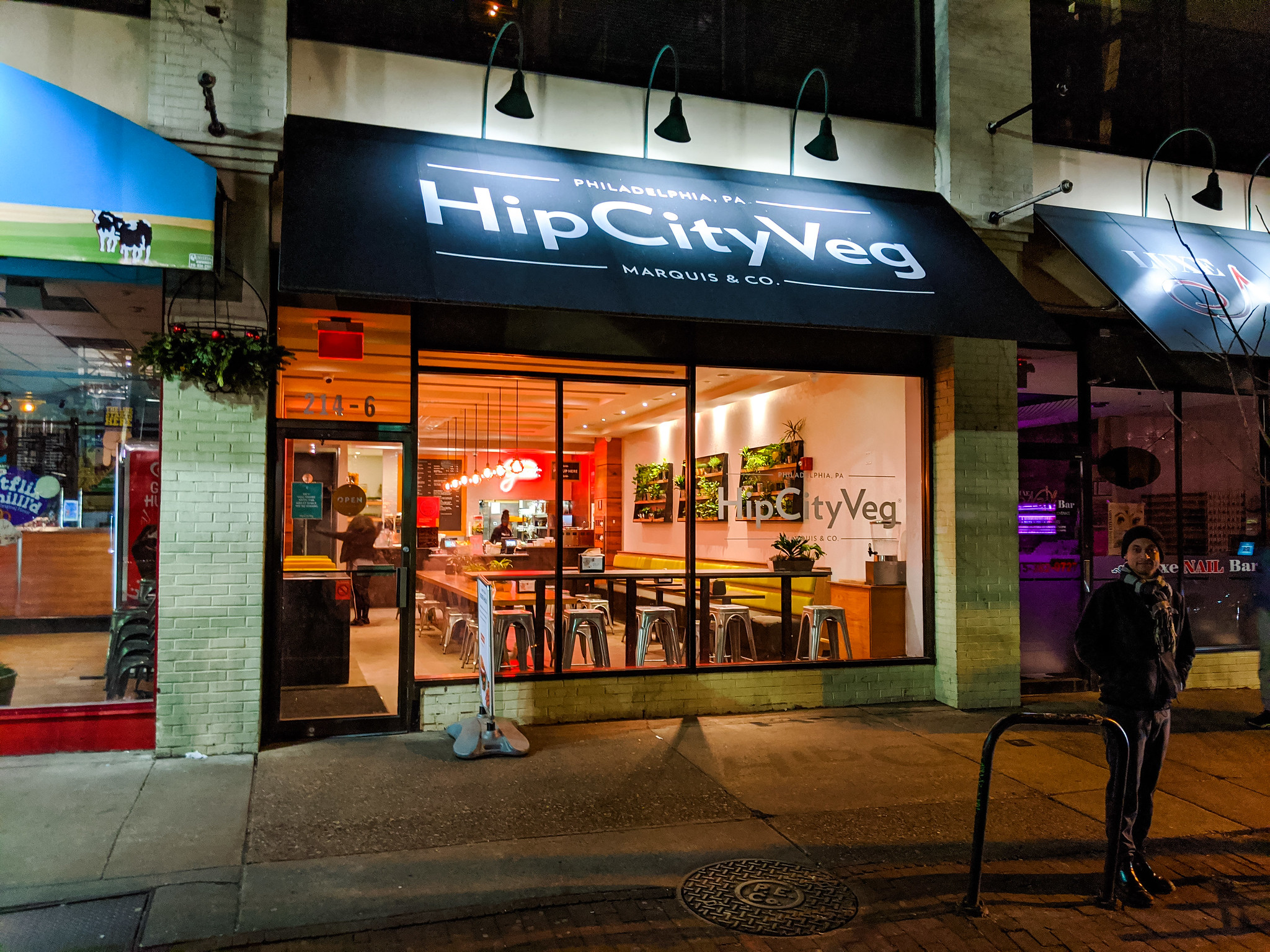
HipCityVeg is one of the countless Philly favorites struggling to stay in business through the fight against COVID-19. (Photograph courtesy of Mitch Altman at Flickr.)

In a New York Times interview, the famous chef and restauranteur David Chang — owner of the wildly popular restaurant Momofuku Noodle Bar in Manhattan, along with a dozen others — was asked about his prediction for the restaurant industry.

‘“I’m not being hyperbolic in any way,” Chang said about the future of the field in which he made his name. “Without government intervention, there will be no service industry.”’

It’s been just about a month since the United States came to an effective stoppage in normal daily life, and these past four weeks have been full of unexpected adjustments and, frankly, a lot of uncertainty.

However, if there is one industry in which there is the most uncertainty — minus the obvious answer of the medical industry, which is fighting on the front lines of this epidemic — it is most certainly the restaurant industry.

At the beginning of the Great Recession in 2008, the financial crisis was setting in. The U.S. Government, in an attempt to bail out the Central Banks, deemed them “too big to fail.” And, while it was the banks’ greed that got the U.S. into the Great Recession, they were indeed too big to fail.

Now it’s the restaurant industry — and frankly, the entire country’s service industry — that is too big to fail.

However, Chang doesn’t see the smaller restaurants and businesses getting the same help that the banks did back in 2008, despite them needing it all the same, if not more.

“I feel like it’s the polar opposite of 2008 when they helped the big banks and insurance companies because they had to or the world as we knew it would end. And now, in 2020, we’re talking about ‘nonessential’ businesses and people who don’t have the clout to be able to speak to the government. I have a hard time seeing all the mom-and-pop shops getting help from the government,” said Chang.

And yet, this is in reference to one of the largest industries to exist in the U.S.

According to Vault, the restaurant and food services industry is a $660 billion industry in the United States. The spread of the industry across the nation is so high that half of all adults have worked in food service at some point in their lives.

Restaurants employed 13.7 million Americans in 2018, and with reports discussing 2016 projections of earnings, The National Restaurant Association projected industry sales of $783 billion.

But one of the biggest problems of the greatly expanded restaurant industry — that was continually burgeoning over the last decade — is that many restaurants have been operating on extremely thin margins. That means after quickly losing revenue due to the pandemic, there may be no coming back.

The struggles of the gigantic restaurant industry, along with the large swaths of workers who have filed for unemployment, are why the Coronavirus Aid, Relief and Economic Security (CARES) Act has been created, passed and signed into action so quickly.

Along with the stimulus package and checks being sent to the unemployed and employed alike, restaurants and small businesses are also being helped. Thanks to a handy resource made by the U.S. Senate Committee on Small Business and Entrepreneurship, there is The Small Business Owner’s Guide to the CARES Act.

The guide covers anything and everything, from the Paycheck Protection Program (that is designed to help retain employees) to the Emergency Economic Injury Grant (which will give smaller cash infusions to cover current pandemic costs) to the Small Business Debt Relief Program (which will help with planning future loan payments for small businesses.)

All of these resources are invaluable, and the money given out from the CARES Act will be extremely helpful and go toward the inevitable stockpiling costs — not to mention the countless donations from customers, businesses and other kind souls.

And yet, a Philadelphia Magazine article written by Maddy Swietzer-Lamme suggests that even with government support, there will be countless restaurants that will never re-open. A statistic from the Department of Labor is mentioned in the article, stating that 60 percent of the 701,000 American jobs lost in March were employees at restaurants and bars.

On top of that, if the restaurants go out of business, what will become of the cities with empty buildings? As Michael Schulson of HipCityVeg explained, “If restaurants go out of business, that’s every ground floor, empty. There’s going to be no one to take over those spaces, and then our city [will be] a ghost town.”

With the uncertainty of ever re-opening the doors, restaurant owners have to not only figure out how to pay their employees now but also how they will recover from this in the future.

While many things need help right now, the restaurant industry will be taking one of the biggest hits, and when the dust settles, many of the places you used to frequent may never come back. But the fact still remains that the restaurant industry will be extremely affected — and inevitably permanently changed — by this pandemic.

Posted in UncategorizedComments Off on Philly ‘will be a ghost town’ if restaurants don’t survive pandemic

Free online learning resources made available to Drexel students

It is no secret to everyone that, in the middle of this pandemic, millions of people worldwide are being affected. Although some Drexel students are lucky to still be able to attend their classes online, others are struggling to maintain their co-ops by working from home or finding new ones. In general, the economic situation is challenging for students and textbooks are piling onto the existing strain from tuition.

With this in mind, some textbook and academic journal publishers have made their online resources free for students and educators to continue learning and teaching through this very challenging period.

Cengage Learning is providing free access for their Cengage Unlimited platform to all students and instructors in the US whose physical classes have been affected by COVID-19.

Several courses at Drexel are already getting their materials for free through this platform, which offers various eTextbooks as well as other interactive services like Quizlet Plus, Chegg Study Pack, Kaplan Test Prep courses and Evernote Premium.

The John Wiley & Sons, Inc. publisher, commonly known as Wiley, is also offering free access to their courseware, and their WileyPLUS or Knewton Alta platforms for the duration of spring term.

Cambridge University Press is making higher education textbooks free to access online during the outbreak. They offer over 700 textbooks, currently available for free until the end of May.

In addition, more field-based academic resources are offering free access to their resources like the American Psychology Association (APA) and the American Economic Association.

Mc Graw Hill and Sage Publishing are following suit but, in these cases, the class instructors have to submit a request for access. Some spring term courses at Drexel are already taking advantage of these free resources.

The online learning platforms Coursera and Skillshare are offering educational content, and Scribd is offering access to its library for free.

Coursera offers full courses from top universities like “The Science of Well Being” at Yale University and “Buddhism and Modern Psychology” at Columbia University. Skillshare is offering college students with a “.edu” email address two free months of premium membership to make it easy to learn new skills from home. And Scribd’s library — which includes millions of ebooks, audiobooks, magazine articles, and more — is available to anyone for free for 30 days, the company’s CEO and founder, Trip Adler announced in March.

Posted in UncategorizedComments Off on Free online learning resources made available to Drexel students

‘Policing Pandemics’ on the dangers of criminalization during pandemic

Criminology and the medical industry might not seem connected at first. TheBody, a well-known HIV/AIDS resource, proved otherwise in a webinar that took place on Wednesday, April 15. TheBody presented a webinar entitled “Policing Pandemics.” Four panelists discussed the dangers of criminalization during the COVID-19 pandemic.

Moderated by senior editor Kenyon Farrow and associate editor Mathew Rodriguez, the panel featured Catherine Hanssens, founder and executive director of The Center for HIV Law and Policy; Andrea Ritchie, researcher-in-residence at the Barnard Center for Research on Women and founder of the Interrupting Criminalization Project; Trevor Hoppe, assistant professor of sociology at UNC Greensboro and author of “Punishing Disease: HIV and the Criminalization of Sickness” and Breanna Diaz, policy director at Positive Women’s Network.

Hoppe opened by reminding viewers of the deep-rooted history of criminalizing disease. Hoppe frames Trump’s intentionality and use of the phrase “Chinese Virus” by discussing a history of similar behavior during epidemics. In the face of fear and unease, it is easy to blame certain groups and communities. More often than not, the groups blamed are based on stigma around class, gender and race.

Hoppe cited a bubonic plague outbreak in San Francisco between 1900-04, where Chinatown was targeted and exclusively quarantined by the government. He also discussed Mary Mallon, better known as “Typhoid Mary,” who was quarantined for life. While a number of carriers were documented at the same time, a low-skilled woman is still largely blamed in history books for spreading typhoid. Even in our recent history, stigma drove the scapegoating of a sexually promiscuous gay flight attendant for spreading AIDS in 1987. Clearly, blame shaped by prejudice and fear is not new to America.

“It looks a lot like history,” Hoppe said.

The group then moved on to discuss policing of space. With the new laws regulating public space during the pandemic, many rulings contradict themselves. Diaz cited an example in Virginia, where it is illegal to cover a portion of your face in public, yet the COVID-19 grocery store regulations call for people to wear face masks. A black man was already arrested for following store policy but breaking state law. Another person was arrested on the grounds of “reckless conduct” for coughing in the direction of police officers.

These contradictions in regulations and law allow for discrimination and policing of specific groups. Ritchie added that arrests are often violent and allow more opportunity for the spread of disease. She also pointed out the practice of “broken window policing,” a theory that suggests that eliminating visible signs of crime will prevent more serious crime.

Criminalization of disease also leads to heightened surveillance culture among law enforcement. Diaz discussed multiple instances of heightened surveillance, including sharing addresses of infected COVID-19 patients with first responders. Also listed was Kentucky’s use of ankle monitors to track COVID-19 patients and those within the same household who have disobeyed quarantine orders. A participant in the webinar chat added that citizens living on Maui Island, Hawaii are being tracked via cell phone due to the pandemic.

These measures blatantly ignore that asymptomatic groups are known to be a key factor in continuing the spread of the disease and thus is a misuse of data sharing.

Ritchie added that while our first reaction is to police groups and spaces, we should be asking our leaders for other options. Hoppe jumped in, saying that disease and epidemics are social mechanisms. People act as community members and not individuals during times like these. He encouraged the group to ask more questions. Rather than blaming people who go out in public while sick, Hoppe suggested we instead question policies and access to resources.

The webinar was very informational thanks to its expert panelists. The chat was also impressive and acted as a second dialogue to the topics. One participant brought up the issue of domestic violence, saying their community’s Intimate Partner Violence Shelter was beyond capacity. Another participant discussed immigration and COVID-19, saying 50 percent of U.S. deportees to Guatemala are testing positive.

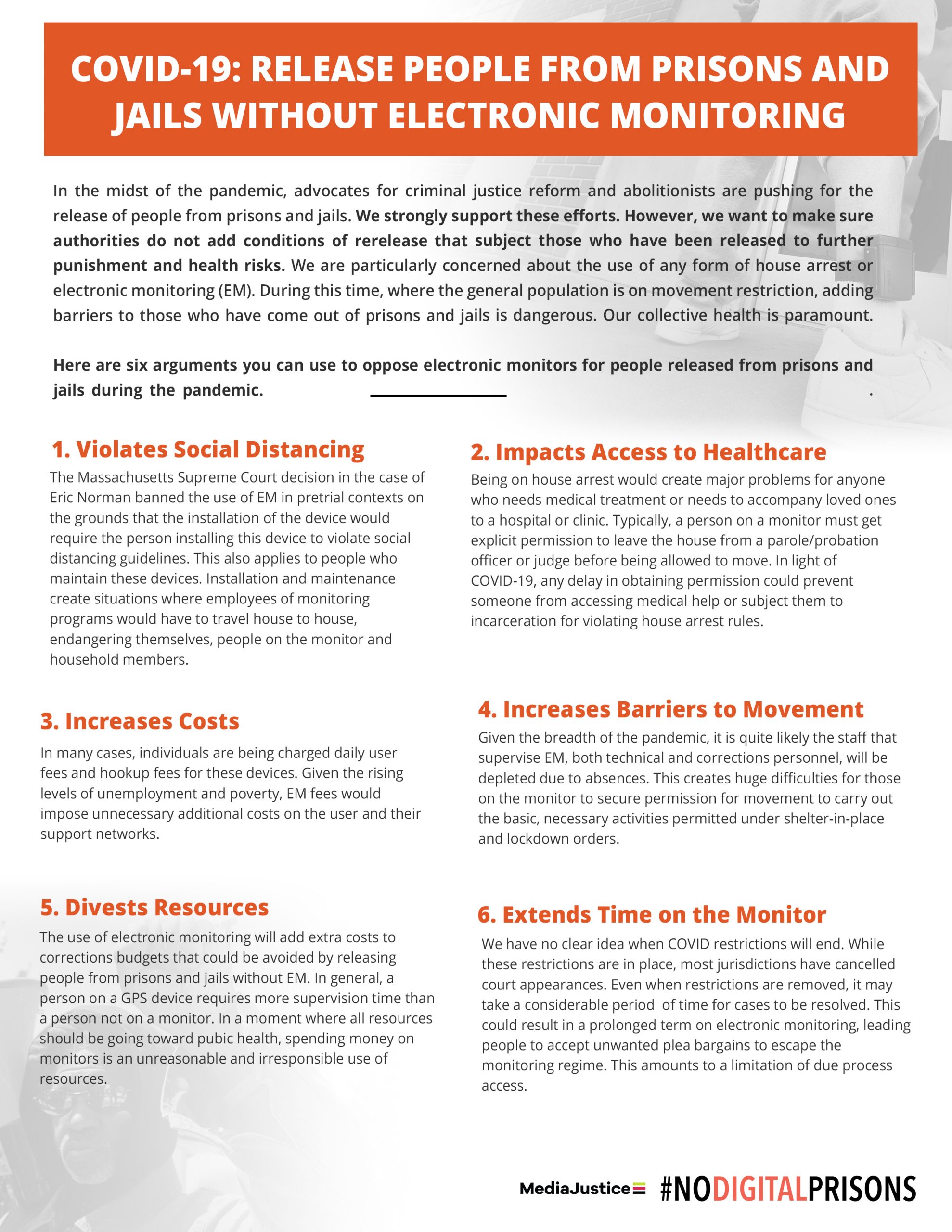
Resources were exchanged in the chat, which included a letter from the Positive Women’s Network urging congress to stop criminalizing COVID-19, a handout offering reasons to release people from prisons and jails without electronic monitoring, resources on COVID-19 Support, Advocacy, Gender and HIV from The Well Project and an analysis on HIPAA and public access to COVID-19 data.

Posted in UncategorizedComments Off on ‘Policing Pandemics’ on the dangers of criminalization during pandemic

Some co-ops canceled, others allow working remotely

Drexel has moved to online learning for spring term to combat the spread of COVID-19. (Photograph courtesy of Ted Major at Flickr.)

During the ongoing COVID-19 crisis, adjustments have become more and more commonplace, and nowhere has this mentality been embraced as wholeheartedly as it has been by Drexel University.

Colleges and universities across the world have made a major transition by moving classrooms to an online setting, with the additional complication of evacuating on-campus housing. However, the phenomenon of co-op that Drexel has so integrated into their plan of study presents an entirely new host of obstacles. In addition to the even more accelerated pace at which classes are now proceeding — from the traditional ten-week run to a nine-week sprint — students who were slated to start their co-op in spring quarter have faced extenuating issues.

Drexel’s co-op students are faced with working remotely for the first time, being reassigned to a different co-op position or having their starting date postponed. Uswa Mutaal, a sophomore Political Science and Economics double major, spoke with the Triangle about Drexel’s response and communication with students currently in the spring/summer co-op cycle.

“Drexel’s been very supportive actually. Steinbright worked with employers to have them delay start dates or start students off remotely rather than canceling the co-op altogether,” Mutaal said.

Despite spring break being extended an additional week, start and end dates vary depending on the employer, and the university continues to maintain the dates of the six-month co-op window.

While other colleges have more easily canceled the potential plans of their students intending to study abroad, the preparation required for students with co-op positions abroad has been difficult to navigate in the wake of various travel restrictions. In addition to all study abroad programs, intensive courses abroad and research abroad, co-ops abroad have also been canceled writ large, except for circumstances wherein international students would be returning to their country of origin to work.

Drexel has encouraged such students in these exceptional situations to immediately contact their co-op advisors for help in seeking out other options. Mutaal describes the process available for students attempting to salvage their co-op: “People who had their co-ops canceled actually went on other interviews via Steinbright, I’ve been told.”

Students across the globe have been coordinating with university mandates to evacuate campus housing and gain access to the technology required to attend and participate in their classes, all while grappling with the seemingly universal loss of motivation. Drexel students find themselves once again in a particularly unique position when considering those on co-op.

With many employers becoming more flexible (in terms of allowing employees to work from home), there is undoubtedly some element of Drexel’s distinguished co-op experience that is being lost. Despite there being no easy solution to this issue, a wide array of concerns have been voiced, especially from students with only one co-op opportunity.

Students with such concerns are being directed to their co-op advisor and have been told to keep their advisor in the loop regarding any changes. Mutaal explains, “I’ve been in touch with my co-op advisor about any changes to my situation and other professional development opportunities I could pursue, and she’s been helpful.”

If students are experiencing any difficulty in managing their co-op or classes amid this crisis, they are instructed to contact their co-op advisor or academic advisor accordingly.

Posted in UncategorizedComments Off on Some co-ops canceled, others allow working remotely