In today’s shifting energy landscape, the emphasis on the integration of renewable resources has stood at the forefront of continued innovation for a more sustainable future. However, this shift toward energy sources such as solar, wind and hydro to create renewable energy systems for national power grids has proved to be much more challenging.
With the growing incorporation of sustainable technologies, a similar growth in cyber attacks has arisen. Recognizing this increasing vulnerability in energy infrastructure, the U.S. Department of Energy (DOE) has designated a $4.6 Million grant to Georgia Tech’s School of Cybersecurity and Privacy (SCP). The grant, awarded last October, will fund the development of advanced cybersecurity measures for renewable energy systems.
The initiative, led by Associate Professor Saman Zonouz of both SCP and the School of Electrical and Computer Engineering (ECE), aims for his project to employ a new form of advanced artificial intelligence (AI) in the creation of a new cybersecurity lever named, Phorensics.
Phorensics, spelled with a “Ph” to emphasize a focus on the more physical aspect of forensic analysis, is specifically designed for security analysis following cyber attacks on modern-day power grid systems.
“After a security incident, you want to analyze what happened. You have data logs like in airplanes, a black box. In power systems, we have databases and data logs from the power system sensors and the computer logs,” Zonouz stated.
Using Phorensics’ AI-driven approach to standard cyber-attacks, response times and measures have quickly been revolutionized. Combining traditional data-driven cybersecurity with physical-based forensics, Zonouz’ modeled AI works to sift through and fill in cybersecurity gaps.
“Now, after the attack, you want to as best as possible analyze those logs to figure out what happened during the attack so that you figure out what was the whole code and code in your system that attackers penetrated through so that you can patch it and future, similar attacks from happening,” Zonouz ended.
Paired with the ever growing complexity of modern power grids in its shift toward renewable energy sources, Phorensics’ main promise stems from its adaptability and practicality. With the goal of total security presenting itself as an unrealistic expectation, Zonouz emphasizes his intention in the project.
“The real challenge is resilience,” Zonouz stated. “It’s about making sure that even if a cyberattack succeeds, we can recover quickly and restore full system functionality. Phorensics will allow us to analyze the situation, identify what parts of the system were impacted, and figure out how to restore normal operations without delay.”
While advancing technologies in AI have been seen to increasingly affect and promote renewable energy systems, a concern regarding its own energy consumption remains relevant.
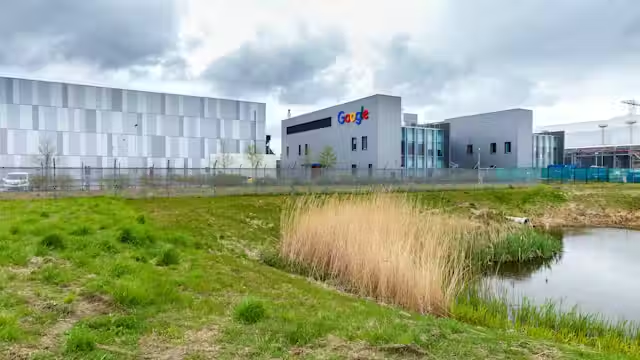
Seen in the growing use of AI data centers, large facilities specifically built to promote high-demand machine learning models and data processing, that are notorious for high-energy output costs and increasingly complex computational resource demands. The state of growing AI use in everyday life comes with a waning cost of how its carbon footprint may play a role in its future.
In an interview with The Technique, Arjun Ramshankar, a PhD student at Tech whose research basis focuses on cybersecurity for renewable energy, discusses the importance of balancing the rapid progression of AI with its environmental impact.
“While AI can optimize energy systems and predict electricity demand more accurately, it is also important to acknowledge the energy costs of running these AI algorithms,” Ramshankar said. “The challenge is to make AI more energy-efficient while ensuring it can still help improve sustainability.”
Despite the challenges, Ramshankar believes that the path to pushing for greater sustainable practices is more clear than people make it out to be.
“One solution is optimizing hardware, such as using energy-efficient GPUs specifically designed for AI tasks. Another approach is to refine algorithms to be more efficient, minimizing the computational power required.” Ramshankar ended.
In this, both Zonouz and Ramnshankar acknowledge the careful management that comes with the reduction of a growing carbon footprint presented by AI.
With renewable energies continuing to represent a definitive movement in the current global state, Zonouz’s initiative stands as just one of many different examples now of the dual role AI presents in both advancing and opposing sustainability goals. By continuing research and innovative practices regarding the interconnected roles AI plays, Tech researchers are paving the way for a more sustainable future.
“Our project is essentially a support effort to make the whole grid more sustainable and environmentally friendly. And the way we’re supporting it is to also provide cyber security protection with these new facilities that are being placed in the real world,” Zonouz ended.
The post AI reinforces grid security and sustainability appeared first on Technique.