Author Archives | Emma Kahl, Opinion Columnist

Kahl: Highway 99 after dark

The stretch from Eugene’s Roosevelt Boulevard to the Randy Papé Beltline houses a bowling alley, coffee shops, hotels, bars and restaurants. As the sun goes down, the lack of lights along the roadway makes it easy to see the stars. My view of the sky is quickly interrupted by the loud rumble of a huge truck racing by. The driver looks down, with the light of his phone illuminating his face, now in the distance. Suddenly, I remember that I’m standing along a highway: Highway 99.

A former barbecue restaurant now stands as an abandoned building covered in vivid and detailed graffiti. Makeshift tarp shelters are somewhat concealed by fences and street signs. There’s a real sense of history and culture around this area, even if it may not be a glamorous one.

As I walked up to the 7-Eleven on Roosevelt, I began chatting with a man named John. Appearing to be in his late 60s, John was accompanied by his three small dogs: Rambo, Ruckus and Rosie. They sat in a large cart atop all of his belongings as John explained that he has been living on the streets for the past nine years, with most of that time spent along Highway 99.

To John, this area is home. It’s where his friends live, where he finds his meals and where he tries to get a good night’s sleep, often unsuccessfully.

This isn’t an unusual story along Highway 99, as the roadway makes up Eugene’s densest area of resources for homeless members of the community.

St. Vincent de Paul has two shelters located in the area. The Schlies Resource Center and the Lindholm Social Service Center both provide food, showers, clothing and stabilization assistance. There are other community-supported shelters serving those who need medical recuperation housing, women-only and veteran housing. ShelterCare and Carry it Forward provide extensive support resources to the unhoused, and Sponsors Inc. is an affordable housing non-profit.

Because there are so many resources located in this small stretch, there’s a large population of people sleeping, walking and living along the highway.

John explained that there have been high rates of displacement from regular sweeps done by law enforcement, as the area is usually bustling at night. This has made it significantly harder for people to get back to the resource centers located near the highway.

The same stretch that often provides people a place to stay and an occasional warm meal, also places a vulnerable population right next to high-speed traffic. The combination of a 55 mph speed limit, with late-night traffic from the abundance of bars on this road and the large unhoused population living here, is a catastrophe waiting to happen — and it already has.

The Eugene Fatal Crash Report states that “88% of fatal crashes between 2022-2024 involved arterial streets, such as Highway 99.”

Back in 2022, Amber Mark, a beloved community member experiencing homelessness, was killed on impact when a driver recklessly tore through her tent. A large cross now marks the spot where she was killed, honoring her life and memory.

Merle Dean Sheffield was killed in a hit-and-run while riding his bike through a crosswalk on the Highway in January of this year. As another homeless Eugenian, Sheffield’s life is now honored by a ghost bike chained to the fence outside of the Lindholm Center.

To John, Sheffield’s death was personal. The two spent time living together along nearby train tracks and quickly became close friends. “He was quite a character,” John said with a chuckle, as though reminiscing on an old memory.

These deaths are not isolated incidents, but part of a larger pattern of hostility from drivers.

John recalled one occasion when a car targeted a group he was walking with on the sidewalk. The driver attempted to hit them and went as far as following the group to the train tracks, where they had to slip through a fence to avoid being struck.

John explained that he sees reckless driving and speeding along the highway daily. “It’s always been like that around here,” he said. Another issue with incidents like these is the lack of accessibility in reporting.

Local homelessness advocate, Sarah Koski, explained that unhoused people frequently receive trespassing citations or other minor infractions simply because they have nowhere else to go. As a result, many fear interacting with law enforcement, let alone feeling safe enough to report an incident or targeted attack.
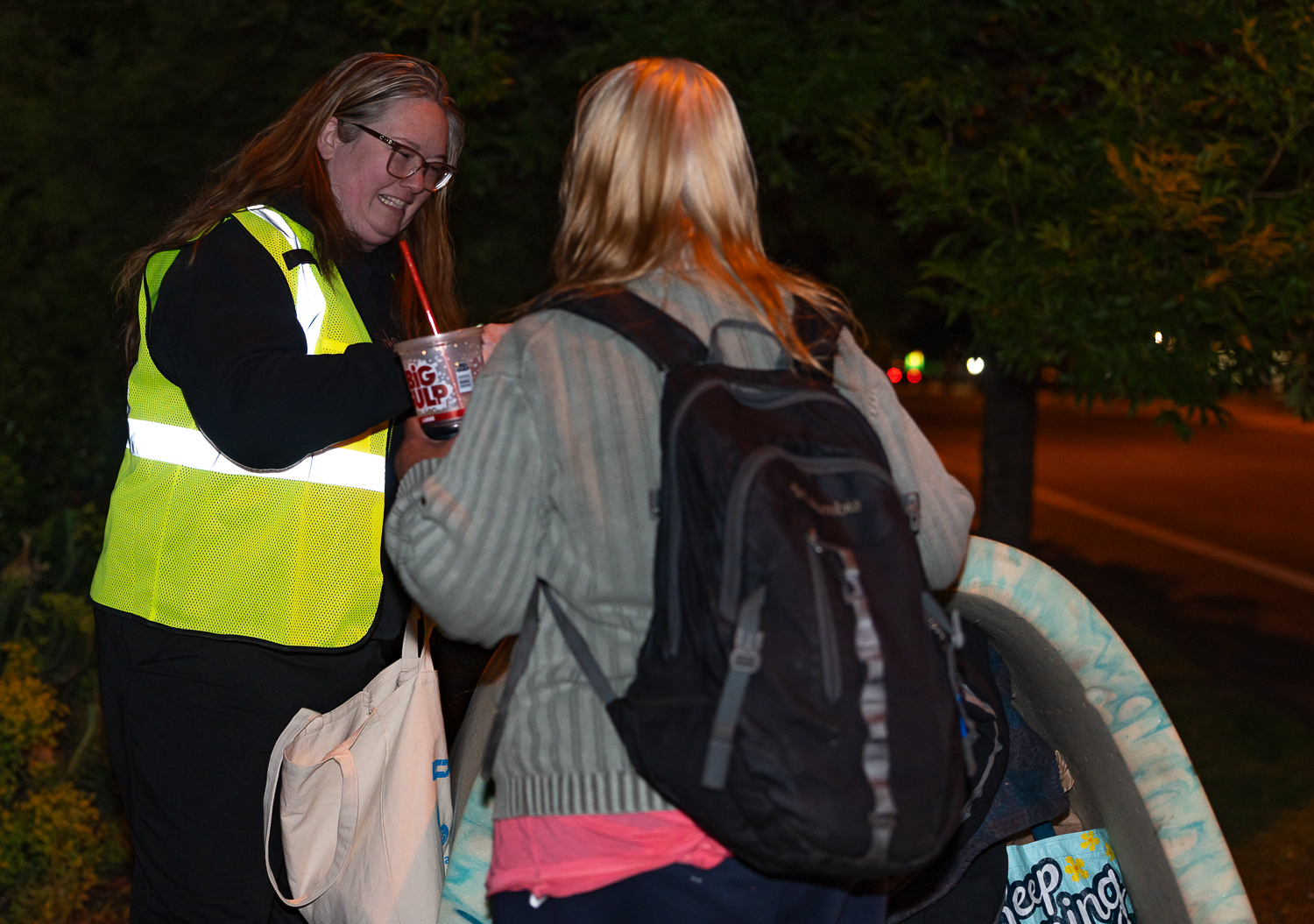
 

Sarah Koski hands out lights to unhoused individuals with the goal to keep them visible to passing motorists. Sarah Koski, an advocate for the equitable treatment of unhoused individuals seeking rehabilitation, housing, employment and care, works along Highway 99 in Eugene, Ore., to create a safer space for both motorists and pedestrians alike on May 19, 2026. (Saj Sundaram/Emerald) (Saj Sundaram)

In a 2019 study conducted by the National Coalition for the Homeless, the Bureau of Justice found that “less than half (44%) of violent victimizations (of people experiencing homelessness) are reported to police.”

While incidents go unreported for many reasons, the danger unhoused people face along Highway 99 should be hard to ignore.

Koski also pointed out that people tend to jaywalk on the highway as there’s a lack of crosswalks and that sidewalks abruptly end in certain areas, which is “bad for mobility.”

Many of the dedicated crosswalks also don’t feel safe. Koski said that with the deaths of Mark, Sheffield and others, the community is forced to choose between unsafely jaywalking or using the same crosswalks where people they know have been killed.

The danger of Eugene’s streets isn’t a secret to city leaders, as Eugene’s mayor and police chief both recently spoke at a community event and press conference on transportation and bicycle safety. Here, Eugene Police Department Chief Chris Skinner emphasized the importance of community reporting.

“We need to hear from you,” Skinner said after he explained that in his 35 years of service, the most aggressive driving he had “ever seen is in Eugene.”

While the city encourages the community to report in order to help make change, many of those being impacted by the accidents on Highway 99 face significant barriers in doing so. This often includes not having access to a phone or the internet in order to make reports.

The possibility of a low reporting rate doesn’t mean that incidents and attacks on this road are rare. What it indicates is that violence against unhoused people is overlooked.

This is where highway safety corridors come into play. Safety corridors are specific stretches of state highways where people are encouraged to drive more carefully and are often located where there are high rates of serious and fatal injury.

Typically, there is more action taken in these corridors to improve safety through enforcement, engineering progress, increased awareness efforts and enhancing coordination of emergency medical services.

Logan Telles, a transportation planner with the city, explained some of the upcoming plans for making the highway safer. He shared that there will soon be an increase in brighter street lights added, as well as sidewalk infill being done in 2027.

While these are important efforts, infrastructure alone won’t fully address the risks many face. A safety corridor designation would acknowledge the highway as a place where vulnerable people are looking to survive, while also helping to prevent further unnecessary deaths.

Lane County just recently designated portions of Marcola Road and Clear Lake Road as Safety Corridors, and beginning in May, traffic fines have doubled for speeding violations.

So why wouldn’t the city of Eugene consider this same designation for a portion of Highway 99? One particular stretch was already determined to be one of Eugene’s most dangerous roads for cyclists and pedestrians by LookOut Eugene in 2025.

This area simply doesn’t function as just a highway anymore. Highway 99 is a busy traffic route with high pedestrian activity, a wide range of businesses and is a central point for homelessness resources. Pair this with frequent car crashes, attacks on the homeless and driving under the influence, it’s a recipe for disaster, and we’ve already seen the effects.

In a recent Facebook post, the Lane County Government said that it “previously participated in a state pilot program on London Road that demonstrated safety corridors, combined with signage and public outreach, can significantly reduce deadly and serious crashes.” So by the county’s own reasoning, Highway 99 would likely see substantial improvements in safety from this kind of action and corridor designation.

We continue to treat Highway 99 as only a major roadway when it acts as more of a neighborhood. People commute, live, work, walk, eat and sleep here. They deserve to feel safe doing so.

There’s a serious safety concern here that the city can no longer overlook. While it may be an inconvenience for drivers to have to slow down on Highway 99, a highway safety corridor designation can help to save lives.

An unhoused individual shows his hands, covered in grime from living on the side of Highway 99. Sarah Koski, an advocate for the equitable treatment of unhoused individuals seeking rehabilitation, housing, employment and care, works along Highway 99 in Eugene, Ore., to create a safer space for both motorists and pedestrians alike on May 19, 2026. (Saj Sundaram/Emerald) (Saj Sundaram)

The post Kahl: Highway 99 after dark appeared first on Daily Emerald.
Posted in UncategorizedComments Off on Kahl: Highway 99 after dark

Kahl: Too many cyclists are being killed in Eugene

Just five days after Erick Munene Njue died in a collision while riding his bike near the University of Oregon campus, hundreds gathered for a vigil mourning the doctoral student. A stark white ghost bike memorial has since been surrounded by flowers just near the site of the crash. The community should not have to continuously grieve preventable deaths while waiting for safer infrastructure to be implemented.

Early this year, The Daily Emerald examined the local rise in traffic deaths and the seemingly slow response by the city of Eugene. While advocacy is essential in reducing the number of crashes, we have reached a point where direct action is urgently required to protect the broader community.

Darren Isenhour is a sales account manager for a local millwork shop in Eugene. He lives on River Road, directly across from where a traffic accident occurred on May 2 that resulted in the death of David Winston Morris, a local cyclist.

Isenhour explained that the streets of Eugene, and particularly those around River Road, have felt unsafe since he moved there over 10 years ago. He also mentioned that speeding and reckless driving are common occurrences in the area.

“Eugene has changed the speed limit, but that hasn’t changed the speeding. Maybe if people had real consequences for their actions, things would change,” Isenhour said. “I am at the point where I just don’t believe anyone really gives a damn.”

He also said the area is unfit for children and he doesn’t allow his kids to walk or bike to their nearby school or play in front of their house. “People have become selfish and unaware of their surroundings. It’s only a matter of time before another person is killed on this road,” Isenhour said.

Residents like Isenhour point to reckless driving and weak enforcement as major problems, while some cycling advocates say that Eugene’s inadequate road infrastructure also plays a substantial role in putting bikers at risk.

Kayna Robison is the president of Greater Eugene Area Riders, a nonprofit organization that encourages locals to use bike riding for both transportation and recreation. GEARs also provides safety skills and education and coordinates group rides.

Robison explained that Eugene’s reputation as a “bike-friendly” city can hide some of the very real safety concerns. She said that while the city continues to invest in painted bike lanes and increased cycling efforts, there is missing infrastructure, like protection barriers, that can better protect cyclists.

“Cyclists remain vulnerable when sharing roads with cars, especially on busy arterial streets. Rising traffic deaths nationwide, distracted driving and inconsistent road design also help explain why there have been increased cyclist fatalities despite Eugene having a healthy cycling culture,” Robison said.

The League of American Bicyclists established May as National Bike Month in 1956, and Eugene annually promotes its celebration all throughout the month by hosting events and group rides.

As Eugene riders take to the streets this month, cyclists must also consider if the city’s streets are actually safe enough to use. If the city encourages more frequent biking without making significant safety improvements, they risk turning this sustainable mode of transportation into a dangerous one.

The post Kahl: Too many cyclists are being killed in Eugene appeared first on Daily Emerald.

Posted in UncategorizedComments Off on Kahl: Too many cyclists are being killed in Eugene

Kahl: How street art and social movements interact

I recently went on a walk with the purpose of finding art and graffiti around the city. In doing so, I realized just how many little details are easy to miss if you don’t pay close attention — things like the hotdog stickers all around my apartment building, or the cryptic message spray-painted on the wall I pass every day on my walk home.

Some community art looks like big, beautifully thought out murals, silly little drawings or the letters L+S carved in a tree surrounded by a poorly sharpied-on heart. There are stickers with political messages slapped on lamp posts, flyers with cool visuals promoting the next protest and even anonymous cries for peace in affairs of global importance.

University of Oregon junior Gretchen Wackler remembered seeing particularly impactful artwork during the 2024 pro-Palestine encampment that took place on campus. She said one particular piece of sidewalk chalk art stood out to her as it labeled UO’s Johnson Hall as “Hind’s Hall.” This paid tribute to 5-year-old Hind Rajab, who was killed by Israel’s military forces in the Gaza Strip.

“I think that’s a really powerful thing to do. It gets people’s attention and forces people to reckon with the life of this child that was taken,” Wackler said. “I think it’s a peaceful form of protest, and I don’t think it hurts anybody.”

Wackler also shared her view on street art as having the unique ability to represent the values of everyday people in the community. “It’s so raw and unfiltered, especially graffiti. I think it’s kind of beautiful to see,” she said.

Graffiti grew in immense popularity back in 1960s New York and Philadelphia as a form of self-expression and rebellion, according to the East End Arts and Humanities Council. In an article, they wrote about the impact of the art form as having a great influence on community engagement and supporting grassroots movements by transforming blank spaces into places that capture the history and culture of an area.

Eugene has some truly beautiful murals, and the city often holds mural projects and programs to support local artists in making their mark.

UO Professor Julianne Newton, teaches visual communication and directs the doctoral program. She explained that graffiti and street design are “manifestations of human visual behavior.” These works reflect public opinion yet the impact of this art is often difficult to measure.

Professor Newton emphasized that the anonymity of these art forms allow artists to communicate
messages they may not feel safe attaching their name to. “It also carries an air of mystery, as with Banksy’s art. Credibility is bestowed by the viewer,” she said.

“Graffiti and street art offer meaningful platforms for messages a community needs to see and contemplate and that might not be publicly shared otherwise,” Newton said.

While many cities often commission murals, unauthorized graffiti is considered a criminal act, stickers and posters are commonly removed and written messages are painted over.

Because this art is used as a form of urban and suburban protest, it plays an important role in our local community. It not only entertains, it also informs. The thoughts of our neighbors are painted around the city like it’s Eugene’s living opinion column.

The post Kahl: How street art and social movements interact appeared first on Daily Emerald.

Posted in UncategorizedComments Off on Kahl: How street art and social movements interact

Kahl: A marathon is more than just miles

On what seemed to be Eugene’s sunniest spring day yet, over 10,000 participants took off past UO’s shimmering Hayward Field on April 26. Runners faced the same miles of hardship and perseverance, but each carried their own motivation to finish. 

Parker Washington flew into Eugene from San Diego, filled with nerves and excitement for the 26.2-mile race. Despite being a college basketball player and the manager of a fitness club, he didn’t feel totally capable of reaching his goal of finishing the Eugene Marathon in under four hours.

Having always been active and preparing for the race for over a year, Parker still found many moments of self-doubt throughout his first marathon. What helped him succeed with a time of 3:55:35 was his wife, Fontayne Washington. Fontayne is a nine-time marathon runner who had just finished the Boston Marathon six days before arriving in Eugene. 

“I remember not being a runner, and you don’t realize how much goes into running a marathon, and how much prep it takes; and back then, I don’t feel like I was as near as supportive as I am now, and so we’ve really been leaning on each other,” Parker said.

“It’s way more difficult than you think it’s gonna be, and she makes it look really easy,” he nodded toward his smiling wife while lying on the bright green turf near the finish line.

Fontayne also described the power running has in bringing people together. “Everyone just feels like one big family. Because I feel like in that moment, it’s so raw, and you see people at their worst and also their highest. It’s hard to find something like that,” she said. 

Not only are people running to beat personal records and overcome new athletic challenges, but some are also running for causes bigger than themselves. 

Two UO students, Taylor Parker and Hana Mazur, are a perfect example. They ran in honor of hostages and wrongful detainees with the goal of spreading awareness and creating hope for those affected by the wide-reaching and devastating impacts of hostage taking. 

In the UO Hostage Diplomacy course I am part of, Mazur and Parker have focused their project on running as a form of resistance. They were inspired by marathon runner and former hostage Anoosheh Ashoori, who was a guest speaker in the class. 

Ashoori emphasized the importance of something positive to come out of his experience and found running to be a “part of his salvation.” He finished the London Marathon on the same day as those running in Eugene.

Another pair running for a noble cause was Cleven and Nehemia Mmari. The pair ran in honor of Erick Munene Njue, a Ph.D. student at UO who was recently killed in a local traffic accident. I witnessed large groups wandering around the marathon route in matching shirts with Munene Njue’s photo and a message for Eugene City Council to “Act Now” against traffic deaths. The simple graphic held a powerful message. 

Whether it’s running for fun, for hostage diplomacy or in honor of a beloved community member, the result is the same: a highly emotional finish at Hayward Field with students, friends and family members cheering on their runner and the thousands of random strangers who participated. The Eugene Marathon sheds light on the power of community-centered events.

The post Kahl: A marathon is more than just miles appeared first on Daily Emerald.

Posted in UncategorizedComments Off on Kahl: A marathon is more than just miles

Kahl: Our coinless, cashless parking meters are leaving people behind

A few weeks ago, a friend of mine was visiting from out of town and pulled out her quarters to pay for parking while in downtown Eugene. She paused, realizing that there was no slot for coins, only a screen prompting payment by card. At that moment, we both realized how strange it was that so many systems are moving away from accepting physical cash.  

As cities continue to modernize infrastructure, cashless systems — while convenient for some — are exposing accessibility concerns. In a town filled with college students and people of all incomes, it’s important to have conversations about equity and access.

The city of Eugene’s website states that the switch to a card-only system was due to a large amount of meter vandalism and coin theft. While these concerns are understandable, completely removing cash places a burden on residents who rely on it.

A year ago, a Reddit thread with over 170 replies discussed Eugene parking meters only taking cards.
The initial post said, “As annoying as it is when private businesses don’t accept cash, I feel like that is their prerogative, but public gov(ernment) entity pulling this seems discriminatory at best.”

Another user responded, “I miss being able to drop a couple of quarters in and run an errand. Involving a card makes me avoid the area.” This issue has clearly concerned members of the community for some time.

Anne Brown is an associate professor at UO’s School of Planning, Public Policy and Management with a focus on transportation equity and travel behavior. She spoke on how card-only access affects unbanked populations.

“Unbanked households make up a declining share of American households, about 4.2% in 2023; this totals 5.6 million households nationwide,” Professor Brown said.

“I’d argue that parking access is not curtailed by a move to card-only meter parking in Eugene,” Brown said. She noted there are cash options at off-street garages and “multi-space kiosks in other city-owned parking lots.”

Brown offered a few alternate solutions Eugene could implement to maintain efficiency while ensuring the system remains inclusive. These included cash-loadable cards, integrating LTD’s tap card to be compatible with parking meters and postal banking.

However, the discussion surrounding cashless systems goes beyond just parking access.

Associate Professor of Sociology Jill Harrison specializes in studies of inequalities, occupations, labor and working class studies. She explained how there are important issues and inequalities created within public cashless systems.

Professor Harrison explained that credit, debit and prepaid cards all have fees or interest set by private companies, adding a cost to transactions. The shift to cashless systems works to increase profits for these companies. “There are clear inequalities present here,” she said.

Harrison also mentioned how using cashless systems requires technological literacy. She shared the example of her own mother, who is in her 70s and only uses cash or checks, and isn’t “technologically savvy.”

Access differences can leave some community members feeling excluded from an increasingly digital system.

“Cities definitely have responsibility for ensuring accessibility across a variety of domains of public life,”Harrison said. “The key is, we need people in positions of power that think and make decisions about issues like these.”

The post Kahl: Our coinless, cashless parking meters are leaving people behind appeared first on Daily Emerald.

Posted in UncategorizedComments Off on Kahl: Our coinless, cashless parking meters are leaving people behind

Kahl: Homelessness isn’t a personal failure; it’s a failure of the system

On Halloween, dressed as Mario, with a bright blue drink in hand, I was tired of losing at pool and ended up talking to the bouncer of the bar I was at. He was doodling flowers on a USPS sticker, and we ended up chatting about his passion for art, as well as his living situation, as he was working while also living out of his car. Since then, I’ve continuously thought about the fact that someone can be working full-time while still not being able to afford housing.

The city of Eugene estimates that over 3,000 people are affected by homelessness within the city. It’s a wide-reaching problem that requires further attention as well as compassion. I often hear overwhelmingly negative anti-homeless rhetoric when, in reality, these are our neighbors.

The National Alliance to End Homelessness did a study on the public perception of the root causes of homelessness. They found their polling to indicate many Americans believe that homelessness is primarily caused by personal issues and individual decisions. This viewpoint often overlooks the immense barriers people face in attaining stable housing, even when many are part of the local workforce.

ShelterCare is a nonprofit that has provided housing and behavioral health services to unhoused people in Eugene since opening in 1970. Crys Webb is a peer support supervisor and program coordinator at the organization.

Webb explained that it’s common for unhoused people to be earning an income in some way, but it’s often unstable and simply doesn’t keep up with housing costs. “The idea that most aren’t working is more myth than reality,” she said.

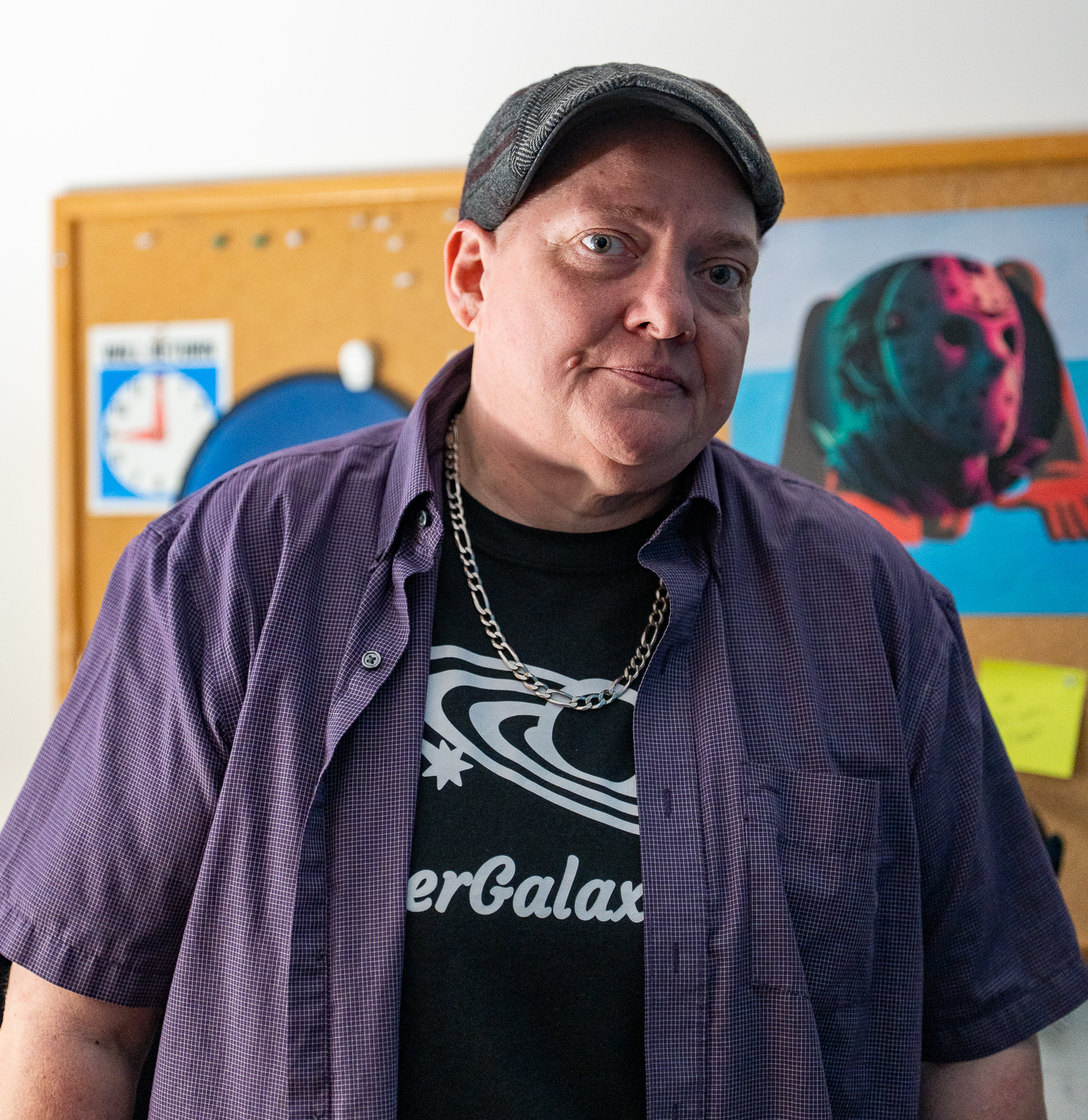
Crys Webb, a Peer Support Supervisor and Program Coordinator for ShelterCare, stands in her office inside ShelterCare. ShelterCare, a nonprofit located on 499 W 4th Ave., in Eugene, Ore., on Mar. 19, 2026, provides housing and behavioral health services for unhoused people across Eugene-Springfield area. (Saj Sundaram/Emerald). (Saj Sundaram)

Some of the barriers homeless people face when finding a stable job are not getting enough sleep while on the streets or in a car, a lack of transportation, access to a shower or clean clothes and the stigma that comes with being homeless.

“The narrative that unhoused people ‘don’t contribute’ does real harm, both in how policies are shaped and in how people are treated day to day. When the public believes someone isn’t working or giving back, it becomes easier to support policies that focus on punishment or removal instead of housing, services and stability,” Webb said.

This view continues to shape how our community responds to homelessness, often preventing meaningful aid and long-term solutions.

Sarah Koski is a University of Oregon alum who graduated with a degree in political science and is now a local homelessness advocate. She has worked in nearly every aspect of advocacy, as she ran a safe sleep site, oversaw local disaster response in preventing unnecessary homeless deaths, provided medical care with Whitebird clinic in homeless camps and created detox bags for those trying to get sober.

Koski explained that when solutions are proposed, the underlying problem is that people simply do not want to see homelessness. Some want to help, but only if it remains out of “their own backyard.”

She said that in order to get employed, you need stability, rest and to get healthy. “But what if you don’t have a phone, a resume, an email, access to charging or even a watch?” It’s the small things that people don’t realize are essential.

Despite this, 1/3 of the people at Koski’s safe sleep site were employed. She said that people are doing “whatever they can,” and just need “a little TLC.” Koski underscored the need for a strong system of support for these individuals, as well as second-chance employers.

“We have no idea what it takes to make it out there, but grace is so important,” Koski said.

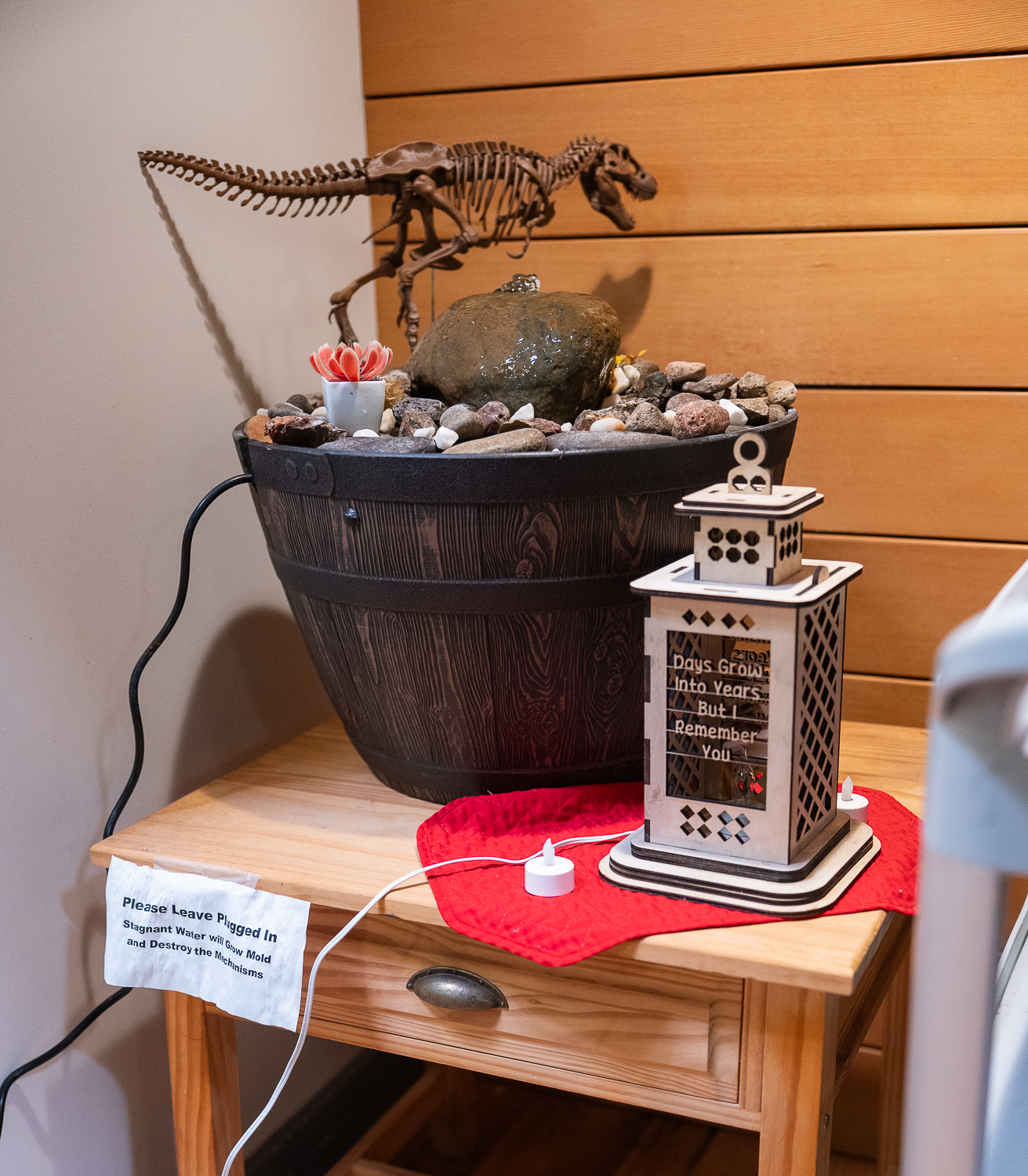
A small tribute, set up for former clients that have lost their life. ShelterCare, a nonprofit located on 499 W 4th Ave., in Eugene, Ore., on Mar. 19, 2026, provides housing and behavioral health services for unhoused people across Eugene-Springfield area. (Saj Sundaram/Emerald). (Saj Sundaram)

The post Kahl: Homelessness isn’t a personal failure; it’s a failure of the system appeared first on Daily Emerald.

Posted in UncategorizedComments Off on Kahl: Homelessness isn’t a personal failure; it’s a failure of the system

Kahl: Is taking a minor really worth it?

Initially, I didn’t plan to take a minor because I only wanted to study journalism. After finding out that I had to take one as a graduation requirement with my major, I was pretty frustrated. I already knew the path I wanted to take, so why did I have to add a bunch of extra classes I probably wouldn’t be that interested in?

I ended up declaring my global studies minor after realizing that I had already taken about half the credits I would need to finish a minor in the program. This was one of the best decisions I ended up making in college.

Senior McKenzie Leary faced a similar situation. As a public relations major, she was required to choose a minor, but she said that she probably would have chosen to take one regardless.

“It allows me to pursue my other interests outside of what I’m studying, and I think it gives you more competitiveness in the job market,” Leary said.

“I think it gives you specificity, and I also just think it’s fun,” she noted. “It’s pushing me outside of what I would normally take.”

Having even a small amount of knowledge in a more niche subject can make you a valuable asset in a post-grad world, especially if it complements your major.

Some students see a minor as a strategic way to explore new topics and stand out, while others may view it as an unnecessary add-on. Both perspectives are valid; it just depends on your priorities and long-term goals.

Ivonne Lopez, a third-year human physiology major, came into college with a bunch of psychology credits that she didn’t want to waste. This was her main motivation for declaring a minor.

She explained the extensive overlap between the two subjects and that taking both aligns well with her goal of going into the healthcare field. Despite her minor’s usefulness, she also said that many challenges can come with taking on extra classes.

For some, adding a minor to a degree can also add on extra terms and therefore increase a student’s financial burden. This can also increase the stakes during registration and make advising appointments that much more complicated.

“There is a lot of stress that comes with it, and I feel like for me and some friends I’ve talked to, you have to really decide whether it’s worth it,” Lopez said.

When asked if she would recommend other students take a minor, Lopez said that it truly depends on the person, their goals and what the minor is.

“I really do like psychology, and I think it’s been super beneficial for me,” Lopez said.

If I weren’t required to take a minor, I may not have found my passion for international relations. Because of the interesting and in-depth courses I’ve taken in international human rights, international cooperation and conflict, and others, I am now applying to master’s programs to continue these studies.

Sometimes it’s the classes you didn’t even plan to take that end up shaping your academic experience. While everyone’s goals look different and taking a minor may or may not be for you, it can be an opportunity to grow or widen your interests.

The post Kahl: Is taking a minor really worth it? appeared first on Daily Emerald.

Posted in UncategorizedComments Off on Kahl: Is taking a minor really worth it?

Kahl: The inhumane use of non-lethal munitions in Eugene

The only time I experienced tear gas was during an unlucky encounter with a protest in France. The Parisian police had accidentally dropped tear gas canisters into the subway below, leading to everyone in the crowded metro car to be trapped in a haze of chemical gas. The sounds of uncontrollable coughing came from every direction as tears poured down my face. I’ll never forget the intense burning smell and the way it choked me.

This experience doesn’t feel quite so distant anymore as I see similar tactics being used in Eugene today.

On Jan. 27, pepper balls, flash-bang grenades and tear gas were deployed against protesters over the span of four hours at a protest and vigil located at the Eugene Federal Building.

One protester said they experienced being teargassed that day and again on Jan. 30. They requested to remain anonymous due to fear of retaliation by DHS. The protesters explained that they showed up as part of the weekly interfaith “Singing for our Lives” protest.

“They started firing munitions while we were singing. It was a sudden but unsurprising escalation,” they said. “On Friday, things got quite heated.”

The Jan. 30 protest was deemed a riot, and President Trump even called out EPD on Truth Social for not having stopped the “criminals” from “breaking into” the building and doing “great damage.”

So, what was the damage? Video showed a federal agent who smashed a window from the inside to shoot tear gas out at the crowd.

“People are feeling scared but more empowered,” the protester said. “It’s very clear that (DHS) wanted to escalate, and they wanted any excuse to use this force.”

According to the Geneva Protocol of 1925, the use of chemical weapons such as tear gas is illegal in warfare, yet they are being utilized by the U.S. government against protesters regularly.

Dr. Stephanie Wiley is a UO sociology professor with 20 years of experience in the criminology field. “This wouldn’t be the first time the U.S. and international standards are at odds. Our entire criminal and juvenile justice systems are out of step with the United Nations’ recommendations for protecting human rights,” she said.

Wiley explained that the use of tear gas at protests does not de-escalate conflict and has the possibility of making situations worse. “Despite the potential for strengthening social connections within the protest group, the negative consequences of using tear gas certainly outweigh any
benefits,” she said.

“Chemical sprays, like tear gas, are the last step before lethal force. I don’t believe tear gas should be used at peaceful protests, and I think there are better methods for handling large crowds when disorder and illegal activity erupt,” Wiley said.

Protesters haven’t been the only ones targeted by munitions and violence by federal agents. The Daily Emerald captured video that shows agents continuously shooting at press who clearly and repeatedly identified themselves.

While the First Amendment guarantees freedom of the press, it apparently does not guarantee that journalists will not be targeted and attacked by their own government.

A federal judge temporarily prohibited DHS from using crowd control munitions at Portland’s ICE facility after tear gas was deployed on a peaceful protest, harming protesters, children, pets and elderly people.

My question is, what will it take for that temporary order to become permanent and extend to other communities facing similar treatment? Largely unidentified, masked federal agents are controlling what they deem to be “crime” at the cost of our community’s safety and freedom.

We’re at the point where Eugene City Council has declared a humanitarian crisis, yet residents are left to deal with the consequences and fear of being tear-gassed for standing up.

The post Kahl: The inhumane use of non-lethal munitions in Eugene appeared first on Daily Emerald.

Posted in UncategorizedComments Off on Kahl: The inhumane use of non-lethal munitions in Eugene

Kahl: Why Eugene must ‘Say No to Amazon’

I stopped using Amazon Prime over a year ago, despite its often-celebrated convenience. My choice to boycott the company was rooted in its ethical and environmental issues. This is why Eugene’s planned Amazon mega-warehouse is deeply concerning to me.

Amazon initially denied its intent to build the e-commerce center in Eugene in early 2025, but the company paid $2 million on Dec. 26, 2025, for a lot on Highway 99. Locals have voiced a range of concerns about the facility.

Stan Taylor is a co-leader of the advocacy group Indivisible Eugene Springfield and a former instructor of political science at Lane Community College.

Taylor pointed out the flawed argument that the warehouse would bring in money to solve Eugene’s financial crisis. “It’s not enough to solve the city’s problems, and it’s certainly not enough to sell your soul for,” he said.

While some argue that the warehouse has the potential to create openings in Eugene’s job market, Amazon has also shared its plan to replace the majority of its workers with robots and AI technology. The New York Times wrote, “documents show that Amazon’s robotics team has an ultimate goal to automate 75% of its operations.”

The advocacy group also formed “Say No to Amazon,” a collective looking to stop the implementation of the warehouse. At the Eugene City Council meeting on Jan. 26, members showed up wearing matching shirts and pins, with speeches in hand for the public comment portion of the meeting.

The group handed out a six-page packet filled with sources detailing Amazon’s connection with ICE  and aiding deportations, the company’s historical anti-union stance, its poor working conditions, its poor climate record and history of tax evasion.

Taylor also shared his deep concern for members of the Bethel and Santa Clara community who neighbor the purchased land. He said that no one from the city had informed them of Amazon’s intent and purchase.

“How hard would it have been for the city to reach out to the two closest neighborhood associations and let them know so that you could actually get real feedback?” Taylor said.

While economics and labor practices both raise serious questions, the environmental impacts remain one of the most critical reasons residents oppose the warehouse.

Victoria Acosta, an 18-year-old Eugene local, also spoke at the Jan. 26 Eugene City Council meeting to share her desire to see action taken by the city.

Acosta cited her concerns for Eugene’s wetlands, which will face the brunt of the damage with the implementation of the mega-warehouse.

The facility will be located on what was protected farmland until 2017 and will impact 9 acres of wetland, which the Willamette Valley has already lost 57% of. The project will permanently alter the wetlands, removing soil and infill.

“The wetlands are also flood protection, so if we get rid of this, what happens when we have heavy rain? We’re on the border of a climate disaster, and they’re not doing enough about it,” Acosta said.

Acosta also shared her view on the display of hypocrisy from the Eugene City Council for starting its meetings with a land acknowledgement while simultaneously harming the local land by allowing this project to take place.

The facility requires a pollution permit as “2,592 daily vehicle trips (are) projected to move in and out of the facility,” according to LookOut Eugene-Springfield. It’s clear that the environmental impacts will be wide-reaching.

It seems that city officials are unwilling to reconsider the facility despite the vast and deeply profound public concerns. As the project moves forward, it’s important that locals continue to voice their concern and find alternative retailers.

The post Kahl: Why Eugene must ‘Say No to Amazon’ appeared first on Daily Emerald.

Posted in UncategorizedComments Off on Kahl: Why Eugene must ‘Say No to Amazon’

Kahl: Eugene’s healthcare system is failing students and residents

It’s no secret that University of Oregon’s Health Center has long waitlists, a lack of medication and steep fees. These issues are compounded by the further lack of access to affordable healthcare in Eugene, leaving students and the local community to suffer.

Stella Schneider, a junior studying business and psychology, has regularly visited the UO Health Center when sick. She noted that while the care was adequate, wait times were long and that things “could be improved a bit.”

Schneider also mentioned she has noticed a lack of access to women’s health resources and programs at UO, and in Eugene as a whole. When a friend of hers went to the health center to get an IUD, she faced issues that led her to seek care elsewhere.

“I think changes need to be made,” Schneider said. As students feel the weight of limited care options, it seems that this points to a much larger crisis taking place.

With the shutdown of Eugene’s only emergency room in December 2023, the shutdown of Crisis Assistance Helping Out On The Streets in April 2025  and urgent care clinics that take hours to get an appointment at, Eugene residents are being put at risk. These changes allow for further delays in care, unnecessary and avoidable medical complications and mental health crises to go untreated.

During my freshman year, I had a sinus infection that took me out for nearly two weeks. After finally deciding to seek care at a walk-in clinic near campus, my last name was misspelled, causing my insurance not to cover the expenses. Three years later and countless phone calls to many billing departments, I never got a cent back from an over $300, five-minute visit.

Recently, a friend of mine visited this same clinic, where they paid only a $60 copay. So, without insurance, a patient might face a 400% increase for the same care received. As useful as health insurance can be, it also took this same friend over eight months to receive health insurance after moving to Oregon.

The impact of limited healthcare access hits some harder than others. Eugene’s unhoused population is already facing increased health risks and barriers to receiving care. With funding reductions and diminished capacity for winter warming centers in Eugene, the lack of accessible and affordable healthcare becomes significantly more dangerous.

Healthcare access has long been a systemic issue, which Oregon will continue to face as federal funds steadily diminish. According to the Oregon Department of Human Services, the Oregon Health Plan may see up to a $10 billion decrease over the next decade.

The Oregon Division of Financial Regulation recently noted that it expects insurance rates to increase by around 9.7% in 2026. This is due to the expiration of “federal Affordable Care Act tax subsidies” on Dec. 31, 2025, that helped to offset medical costs for many Oregonians.

These local failures point to a deeper-rooted issue that goes beyond the need for short-term fixes.

Healthcare for All Oregon is a nonprofit that has been working on universal health care reform in Oregon for over 20 years. According to their website, the organization advocates for equity, affordability and a “high-quality publicly funded universal healthcare system.”

Collin Stackhouse is HCAO’s communications coordinator. He explained that our current for-profit healthcare system is deeply broken.

“The biggest systemic failure is not having moved as a state to universal health care decades ago; propping up a broken system is the problem,” Stackhouse said.

“Canada spends half the money that we spend (on healthcare) in the U.S., and their people live five years longer on average than most Americans. The current status quo is the most expensive option on the planet, and it’s time for a change,” Stackhouse said.

HCAO helped create and now advocates for Oregon’s Universal Health Plan Governance Board, which is developing a plan to transition Oregon to a universal health care system by the 2027 legislative session.

“Oregon has shown remarkable tenacity and an ability to think creatively within a federal system that is dysfunctional and failing,” Stackhouse said.

The post Kahl: Eugene’s healthcare system is failing students and residents appeared first on Daily Emerald.

Posted in UncategorizedComments Off on Kahl: Eugene’s healthcare system is failing students and residents