

Author Archives | Ellyssa Meyer

Prediction markets need stricter regulations

Lily Huynh/The Cougar

Recently, D. Todd Christofferson, a leader of The Church of Jesus Christ of Latter-day Saints, condemned prediction markets, sparking discussion on the legality of the practice. While members of the faith have a reputation for being strict, their attitudes towards the subject tend to be consistent.

The same cannot be said of the federal government. Amidst countless regulations on gambling, prediction markets largely go overlooked, even though they cause a great amount of harm.

Gambling pains

Take Thomas, whose story was first reported by NPR, for example. After being introduced to gambling, he quickly fell into a rabbit hole, one that deepened after his introduction to Kalshi, an app based around prediction markets.

Gambling — because that’s what prediction markets are — ruined Thomas’ life. However, the Trump administration has yet to hold prediction markets to the same standards as traditional gambling.

This is despite the fact that traditional gambling had the same addictive qualities, but it was confined to a physical location.

When a person felt the urge to gamble, there was at least some amount of resistance built into the act, as they had to physically access that place. Gambling was therefore separate from everyday life, preventing a person from constantly placing bets.

Not today. Modern prediction markets take place entirely on apps, meaning that addiction can spread into the world at large, further financially harming affected individuals as they can continuously indulge.

As such, in order to keep those at particular risk of gambling addiction from financial ruin in an ever-unstable economy, the federal government should tighten restrictions on all forms of online gambling.

Who benefits from deregulation?

The Trump administration has not done that. As previously noted, it has instead done the opposite, leaving corporations to regulate themselves.

While such a hands-off approach is typical of an administration that espouses deregulation, it may also raise questions when Kalshi lobbies so vehemently and when Trump’s son has stakes in both Kalshi and Polymarket, another prediction market platform.

Anyone in direct contact with the president or any political authority should not be allowed to gamble on prediction markets, let alone have a vested interest in them, as they may have insight into the outcome of an event.

Such an act would be tantamount to insider trading, further highlighting why prediction markets should be clamped down upon.

Moving forward

As of this point in time, the federal government condones prediction markets. However, that does not mean there is nothing to be done.

Lobbying, such as Kalshi is doing, demonstrates the industry’s interest in keeping prediction markets unmoderated; thus, the public can counterbalance lobbying to some degree by calling their representatives and demonstrating their support for legislation restricting online gambling.

Though prediction markets are favored now, that does not mean that they will be favored forever. Administrations change, after all, and with them, the chance for stronger regulations.

opinion@thedailycougar.com

—
“Prediction markets need stricter regulations” was originally posted on The Cougar

Posted in UncategorizedComments Off on Prediction markets need stricter regulations

Prediction markets need stricter regulations

Lily Huynh/The Cougar

Recently, D. Todd Christofferson, a leader of The Church of Jesus Christ of Latter-day Saints, condemned prediction markets, sparking discussion on the legality of the practice. While members of the faith have a reputation for being strict, their attitudes towards the subject tend to be consistent.

The same cannot be said of the federal government. Amidst countless regulations on gambling, prediction markets largely go overlooked, even though they cause a great amount of harm.

Gambling pains

Take Thomas, whose story was first reported by NPR, for example. After being introduced to gambling, he quickly fell into a rabbit hole, one that deepened after his introduction to Kalshi, an app based around prediction markets.

Gambling — because that’s what prediction markets are — ruined Thomas’ life. However, the Trump administration has yet to hold prediction markets to the same standards as traditional gambling.

This is despite the fact that traditional gambling had the same addictive qualities, but it was confined to a physical location.

When a person felt the urge to gamble, there was at least some amount of resistance built into the act, as they had to physically access that place. Gambling was therefore separate from everyday life, preventing a person from constantly placing bets.

Not today. Modern prediction markets take place entirely on apps, meaning that addiction can spread into the world at large, further financially harming affected individuals as they can continuously indulge.

As such, in order to keep those at particular risk of gambling addiction from financial ruin in an ever-unstable economy, the federal government should tighten restrictions on all forms of online gambling.

Who benefits from deregulation?

The Trump administration has not done that. As previously noted, it has instead done the opposite, leaving corporations to regulate themselves.

While such a hands-off approach is typical of an administration that espouses deregulation, it may also raise questions when Kalshi lobbies so vehemently and when Trump’s son has stakes in both Kalshi and Polymarket, another prediction market platform.

Anyone in direct contact with the president or any political authority should not be allowed to gamble on prediction markets, let alone have a vested interest in them, as they may have insight into the outcome of an event.

Such an act would be tantamount to insider trading, further highlighting why prediction markets should be clamped down upon.

Moving forward

As of this point in time, the federal government condones prediction markets. However, that does not mean there is nothing to be done.

Lobbying, such as Kalshi is doing, demonstrates the industry’s interest in keeping prediction markets unmoderated; thus, the public can counterbalance lobbying to some degree by calling their representatives and demonstrating their support for legislation restricting online gambling.

Though prediction markets are favored now, that does not mean that they will be favored forever. Administrations change, after all, and with them, the chance for stronger regulations.

opinion@thedailycougar.com

—
“Prediction markets need stricter regulations” was originally posted on The Cougar
Posted in UncategorizedComments Off on Prediction markets need stricter regulations

Prediction markets need stricter regulations

Lily Huynh/The Cougar

Recently, D. Todd Christofferson, a leader of The Church of Jesus Christ of Latter-day Saints, condemned prediction markets, sparking discussion on the legality of the practice. While members of the faith have a reputation for being strict, their attitudes towards the subject tend to be consistent.

The same cannot be said of the federal government. Amidst countless regulations on gambling, prediction markets largely go overlooked, even though they cause a great amount of harm.

Gambling pains

Take Thomas, whose story was first reported by NPR, for example. After being introduced to gambling, he quickly fell into a rabbit hole, one that deepened after his introduction to Kalshi, an app based around prediction markets.

Gambling — because that’s what prediction markets are — ruined Thomas’ life. However, the Trump administration has yet to hold prediction markets to the same standards as traditional gambling.

This is despite the fact that traditional gambling had the same addictive qualities, but it was confined to a physical location.

When a person felt the urge to gamble, there was at least some amount of resistance built into the act, as they had to physically access that place. Gambling was therefore separate from everyday life, preventing a person from constantly placing bets.

Not today. Modern prediction markets take place entirely on apps, meaning that addiction can spread into the world at large, further financially harming affected individuals as they can continuously indulge.

As such, in order to keep those at particular risk of gambling addiction from financial ruin in an ever-unstable economy, the federal government should tighten restrictions on all forms of online gambling.

Who benefits from deregulation?

The Trump administration has not done that. As previously noted, it has instead done the opposite, leaving corporations to regulate themselves.

While such a hands-off approach is typical of an administration that espouses deregulation, it may also raise questions when Kalshi lobbies so vehemently and when Trump’s son has stakes in both Kalshi and Polymarket, another prediction market platform.

Anyone in direct contact with the president or any political authority should not be allowed to gamble on prediction markets, let alone have a vested interest in them, as they may have insight into the outcome of an event.

Such an act would be tantamount to insider trading, further highlighting why prediction markets should be clamped down upon.

Moving forward

As of this point in time, the federal government condones prediction markets. However, that does not mean there is nothing to be done.

Lobbying, such as Kalshi is doing, demonstrates the industry’s interest in keeping prediction markets unmoderated; thus, the public can counterbalance lobbying to some degree by calling their representatives and demonstrating their support for legislation restricting online gambling.

Though prediction markets are favored now, that does not mean that they will be favored forever. Administrations change, after all, and with them, the chance for stronger regulations.

opinion@thedailycougar.com

—
“Prediction markets need stricter regulations” was originally posted on The Cougar

Posted in UncategorizedComments Off on Prediction markets need stricter regulations

Why Texas Republicans are avoiding political debates

Chloe Sales/The Cougar

Election season is underway in the United States. Typically, such a season would consist of ads, speeches and debates; however, for Texans, the latter is almost entirely absent.

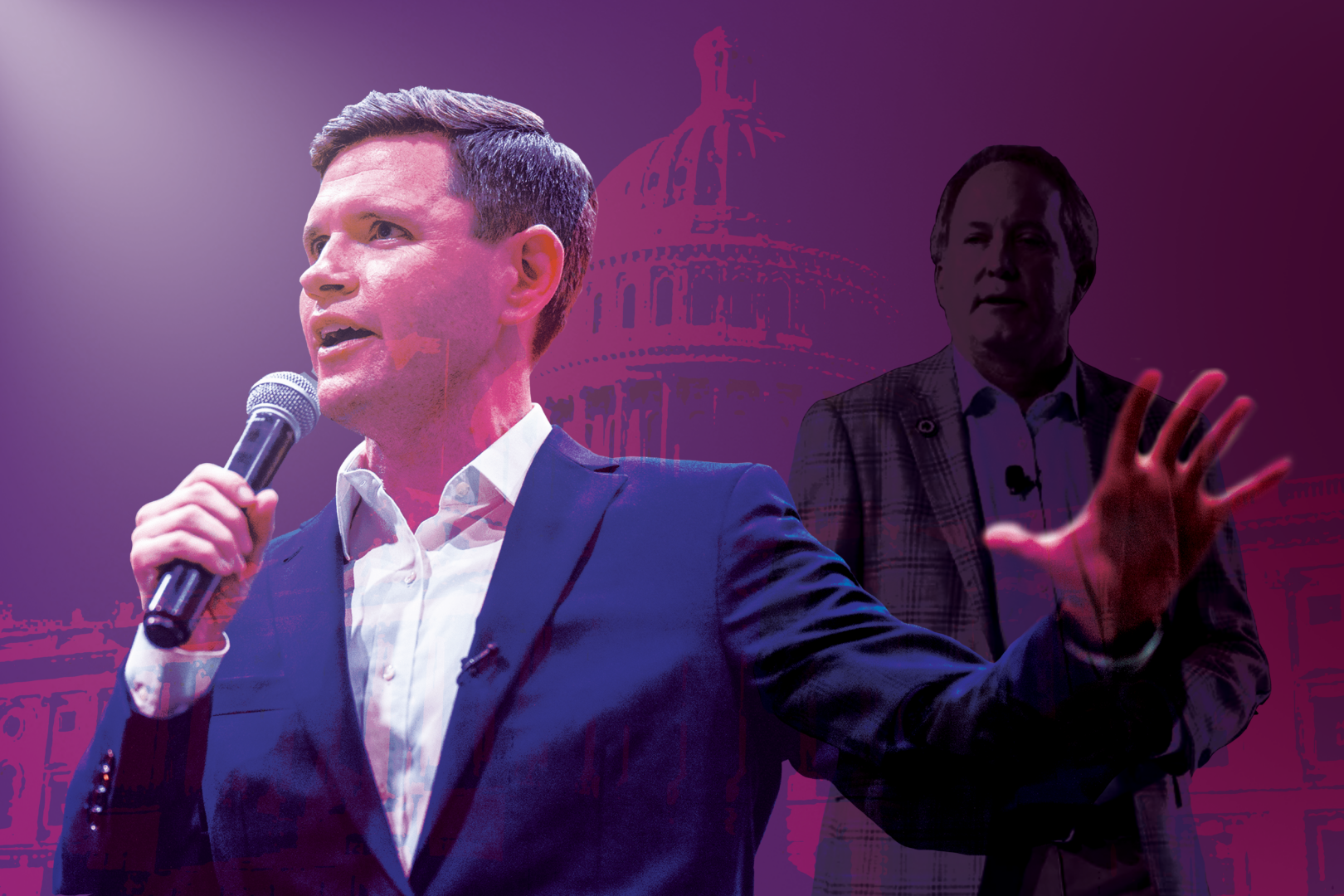
While candidates from both parties have declined debates, some prominent Texas Republicans have faced criticism for doing so, including Ken Paxton, who has declined calls to debate Democratic opponent James Talarico in the U.S. Senate race.

Some critics have suggested that Paxton’s reluctance to debate stems from concerns about how a public confrontation could affect his campaign. Regardless of Paxton’s speaking prowess, this assumption ignores the previously stated fact: Republicans across the board refuse to debate, not just Paxton.

Gov. Greg Abbott has debated his Democratic opponent in the past 12 years and three elections, and has won each one. This year, even though the race against Democrat Gina Hinojosa is extremely close, he has now decided that a debate is unnecessary. 

Assuming that every Republican candidate avoids debates out of fear of losing oversimplifies the issue. Given the sheer number of people involved, it is reasonable to assume that at least some Republicans would be skilled enough at debate, or face opponents weak enough, to avoid losing.

However, that does not mean that they are not afraid. Texas Republicans occupy a unique position. It is no small stretch to say that Texas is Republican, but at the same time, they support Trump, who is being viewed more and more negatively as time goes on.

The political climate is further complicated by immigration enforcement in Texas, which could affect support among Latino voters, as well as unfavorable public perceptions of both major political parties.

From a campaign strategy perspective, declining debates may allow Republican candidates to avoid giving their opponents additional visibility.

The strategy behind avoiding debates

It may be said that the entire point of campaigns is to give attention to the political candidate. 

Although some attention is necessary to inform voters about a candidate, Republican campaigns often structure their messaging, particularly in advertisements that voters regularly see, around presenting their candidate as a solution to the opposition.

By doing so, Republicans focus attention, and thus negativity, on their opponents, a strategy that relies on their opponents being the main focus. A debate would change this. Both parties are placed on equal footing, resulting in attention shared equally between them.

Participating in a debate could introduce political risks for Republican candidates who already benefit from a loyal voter base in Texas.

Although debates can offer candidates opportunities to reach voters, they also carry risks, which may help explain why some Republicans choose not to participate.

Voters deserve answers

Still, avoiding debates does not mean candidates should be exempt from answering voters’ questions.

Candidates regularly visit communities to connect with voters. Although Gov. Greg Abbott has emphasized the importance of community engagement in his campaign for a fourth term, participating in a debate would give voters another opportunity to hear directly from him.

If candidates want to earn voters’ trust, they should be willing to defend their positions on the debate stage rather than leave voters with unanswered questions.

opinion@thedailycougar.com

—
“Why Texas Republicans are avoiding political debates” was originally posted on The Cougar

Posted in UncategorizedComments Off on Why Texas Republicans are avoiding political debates