Author Archives | Elijah Andrews

PTS addresses Stinger network redesign feedback

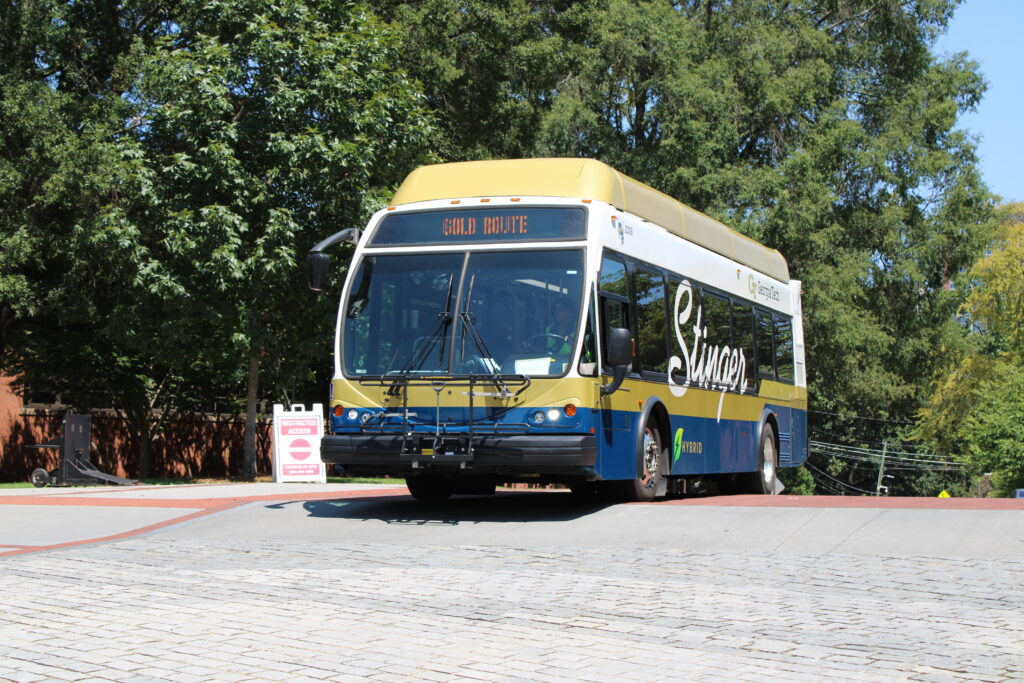
Parking and Transportation Services (PTS) announced last week that they are reverting some of the bus route changes implemented earlier this semester. The reversal comes after many students took to social media to express their dissatisfaction with the new bus routes and their desire for the old routes to be reinstated. PTS launched the new bus routing scheme on Aug. 11, but many users did not see the changes as positive.

The Aug. 11 redesign impacted a majority of weekday Stinger routes. The Gold replaced the Clough/Tech Square route and terminated at the Clough Undergraduate Learning Commons rather than circling campus to the Transit Hub. It also has a new stop at the intersection of Peachtree Place and Spring Street.

Another significant change was the conversion of the Red and Blue routes from opposing one-way loops into two bidirectional routes. The Blue route serves the Student Center and Campus Recreation Center, while the Red route serves Techwood Drive and the northern section of Ferst Drive.

The Gold, Red and Blue routes now operate from 7:00 a.m. to 2:45 a.m., replacing the Midnight Rambler, which operated between Clough, North Avenue Apartments and West Campus from 8:50 p.m. to 2:05 a.m. Nighttime Stingerette on-demand vans have also been changed to prioritize people leaving campus to nearby neighborhoods rather than those traveling within campus.

Routes serving off-campus destinations also changed in the Aug. 11 redesign. The Green route, which serves Home Park, Graduate and Family housing and Tech’s 14th St. facilities, was condensed to increase frequency. The North Avenue Research Area (NARA)/Science Square route no longer stops in front of the Engineering Science and Mechanics Building and Savant Building, instead taking a more direct route via State Street. 

After all the changes to existing routes, two new weekday routes were created. The Circulator route operates counterclockwise around the core campus, and the Northside/Atlantic Station route connects the respective areas to West Campus.

The bus network redesign was a part of the Transit Master Plan, which PTS began developing with an external consulting firm in 2024. The plan includes an electrification transition plan for the bus fleet and an operational analysis aimed at optimizing the network and responding to new developments in and around campus. As part of the redesign process, PTS began collecting opinions from students during the 2024-2025 academic year by posting an online survey about the buses and soliciting suggestions for improvements. The survey included 25 questions ranging from what buildings riders visited the most to whether they preferred frequency or coverage.

“We wanted to look at some of the service issues that we were experiencing, look at how the demand has shifted and align that with our Comprehensive Campus Plan,” said Derrick Walker, Director of Transportation at PTS.

The consultant evaluation of the existing bus system, survey answers and suggestions found that the Gold route was overcrowded and unreliable due to bus bunching caused by the route’s length and congestion on Ferst Drive. It also recorded student support for improving transportation connections to off-campus housing. PTS hosted meetings with the Student Government Association (SGA) and faculty and staff interest groups to share their recommended changes and gather feedback. 

“Once we got to a finalized point based on feedback … we started working this summer to move forward with the changes,” Walker said.

Abraham Werner, third-year CE & ALIS and Joint Vice President of Infrastructure and Sustainability for SGA, serves as a liaison between the student body and PTS. Werner has been involved in the redesign process, initially as a student assistant, and shared his thoughts about the Stinger redesign.

“On paper, if [the new routes] operated with the efficiency that a bus system should operate, they would have been incredible,” Werner said.

In his new position, Werner helped bring students’ and faculty’s opinions to PTS in the weeks following the Aug. 11 redesign launch.

“I’ve compiled close to 200 — maybe a little bit more — individual testimonials and comments about the new routes, which is an unprecedented level of engagement on any student issue,” Werner said. 

One of the Aug. 11 changes that impacted students the most is the merging of the Gold route with the Clough/Tech Square route.

“It’s faster to come to campus because the Gold is shorter and they have more buses on it,” said Saleema Manzoor, second-year CHBE. “But it is less convenient because it only goes [to Clough].”

The shortened Gold route also limited the benefits of the new Northside/Atlantic Station route for students traveling to Tech Square.

“I’d probably have to take three buses to come to Scheller,” said Sindhu Panthangi, M.S. ANLT, who lives near Atlantic Station. “I just walked today, that’s better.”

Issues with the TransLoc app made the Aug. 11 route changes more disruptive. One of the two buses on the new Circulator route regularly failed to appear on the TransLoc app due to technical difficulties with the GPS transmitter. Students have expressed a desire for the app to provide more information about the status of buses, such as whether a bus is in service.

“Sometimes you don’t know if they are just stopped or in traffic, and you are just waiting,“ said Ethan Eccleston, first-year CS. “[TransLoc] needs to give more information about when the bus is coming over.”

Students reported that they saw more buses congregating at one end of the Gold route due to the redesign.

“Sometimes you’ll have three buses come one after another, and then someone at another bus stop has to wait like 30 minutes,” said Kenneth Wangsadarma, fifth-year BME.

PTS met with SGA and the Georgia Tech Staff Council in early September to discuss the planning process and gather input on the new routes 

“We have also gotten good feedback from students, faculty and staff via email and our customer support online forms,” Walker said.

After gathering feedback and hearing students’ concerns, PTS announced adjustments to the new routes on Sept. 29, which will go into effect on Oct. 6. The old Gold route will be reinstated, and the new Gold route will be renamed to the Clough route. At night, eastbound Gold route buses will stop at the CULC. The new Circulator route will be eliminated, with buses being reallocated to the Gold route. 

The westbound Blue route stop at the Weber Building will be relocated to the shelter on Ferst Drive to help riders determine whether buses are going to North Avenue Apartments or West Village. However, these adjustments will not affect Aug. 11 changes to the Blue, Red, and NARA/Science Square routes.

“I’m super thankful for how much PTS has engaged with the student body, SGA, plenty of student groups and faculty and staff,” Werner said.

PTS is also working on creating a more structured program for individuals who use micromobility solutions, such as bikes and scooters, and is exploring partnerships with operators like Bird and Lime. It hopes to improve safety and ADA accessibility on campus sidewalks by addressing scooter parking. SGA has also requested that PTS explore student discounts for micromobility rental services.

“We’re trying to service a campus with a lot of different demands from various groups. So we’re doing our best to try to meet the needs of everybody,” Walker said. “We really appreciate the feedback that [students] bring … because you guys are the riders on a day-to-day basis.”

The PTS press release is available at www.pts.gatech.edu/2025/09/29/stinger-route-update-oct-6-25/. Students can offer feedback to PTS through its annual commuter survey, which concludes on Oct. 24. Any additional feedback can be submitted via www.pts.gatech.edu/contact/, the TransLoc app, or SGA by emailing it@sga.gatech.edu. 

The post PTS addresses Stinger network redesign feedback appeared first on Technique.
Posted in UncategorizedComments Off on PTS addresses Stinger network redesign feedback

PTS addresses Stinger network redesign feedback

Parking and Transportation Services (PTS) announced last week that they are reverting some of the bus route changes implemented earlier this semester. The reversal comes after many students took to social media to express their dissatisfaction with the new bus routes and their desire for the old routes to be reinstated. PTS launched the new bus routing scheme on Aug. 11, but many users did not see the changes as positive.

The Aug. 11 redesign impacted a majority of weekday Stinger routes. The Gold replaced the Clough/Tech Square route and terminated at the Clough Undergraduate Learning Commons rather than circling campus to the Transit Hub. It also has a new stop at the intersection of Peachtree Place and Spring Street.

Another significant change was the conversion of the Red and Blue routes from opposing one-way loops into two bidirectional routes. The Blue route serves the Student Center and Campus Recreation Center, while the Red route serves Techwood Drive and the northern section of Ferst Drive.

The Gold, Red and Blue routes now operate from 7:00 a.m. to 2:45 a.m., replacing the Midnight Rambler, which operated between Clough, North Avenue Apartments and West Campus from 8:50 p.m. to 2:05 a.m. Nighttime Stingerette on-demand vans have also been changed to prioritize people leaving campus to nearby neighborhoods rather than those traveling within campus.

Routes serving off-campus destinations also changed in the Aug. 11 redesign. The Green route, which serves Home Park, Graduate and Family housing and Tech’s 14th St. facilities, was condensed to increase frequency. The North Avenue Research Area (NARA)/Science Square route no longer stops in front of the Engineering Science and Mechanics Building and Savant Building, instead taking a more direct route via State Street. 

After all the changes to existing routes, two new weekday routes were created. The Circulator route operates counterclockwise around the core campus, and the Northside/Atlantic Station route connects the respective areas to West Campus.

The bus network redesign was a part of the Transit Master Plan, which PTS began developing with an external consulting firm in 2024. The plan includes an electrification transition plan for the bus fleet and an operational analysis aimed at optimizing the network and responding to new developments in and around campus. As part of the redesign process, PTS began collecting opinions from students during the 2024-2025 academic year by posting an online survey about the buses and soliciting suggestions for improvements. The survey included 25 questions ranging from what buildings riders visited the most to whether they preferred frequency or coverage.

“We wanted to look at some of the service issues that we were experiencing, look at how the demand has shifted and align that with our Comprehensive Campus Plan,” said Derrick Walker, Director of Transportation at PTS.

The consultant evaluation of the existing bus system, survey answers and suggestions found that the Gold route was overcrowded and unreliable due to bus bunching caused by the route’s length and congestion on Ferst Drive. It also recorded student support for improving transportation connections to off-campus housing. PTS hosted meetings with the Student Government Association (SGA) and faculty and staff interest groups to share their recommended changes and gather feedback. 

“Once we got to a finalized point based on feedback … we started working this summer to move forward with the changes,” Walker said.

Abraham Werner, third-year CE & ALIS and Joint Vice President of Infrastructure and Sustainability for SGA, serves as a liaison between the student body and PTS. Werner has been involved in the redesign process, initially as a student assistant, and shared his thoughts about the Stinger redesign.

“On paper, if [the new routes] operated with the efficiency that a bus system should operate, they would have been incredible,” Werner said.

In his new position, Werner helped bring students’ and faculty’s opinions to PTS in the weeks following the Aug. 11 redesign launch.

“I’ve compiled close to 200 — maybe a little bit more — individual testimonials and comments about the new routes, which is an unprecedented level of engagement on any student issue,” Werner said. 

One of the Aug. 11 changes that impacted students the most is the merging of the Gold route with the Clough/Tech Square route.

“It’s faster to come to campus because the Gold is shorter and they have more buses on it,” said Saleema Manzoor, second-year CHBE. “But it is less convenient because it only goes [to Clough].”

The shortened Gold route also limited the benefits of the new Northside/Atlantic Station route for students traveling to Tech Square.

“I’d probably have to take three buses to come to Scheller,” said Sindhu Panthangi, M.S. ANLT, who lives near Atlantic Station. “I just walked today, that’s better.”

Issues with the TransLoc app made the Aug. 11 route changes more disruptive. One of the two buses on the new Circulator route regularly failed to appear on the TransLoc app due to technical difficulties with the GPS transmitter. Students have expressed a desire for the app to provide more information about the status of buses, such as whether a bus is in service.

“Sometimes you don’t know if they are just stopped or in traffic, and you are just waiting,“ said Ethan Eccleston, first-year CS. “[TransLoc] needs to give more information about when the bus is coming over.”

Students reported that they saw more buses congregating at one end of the Gold route due to the redesign.

“Sometimes you’ll have three buses come one after another, and then someone at another bus stop has to wait like 30 minutes,” said Kenneth Wangsadarma, fifth-year BME.

PTS met with SGA and the Georgia Tech Staff Council in early September to discuss the planning process and gather input on the new routes 

“We have also gotten good feedback from students, faculty and staff via email and our customer support online forms,” Walker said.

After gathering feedback and hearing students’ concerns, PTS announced adjustments to the new routes on Sept. 29, which will go into effect on Oct. 6. The old Gold route will be reinstated, and the new Gold route will be renamed to the Clough route. At night, eastbound Gold route buses will stop at the CULC. The new Circulator route will be eliminated, with buses being reallocated to the Gold route. 

The westbound Blue route stop at the Weber Building will be relocated to the shelter on Ferst Drive to help riders determine whether buses are going to North Avenue Apartments or West Village. However, these adjustments will not affect Aug. 11 changes to the Blue, Red, and NARA/Science Square routes.

“I’m super thankful for how much PTS has engaged with the student body, SGA, plenty of student groups and faculty and staff,” Werner said.

PTS is also working on creating a more structured program for individuals who use micromobility solutions, such as bikes and scooters, and is exploring partnerships with operators like Bird and Lime. It hopes to improve safety and ADA accessibility on campus sidewalks by addressing scooter parking. SGA has also requested that PTS explore student discounts for micromobility rental services.

“We’re trying to service a campus with a lot of different demands from various groups. So we’re doing our best to try to meet the needs of everybody,” Walker said. “We really appreciate the feedback that [students] bring … because you guys are the riders on a day-to-day basis.”

The PTS press release is available at www.pts.gatech.edu/2025/09/29/stinger-route-update-oct-6-25/. Students can offer feedback to PTS through its annual commuter survey, which concludes on Oct. 24. Any additional feedback can be submitted via www.pts.gatech.edu/contact/, the TransLoc app, or SGA by emailing it@sga.gatech.edu. 

The post PTS addresses Stinger network redesign feedback appeared first on Technique.
Posted in UncategorizedComments Off on PTS addresses Stinger network redesign feedback

PTS addresses Stinger network redesign feedback

Parking and Transportation Services (PTS) announced last week that they are reverting some of the bus route changes implemented earlier this semester. The reversal comes after many students took to social media to express their dissatisfaction with the new bus routes and their desire for the old routes to be reinstated. PTS launched the new bus routing scheme on Aug. 11, but many users did not see the changes as positive.

The Aug. 11 redesign impacted a majority of weekday Stinger routes. The Gold replaced the Clough/Tech Square route and terminated at the Clough Undergraduate Learning Commons rather than circling campus to the Transit Hub. It also has a new stop at the intersection of Peachtree Place and Spring Street.

Another significant change was the conversion of the Red and Blue routes from opposing one-way loops into two bidirectional routes. The Blue route serves the Student Center and Campus Recreation Center, while the Red route serves Techwood Drive and the northern section of Ferst Drive.

The Gold, Red and Blue routes now operate from 7:00 a.m. to 3:15 a.m., replacing the Midnight Rambler, which operated between Clough, North Avenue Apartments and West Campus from 8:50 p.m. to 2:05 a.m. Nighttime Stingerette on-demand vans have also been changed to prioritize people leaving campus to nearby neighborhoods rather than those traveling within campus.

Routes serving off-campus destinations also changed in the Aug. 11 redesign. The Green route, which serves Home Park, Graduate and Family housing and Tech’s 14th St. facilities, was condensed to increase frequency. The North Avenue Research Area (NARA)/Science Square route no longer stops in front of the Engineering Science and Mechanics Building and Savant Building, instead taking a more direct route via State Street. 

After all the changes to existing routes, two new weekday routes were created. The Circulator route operates counterclockwise around the core campus, and the Northside/Atlantic Station route connects the respective areas to West Campus.

The bus network redesign was a part of the Transit Master Plan, which PTS began developing with an external consulting firm in 2024. The plan includes an electrification transition plan for the bus fleet and an operational analysis aimed at optimizing the network and responding to new developments in and around campus. As part of the redesign process, PTS began collecting opinions from students during the 2024-2025 academic year by posting an online survey about the buses and soliciting suggestions for improvements. The survey included 25 questions ranging from what buildings riders visited the most to whether they preferred frequency or coverage.

“We wanted to look at some of the service issues that we were experiencing, look at how the demand has shifted and align that with our Comprehensive Campus Plan,” said Derrick Walker, Director of Transportation at PTS.

The consultant evaluation of the existing bus system, survey answers and suggestions found that the Gold route was overcrowded and unreliable due to bus bunching caused by the route’s length and congestion on Ferst Drive. It also recorded student support for improving transportation connections to off-campus housing. PTS hosted meetings with the Student Government Association (SGA) and faculty and staff interest groups to share their recommended changes and gather feedback. 

“Once we got to a finalized point based on feedback … we started working this summer to move forward with the changes,” Walker said.

Abraham Werner, third-year CE & ALIS and Joint Vice President of Infrastructure and Sustainability for SGA, serves as a liaison between the student body and PTS. Werner has been involved in the redesign process, initially as a student assistant, and shared his thoughts about the Stinger redesign.

“On paper, if [the new routes] operated with the efficiency that a bus system should operate, they would have been incredible,” Werner said.

In his new position, Werner helped bring students’ and faculty’s opinions to PTS in the weeks following the Aug. 11 redesign launch.

“I’ve compiled close to 200 — maybe a little bit more — individual testimonials and comments about the new routes, which is an unprecedented level of engagement on any student issue,” Werner said. 

One of the Aug. 11 changes that impacted students the most is the merging of the Gold route with the Clough/Tech Square route.

“It’s faster to come to campus because the Gold is shorter and they have more buses on it,” said Saleema Manzoor, second-year CHBE. “But it is less convenient because it only goes [to Clough].”

The shortened Gold route also limited the benefits of the new Northside/Atlantic Station route for students traveling to Tech Square.

“I’d probably have to take three buses to come to Scheller,” said Sindhu Panthangi, M.S. ANLT, who lives near Atlantic Station. “I just walked today, that’s better.”

Issues with the TransLoc app made the Aug. 11 route changes more disruptive. One of the two buses on the new Circulator route regularly failed to appear on the TransLoc app due to technical difficulties with the GPS transmitter. Students have expressed a desire for the app to provide more information about the status of buses, such as whether a bus is in service.

“Sometimes you don’t know if they are just stopped or in traffic, and you are just waiting,“ said Ethan Eccleston, first-year CS. “[TransLoc] needs to give more information about when the bus is coming over.”

Students reported that they saw more buses congregating at one end of the Gold route due to the redesign.

“Sometimes you’ll have three buses come one after another, and then someone at another bus stop has to wait like 30 minutes,” said Kenneth Wangsadarma, fifth-year BME.

PTS met with SGA and the Georgia Tech Staff Council in early September to discuss the planning process and gather input on the new routes 

“We have also gotten good feedback from students, faculty and staff via email and our customer support online forms,” Walker said.

After gathering feedback and hearing students’ concerns, PTS announced adjustments to the new routes on Sept. 29, which will go into effect on Oct. 6. The old Gold route will be reinstated, and the new Gold route will be renamed to the Clough route. At night, eastbound and westbound Gold route buses will stop at the CULC. The new Circulator route will be eliminated, with buses being reallocated to the Gold route. 

The westbound Blue route stop at the Weber Building will be relocated to the shelter on Ferst Drive to help riders determine whether buses are going to North Avenue Apartments or West Village. However, these adjustments will not affect Aug. 11 changes to the Blue, Red, and NARA/Science Square routes.

“I’m super thankful for how much PTS has engaged with the student body, SGA, plenty of student groups and faculty and staff,” Werner said.

PTS is also working on creating a more structured program for individuals who use micromobility solutions, such as bikes and scooters, and is exploring partnerships with operators like Bird and Lime. It hopes to improve safety and ADA accessibility on campus sidewalks by addressing scooter parking. SGA has also requested that PTS explore student discounts for micromobility rental services.

“We’re trying to service a campus with a lot of different demands from various groups. So we’re doing our best to try to meet the needs of everybody,” Walker said. “We really appreciate the feedback that [students] bring … because you guys are the riders on a day-to-day basis.”

The PTS press release is available at www.pts.gatech.edu/2025/09/29/stinger-route-update-oct-6-25/. Students can offer feedback to PTS through its annual commuter survey, which concludes on Oct. 24. Any additional feedback can be submitted via www.pts.gatech.edu/contact/, the TransLoc app, or SGA by emailing it@sga.gatech.edu. 


Note: A previous version of this article stated that Gold, Red and Blue routes end at 2:45 a.m. and the Gold route only stops at the CULC when traveling eastbound. The Gold, Red and Blue routes end service at 3:15 a.m., and the GOLD route stops at the CULC when traveling both directions.

The post PTS addresses Stinger network redesign feedback appeared first on Technique.

Posted in UncategorizedComments Off on PTS addresses Stinger network redesign feedback

WreckCon welcomes waves of students

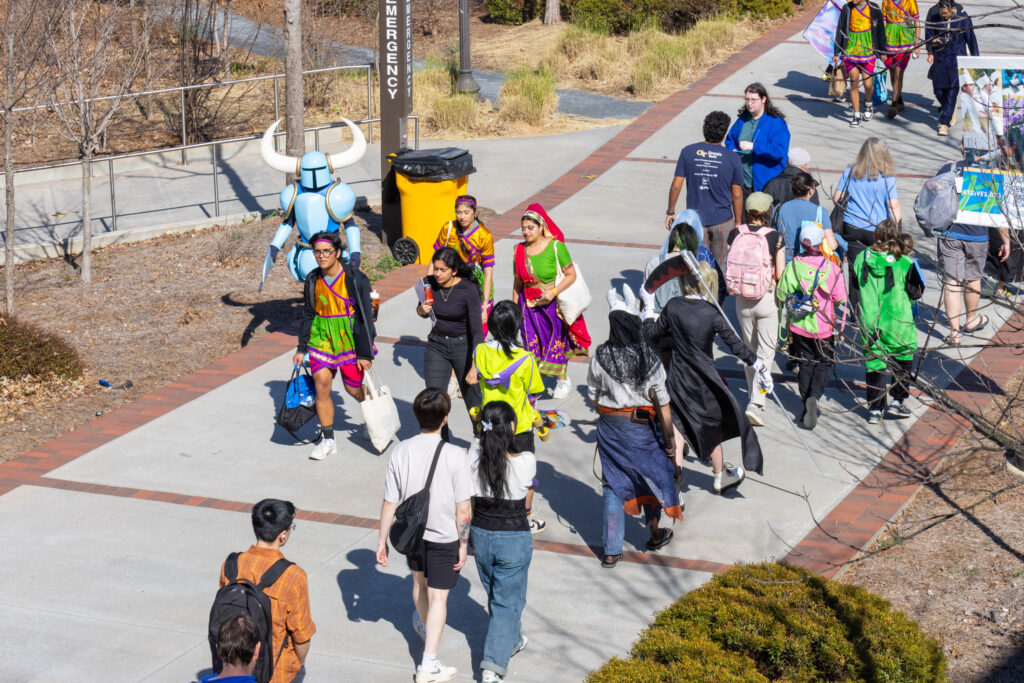
Over 1,100 people — according to organizers — walked the halls of the Exhibition Hall on March 1 for the third annual WreckCon. The student-run fan convention included video game tournaments, table-top game free play, panels, vendors and a cosplay competition.

Flavio Irani, fourth-year CS and President of WreckCon, has been attending conventions for ten years and has been involved in WreckCon since its inaugural event in 2023. He started out managing volunteers before becoming outreach head, organizing tabling, flyers and social media. This year, he focused more on logistics — contacting vendors, communicating with Tech staff about reservations and guiding preparations by other staff.

“The most rewarding [part] is definitely the convention itself,” Irani said. “I’m so excited for it tomorrow, just to see how everything turns out — it’s built up for an entire year.”

For the first time, WreckCon had three panel spaces that were active throughout the day. One panel featured Tom Bloom, a comic author and game designer, who talked about how to create a tabletop role-playing game (TTRPG). Another panel featured Tiffany Grant, Nadia Marshall and Corey Wilder, who answered questions about their voice acting careers. The main stage also hosted trivia and the cosplay contest.

“I just really appreciate the community here and the amount of people who are participating,” said Christopher Leonard, first-year CS. 

Many of the events are run by student clubs: GA Tech eSports hosted the Mario Kart tournament, Gourd Art invited attendees to add to a mural to commemorate the convention, Anime O’Tekku ran the cosplay contest and, VG Dev showcased student-made video games. Six other clubs invited fans of all skill levels to join in trading card games, TTRPGs and board games.

“I had a lot of fun,” said Levi Phillips, first-year ChBE. “This was my first real con.”

In addition to Tech students, many families, cosplayers and fans from around the Atlanta metro area, such as James Brathwaite, attended WreckCon. Brathwaite is a local social media creator who makes tutorials for constructing cardboard props and weaponry. His costume included goggles and a cardboard gauntlet, and he was carrying a large cardboard hammer based on a weapon from the indie video game “Clone Drone in the Danger Zone.”

“I really like how cozy [the convention] is,” Brathwaite said. “The smaller scale makes it a lot easier to just bump into new and interesting things that are happening.”

However, the intimate scale of the convention does have some drawbacks.

“It was a little bit crowded during some of the panels in the Exhibition Hall,” said Samuel Galysh, first-year CS.

WreckCon follows in the steps of MomoCon, an annual fan convention started in 2005 by Anime O’Tekku, an anime club at Tech. MomoCon initially took place in Tech’s Student Center before moving to Atlanta Marriott Marquis in 2011 and the Georgia World Congress Center in 2015. 

This year’s WreckCon provided students with an opportunity to volunteer and share their passion with others. It allowed Tech students to showcase their skills and meet new people from across Atlanta in an environment surrounded by people just as passionate as they are. Irani says they do it all for Tech students and the community.

“We want to show off Georgia Tech culture,” said Irani. “It’s a convention made by Georgia Tech students for everyone.”

The post WreckCon welcomes waves of students appeared first on Technique.

Posted in UncategorizedComments Off on WreckCon welcomes waves of students

Try out the Pi Mile

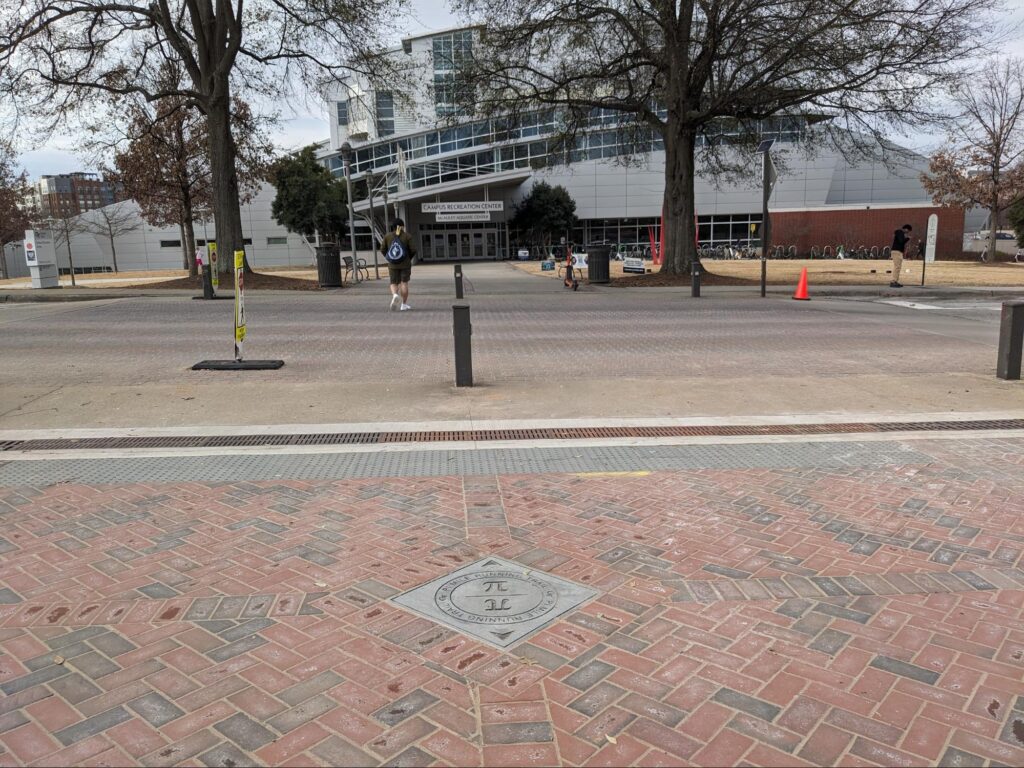
Finding time to exercise in college can be extremely difficult, but running is my preferred way of staying fit and getting fresh air. Using the same route over and over again can become boring, but I regularly end up on the Pi Mile Trail. Despite the crowded sidewalks, the Pi Mile is a great resource for running that allows you to appreciate campus.

The Pi Mile creates a running environment that you can enjoy without leaving the Institute. At 3.14 miles, the trail is long enough not to get too repetitive. It gives students a great tour of campus landmarks such as the West Village Dining Commons, EcoCommons, McCamish Pavilion, Bobby Dodd Stadium and Tech Tower, while avoiding the busy center of campus and reducing the congestion around Tech Green. The Pi Mile also has a minimal number of traffic lights to stop at, contrasting sharply with Midtown and Downtown Atlanta. In a city where public bathrooms are few and far between, access to academic buildings that can offer restrooms and a water fountain is always reassuring.

The trail does have some safety issues. The portion of the Pi Mile along Tech Parkway feels very isolated from campus, as students typically walk on Ferst Drive. Additionally, there aren’t any stop signs for drivers where the trail crosses Hemphill Avenue and State Street, forcing you to wait until there is a gap in both directions of traffic before you cross. It is even more nerve-wracking around 6 p.m., when faculty, staff and commuters are lined bumper-to-bumper trying to drive home. There are also many points along the trail where the sidewalks are too narrow. During a run last semester with Running Reck, the Tech running club, a part of our group had to run on the road because the sidewalk was being rebuilt.

Despite these concerns, I find myself returning to the Pi Mile regularly. Being less than 300 feet from my dorm, the trail makes it easy for me to leave my room and exercise on the days I need it most. It enables joyful encounters with friends and classmates, which make my day. Using the trail also allows me to avoid the daunting task of reaching any off-street trails. To get to the Westside Beltline Connector, which lies less than a mile west of campus, you need to cross the railroad tracks and Northside Drive. To reach Piedmont Park and the Eastside Beltline you need to cross I-75/85 and four major one-way roads that slice through Midtown Atlanta.

Most of all, I enjoy using the Pi Mile because it allows me to appreciate the Tech community. Seeing students out and about reminds me how fortunate I am to live in such a dense cluster of smart and social people. Seeing the uncomfortable sidewalk and fast traffic on 10th Street reminds me why I came to Tech. I hope you find running to be a great mood boost that encourages you to enjoy campus and Atlanta and appreciate them in a new way. See you out on the trail!

The post Try out the Pi Mile appeared first on Technique.

Posted in UncategorizedComments Off on Try out the Pi Mile

Westside block party draws local crowds

A day after Tech’s victory against Duke, the people of Atlanta flooded the streets for a different block party. The second annual Westside Stride, organized by Upper Westside CID (community improvement district), drew 20,000 people to hear live music and shop at local vendors along Howell Mill Road between 8th Street and 17th Street, just west of campus.

The cloudless sky on Sunday, Oct. 6, made shade a commodity. Some vendors, such as Sisters Lemonade, Rhoot Man Beverage Co. and Coca-Cola, took advantage of this by offering beverages. Food offerings included poutine, barbeque, two Greek vendors, popsicles and a few bakeries. More than fifty other vendors were present, selling everything from clothing to art to perfume. Inflatables, pumpkin painting and a petting zoo attracted many families with young kids. People of all ages mingled and enjoyed music from five stages set up along the route. 

The Technique spoke to Tech alumnus Katherine Meiser, EE 18’, who lives in Underwood Hills and biked to the festival with her boyfriend.

“I obviously love seeing people out and about, especially after COVID,” Meiser said. “It gives me such a warm feeling to see everyone enjoying themselves, and it’s a good opportunity to experience new food.”

MARTA showcased their new fully-electric bus, giving people an opportunity to practice loading their bikes onto the rack on the front of the bus. They also highlighted the rooftop charging arm, which will allow the bus to charge at stops instead of returning to the depot. 

A representative from the Atlanta Department of City Planning was promoting the ongoing community meetings for the revision of Atlanta’s Comprehensive Development Plan, Plan A, and its zoning code.

Engineers also worked to gather feedback on the Chattahoochee Avenue Improvements and Collier Road Multimodal Study, which are partially funded by the CID. The Chattahoochee Avenue project is slated to start construction in 2026 and will add a shared-use path between Howell Mill Road and Ellsworth Industrial Blvd and improve lighting along the corridor. 

Upper Westside CID Executive Director Elizabeth Hollister and Program Director Adeline Collot, MCRP 2015 and 2016, explained that the CID collects a property tax to raise funds for mobility infrastructure, parks and art projects to help the community accommodate growth. The CID is currently working on two trail projects and the Howell Mill Complete Streets project, which began in 2016.

“We recognize [that] Howell Mill is not going to get any wider,” Hollister said. “None of our roads are going to get any wider, so we really have to think holistically about how we move people through and into this area.”

Progress on the Howell Mill Complete Streets project was visible in the form of new pedestrian crossing islands and a red sidewalk stretching two blocks, which will become a raised bike lane extending all the way to Morris St.

“This festival is a chance for us to celebrate all the ways we and the City of Atlanta are working to improve connectivity on the Westside,” Hollister said. “The local sponsors are really excited to showcase their buildings and tenants and celebrate all of this growth and excitement on the Westside.”

Collot explained that the CID used last year’s Westside Stride to launch the Huff Road study, which concluded this year. She added that they want residents, particularly Tech students, to submit concerns on their website to guide future projects. 

“We would love to hear from the student community that is trying to travel from the Upper Westside to Tech’s campus,” Collot said. “We’ve been considering a cycle track on 10th Street and want to understand the types of improvements that would be well utilized… It’s really helpful to understand what some of the difficult points are [for students].”

More information about Upper Westside CID can be found at upperwestsideatl.org. To the east of campus, the Midtown Improvement District funds programs and projects that are carried out by Midtown Alliance, which can be found at midtownatl.com.

The post Westside block party draws local crowds appeared first on Technique.

Posted in UncategorizedComments Off on Westside block party draws local crowds

Students stove for innovation at HackGT 11

Despite ongoing flood warnings from Hurricane Helene, HackGT 11: Circus of Inventions started on schedule on Friday, Sept. 27. Sounds of intense brainstorming and laughter drifted through the halls of the Klaus Advanced Computing Building as students worked on their projects and hung out.

HexLabs invited over 700 students from across the country to collaborate on innovative projects showcasing their creativity. Students had 36 hours to build and/or code a project from scratch to win prizes from sponsors for one of four categories: data analytics, AI, VR/AR (augmented reality) or charitable causes.

The Technique spoke with students about why they chose to participate in the competition. Many cited getting project experience to bolster their resumes. But they also shared other reasons with each other. 

“I honestly just wanted to go out and meet new people and work on cool stuff together,” Kamrul Tarafder, third-year CS at Georgia State University, said. 

“We want to create a product that has an impact,” Ivan Yakubovich, second-year CS, said. His team’s project was a mobile app called SafeHaven that helped people in need find shelters and get real-time updates during a disaster.

“Events like this draw in a specific type of person who’s really friendly, really open and very goal-oriented, and that was really appealing to me,” said HexLabs marketing co-director Tony Luu, fourth-year CS. “The people who are here at night are so dedicated to what they’re working on — putting all their energy into it — and that’s really inspiring to me.”

Students visited mini-events and workshops throughout the hackathon to earn points for swag and to socialize. Music rang out in the courtyard from various student group performances, including Afro Dance and Glee Club. Other events, such as a chess competition, karaoke and movie night, were scattered throughout the weekend. On Saturday afternoon, students gathered in the dim mini-events classroom to mingle and construct paper planes while soft Wii music played in the background.

In the Klaus Atrium, students clustered around the table of Snap AR, one of the event sponsors, excited to try their new Spectacles AR glasses. Some event organizers played together, summoning random objects in a shared experience. “Snap reached out to us this year, and we didn’t know why they did,” HexLabs co-director Anna Zhao, fourth-year ISYE, said. “But a couple of days before the hackathon, they told us that they were launching Spectacles and are here to test it.”

Russell Patton, product manager at Snap Labs, explained that Snap is “excited about AR [augmented reality] as a way to expand what computing can be” and lent glasses for several teams to develop programs with them.

“There’s a lot of great ideas coming from everyone here, and we’re excited to see people bring things to life on Spectacles,” Patton said.

Pittsburgh Regional Health Initiative (PRHI) sponsored an award for projects that tackled patient safety challenges in medications, procedural, patient care, infections and diagnostic safety. Ariana Longley, Patient Safety Consultant at PRHI, explained that they have sponsored around 70 events in the past few years supporting innovation in patient safety with the goal of increasing awareness of the safety crisis.

“We need [corporate] sponsors because they are providing the jobs, internships, skills and tools that students need, but they have generally lacked the social good element,” Longley said. “We are bringing the human element to these hackathons.”

PRHI awarded their prize to the team that developed Clarity, a software aimed at detecting fatigue in doctors through real-time video and audio tracking. The team suggested that it could reduce the risk of medical error and help prevent burnout.

The designers of Noma won the best overall prize. Their software used real-time 3D facial tracking and automatically labeled audio and visual transcriptions to allow surgeons in rural areas to collaborate with specialists for Mohs micrographic surgery, a procedure used to treat skin cancer. 

Some of the projects were more lighthearted and fun. One team made a ghost survival game using the Spectacles, and another built a motorized car, Lightning McScream, that used sound sensors to power a virtual drag race. 

By Sunday, participants submitted a total of 143 projects, showcasing their passion and dedication. Winners and all projects submitted for judging can be found at hackgt-11-circus-of-invention.devpost.com/project-gallery. HexLabs also hosts smaller events throughout the year, such as the Horizons Design and Tech Make-a-Thon and Catalyst high school STEAM program, both of which are in the spring. More information will be announced at hexlabs.org and on their Instagram account, @thehexlabs.

The post Students stove for innovation at HackGT 11 appeared first on Technique.

Posted in UncategorizedComments Off on Students stove for innovation at HackGT 11