
Author Archives | Charles Stallworth

Airport pricing does not need to be exorbitant

According to The Weather Channel, throughout the 2010s, Denver International Airport ranked 4th in terms of total minutes lost to weather delays among U.S. hubs, thanks to a mix of snow, wind and thunderstorms, courtesy of the Rocky Mountains. As I read this statistic on my phone, I mused about how lucky I was to experience this phenomenon. It was 8:23 p.m. By now, I was supposed to be back in Atlanta, snuggled up in bed; instead, I was stuck in Denver, $40 poorer. The culprit? A burger, maybe 17 fries, a liter of water and a dainty, pre-packed salad.

Airport pricing is out of control. $6 waters, $20 burgers and alcohol prices that rival those at swanky venues are all too common due to a myriad of reasons that pervert typical consumer choice. To start, airports are captive markets, similar to venues like stadiums and nightclubs. Patrons to these spaces can’t easily leave, and competition inside is usually limited, allowing vendors to set prices at essentially whatever they want. The primary difference here is that people want to go out to a club, and people want to watch the Braves play, but not everyone goes to LaGuardia or O’Hare with the same excitement — the second you get there, the objective is to go somewhere else. Yet, the three charge comparable prices for food and drinks.

Unlike the other two venues where you are free to leave whenever you want, in an airport, the second you pass the Transportation Security Administration (TSA) checkpoint, you are stuck there until the flight takes off. Plus, the time you spend there can rapidly balloon past expectations, between the delays and the near-compulsory two hour early arrival, serving as insurance for whenever TSA has one of its frequent meltdowns. The longer you remain in the airport, the more likely you are to consume, leading the ridiculous prices to seem even more predatory.

This is exacerbated by the fact that airplanes themselves are captive markets as well. Complimentary food and drink on board is usually limited in terms of variety and quantity, and if you choose to pay to expand your options, you are often rewarded with pricey and low-quality fare. Then, when you factor in the hours spent in the air, many travelers actually find it more appealing to eat or drink in the terminal than to settle for in-flight options or wait until they arrive. 

Psychological factors play a role as well. Many people find flying stressful, and stress tends to make people indulge more heavily in food and drink. Spending momentum adds another layer of complexity, as after dropping hundreds or thousands of dollars on a flight, a $20 burger suddenly doesn’t sound that bad.

The catch is,  airport vendors can’t choose to lower their prices to spark competition — mega-conglomerates, the same culprit at the crux of so many broader economic problems, prevent that from happening. Paradies Lagardere, SSP Group and Avolta control a majority of the U.S. airport concessionary market, with Avolta being the biggest player at 34% market share. That dominance allows these companies the leverage to strong-arm and absorb competitors, discouraging competition and further limiting the potential for lower prices.

But the mega-corporations are not completely at fault; there are a handful of reasons why prices in airports might be somewhat higher than those outside. Airports usually charge concessionaires hefty rent fees and take a good chunk of cash off the top of all sales. Operating inside an airport also leads to a whole host of additional logistical obstacles, like getting merchandise and employees screened through TSA. Though this leads to higher operating costs,  airports have greater customer volume than most locations out in the wild, which should help mitigate the effects of higher costs to an extent. 

Still, it’s important to distinguish price increases due to operational costs from increasing the price of a product just because consumers are willing to pay more. The worst offenders of the latter are usually newsstands and small, regional quick-service restaurants. Quick-service chains with a large nationwide footprint are usually a little better; they’re more likely to keep prices as consistent as economically feasible with their locations on the outside, primarily for the sake of brand consistency and meeting customer expectations. In addition, sit-down establishments also deserve a little more slack, as their operating costs are even higher. They have to rent a larger space and often have to pay servers more in order to maintain the slim profit margins that restaurants usually receive. The newsstands and grab-and-go restaurants  don’t have a nationwide brand to worry about, nor the additional expenses of operating a sit-down restaurant in an airport, yet they continue to charge more. 

Thankfully, consumers and even the U.S. Congress have taken note, and airports are now making some sort of effort to limit prices. Most have implemented a “street price plus” policy, designed to ensure that companies don’t charge more than the street price for an item, plus 10 to 20 percent to cover additional operating costs. In practice, the definition of a street price is a bit murky, as companies with significant influence try to persuade airport policymakers to accept inflated street prices as reality, boosting profit margins in the process. Airports attempt to enforce compliance through a collection of audits, requiring companies to lower prices if they aren’t in accordance with policy. Unfortunately, these audits are often not thorough, and many airport retailers continue to charge more than the maximum percentage above the street price.

To end on a positive note, consider Portland, Ore.’s main airport, PDX. They enforce a true street-level policy, where prices inside the airport must match those on the streets of Portland, and not what the companies think they should be. These prices are well-maintained and audited by airport management. Maybe if Denver were to follow the lead of PDX, being stranded there for a few hours wouldn’t be so catastrophic after all.

The post Airport pricing does not need to be exorbitant appeared first on Technique.
Posted in UncategorizedComments Off on Airport pricing does not need to be exorbitant

Airport pricing does not need to be exorbitant

According to The Weather Channel, throughout the 2010s, Denver International Airport ranked 4th in terms of total minutes lost to weather delays among U.S. hubs, thanks to a mix of snow, wind and thunderstorms, courtesy of the Rocky Mountains. As I read this statistic on my phone, I mused about how lucky I was to experience this phenomenon. It was 8:23 p.m. By now, I was supposed to be back in Atlanta, snuggled up in bed; instead, I was stuck in Denver, $40 poorer. The culprit? A burger, maybe 17 fries, a liter of water and a dainty, pre-packed salad.

Airport pricing is out of control. $6 waters, $20 burgers and alcohol prices that rival those at swanky venues are all too common due to a myriad of reasons that pervert typical consumer choice. To start, airports are captive markets, similar to venues like stadiums and nightclubs. Patrons to these spaces can’t easily leave, and competition inside is usually limited, allowing vendors to set prices at essentially whatever they want. The primary difference here is that people want to go out to a club, and people want to watch the Braves play, but not everyone goes to LaGuardia or O’Hare with the same excitement — the second you get there, the objective is to go somewhere else. Yet, the three charge comparable prices for food and drinks.

Unlike the other two venues where you are free to leave whenever you want, in an airport, the second you pass the Transportation Security Administration (TSA) checkpoint, you are stuck there until the flight takes off. Plus, the time you spend there can rapidly balloon past expectations, between the delays and the near-compulsory two hour early arrival, serving as insurance for whenever TSA has one of its frequent meltdowns. The longer you remain in the airport, the more likely you are to consume, leading the ridiculous prices to seem even more predatory.

This is exacerbated by the fact that airplanes themselves are captive markets as well. Complimentary food and drink on board is usually limited in terms of variety and quantity, and if you choose to pay to expand your options, you are often rewarded with pricey and low-quality fare. Then, when you factor in the hours spent in the air, many travelers actually find it more appealing to eat or drink in the terminal than to settle for in-flight options or wait until they arrive. 

Psychological factors play a role as well. Many people find flying stressful, and stress tends to make people indulge more heavily in food and drink. Spending momentum adds another layer of complexity, as after dropping hundreds or thousands of dollars on a flight, a $20 burger suddenly doesn’t sound that bad.

The catch is,  airport vendors can’t choose to lower their prices to spark competition — mega-conglomerates, the same culprit at the crux of so many broader economic problems, prevent that from happening. Paradies Lagardere, SSP Group and Avolta control a majority of the U.S. airport concessionary market, with Avolta being the biggest player at 34% market share. That dominance allows these companies the leverage to strong-arm and absorb competitors, discouraging competition and further limiting the potential for lower prices.

But the mega-corporations are not completely at fault; there are a handful of reasons why prices in airports might be somewhat higher than those outside. Airports usually charge concessionaires hefty rent fees and take a good chunk of cash off the top of all sales. Operating inside an airport also leads to a whole host of additional logistical obstacles, like getting merchandise and employees screened through TSA. Though this leads to higher operating costs,  airports have greater customer volume than most locations out in the wild, which should help mitigate the effects of higher costs to an extent. 

Still, it’s important to distinguish price increases due to operational costs from increasing the price of a product just because consumers are willing to pay more. The worst offenders of the latter are usually newsstands and small, regional quick-service restaurants. Quick-service chains with a large nationwide footprint are usually a little better; they’re more likely to keep prices as consistent as economically feasible with their locations on the outside, primarily for the sake of brand consistency and meeting customer expectations. In addition, sit-down establishments also deserve a little more slack, as their operating costs are even higher. They have to rent a larger space and often have to pay servers more in order to maintain the slim profit margins that restaurants usually receive. The newsstands and grab-and-go restaurants  don’t have a nationwide brand to worry about, nor the additional expenses of operating a sit-down restaurant in an airport, yet they continue to charge more. 

Thankfully, consumers and even the U.S. Congress have taken note, and airports are now making some sort of effort to limit prices. Most have implemented a “street price plus” policy, designed to ensure that companies don’t charge more than the street price for an item, plus 10 to 20 percent to cover additional operating costs. In practice, the definition of a street price is a bit murky, as companies with significant influence try to persuade airport policymakers to accept inflated street prices as reality, boosting profit margins in the process. Airports attempt to enforce compliance through a collection of audits, requiring companies to lower prices if they aren’t in accordance with policy. Unfortunately, these audits are often not thorough, and many airport retailers continue to charge more than the maximum percentage above the street price.

To end on a positive note, consider Portland, Ore.’s main airport, PDX. They enforce a true street-level policy, where prices inside the airport must match those on the streets of Portland, and not what the companies think they should be. These prices are well-maintained and audited by airport management. Maybe if Denver were to follow the lead of PDX, being stranded there for a few hours wouldn’t be so catastrophic after all.

The post Airport pricing does not need to be exorbitant appeared first on Technique.
Posted in UncategorizedComments Off on Airport pricing does not need to be exorbitant

Airport pricing does not need to be exorbitant

According to The Weather Channel, throughout the 2010s, Denver International Airport ranked 4th in terms of total minutes lost to weather delays among U.S. hubs, thanks to a mix of snow, wind and thunderstorms, courtesy of the Rocky Mountains. As I read this statistic on my phone, I mused about how lucky I was to experience this phenomenon. It was 8:23 p.m. By now, I was supposed to be back in Atlanta, snuggled up in bed; instead, I was stuck in Denver, $40 poorer. The culprit? A burger, maybe 17 fries, a liter of water and a dainty, pre-packed salad.

Airport pricing is out of control. $6 waters, $20 burgers and alcohol prices that rival those at swanky venues are all too common due to a myriad of reasons that pervert typical consumer choice. To start, airports are captive markets, similar to venues like stadiums and nightclubs. Patrons to these spaces can’t easily leave, and competition inside is usually limited, allowing vendors to set prices at essentially whatever they want. The primary difference here is that people want to go out to a club, and people want to watch the Braves play, but not everyone goes to LaGuardia or O’Hare with the same excitement — the second you get there, the objective is to go somewhere else. Yet, the three charge comparable prices for food and drinks.

Unlike the other two venues where you are free to leave whenever you want, in an airport, the second you pass the Transportation Security Administration (TSA) checkpoint, you are stuck there until the flight takes off. Plus, the time you spend there can rapidly balloon past expectations, between the delays and the near-compulsory two hour early arrival, serving as insurance for whenever TSA has one of its frequent meltdowns. The longer you remain in the airport, the more likely you are to consume, leading the ridiculous prices to seem even more predatory.

This is exacerbated by the fact that airplanes themselves are captive markets as well. Complimentary food and drink on board is usually limited in terms of variety and quantity, and if you choose to pay to expand your options, you are often rewarded with pricey and low-quality fare. Then, when you factor in the hours spent in the air, many travelers actually find it more appealing to eat or drink in the terminal than to settle for in-flight options or wait until they arrive. 

Psychological factors play a role as well. Many people find flying stressful, and stress tends to make people indulge more heavily in food and drink. Spending momentum adds another layer of complexity, as after dropping hundreds or thousands of dollars on a flight, a $20 burger suddenly doesn’t sound that bad.

The catch is,  airport vendors can’t choose to lower their prices to spark competition — mega-conglomerates, the same culprit at the crux of so many broader economic problems, prevent that from happening. Paradies Lagardere, SSP Group and Avolta control a majority of the U.S. airport concessionary market, with Avolta being the biggest player at 34% market share. That dominance allows these companies the leverage to strong-arm and absorb competitors, discouraging competition and further limiting the potential for lower prices.

But the mega-corporations are not completely at fault; there are a handful of reasons why prices in airports might be somewhat higher than those outside. Airports usually charge concessionaires hefty rent fees and take a good chunk of cash off the top of all sales. Operating inside an airport also leads to a whole host of additional logistical obstacles, like getting merchandise and employees screened through TSA. Though this leads to higher operating costs,  airports have greater customer volume than most locations out in the wild, which should help mitigate the effects of higher costs to an extent. 

Still, it’s important to distinguish price increases due to operational costs from increasing the price of a product just because consumers are willing to pay more. The worst offenders of the latter are usually newsstands and small, regional quick-service restaurants. Quick-service chains with a large nationwide footprint are usually a little better; they’re more likely to keep prices as consistent as economically feasible with their locations on the outside, primarily for the sake of brand consistency and meeting customer expectations. In addition, sit-down establishments also deserve a little more slack, as their operating costs are even higher. They have to rent a larger space and often have to pay servers more in order to maintain the slim profit margins that restaurants usually receive. The newsstands and grab-and-go restaurants  don’t have a nationwide brand to worry about, nor the additional expenses of operating a sit-down restaurant in an airport, yet they continue to charge more. 

Thankfully, consumers and even the U.S. Congress have taken note, and airports are now making some sort of effort to limit prices. Most have implemented a “street price plus” policy, designed to ensure that companies don’t charge more than the street price for an item, plus 10 to 20 percent to cover additional operating costs. In practice, the definition of a street price is a bit murky, as companies with significant influence try to persuade airport policymakers to accept inflated street prices as reality, boosting profit margins in the process. Airports attempt to enforce compliance through a collection of audits, requiring companies to lower prices if they aren’t in accordance with policy. Unfortunately, these audits are often not thorough, and many airport retailers continue to charge more than the maximum percentage above the street price.

To end on a positive note, consider Portland, Ore.’s main airport, PDX. They enforce a true street-level policy, where prices inside the airport must match those on the streets of Portland, and not what the companies think they should be. These prices are well-maintained and audited by airport management. Maybe if Denver were to follow the lead of PDX, being stranded there for a few hours wouldn’t be so catastrophic after all.

The post Airport pricing does not need to be exorbitant appeared first on Technique.
Posted in UncategorizedComments Off on Airport pricing does not need to be exorbitant

Airport pricing does not need to be exorbitant

According to The Weather Channel, throughout the 2010s, Denver International Airport ranked 4th in terms of total minutes lost to weather delays among U.S. hubs, thanks to a mix of snow, wind and thunderstorms, courtesy of the Rocky Mountains. As I read this statistic on my phone, I mused about how lucky I was to experience this phenomenon. It was 8:23 p.m. By now, I was supposed to be back in Atlanta, snuggled up in bed; instead, I was stuck in Denver, $40 poorer. The culprit? A burger, maybe 17 fries, a liter of water and a dainty, pre-packed salad.

Airport pricing is out of control. $6 waters, $20 burgers and alcohol prices that rival those at swanky venues are all too common due to a myriad of reasons that pervert typical consumer choice. To start, airports are captive markets, similar to venues like stadiums and nightclubs. Patrons to these spaces can’t easily leave, and competition inside is usually limited, allowing vendors to set prices at essentially whatever they want. The primary difference here is that people want to go out to a club, and people want to watch the Braves play, but not everyone goes to LaGuardia or O’Hare with the same excitement — the second you get there, the objective is to go somewhere else. Yet, the three charge comparable prices for food and drinks.

Unlike the other two venues where you are free to leave whenever you want, in an airport, the second you pass the Transportation Security Administration (TSA) checkpoint, you are stuck there until the flight takes off. Plus, the time you spend there can rapidly balloon past expectations, between the delays and the near-compulsory two hour early arrival, serving as insurance for whenever TSA has one of its frequent meltdowns. The longer you remain in the airport, the more likely you are to consume, leading the ridiculous prices to seem even more predatory.

This is exacerbated by the fact that airplanes themselves are captive markets as well. Complimentary food and drink on board is usually limited in terms of variety and quantity, and if you choose to pay to expand your options, you are often rewarded with pricey and low-quality fare. Then, when you factor in the hours spent in the air, many travelers actually find it more appealing to eat or drink in the terminal than to settle for in-flight options or wait until they arrive. 

Psychological factors play a role as well. Many people find flying stressful, and stress tends to make people indulge more heavily in food and drink. Spending momentum adds another layer of complexity, as after dropping hundreds or thousands of dollars on a flight, a $20 burger suddenly doesn’t sound that bad.

The catch is,  airport vendors can’t choose to lower their prices to spark competition — mega-conglomerates, the same culprit at the crux of so many broader economic problems, prevent that from happening. Paradies Lagardere, SSP Group and Avolta control a majority of the U.S. airport concessionary market, with Avolta being the biggest player at 34% market share. That dominance allows these companies the leverage to strong-arm and absorb competitors, discouraging competition and further limiting the potential for lower prices.

But the mega-corporations are not completely at fault; there are a handful of reasons why prices in airports might be somewhat higher than those outside. Airports usually charge concessionaires hefty rent fees and take a good chunk of cash off the top of all sales. Operating inside an airport also leads to a whole host of additional logistical obstacles, like getting merchandise and employees screened through TSA. Though this leads to higher operating costs,  airports have greater customer volume than most locations out in the wild, which should help mitigate the effects of higher costs to an extent. 

Still, it’s important to distinguish price increases due to operational costs from increasing the price of a product just because consumers are willing to pay more. The worst offenders of the latter are usually newsstands and small, regional quick-service restaurants. Quick-service chains with a large nationwide footprint are usually a little better; they’re more likely to keep prices as consistent as economically feasible with their locations on the outside, primarily for the sake of brand consistency and meeting customer expectations. In addition, sit-down establishments also deserve a little more slack, as their operating costs are even higher. They have to rent a larger space and often have to pay servers more in order to maintain the slim profit margins that restaurants usually receive. The newsstands and grab-and-go restaurants  don’t have a nationwide brand to worry about, nor the additional expenses of operating a sit-down restaurant in an airport, yet they continue to charge more. 

Thankfully, consumers and even the U.S. Congress have taken note, and airports are now making some sort of effort to limit prices. Most have implemented a “street price plus” policy, designed to ensure that companies don’t charge more than the street price for an item, plus 10 to 20 percent to cover additional operating costs. In practice, the definition of a street price is a bit murky, as companies with significant influence try to persuade airport policymakers to accept inflated street prices as reality, boosting profit margins in the process. Airports attempt to enforce compliance through a collection of audits, requiring companies to lower prices if they aren’t in accordance with policy. Unfortunately, these audits are often not thorough, and many airport retailers continue to charge more than the maximum percentage above the street price.

To end on a positive note, consider Portland, Ore.’s main airport, PDX. They enforce a true street-level policy, where prices inside the airport must match those on the streets of Portland, and not what the companies think they should be. These prices are well-maintained and audited by airport management. Maybe if Denver were to follow the lead of PDX, being stranded there for a few hours wouldn’t be so catastrophic after all.

The post Airport pricing does not need to be exorbitant appeared first on Technique.

Posted in UncategorizedComments Off on Airport pricing does not need to be exorbitant

Pro Jackets Making Noise as 2025 NFL Season Progresses

We’re five weeks into the 2025 NFL season, and the seven Tech alumni in the league have already begun making some noise. 

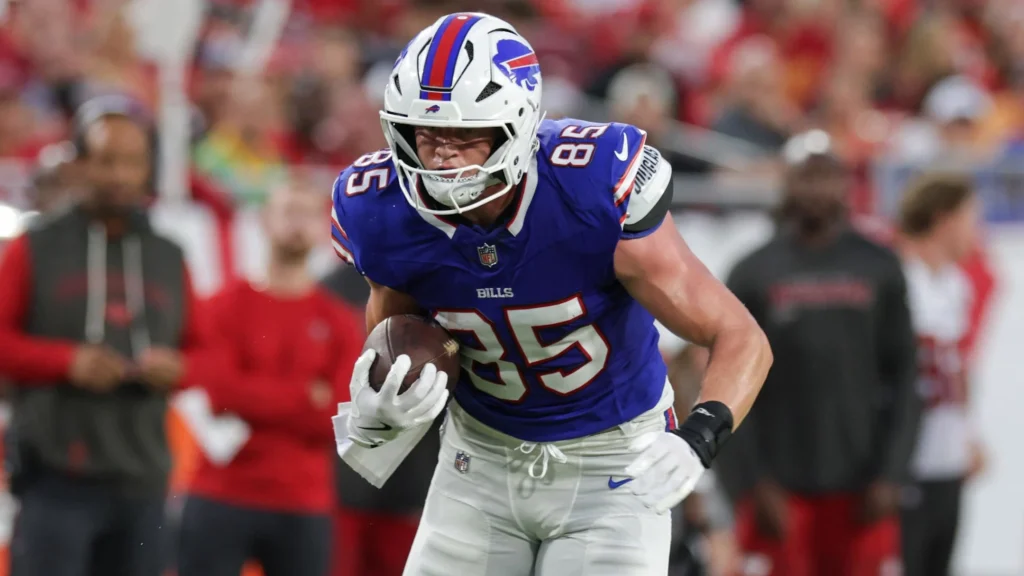
Starting with the Jackets picked in the most recent NFL draft, Bills TE Jackson Hawes, ‘23–24, has been the standout. He’s currently the highest graded rookie in the 2025 draft class by Pro Football Focus (PFF), primarily due to his stellar run and pass blocking: areas where he’s ranked in the top 10 among tight ends in the league. He’s not just a blocker though, Hawes has also caught all four of his targets, including a touchdown against the Miami Dolphins. Just a few weeks into the season, he already looks to be one of the best tight ends in his class.

Zeek Biggers, BA ‘24, was the other Tech alum drafted in 2025. A late seventh-round pick, Biggers battled through training camp and earned himself a full-time roster spot with the Dolphins. Opportunities have been limited for the defensive tackle, only seeing a handful of snaps to date, but Tech fans hope that when he gets his shot, he’ll make the most of it, just as he did on the Flats. 

Sticking with the Dolphins, Darren Waller, BA ‘14, made his season debut on Sept. 29, catching three of four targets for 27 yards and a pair of touchdowns in a Monday Night Football win over the New York Jets. Waller’s triumphant return came in his first NFL game in 631 days, following the veteran’s retirement in the 2023 offseason. Back on the field with a new team, Waller looks to make his mark on an injury-riddled Dolphins’ squad. 

Veteran kicker Harrison Butker, ISyE ‘17, is also off to a solid start. In his ninth NFL season, Butker has gone 10 for 13 on field goals thus far, including a perfect 6 for 6 from inside 40 yards. Butker hopes to stay consistent this season, aiding the Kansas City Chiefs as they vie for their fourth Super Bowl in the past six years. 

With starting running back Aaron Jones injured, Vikings RB Jordan Mason, BA ‘21, was thrust into Minnesota’s starting role. He has thrived so far, tallying over 300 all-purpose yards and two touchdowns. His best performance came in week three, when he averaged 7.25 yards per carry on 16 runs as the Vikings trounced the Cincinnati Bengals, 48-10.

On the defensive side, DB Juanyeh Thomas, LMC ‘21 and DE Keion White, ‘21–22, have also been contributing as solid depth pieces in the Cowboys’ and Patriots’ defenses, respectively. Thomas has yet to give up a reception through 61 snaps played, while White, albeit quieter on the stat sheet due to an illness that sidelined him in week two, bounced back in week four, leading all Patriots’ tackles in snaps. 

That’s it for the Pro Jackets, but there are a couple of NFL players who spent time at Tech before transferring elsewhere during their college career. The most notable is third-year RB Jahmyr Gibbs, who, after putting together his second consecutive Pro Bowl season, is on pace for a third, with 350 all-purpose yards and four touchdowns. He headlines both Detroit’s powerful “Sonic and Knuckles” running back tandem alongside David Montgomery, and nearly every top-seeded fantasy football roster. 

Finally, rookie linebacker Demetrius Knight Jr., a Jacket from 2019 to 2022, has impressed for the Bengals, tallying 31 combined tackles, an interception and a couple of pass deflections on the year. Knight Jr. has been one of the few bright spots on a Cincinnati defensive unit that has disappointed across the early weeks of the season. 

The Pro Jackets are off to a strong start, and Tech faithful are eager to see how they grow as the season progresses.

The post Pro Jackets Making Noise as 2025 NFL Season Progresses appeared first on Technique.

Posted in UncategorizedComments Off on Pro Jackets Making Noise as 2025 NFL Season Progresses

Jackets survive scare at Wake Forest, improve to 5-0

The No. 16-ranked Jackets took their football campaign on the road last Saturday, facing ACC foe Wake Forest in Winston-Salem. Despite the excitement the Brett Key era has brought to Tech football, the program still carries the reputation of struggling with unranked conference opponents. Entering this matchup, they were 8-8 in such matchups. Comparatively, they’re 7-1 against ranked ACC teams. Saturday’s showdown provided the Jackets with an opportunity to work toward shedding that label and being viewed as a true contender. 

The first half wasn’t very inspiring, as the Jackets turned in arguably their worst stretch of football so far this season. The offense didn’t execute with missed throws, dropped balls, blown blocks and a general lack of flow. One play encapsulated the whole half: a gutsy fake-punt pass on fourth-and-6, which was completed but underthrown, left the receiver a yard short of the sticks. 

The defense played well early, keeping the game close throughout the first quarter. But, as the offense failed to produce, more pressure was put on the defense, and eventually the dam broke, leading to chunk plays and touchdowns that had the Jackets down 17-3 after two quarters. For the first time all season, Tech faithful had a genuine reason for concern at the intermission, as the Demon Deacons had all the momentum and would receive the ball to open the second half. All Tech fans could do was hope that the Jackets woke up before things got really ugly. 

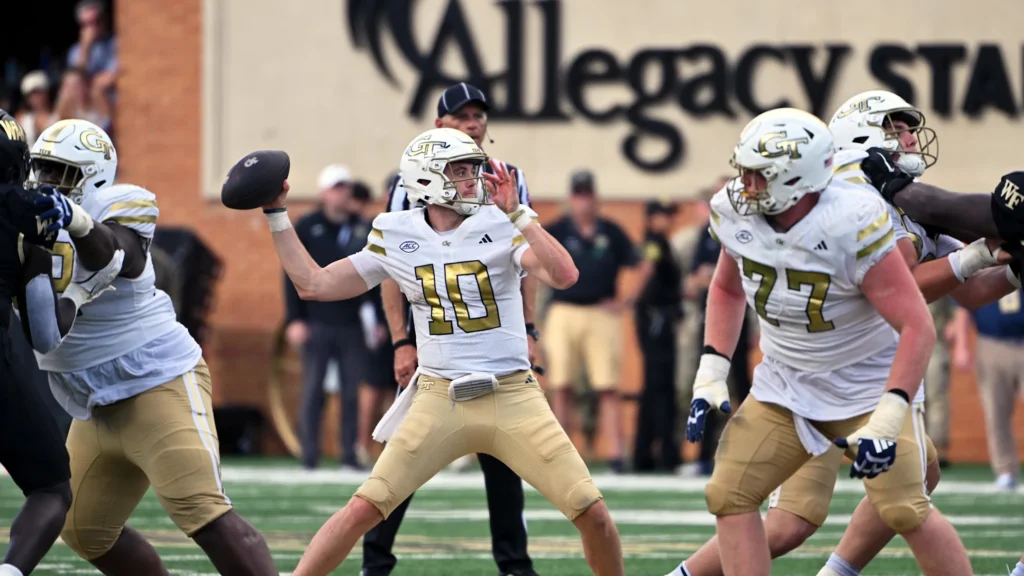
Wake opened the half by driving down to the red zone, but the Jackets’ defense made a stand, holding them to a field goal, making the score 20-3, Deacons. Tech’s offense proceeded to finally get in rhythm, with a 13-play drive culminating in a touchdown catch following a backyard football-esque sequence between Haynes King and Eric Rivers. Wake punted on their ensuing drive, and the Jackets embarked on another odyssey, this time finished by a King rushing touchdown, making the score 17-20 entering the fourth quarter. 

Tech was building momentum, and after a Deacon three-and-out and a Jackets field goal, the comeback was finally complete, knotting the game up at 20. Wake’s doom spiral continued, as even after they pushed into Tech territory and lined up for a 27-yard field goal, their kicker blasted the kick off the right upright, keeping the score tied at 20. At that moment, Jackets fans breathed a sigh of relief. It felt like the team would escape with a win through a clock-chewing drive and a last-second score. That feeling of security was short-lived, as on the very first play of the next drive, the Jackets fumbled, giving Wake the ball back at Tech’s 23. 

The defense again held strong and forced another field goal, which this time was pure, giving Wake a 23-20 lead. Tech’s next drive looked good at the onset, but stalled near the 50, where Tech gave the ball back to Wake, needing a defensive stop to prevent them from running out the clock. The defense was able to pull it off, in large part thanks to a very fortunate missed offside penalty that would’ve ended the game, handing the ball back to the Jackets at their own 30. Tech moved the ball well again, down to the Wake 15, but they couldn’t find the end zone, forcing them to make yet another fire drill field goal, sending the game into overtime tied at 23. 

Seeing the GT logo and word “overtime” together on an ESPN scorebug might’ve brought Tech faithful back bad memories of last year’s gut-wrenching loss to u[sic]ga, but thankfully, this story had a different ending. Tech got the ball and scored first, behind King’s second rushing touchdown of the contest. Wake responded in one play, scoring a touchdown of their own. Then came the gamble; Wake Forest Coach Jack Dickert decided to go for two to win the game. Luckily, the play was blanketed, resulting in an interception by defensive back Clayton Powell-Lee and a Jackets victory, 30-29. 

The win brought reasons for optimism. Good teams win ugly, especially in the clutch, and the Jackets have proven that they are one of the most clutch teams in college football. The 17-point comeback is tied for second-largest in school history, and, despite the deficit, there was never a moment when team leaders looked dejected. King put together a strong performance, notching 349 total yards and three touchdowns, all while passing 42 times, the most he’s ever thrown for the white and gold. This is also the first time the Jackets have started 5-0 since 2014, and since Tech is due to be favored in every game until their showdown with u[sic]ga in November, they now have a genuine chance to make the ACC championship game and even the College Football Playoff if they continue winning.

There are, however, serious causes for concern. The Jackets’ win against Wake Forest was too close for comfort. Their third-quarter comeback was partially aided by an injury to Deacon QB Robby Ashford, as Wake’s offense stalled with backup Deshawn Purdie in the game. Although Ashford only missed eight snaps, it was significant enough to change the momentum in the Jackets’ favor. Even with the injury, if Wake made their field goal, or if a few calls went the other way, the Jackets may have lost, dashing the hope this season has built so far. 

Tech still has holes to patch, as they haven’t played a spotless game all season. The offense often looks out of focus, either through the air, on the ground or, in the rare case on Saturday, both. The defense is usually stout, but it tends to give up momentum-killing chunk plays. Granted, it does give reason for hope, as it seems that the Jackets have not reached their ceiling, but it’s clear that they’ll have a lot of work to do to reach that level as they enter the bye week before hosting Virginia Tech on Oct. 11th.

The post Jackets survive scare at Wake Forest, improve to 5-0 appeared first on Technique.

Posted in UncategorizedComments Off on Jackets survive scare at Wake Forest, improve to 5-0

Braves to miss postseason for the first time since 2017

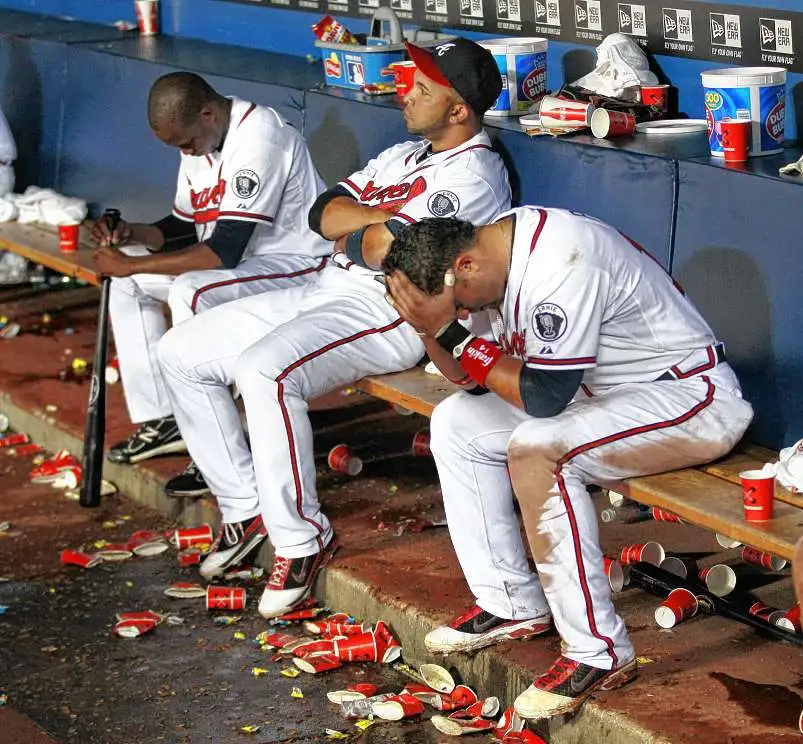
With the New York Mets’ win on  Sept. 19, the Atlanta Braves have officially been eliminated from MLB playoff contention. Despite a late surge, there will be no October baseball in Atlanta for the first time since 2017, snapping the club’s seven-year playoff streak, the third longest in the league. But for Braves faithful, the writing was on the wall as early as July. You may ask, “When did things go wrong?” The better question is this: Did things ever go right? 

The season’s disappointment started before a single pitch was thrown. The Braves had a surprisingly quiet offseason for a team that was still in contention in the National League title. They lost ace Max Fried and deadline acquisition Ramón Laureano to free agency and their only notable addition was outfielder Jurickson Profar. To much of Braves Country, this move felt like a consolation prize, and those feelings soured after Profar was suspended for 80 games in the first week of the season after testing positive for performance-enhancing drugs. The news dropped while the Braves were in the midst of a seven-game skid to start the season, a start that they would never recover from.

Fast forward to the beginning of June. The Braves are 27-31, which, oddly enough, was one of the few positives surrounding the club at the time. Their season had been defined by injury, primarily to starting pitchers. The club’s best three pitchers by wins above replacement (WAR), Spencer Schwellenbach, Grant Holmes and Chris Sale, all missed significant time; as of today, not a single one of them cracks the top 100 list for innings pitched across baseball. Bryce Elder was the one exception, being the club’s most available arm, although he posted an earned run average (ERA) above five with negative WAR. 

Despite this, Braves fans still clung to the hope that the returns of Spencer Strider and Ronald Acuna Jr., stars who both missed most of the 2024 campaign with season-ending injuries, could somehow light a spark in the club. Unfortunately, Strider never returned to form, as he battled nagging injuries throughout the year. Acuna, despite playing well when healthy, spent even more time out injured. The latter will fail to reach 100 games played for the third season in his seven-year career (excluding the COVID-shortened 2020 season). 

At the start of July, the Braves slouched to eight games under .500, and by now, it became quite apparent that a dramatic turn around would not happen. By the end of the month, they were 16 games under and firmly out of the playoff conversation. Even so, injuries and their poor record weren’t nearly the most pressing issues surrounding the club – Braves fans were most concerned with the regression and underperformance of their healthy key players.

Three-time all-star Ozzie Albies? Firmly in the middle of the pack in terms of WAR among second basemen. 2022 Rookie of the Year Michael Harris II? The worst outfielder in all of baseball in terms of offensive value, according to Fangraphs. Marcell Ozuna regressed, Austin Riley regressed; in fact, the only Braves meeting expectations this season were rookie Drake Baldwin and veteran Matt Olson. 

This season is the latest in a string of disappointments. Since winning the 2021 World Series, the Braves have gone 2-8 in their last 10 playoff games, and they won’t have the chance to improve upon that mark this year. This puts general manager Alex Anthopoulos in a tough spot as the offseason approaches. 

The Braves’ core is still very young, but with the injuries and underperformances of this season, the front office may reconsider major moves in the near future. Now, thanks to their contract philosophy— taking bets on young players before securing them on long-term team-friendly deals —some players, like Harris and Albies, don’t make sense to move. Their contracts are so cheap in comparison to the rest of the league that even if they regressed to replacement level, they would still be worth keeping . Even Austin Riley’s contract, one of the Braves’ most expensive, will begin to look better as MLB payrolls continue to balloon. Though it would be rash to trade Strider or Acuna after one down year, it might not be out of the realm of possibility to sell aging stars in Olson, Ozuna and Sale to begin retooling for the long-term future of the team.

This is the most pivotal off-season for the Braves since the 2021 Freddie Freeman fiasco, and whether their championship window is extended or slammed shut rests squarely in the hands of Anthopoulos.

The post Braves to miss postseason for the first time since 2017 appeared first on Technique.

Posted in UncategorizedComments Off on Braves to miss postseason for the first time since 2017