
Author Archives | Caroline Bouillion

Remember when Black Friday meant something

For decades, Black Friday marked the unofficial start of the holiday season — a day when families bundle up, grab a coffee and head to packed stores in search of the best deal. 

It was not just about shopping. It felt like a tradition: a shared experience of chaos and excitement. 

The Black Friday I grew up with was centered on in-person shopping. Families planned their routes. Groups waited in long lines outside the stores. Employees getting prepared for a giant day. 

But the Black Friday many people are familiar with is fading. Today, the day looks and feels completely different. What used to be an early morning has transformed into a weeks-long digital marketing marathon dominated by online shopping, social media hype and constant sales emails. 

For some, that change is convenient. For others, it is a sign that something meaningful has been lost. 

Digital frenzy

Some of the shifts are practical. Online shopping is easier and more accessible. Long lines and crowded stores are not for everyone. 

With this holiday now starting in early Nov., major retailers release staggered sales, with their “early access” deals, online-only countdowns and app-exclusive promotions.

The traditional early-morning rush has been replaced by people refreshing their phones at home or ignoring the frenzy altogether.

The gradual movement away from in-person shopping has erased the communal feel that once defined the day. What was once a shared moment now takes place behind screens and individual devices.

With the online move, social media became the new storefront. Influencers post “must-buy” lists and brands flood feeds with targeted ads. Instead of circling deals in newspaper inserts, shoppers scroll endlessly through curated content telling them what they “need.”

This creates new pressure. With constant deal reminders, shoppers feel pushed to buy more, spend more or compare their purchases to what others are posting.

The day has shifted from bargain hunting to a performance, a display of how much you saved, how fast you bought it or how much you checked off your holiday list.

What we lost, what we gained

Many shoppers appreciate not having to fight crowds or wake up at 4 a.m., so maybe the shift is not entirely negative. Online deals are more accessible to people who cannot physically shop in stores, and the convenience is undeniable.

But something has changed. Black Friday once represented a sense of excitement, community and tradition, even for people who couldn’t afford to spend much. 

Today, it feels more like noise: endless notifications, early deals and the pressure to “get the best price” before the next flash sale disappears.

What used to be an annual event has become a season-long reminder of how much the holidays now revolve around consumerism.

Black Friday is still here, but it looks different. As the holiday season approaches, there is an opportunity to reconsider what the day should be.

Should it remain a digital race for discounts? Or can communities bring back some of the connection, joy and tradition that once made it special?

The answer may depend on what we value more: convenience or experience. For many, it might be time to redefine the Black Friday shopping cart and remember what the day used to mean. 

opinion@thedailycougar.com

—
“Remember when Black Friday meant something” was originally posted on The Cougar
Posted in UncategorizedComments Off on Remember when Black Friday meant something

Remember when Black Friday meant something

For decades, Black Friday marked the unofficial start of the holiday season — a day when families bundle up, grab a coffee and head to packed stores in search of the best deal. 

It was not just about shopping. It felt like a tradition: a shared experience of chaos and excitement. 

The Black Friday I grew up with was centered on in-person shopping. Families planned their routes. Groups waited in long lines outside the stores. Employees getting prepared for a giant day. 

But the Black Friday many people are familiar with is fading. Today, the day looks and feels completely different. What used to be an early morning has transformed into a weeks-long digital marketing marathon dominated by online shopping, social media hype and constant sales emails. 

For some, that change is convenient. For others, it is a sign that something meaningful has been lost. 

Digital frenzy

Some of the shifts are practical. Online shopping is easier and more accessible. Long lines and crowded stores are not for everyone. 

With this holiday now starting in early Nov., major retailers release staggered sales, with their “early access” deals, online-only countdowns and app-exclusive promotions.

The traditional early-morning rush has been replaced by people refreshing their phones at home or ignoring the frenzy altogether.

The gradual movement away from in-person shopping has erased the communal feel that once defined the day. What was once a shared moment now takes place behind screens and individual devices.

With the online move, social media became the new storefront. Influencers post “must-buy” lists and brands flood feeds with targeted ads. Instead of circling deals in newspaper inserts, shoppers scroll endlessly through curated content telling them what they “need.”

This creates new pressure. With constant deal reminders, shoppers feel pushed to buy more, spend more or compare their purchases to what others are posting.

The day has shifted from bargain hunting to a performance, a display of how much you saved, how fast you bought it or how much you checked off your holiday list.

What we lost, what we gained

Many shoppers appreciate not having to fight crowds or wake up at 4 a.m., so maybe the shift is not entirely negative. Online deals are more accessible to people who cannot physically shop in stores, and the convenience is undeniable.

But something has changed. Black Friday once represented a sense of excitement, community and tradition, even for people who couldn’t afford to spend much. 

Today, it feels more like noise: endless notifications, early deals and the pressure to “get the best price” before the next flash sale disappears.

What used to be an annual event has become a season-long reminder of how much the holidays now revolve around consumerism.

Black Friday is still here, but it looks different. As the holiday season approaches, there is an opportunity to reconsider what the day should be.

Should it remain a digital race for discounts? Or can communities bring back some of the connection, joy and tradition that once made it special?

The answer may depend on what we value more: convenience or experience. For many, it might be time to redefine the Black Friday shopping cart and remember what the day used to mean. 

opinion@thedailycougar.com

—
“Remember when Black Friday meant something” was originally posted on The Cougar

Posted in UncategorizedComments Off on Remember when Black Friday meant something

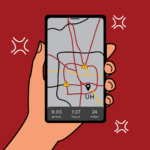
Houston is a city built for cars, not people

Isabella Decena/The Cougar

Houston is not walkable – and at this point, that is not just a planning failure. It is a safety hazard. If the city does not prioritize pedestrian safety and walkable development, more Houstonians will be put at risk simply trying to move around their own neighborhoods.

Houston’s reputation as a car city did not happen by accident. It was designed, protected and reinforced for decades. From the way the roads were built to the city’s zoning rejections on three separate occasions in 1948, 1962 and 1993.

However, it still relies on a patchwork of regulations, deed restrictions and minimum lot sizes that function like zoning without providing any benefits. Instead of guiding walkable development, Houston’s system enables disconnected growth, reinforces car dependency and leaves pedestrians navigating streets designed purely for vehicles.

Walk score confirms what residents already feel

The impact is visible in the numbers. According to Walk Score, Houston’s overall walkability score is a low 47 – a number that reflects the lived reality of most residents. 

Neighborhoods like Pecan Park, Meyerland and Braeswood Place have a score of 57-59, a polite way of saying that walking there is more of a chore than a choice. Long blocks, missing sidewalks and fast-moving traffic practically guarantee that most errands require a car. 

Even the Texas Medical Center, one of Houston’s most iconic districts, ranks at 59 for walkability. Its impressive Bike Score of 81 shows that some alternative mobility exists, but honestly, actually walking around the area still feels like navigating an obstacle course.

To be fair, Houston does have walkable areas. According to Walk Score, Neartown-Montrose and Midtown have a walkability score of 86, supported by restaurants, small businesses and a street network that encourages foot traffic. 

Fourth Ward, the Museum District, Greater Heights and Upper Kirby all land in the low to mid-70s, giving them the feeling of compact, genuinely connected urban pockets. These neighborhoods stand out not because walkable design is some rare miracle in Houston, but because the city has never made it a consistent priority. 

They’re the exceptions that prove the rule. Walkability here isn’t impossible; it’s just been treated like an optional upgrade instead of a basic part of city planning.

Walking shouldn’t feel like a safety gamble

For many Houstonians, walking isn’t just inconvenient – it’s impractical. The city’s sprawling layout means that even short errands can take 15-30 minutes or more, and crossing town during rush hour can take 45 minutes or more. Homes, offices and commercial centers are spread far apart. 

This forces pedestrians to navigate long stretches without sidewalks, unsafe intersections and streets with no shade in summer heat, which often exceeds 90 degrees. Low-income neighborhoods are usually hit the hardest, with fewer sidewalks, crosswalks and streetlights, making daily travel even more dangerous and inequitable.

That prioritization matters, especially in terms of safety. Houston consistently ranks among the most dangerous large cities for pedestrians. In 2024, 301 people died in traffic crashes in Houston, according to the Texas Department of Transportation – an increase of 29 deaths from the previous year and a new record for the city, surpassing the previous high of 295 in 2021. 

Signs of progress

But there is still hope, and it’s visible. In 2017, the city established its Walkable Places Committee to advocate for streetscape improvements, encourage mixed-use development, and shift outdated planning habits. 

One example is the West Gray Street Improvement Project, a multi-faceted effort to enhance mobility and safety between Midtown and the Third Ward. 

The West Gray Street project aims to upgrade road conditions, improve lighting and strengthen connections for pedestrians, cyclists and drivers alike. It also includes long-overdue fixes, such as improved stormwater drainage and new traffic signals, which address safety issues the neighborhood has faced for years. 

By responding directly to community needs, West Gray shows that Houston can design streets for people, not just cars and offers a glimpse of what a more walkable city could look like.

Walkability is not a luxury – it is a public safety, equity and sustainability issue. Houston’s unwalkable streets reflect its priorities. 

Houston has the talent, research and community support to change course. METRO is working to modernize transit. Residents, especially younger generations, are demanding safer, more connected neighborhoods. The city’s own walkability scores show that Houston needs to make it a priority everywhere, not just in areas where development is already dense and profitable. 

Houston has always prided itself on innovation, growth and possibility. Now it needs to apply that same ambition to the ground beneath our feet. Every street should be safe, accessible and walkable for all residents – not just those fortunate enough to live in the few walkable areas.

opinion@thedailycougar.com

—
“Houston is a city built for cars, not people” was originally posted on The Cougar

Posted in UncategorizedComments Off on Houston is a city built for cars, not people

Having fun in college doesn’t have to be expensive

Llily Huynh/The Cougar

The cost of living, which often seems too high, can make college feel like a financial marathon.

For many students, the price tag of having fun seems as heavy as the cost of living itself. Here is the twist: some of the best college experiences do not require spending money.

Student discounts and free events show that memorable events do not always come with a price tag.

Take Advantage of Student Discounts

One of the easiest ways to save is by using student discounts. Many restaurants, movie theaters and streaming services offer deals for students. 

Even small discounts add up over time, giving you more freedom to enjoy other social activities without worrying about money.

The Museum of Fine Arts Houston offers free admission on Thursdays. This is a great way to explore the arts or an excuse to wear a cute outfit. 

The University’s online event calendar, along with many other websites, can help you find these discounts quickly, making it simple to get more for less.

Free Events on Campus

The University offers numerous opportunities to have fun at no cost.

Additionally, Frontier Fiesta, a long-standing UH tradition, offers carnival booths, a cook-off, a headline concert and a variety of performances hosted by student organizations.

Beyond the big events, student organizations regularly hold smaller activities throughout the year. 

Active Minds UH, a student organization that focuses on changing the conversation about mental health, holds personal and academic workshops, petting zoos and vision board-making events.

Attending campus events not only saves money but also provides an opportunity to meet new people and create lasting memories. 

Discovering Events Around Campus and the City

Check campus bulletin boards, student newsletters and social media platforms like Instagram or Facebook for announcements. This makes it easy to find local low-cost events. 

Coog$ave offers exclusive discounts for local businesses and streaming services to students.

Houston provides numerous free and affordable events for students looking to explore the city.

The Visit Houston events page highlights concerts, festivals and family-friendly activities happening each week. Events This Weekend tab is beneficial for making spontaneous plans, as it makes it easy to discover something new at little to no cost.

Many of these events are open to the public, giving UH students the chance to connect with the Houston community. 

College is expensive, but having fun does not have to be. Students can find plenty of ways to enjoy themselves without spending much – or anything at all.

Next time you are tempted to skip out on plans because of cost, look for student discounts and free events. Sometimes, the best memories come without spending a penny. 

Editor’s note: a previous article said MFAH was open on Tuesdays, when it is actually Thursday

Caroline Bouillion can be reached at opinion@thedailycougar.com. 

—
“Having fun in college doesn’t have to be expensive” was originally posted on The Cougar

Posted in UncategorizedComments Off on Having fun in college doesn’t have to be expensive

Having fun in college doesn’t have to be expensive

Llily Huynh/The Cougar

The cost of living, which often seems too high, can make college feel like a financial marathon.

For many students, the price tag of having fun seems as heavy as the cost of living itself. Here is the twist: some of the best college experiences do not require spending money.

Student discounts and free events show that memorable events do not always come with a price tag.

Take Advantage of Student Discounts

One of the easiest ways to save is by using student discounts. Many restaurants, movie theaters and streaming services offer deals for students. 

Even small discounts add up over time, giving you more freedom to enjoy other social activities without worrying about money.

The Museum of Fine Arts Houston offers free admission on Tuesdays. This is a great way to explore the arts or an excuse to wear a cute outfit. 

The University’s online event calendar, along with many other websites, can help you find these discounts quickly, making it simple to get more for less.

Free Events on Campus

The University offers numerous opportunities to have fun at no cost.

Additionally, Frontier Fiesta, a long-standing UH tradition, offers carnival booths, a cook-off, a headline concert and a variety of performances hosted by student organizations.

Beyond the big events, student organizations regularly hold smaller activities throughout the year. 

Active Minds UH, a student organization that focuses on changing the conversation about mental health, holds personal and academic workshops, petting zoos and vision board-making events.

Attending campus events not only saves money but also provides an opportunity to meet new people and create lasting memories. 

Discovering Events Around Campus and the City

Check campus bulletin boards, student newsletters and social media platforms like Instagram or Facebook for announcements. This makes it easy to find local low-cost events. 

Coog$ave offers exclusive discounts for local businesses and streaming services to students.

Houston provides numerous free and affordable events for students looking to explore the city.

The Visit Houston events page highlights concerts, festivals and family-friendly activities happening each week. Events This Weekend tab is beneficial for making spontaneous plans, as it makes it easy to discover something new at little to no cost.

Many of these events are open to the public, giving UH students the chance to connect with the Houston community. 

College is expensive, but having fun does not have to be. Students can find plenty of ways to enjoy themselves without spending much – or anything at all.

Next time you are tempted to skip out on plans because of cost, look for student discounts and free events. Sometimes, the best memories come without spending a penny. 

Caroline Bouillion can be reached at opinion@thedailycougar.com. 

—
“Having fun in college doesn’t have to be expensive” was originally posted on The Cougar

Posted in UncategorizedComments Off on Having fun in college doesn’t have to be expensive