Author Archives | Caroline Bouillion

Spring break should feel like resting, not more work

Nina To/ The Cougar

According to the Merriam-Webster dictionary, spring break is “a vacation from classes at school usually for a week in the spring.”

The idea behind spring break is simple. A week off from school so students can step away from the semester’s stress and come back refreshed. In theory, spring break is supposed to be a reset before the final stretch of assignments, exams and projects. That is not quite how it works anymore.

Instead of resting, many students feel pressured to make the week productive and exciting. Some fill their schedules with extra shifts at work, while others feel they need to travel somewhere just to make the week worthwhile.

During spring break, social media feeds quickly fill with beach photos, boarding passes and group trips. Everyone seems to be somewhere. Even if those posts only show a small part of someone’s week, it can create the feeling that this is what spring break is supposed to look like.

If you’re staying at home, working or just relaxing, it can feel like you are doing it wrong. The reality is that many college students are already running on empty.

Between classes, homework, jobs and other commitments, most weeks during the semester feel nonstop. Many students are also thinking about their internships, career paths and the pressure of what lies after graduation. There is almost no room to slow down.

Spring break is supposed to be that chance to catch your breath. Still, we often end up just as busy during our break. 

I personally use spring break as time to get ahead, build my resume or at least make memories. But there have been a few years in my life where I didn’t do much on spring break. Spending the break sleeping, watching movies or doing nothing can feel embarrassing. In a culture where everyone is expected to be constantly improving themselves, slowing down can feel like falling behind.

Rest is not a waste of time

Sleep deprivation is common among college students, with academic pressure and irregular schedules contributing to chronic fatigue, according to a 2014 study published in the journal Nature and Science of Sleep.

When each week is packed with deadlines and responsibilities, a real break can make a huge difference. For some students, spring break means traveling somewhere new, and there is nothing wrong with that. Trips can create lasting memories and an escape from our routine. 

But traveling shouldn’t be a standard that everyone feels pressured to meet. Not everyone has the money to travel and not everyone wants to spend their break rushing from one plan to the next. 

Sometimes the best version of a break is the simplest one: sleeping in, spending time at home and enjoying a slow week. Those moments may not look exciting on Instagram, but spring break shouldn’t need a highlight reel to be meaningful. 

It’s easy to forget that the purpose of the week is to pause. A break should feel like stepping away from work or school. As spring break approaches, students will start comparing plans and counting down the days. Some will travel, some will stay home and some will work. 

Perhaps the best spring break itinerary doesn’t involve doing more. Maybe it is simply taking the break for what it’s meant to be: a break. 

opinion@thedailycougar.com

—
“Spring break should feel like resting, not more work” was originally posted on The Cougar

Posted in UncategorizedComments Off on Spring break should feel like resting, not more work

Love shouldn’t come with a price tag

Lily Huynh / The Cougar

There is one day each year that makes me question my sanity, a day supposedly dedicated to love. What used to be one of my favorite times of the year is now something I dread. I know the second I clock into my grocery store’s floral department on Feb. 14, I won’t be able to catch a break.

This year, I spent an entire shift inflating heart-shaped balloons, priced from $8.98 to $25.98 each. Each balloon string I tie, I do the math in my head. Why on earth would anyone be buying this right now? 

Not to mention, the roses that usually cost $10.98 a dozen get marked up to $15.98 just starting a week before, but it’s fine because it’s Valentine’s Day, or, depending on how you look at it, capitalism’s most efficient love language. 

Working behind a floral counter gives you a strange, unfiltered view of romance. I’ve seen the panic buyers, dropping hundreds of dollars on arrangements like it’s nothing. I see the people carefully calculating how much love they can afford. I see the guilt purchases. Once, I had a customer ask for a written apology to the partner they cheated on. 

And I started to see how transactional this whole thing is. 

Valentine’s Day markets itself as a celebration of love, but from where I stand, it seems like a high-pressure deadline for a big project coming up. Love becomes measurable at this point. Did you buy flowers? How big was the arrangement? 

Somewhere along the way, I think we have lost the point of why we celebrate Valentine’s Day. Why must affection be proven with a receipt? 

The weirdest part is that people know this: customers watch the prices rise and know they will come down after Valentine’s. Yet they will still buy the flowers, regardless of whether the quality is any different. Nobody wants to be the person who does nothing. 

That pressure is where the idea of capitalism thrives. Suddenly, love isn’t just something you feel or express; it’s something you perform, and performance can be sold. 

Behind the counter

Working retail during Valentine’s season makes this painfully obvious. The floral department is rearranged weeks in advance, pushing red and pink to every aisle. The environment itself seems to be pushing people toward spending before they have even decided what they want, and it works. 

I have watched customers look at overpriced chocolate or flowers, hesitate then buy it anyway because it’s Valentine’s Day. That phrase becomes a justification, a loophole that makes irrational spending romantic instead of impulsive. The holiday doesn’t encourage overspending; it excuses it. 

For people my age, especially students juggling rent, tuition and groceries, the pressure hits differently. Do you buy her flowers or gas? A nice dinner reservation or next week’s groceries? The symbolism is the same. 

And yet, opting out of Valentine’s Day feels risky. There’s an unspoken rule: not participating, or participating “too little,” can be read as indifference. Sometimes people spend money not because they want to, but because they fear what it might mean if they don’t.

This is what makes Valentine’s Day feel less like a celebration. 

Of course, the gifts themselves aren’t the problem. Gifting someone flowers is meaningful. The issue is the expectation that love has to be visible, purchasable and delivered on a single date. 

Because, honestly, the most genuine moments of love rarely happen under fluorescent grocery-store lights. They happen quietly, in late-night conversations, the small acts no one else sees. 

Ironically, those are the moments I think about while tying balloon strings and restocking the rose table. The contrast is impossible to ignore. On one side, love is packaged in plastic. On the other hand, love exists without needing proof. 

Maybe that is why working Valentine’s Day changed how I see it. It didn’t make me more cynical about romance, but it definitely made me more skeptical about how we’re told to show it. 

The honest takeaway from the floral counter is that love was never meant to feel like a timed purchase. Love doesn’t live in balloons or roses. 

The real challenge isn’t trying to find the perfect Valentine’s Day present; it is remembering that the most meaningful expressions of love were never meant to come with a price tag. 

opinion@thedailycougar.com

—
“Love shouldn’t come with a price tag” was originally posted on The Cougar

Posted in UncategorizedComments Off on Love shouldn’t come with a price tag

Love shouldn’t come with a price tag

Lily Huynh / The Cougar

There is one day each year that makes me question my sanity, a day supposedly dedicated to love. What used to be one of my favorite times of the year is now something I dread. I know the second I clock into my grocery store’s floral department on Feb. 14, I won’t be able to catch a break.

This year, I spent an entire shift inflating heart-shaped balloons, priced from $8.98 to $25.98 each. Each balloon string I tie, I do the math in my head. Why on earth would anyone be buying this right now? 

Not to mention, the roses that usually cost $10.98 a dozen get marked up to $15.98 just starting a week before, but it’s fine because it’s Valentine’s Day, or, depending on how you look at it, capitalism’s most efficient love language. 

Working behind a floral counter gives you a strange, unfiltered view of romance. I’ve seen the panic buyers, dropping hundreds of dollars on arrangements like it’s nothing. I see the people carefully calculating how much love they can afford. I see the guilt purchases. Once, I had a customer ask for a written apology to the partner they cheated on. 

And I started to see how transactional this whole thing is. 

Valentine’s Day markets itself as a celebration of love, but from where I stand, it seems like a high-pressure deadline for a big project coming up. Love becomes measurable at this point. Did you buy flowers? How big was the arrangement? 

Somewhere along the way, I think we have lost the point of why we celebrate Valentine’s Day. Why must affection be proven with a receipt? 

The weirdest part is that people know this: customers watch the prices rise and know they will come down after Valentine’s. Yet they will still buy the flowers, regardless of whether the quality is any different. Nobody wants to be the person who does nothing. 

That pressure is where the idea of capitalism thrives. Suddenly, love isn’t just something you feel or express; it’s something you perform, and performance can be sold. 

Behind the counter

Working retail during Valentine’s season makes this painfully obvious. The floral department is rearranged weeks in advance, pushing red and pink to every aisle. The environment itself seems to be pushing people toward spending before they have even decided what they want, and it works. 

I have watched customers look at overpriced chocolate or flowers, hesitate then buy it anyway because it’s Valentine’s Day. That phrase becomes a justification, a loophole that makes irrational spending romantic instead of impulsive. The holiday doesn’t encourage overspending; it excuses it. 

For people my age, especially students juggling rent, tuition and groceries, the pressure hits differently. Do you buy her flowers or gas? A nice dinner reservation or next week’s groceries? The symbolism is the same. 

And yet, opting out of Valentine’s Day feels risky. There’s an unspoken rule: not participating, or participating “too little,” can be read as indifference. Sometimes people spend money not because they want to, but because they fear what it might mean if they don’t.

This is what makes Valentine’s Day feel less like a celebration. 

Of course, the gifts themselves aren’t the problem. Gifting someone flowers is meaningful. The issue is the expectation that love has to be visible, purchasable and delivered on a single date. 

Because, honestly, the most genuine moments of love rarely happen under fluorescent grocery-store lights. They happen quietly, in late-night conversations, the small acts no one else sees. 

Ironically, those are the moments I think about while tying balloon strings and restocking the rose table. The contrast is impossible to ignore. On one side, love is packaged in plastic. On the other hand, love exists without needing proof. 

Maybe that is why working Valentine’s Day changed how I see it. It didn’t make me more cynical about romance, but it definitely made me more skeptical about how we’re told to show it. 

The honest takeaway from the floral counter is that love was never meant to feel like a timed purchase. Love doesn’t live in balloons or roses. 

The real challenge isn’t trying to find the perfect Valentine’s Day present; it is remembering that the most meaningful expressions of love were never meant to come with a price tag. 

opinion@thedailycougar.com

—
“Love shouldn’t come with a price tag” was originally posted on The Cougar
Posted in UncategorizedComments Off on Love shouldn’t come with a price tag

Love shouldn’t come with a price tag

Lily Huynh / The Cougar

There is one day each year that makes me question my sanity, a day supposedly dedicated to love. What used to be one of my favorite times of the year is now something I dread. I know the second I clock into my grocery store’s floral department on Feb. 14, I won’t be able to catch a break.

This year, I spent an entire shift inflating heart-shaped balloons, priced from $8.98 to $25.98 each. Each balloon string I tie, I do the math in my head. Why on earth would anyone be buying this right now? 

Not to mention, the roses that usually cost $10.98 a dozen get marked up to $15.98 just starting a week before, but it’s fine because it’s Valentine’s Day, or, depending on how you look at it, capitalism’s most efficient love language. 

Working behind a floral counter gives you a strange, unfiltered view of romance. I’ve seen the panic buyers, dropping hundreds of dollars on arrangements like it’s nothing. I see the people carefully calculating how much love they can afford. I see the guilt purchases. Once, I had a customer ask for a written apology to the partner they cheated on. 

And I started to see how transactional this whole thing is. 

Valentine’s Day markets itself as a celebration of love, but from where I stand, it seems like a high-pressure deadline for a big project coming up. Love becomes measurable at this point. Did you buy flowers? How big was the arrangement? 

Somewhere along the way, I think we have lost the point of why we celebrate Valentine’s Day. Why must affection be proven with a receipt? 

The weirdest part is that people know this: customers watch the prices rise and know they will come down after Valentine’s. Yet they will still buy the flowers, regardless of whether the quality is any different. Nobody wants to be the person who does nothing. 

That pressure is where the idea of capitalism thrives. Suddenly, love isn’t just something you feel or express; it’s something you perform, and performance can be sold. 

Behind the counter

Working retail during Valentine’s season makes this painfully obvious. The floral department is rearranged weeks in advance, pushing red and pink to every aisle. The environment itself seems to be pushing people toward spending before they have even decided what they want, and it works. 

I have watched customers look at overpriced chocolate or flowers, hesitate then buy it anyway because it’s Valentine’s Day. That phrase becomes a justification, a loophole that makes irrational spending romantic instead of impulsive. The holiday doesn’t encourage overspending; it excuses it. 

For people my age, especially students juggling rent, tuition and groceries, the pressure hits differently. Do you buy her flowers or gas? A nice dinner reservation or next week’s groceries? The symbolism is the same. 

And yet, opting out of Valentine’s Day feels risky. There’s an unspoken rule: not participating, or participating “too little,” can be read as indifference. Sometimes people spend money not because they want to, but because they fear what it might mean if they don’t.

This is what makes Valentine’s Day feel less like a celebration. 

Of course, the gifts themselves aren’t the problem. Gifting someone flowers is meaningful. The issue is the expectation that love has to be visible, purchasable and delivered on a single date. 

Because, honestly, the most genuine moments of love rarely happen under fluorescent grocery-store lights. They happen quietly, in late-night conversations, the small acts no one else sees. 

Ironically, those are the moments I think about while tying balloon strings and restocking the rose table. The contrast is impossible to ignore. On one side, love is packaged in plastic. On the other hand, love exists without needing proof. 

Maybe that is why working Valentine’s Day changed how I see it. It didn’t make me more cynical about romance, but it definitely made me more skeptical about how we’re told to show it. 

The honest takeaway from the floral counter is that love was never meant to feel like a timed purchase. Love doesn’t live in balloons or roses. 

The real challenge isn’t trying to find the perfect Valentine’s Day present; it is remembering that the most meaningful expressions of love were never meant to come with a price tag. 

opinion@thedailycougar.com

—
“Love shouldn’t come with a price tag” was originally posted on The Cougar

Posted in UncategorizedComments Off on Love shouldn’t come with a price tag

The accountability problem in fast fashion

Lily Huynh / The Cougar

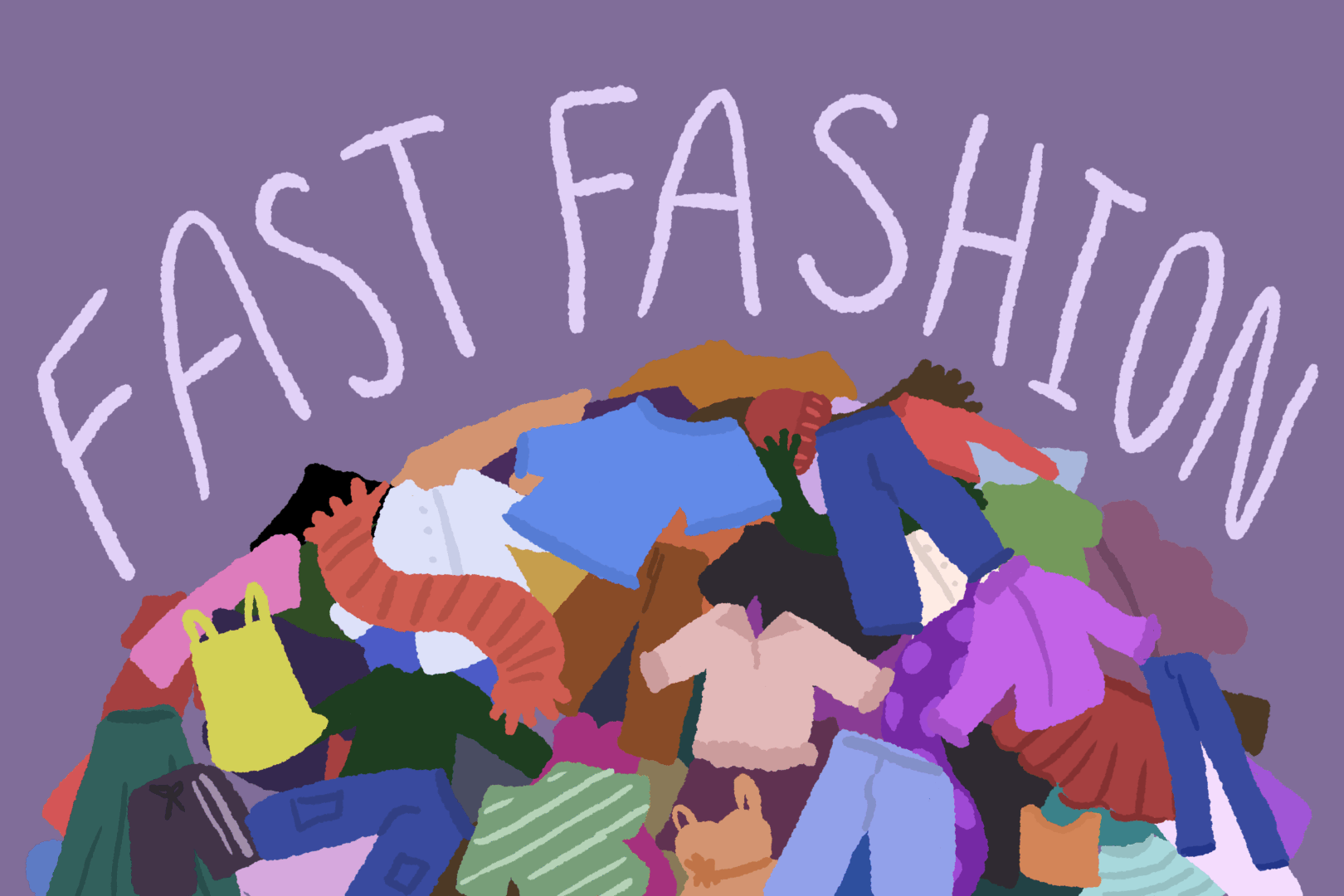
As students, we expect ourselves to care about sustainability while also dressing for jobs, internships and interviews, often on a limited budget. When people turn to fast fashion to meet those expectations, the response is usually criticism of personal choices rather than scrutiny of the system that makes those choices necessary.

Fast fashion thrives not because young consumers lack values, but because the industry’s structure makes quick, cheap clothing the most accessible option. This contributes significantly to environmental degradation and systemic issues that require regulation.

Fast fashion brands are frequently criticized for labor violations and environmental damage, and those critiques are justified. However, the conversation often stops there, shifting to individual morality rather than systemic accountability.

The reality of budget fashion

A few weeks ago, my roommate and I went to the mall. For me, the mall is my own personal nightmare. There are too many options, and spending money scares me. Still, I needed clothes.

We spent around 10 minutes at Zara, most of the time walking past racks of nearly identical items, with price tags low enough to feel tempting but high enough to add up quickly. 

We left without buying anything, but the experience stuck with me. The store was packed, the inventory overwhelming and the pace quick, a reminder of how fast fashion is designed to operate.

What stood out the most to me was how normal it all felt. There were no warnings about where clothes came from or how long they were meant to last. The burden, as always, was for the shopper to know better, choose better and do better, even while navigating limited time and money.

People are encouraged to thrift more, shop ethically or simply buy less. While these suggestions may work for some, they are not realistic for everyone. 

Thrift stores are not always affordable, size-inclusive or accessible. Ethical clothing brands often charge prices that are out of reach for students, balancing tuition, rent and part-time jobs. 

According to research by Sheffield Hallam University, 94% of respondents supported sustainable clothing, 17% shopped at a fast fashion retailer every week and 62% did so monthly. Only 10% claimed they had never purchased from fast-fashion outlets.

For many people, fast fashion is not about excess. It is about necessity. They need clothes, and at every turn, they find fast fashion. Or, it is simply all the person can afford.

When ethical consumption is framed as a personal obligation, it becomes a privilege. It also allows corporations to avoid responsibility for the systems they profit from.

We do not expect people to ensure food safety, enforce labor laws or monitor environmental standards. Governments regulate those industries because the harm is widespread.

Fast fashion should not be an exception.

Behind the bargains

The environmental impact of fast fashion is significant. Clothing designed to be worn only a few times often ends up in landfills or is exported to countries without the infrastructure to manage textile waste. These costs are not reflected in the low prices consumers see in stores.

The Netflix documentary “Buy Now: The Shopping Conspiracy” shows mounds of clothing being sent to countries like Ghana each day. The workers spoke about receiving too many textiles to “get rid of,” which contributes to pollution and blocks waterways.

According to Textile Mountain, “Over 140,000 tonnes of used clothing are imported into Kenya via the port of Mombasa each year, mainly from Europe, the U.S. and Canada. That is the equivalent of 6,000, 40-feet shipping containers of textiles, each containing 550 bales of second-hand clothes.”

As depicted in “Buy Now: The Shopping Conspiracy,” labor conditions are equally concerning. Garment workers, often women, are frequently underpaid and working in unsafe environments. Brands usually rely on supply chains, making accountability difficult. 

Despite this, the dominant narrative continues to focus on personal responsibility. People are made to feel guilty for participating in a system they did not create and cannot easily avoid.

Regulation would help address the problem. This could include labor protections across supply chains, environmental limits on textile waste, requirements for sourcing transparency and penalties for extreme overproduction.

Fast fashion will change only when the industry operates under rules that prioritize people and sustainability over profit, not because consumers feel ashamed of wearing inexpensive clothes.

Until then, moralizing consumption distracts from the real issue: a system designed to benefit from being unregulated.

opinion@thedailycougar.com

—
“The accountability problem in fast fashion” was originally posted on The Cougar

Posted in UncategorizedComments Off on The accountability problem in fast fashion