
Author Archives | by Katrina Bailey

M Health Fairview, Minneapolis’ Health Department partnership helps addiction care

M Health Fairview and the Minneapolis Health Department’s First Steps pilot program offers free and same-day access to medication for opioid use disorder and will continue beyond its pilot stage.

The program comes out of M Health Fairview University of Minnesota Medical Center West Bank’s emergency department, an area impacted by the opioid crisis with one of the highest overdose rates in Minnesota, according to Minneapolis’ website. 

The Health Department has provided around $389,000 to fund the pilot program.

Dziwe Ntaba, an emergency department provider at M Health Fairview, said in a press release that many people who suffer from addiction are not receiving treatment from hospital emergency rooms.

“Effective treatment is essential to overcoming this crisis,” Ntaba said. “Ninety-four percent of patients with substance use disorder don’t receive any treatment, yet many frequently visit the ER. The emergency department presents a unique opportunity to fill that gap.”

Medical Director of the West Bank Emergency Department Robert Tanouye said the program started from a three-year grant, with half of that time spent building the program. The program has treated over 600 patients since starting in June 2023.

The “medication first” treatment approach gets patients the medications they need while the grant pays for the medication, Tanouye said.

“The gap often historically was that we couldn’t get patients to get a prescription or we prescribe it to a pharmacy that wouldn’t have it or wouldn’t be open or a patient couldn’t go to Walgreens because of all of the various social things (like) transportation gaps,” Tanouye said.

Minneapolis City Council Member Jamal Osman (Ward 6) said when he was first elected in 2020, the opioid crisis had already devastated the community and the overdoses it brought were especially impacting the East African and Native American communities. He said we are in a war with opioids.

“Many people did not really know what they were dealing with,” Osman said. “Immigrant members that are not from this area are seeing their kids overdosing or being addicted to opioids, it was very challenging.”

Osman said the First Step program has made a difference in helping people struggling with addiction get the right treatment.

“During the budget markups, every year ever since I’ve been here, I allocated money for cultural specific money for the opioid epidemic,” Osman said. “In the last year, there was about $150,000 that our budget markup for cultural organizations to do outreach, education, awareness, Narcan training, different programs to really tackle this issue.”

Minneapolis received about $18 million from an opioid lawsuit settlement which is used every year to fight the opioid pandemic, Osman said. 

Tanouye said the West Bank lobby has a 24/7 vending machine pharmacy which is stocked with medication to treat both opioid use disorder and prevent death. He added that Narcan, which can reverse an overdose, and Suboxone, which can help alleviate withdrawal symptoms, are stocked in the vending machines.

“We either run the patient’s insurance or if they don’t have insurance or it’s too expensive, we basically just charge it to the grant,” Tanouye said. “So that’s where a decent amount of the grant’s money was used to get patients, not just the in-emergency department treatment, but to send patients home with physical medications that were paid for.”
Posted in UncategorizedComments Off on M Health Fairview, Minneapolis’ Health Department partnership helps addiction care

Measles seeing an uptick around Minneapolis

Measles is on the rise in Minnesota communities as the disease spreads through unvaccinated communities, especially in Minneapolis.

In 2024, 60 measles cases were reported, 52 as part of a May outbreak, according to the Minnesota Department of Health’s website. This year’s total more than doubled the 22 reported cases in 2022 but was less than the high of 75 set in 2017.

The outbreak has largely affected unvaccinated children in Minneapolis’ Somali community, the website said.

“Regrettably, vaccination rates against measles have dropped significantly in our Somali community over the past 10-15 years,” said Dr. Abdul Abdi, a pediatrician at Children’s Minnesota, in a press release.

Measles is a highly infectious viral disease spread through people coughing and sneezing, putting droplets in the air.

The disease starts with cold-like symptoms like sneezing, runny nose and fever before a red rash develops, said Boynton Health Public Health Nursing Director Lesley Gray.

Director of Public Health at Boynton Health Michelle Trumpy said measles tends to appear most in unvaccinated populations.

“Vaccination is the best prevention that’s out there,” Trumpy said. “It’s important for students to stay up to date with all the vaccines that they’re eligible to receive.”

Senior Epidemiologist Supervisor Cynthia Kenyon said to help prevent measles is the measles, mumps and rubella (MMR) vaccine. It comes in two doses, one usually given at 12 months old then the second one between 4 and 6 years old, but people can get it at any age.

“It is 93% effective even with just one dose and with the second dose, it is 97% effective,” Kenyon said. “So once you’ve been vaccinated with the MMR vaccine, you’re really quite well protected from measles.”

Trumpy said vaccination rates are high at the University of Minnesota as the University will put a hold on a student’s registration if they don’t have the required vaccines. The last time an undergraduate student got measles was in 2015, Trumpy added.

“It is a state statute that anyone attending post-secondary institutions (has to get two vaccines),” Trumpy said. “One is the MMR, measles mumps and rubella. The other one is the Td, the tetanus and diphtheria vaccine. That’s a really important measure from a policy perspective to keep students safe on college campuses.”

Kenyon urges people studying abroad to check their vaccination records with a travel clinic before their trip.

“It’s a really good thing to review your immunization records and even check with a travel clinic before you travel,” Keynon said. “Also, there’s sometimes other diseases that are circulating in other countries that aren’t a vaccine we routinely give here in Minnesota, but we might want you to get it before you travel to another country.”

Besides the vaccine, there are other ways to protect yourself, Gray said.

“Wash your hands. That is the best public health advice that we can give people,” Trumpy said. “It’s so important to protect yourself against a variety of illnesses. Stay home if you’re sick. That’s really important.”

Vaccine week is happening around campus from Oct. 28 through Nov. 1 at Coffman Union and Nov. 7 at the St. Paul Student Center, creating a space for students to come get seasonal (flu and COVID-19) vaccines, Trumpy said.

“We have a lot of really easy, low-barrier ways to get vaccinated on campus that we hope are convenient for students,” Trumpy said.

Posted in UncategorizedComments Off on Measles seeing an uptick around Minneapolis

The wild world of urban squirrels

October is Squirrel Awareness Month, an opportunity to shed light on all the mammal offers the local ecosystem.

University of Minnesota student Charlotte Devitz, who is pursuing a doctorate in ecology, evolution and behavior, is studying how aspects of the urban environment affect squirrels. She found the city offers both benefits and consequences for the furry rodent.

Devitz said some benefits of the urban environment for squirrels are a surplus of food and a lack of natural predators. However, Devitz added that living in a city causes a squirrel to have an increase in microplastic intake and greater exposure to the novel predator that is the automobile.

“There’s a much greater risk of being hit by cars,” Devitz said. “And of course, domestic dogs and cats can present a threat as well.”

Devitz said urban squirrels can thrive in their environment, if not better than rural squirrels can in theirs.

“We see higher population densities in the cities because there’s so many resources available,” Devitz said. “That sort of suggests some level of success, that there’s just more of these individuals that they’re having more offspring and stuff.”

Fourth-year student Sandra Liu worked with Devitz on her research and said they analyzed squirrels’ behaviors by catching and collecting samples.

Before Liu did this research, she only thought of squirrels as part of the “urban wildlife puzzle.” Now, she said she understands how important they are to the environment.

“You see them eating Subway sandwiches or whatnot, but they have these behaviors that make them super well adapted for change that has happened,” Liu said. “Their environment has been altered so much with urbanization and it’s really cool that they’re able to adapt to that.”

The common urban squirrels, such as the red, gray and fox squirrels, are not the only squirrels that can be seen around campus. Ecologist professor Anna Mangan from the University’s Duluth campus said flying squirrels are also quite common and can be identified by their smaller stature and how they glide from tree to tree during the night.

Mangan is focusing on flying squirrels for a project in mammal ecology studying the population and distribution of flying squirrels.

Squirrels are important to the ecosystem because they transport tree seeds around and serve as a main source of food for predators like hawks, coyotes and foxes, Devitz said.

“I think most people are pretty familiar with their presence in terms of living in, they’re in people’s backyards, they’re in all of the parks and stuff,” Devitz said. “But I think just recognizing that they are more than just backyard garden pests, that they do have these kind of important roles to play.”

Brett Robertson, a co-owner of Skedaddle Humane Wildlife Control’s Minnesota Branch, a human-wildlife company focused on getting squirrels out of houses, said he wants to get squirrels out safely without trapping them, as up to 70% of them die within 30 days after getting trapped.

Robertson said a one-way door is attached to the house, allowing squirrels to go out but not back in. If non-mobile baby squirrels are found, they are hand-removed and placed in a heated box outside until the mom comes back.

“Everything we do is keeping (them) safe so they stay out of people’s houses,” Robertson said.

Devitz said it is important to understand squirrels’ behaviors are natural and are not intentionally meant to be annoying.

“The reality is that they were here before us,” Devitz said. “We’ve urbanized huge portions of the country. The squirrels are just here along with all of the other wildlife. I think learning to coexist is going to be of growing importance as cities continue to expand because, for squirrels in particular, they’re not going anywhere.”

Posted in UncategorizedComments Off on The wild world of urban squirrels

More than the presidency up for grabs in November

While the presidential election will make the most headlines, this year’s ballot consists of many key federal and state elections.

Voting can be done in person on Nov. 5 or by mail-in ballot, according to the Minnesota Secretary of State website.

Secretary of State Steve Simon said the ballot varies from place to place, but the common elections all Minnesotans will share are the presidential, U.S. Senate, U.S. House of Representatives, the Minnesota House of Representatives, ballot amendment, U.S. Supreme Court, U.S. Court of Appeals and Minnesota State District Court.

Minneapolis’ ballot specifically contains races for the presidency, U.S. Senate, U.S. House District 5 and state House District 60B, as well as the school board, state Supreme Court justices and Courts of Appeals judges, according to the MNVotes website.

With so many decisions on the ballot, Simon said it is okay not to know everything.

“Vote for what you know and feel perfectly free to leave the rest blank,” Simon said. “Your ballot is just as good. It’s not spoiled just because you don’t vote in every contest.”

Riley Hetland, director of civic engagement for Undergraduate Student Government (USG) at the University of Minnesota, said students are narrow-minded when they think about voting, and it is important to research every election on the ballot.

“A lot of people think it’s going to be a two-name ballot with our presidential race, but they forget to really look and kind of understand and do proper research that students do look down the ballot to our local and state elections,” Hetland said.

Hetland said policymakers do not gear their policies toward college students, but she hopes USG’s Row the Vote will encourage students to pay greater attention to the ballot and politics in general.

“It’s really important that college students do take notice of what policymakers are adequately representing college students because a lot of the time they don’t really make policies for us,” Hetland said.

Republican candidate for State House District 60B Abigail Wolters, who is running against incumbent DFL Rep. Mohamud Noor, said she is targeting University students through door-knocking and putting herself out to students as a 2021 University graduate. District 60B covers Dinkytown, Como, Marcy-Holmes, East and West Bank, and Prospect Park.

Wolters said it is important for students to understand the cruciality of local elections.

“Local elections and local politics might and should have more impact on your life than federal,” Wolters said.

Hetland said if students live within 10 miles of campus, the University verifies students’ addresses for them, so they only need to bring their student identification card to register to vote on election day. If students live over 10 miles from campus, an official identification, along with proof of residency, is needed.

Simon said he urges people with questions about their ballot to go to MNvotes.gov.

“A frequent question I get all over the state is people who say ‘Hey, everyone who has a pulse knows there’s a presidential election going on, but what else is up in my area,’” Simon said.

To find your personalized ballot, type your address into the website and a sample ballot will show every contest and candidate within, Simon added.

The Weisman Art Museum is hosting a Voterpalooza on Oct. 22 to allow students to vote early and educate themselves on the election.

“It’s super important that people educate themselves on what their ballot’s going to look like and understand that it’s not just a two-person election,” Hetland said.

Posted in UncategorizedComments Off on More than the presidency up for grabs in November

Minneapolis Republicans seek to establish themselves

In a city dominated by liberal versus progressive debates, the Minneapolis Republican Party is looking to influence local politics with the limited power they have.

No Republicans currently represent Minneapolis in the Minneapolis City Council, state Senate, state House or U.S. House. Despite the long-shot odds, local Republicans are fighting to make an impact.

President and Chair of the Minneapolis Republicans Shawn Holster said the concept of the Minneapolis Republican Party did not exist until March 2023. Different state senate districts and political organizations dissolved and reconsolidated to form one party, Holster added.

With the party now organized, Holster said the biggest challenge is recruitment. Newsletters, social events and border-coordinated messaging are a few things the party is doing to get their name out.

“The greatest hill is letting people know we exist,” Holster said.

Holster said after George Floyd’s murder, people thought all the Republicans moved out of Minneapolis.

“As far as Minneapolis Republicans are concerned, we are your neighbors, not an evil entity that lurks in the shadows,” Holster said.

Bob Carney Jr., a Republican state house candidate for District 61B in southwest Minneapolis, said he is focused on making the party more open to different people.

“Being inclusive allows the party to build,” Carney Jr. said.

The Minneapolis Republican Party stands for election integrity, public safety, fiscal responsibility within the City and improving the quality of life in Minneapolis, Holster said.

“A little return for normality in Minneapolis is what we’re going for,” Holster said.

Holster said he moved from New Orleans to Minneapolis decades ago in hopes there would be less violence, despite references to the city as ‘Murderapolis.’

“I remember 15 to 20 years ago being able to sleep without hearing sirens,” Holster said. “That is not the case anymore.”

Larry Jacobs, a University of Minnesota professor with an emphasis on elections and voting behavior, said the party is a “fish out of water” in Minneapolis.

However, it is not a lost cause, Jacobs said. He added that if a Republican candidate could play to people’s grievances with the DFL, a Republican could win.

“I have a number of Somali students who own businesses who complain about too many regulations,” Jacobs said. “A Republican could tap into that and gain support.”

Holster agreed that the right candidate could win a local election in Minneapolis.

The same is true in Minnesota’s current state government, albeit to a lesser extent, with a trifecta held by the Minnesota DFL Party in the state House, Senate and Governor’s office. The last time a Republican won the governor’s office was Gov. Tim Pawlenty, who served from 2003-11.

Carney Jr., who also ran for governor, the U.S. House and City Council since 2010, said he has spoken with people who believe the current trifecta is too far skewed toward the DFL and that a divided government would be better. A divided government will bring more checks and balances to the state government, Carney Jr. added.

Jacobs said that the state of the Minneapolis Republican Party is still uncertain, as the party needs to reintroduce itself to Minneapolis voters.

“The Minneapolis Republicans can tap into what Former President Donald Trump has done with expanding his support based on critiques of the Democratic Party to possibly win,” Jacobs said.

Posted in UncategorizedComments Off on Minneapolis Republicans seek to establish themselves

Indigenous Peoples Day Powwow celebrates history and culture

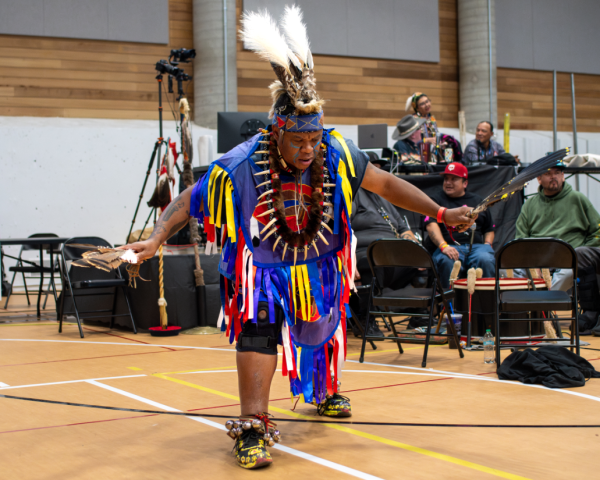
The Minneapolis American Indian Center’s Culture Language Arts Network held a community powwow Monday night to celebrate Indigenous Peoples Day. 

The event started at 5 p.m. with a grand entry where dancers performed traditional Indigenous dances. Vendors sold food and homemade crafts, and organizers from around the city held informational tables at the center. 

Throughout the event, Indigenous songs played correlating with different categories like men’s fancy, women’s jingle and intertribal, according to Culture Language Arts Network Program Director Cheryl Secola. 

This powwow was just one of the many events that took place Monday to celebrate the holiday. 

Indigenous Peoples Day, also known as Columbus Day, started in 1992 in California. While it is not a national holiday, President Joe Biden declared Indigenous Peoples Day to be on Columbus Day in a 2021 White House proclamation. 

The holiday celebrates and recognizes the resilience and diversity of Indigenous peoples, according to the Smithsonian’s National Museum of the American Indian. 

Natalie Rademacher, Minneapolis American Indian Center spokesperson, said this holiday is important to explain the history of the land Americans live on. 

“I think recognizing the land that we’re on and how Europeans got here and were able to live on this land is really important, and so having a day where Native people are honored is huge,” Rademacher said. 

Second-year University of Minnesota student Ava Hartwell, who identifies as Oglala Lakota, said the confusion around Indigenous Peoples Day versus Columbus Day is understandable, but it shows the need for more education about Indigenous history.

“I think that’s a very valid reaction to people who are uninformed about Indigenous history, but then that’s a bigger problem about why are we not educating Americans about Indigenous history,” Hartwell said.

Hartwell said the lack of education about the holiday makes it hard to celebrate. 

“Even myself, as someone who identifies as Indigenous, I don’t know the full history of  Indigenous Peoples Day and that just shows how much of a failure our education system is and how whitewashed our system is that even our own people aren’t aware of our own history,” Hartwell said. 

Monday’s celebration was the first time the Minneapolis American Indian Center held a powwow for the holiday, but it was not the only community celebration, Secola said. The University’s American Indian Student Cultural Center hosted two round dances, bringing the celebration closer to students. 

Secola said the powwow was a great way to celebrate the holiday as a community and bring more attention to Indigenous culture.

“We celebrate Indigenous Peoples Day,” Secola said. “It’s a big celebration, a social gathering. It’s really important for us as Indigenous people to be recognized finally.”

Posted in UncategorizedComments Off on Indigenous Peoples Day Powwow celebrates history and culture

Minneapolis celebrates its first Latino Business Week

Minneapolis celebrates Latino Business Week this week for the first time in the city’s history to highlight local Latino businesses.

The week stretches from Sunday, Oct. 6 to Sunday, Oct. 13 with events ranging from marketing workshops to a farmers market.

“Minneapolis’ growing Latino community is essential to our city’s cultural vibrancy and economic strength,” Minneapolis Mayor Jacob Frey said in a press release. “From small mom-and-pop shops on Lake Street to larger enterprises employing people across the city, Latino-owned businesses are creating jobs, enriching neighborhoods, and strengthening our local economy with their resilience and diversity.”

Minneapolis’ Small Business Team Manager Zoe Thiel said Wednesday and Thursday’s events are angled toward Latino entrepreneurs.

“The folks really interested in learning about what it takes to start a business, what resources there are for businesses (is what the events are about),” Thiel said. “The workshops both today and tomorrow are (also) hosted in Spanish.”

Service providers, including the Lake Street Council, will be present at CareerForce on Thursday in south Minneapolis from 1 to 4 p.m. They will answer questions about workers’ rights, driver’s licenses and immigration pathways to U.S. employment authorization, according to the City of Minneapolis’ website.

Oscar Corral, the business outreach specialist for the Lake Street Council, said the council provides resources such as legal assistance, marketing and permits to business owners.

The council will be tabling at the CareerForce event to ensure local Latino businesses are heard, Corral added. 

To end the week, the Latino Economic Development Center is hosting the Latinx Farmers Market Pop-up, which will showcase Latin music and cuisine.

A market manager for the event, Gladys Mejia, said the market is an opportunity for farmers and different organizations to come together and share their products and services.

“We have supported a variety of urban agriculture initiatives for youth and young adults,” Mejia said. “Like teaching them how to conserve food or teaching them how to grow food, like how to install different water systems, sustainable land care, different things like that. I thought a farmers market is not too different.”

The market will have 40 vendors, live music, two dance groups and a mobile health unit giving out vaccines, market manager Levi Welbourne said.

Thiel said the market will economically benefit Latino business owners while providing a fun experience for community members.

“Everybody loves Sunday trips to the farmers market,” Thiel said.

Mejia said the goal is to keep the market going annually for every Latino Business Week to provide a place to celebrate Latino culture.

“It’s just going to be a place to support local Latinx business owners, farmers, and a place to come have dinner, bring your family, have fun, dance and celebrate the way the Latinx community would with good food and good music,” Mejia said.

Posted in UncategorizedComments Off on Minneapolis celebrates its first Latino Business Week

Hmong-based Vinai restaurant serves as “love letter” to parents and history

The northeast Minneapolis-based Vinai restaurant is a newly nationally recognized hub for Hmong food with the restaurant’s interior being a “love letter” to the owner’s parents. 

Chef Yia Vang opened Vinai in July 2024 in the Sheridan neighborhood after owning Union Hmong Kitchen on Lake Street for several years. 

The restaurant opens at 5 p.m. from Tuesday to Saturday. Reservations are encouraged, as the restaurant frequently fills up within thirty minutes of opening. 

The restaurant got its name from the Ban Vinai refugee camp in Thailand where Vang’s parents met and he was born. Vang said the name still hits home for many refugees in Minnesota. 

“When you say the name Vinai, there’s still a lot of refugees that remember their first time coming from there and then there’s still a lot of parents and grandparents who are around and that’s where they came from,” Vang said.

Vang said he worked with an architect when designing the restaurant to tie elements of his family into Vinai’s interior. 

A few examples of these design choices include the cinder blocks in the center of the restaurant relating to his dad teaching him how to grill, the textured wall resembling the old refugee homes in Vinai, a shelf containing family photos from the camp and plants representing his mom’s green thumb, Vang said. 

“(My parents) harvest their garden and it all comes to the restaurant,” Vang said. “They didn’t ask for a dime.”

Vinai said the food created at Vinai is meant to mimic what parents would serve their children if they had the technology back then.

“It is one generation builds a platform so that another generation can fortify it and build (it), making it stronger,” Vang said. 

Customers Chai Khang-Lee and Rory Lee said the food served here is traditional Hmong food but with a more elegant presentation. 

“This is something our parents would pack for us when we were younger, just different,” Khang-Lee said. 

Khang-Lee added that while Hmong food is typically difficult to plate in a pretty fashion, Vinai nails the presentation.

Bartender Autumn Reid, who has worked at Vinai for around two weeks, said she has never experienced anything like this restaurant. 

“Sharing is caring and that is exactly what we’re trying to inspire,” Reid said. “You can actually feel and taste the love in the food,” 

The food is priced above average, with the highest-priced item being a Double Cut Pork Chop at $58. 

The New York Times listed Vinai as one of their “50 Favorite Places in America 2024.” 

Vang said his goal is to tell the Hmong story through food by balancing the differences in Hmong food all over the country. 

While Vinai will continue to serve food, Vang said he also wants the restaurant to be a place of restoration and community. 

“We’re using food as a vehicle to help develop and build community, just like the refugee camp was 50 years ago, where all these people were displaced, lost, without a home,” Vang said. “They came together and families were formed, communities were formed.”

Posted in UncategorizedComments Off on Hmong-based Vinai restaurant serves as “love letter” to parents and history

City’s Behavior Crisis Response team aims to de-escalate mental health crises

Minneapolis uses the Behavioral Crisis Response (BCR) team to provide crisis intervention, counseling and connection to support services to residents for free. 

The city partnered with Canopy Roots, a community mental health organization, to create the BCR team in 2021. Canopy Roots runs the team and hires responders to support people in crisis.

The support offered by the BCR is completely voluntary, Canopy Roots spokesperson Austin Wiebe said. 

Responders are trained to de-escalate, experienced in helping people with trauma and are caring professionals respectful of people’s backgrounds, according to the BCR website. 

When a 911 call is placed, people in the city ask the caller questions to determine if the Minneapolis Police Department (MPD) or the BCR team is dispatched, Canopy Roots Director of External Affairs Taylor Crouch-Dodson said. 

Certain criteria need to be met for the BCR team to be assigned to the call. If there are signs of violence, weapons or a medical emergency, Crouch-Dodson said MPD is dispatched first.

MPD spokesperson Sergeant Garrett Parten said the MPD finds the BCR team beneficial as more time and specialized help are spent with people in need.

The relationship MPD has with the BCR team is similar to the relationship MPD has with the Minneapolis Fire Department, Parten said

Canopy Roots Program Manager Marisa Stevenson said if a situation changes, a new team can arrive on the scene and have the call handed over to them. 

“If we do call for backup, we do sort of end up handing the call over to MPD, we’ll stay on scene, but we called them for a reason,” Stevenson said. “The reverse also happens, so there may be calls where police are at the scene or respond to something, and they recognize that the BCR team would be better, so they can call on our team.”

The BCR team can be recognized by their use of white vans labeled BCR, the lack of sirens and the blue jacket the response team wears, Wiebe said. 

“We did research and conducted surveys of people around the city around what they would want their program to look like,” Wiebe said. “It included things like city and voluntary and no lights and sirens, and run by a community organization, not directly in the city. So a lot of projects are in the city.”

Crouch-Dodson said the BCR team does not affect the University of Minnesota campus since the University’s police department has jurisdiction and not the MPD.

“It’s just important that sometimes that can be misunderstood because obviously the campus, the primary campus is in the city of Minneapolis, but it kind of offers almost like its own city,” Crouch-Dodson said. 

Before the BCR team existed, people having mental health crises would have to interact with police officers and be sent to the hospital instead of receiving immediate help. 

“We feel like it’s really the appropriate response that we’re providing for people in our community that are experiencing a mental or behavioral health crisis,” Stevenson said. “Police, EMS, are not trained to the extent that BCR is trained to address and attend to these calls.”

Crouch-Dodson said she believes the BCR team serves as the 911 system’s “fourth branch” with its focus on de-escalation and mental health.

Posted in UncategorizedComments Off on City’s Behavior Crisis Response team aims to de-escalate mental health crises

Minneapolis ranked second best city fishing city in Minnesota

Minneapolis ranked the second-best city in Minnesota to fish in, according to an analysis by Fishing Booker Blog. 

The number of available fishing charters, guides with the Angler’s Choice Award, number of bookings, average review score, average recommended score and minimum price of a fishing trip make up the criteria for the rating. Duluth took the number one spot. 

The 19 fishing charters, recreational fishing boats for hire that come with a guide, and the metropolitan lakes like Lake Minnetonka, Lake Waconia, Lake Independence and Shakopee Lake are why Minneapolis ranked so high, Fishing Booker spokesperson Vanja Polovina said. 

Lake Bde Maka Ska and other big lakes around Minneapolis are good for anglers who fish with a rod and a line, as it is hard to find fishing areas along the shore, recent University of Minnesota graduate Thompson Nguyen said. 

Ice Fishing Warrier Founder Jeff Henrichs said Lake Minnetonka is also a good fishing registry. 

“Like I said, the variety of fish and different bays,” Henrichs said. “That lake is over 14,500 acres. Average depth on that lake is about 30 feet and probably the deepest is in Crystal Bay at 113 feet. So it’s a good lake. It’s fun to explore it.” 

Jonathan Wilson-Thieroff, a fourth-year University student, said the Mississippi River is also a good place to fish because of the variety of different species of fish that can be caught. 

“In the river, it’s a lot of smallmouth bass,” Wilson-Thieroff said. “Occasionally you get some walleye too, but I’d say mostly smallmouth. You can catch catfish, muskies, pretty much anything in the river. In the lakes, it’s more kind of panfish oriented, so a lot of bluegill, crappies, perch, that kind of thing.” 

Not all fish caught in metropolitan lakes can be eaten as it depends on the lake, Wilson-Thieroff said. Lake water quality varies from lake to lake, meaning various chemicals caused by human activity can affect the fish. 

Fishing in Minnesota requires a license, which can be obtained on the Minnesota Department of Natural Resources (DNR) website or at gas stations. Minnesota residents are required to be at least 21 years old,bring a driver’s license number and a public safety identification number as proof of residency. Non-Minnesota residents must get a public safety identification number before purchasing any type of license from the DNR. 

A license is not needed for people under 16 years old, above 90 years old, Minnesota residents enlisted in the U.S. Armed Forces or residents of a Minnesota licensed nursing home, according to the DNR website.

Wilson-Thieroff said people associate urban areas with pollution and do not fish here for that reason, but he disagrees as the local rivers and lakes are clean.

“Minneapolis does a really good job, the Parks District especially, of preserving kinds of natural landscapes and making water diversion lakes accessible to a lot of people,” Wilson-Thieroff said.

Nguyen said there are a lot more people fishing in the heart of Minneapolis than farther north, making the competition for fish more fierce. He added overall, Minneapolis is a great spot to fish and will continue to be that way as long as people keep the fishing spots clean.

“Fishing is a lot of fun, Minneapolis has a lot of places to check out,” Nguyen said. “Just please keep fishing spots clean.”

Posted in UncategorizedComments Off on Minneapolis ranked second best city fishing city in Minnesota