

Author Archives | Brady Smith

Charlie Kirk’s death casts a shadow over the future of political dialogue

I don’t think I have ever felt, nor will ever feel, the emotion I did on Sept. 10th, 2025. One of my friends had texted a group chat for my church that Charlie Kirk was shot during one of his infamous “Prove Me Wrong” events, one of which I was able to attend myself last year. Initially, I thought he would probably be fine — knowing the mechanics of the event, I thought that a disgruntled audience member went up to Kirk with a handgun of some sort and fired before security got to the shooter and put Kirk into safety. I had hoped that he would persevere. 

Upon seeing the video, I knew that hope was in vain.

The raw, brutal video of his killing — someone whom I had both seen online and in person multiple times, whose organization I had volunteered countless hours to, whose wish for America was to return to the Christian values that I in most part shared, is something I will never forget. On a human level, seeing his face have the life removed from it is one of the most disturbing things I will ever witness. For my generation — whom Kirk primarily spoke to in his short life —  his death is particularly frightening. 

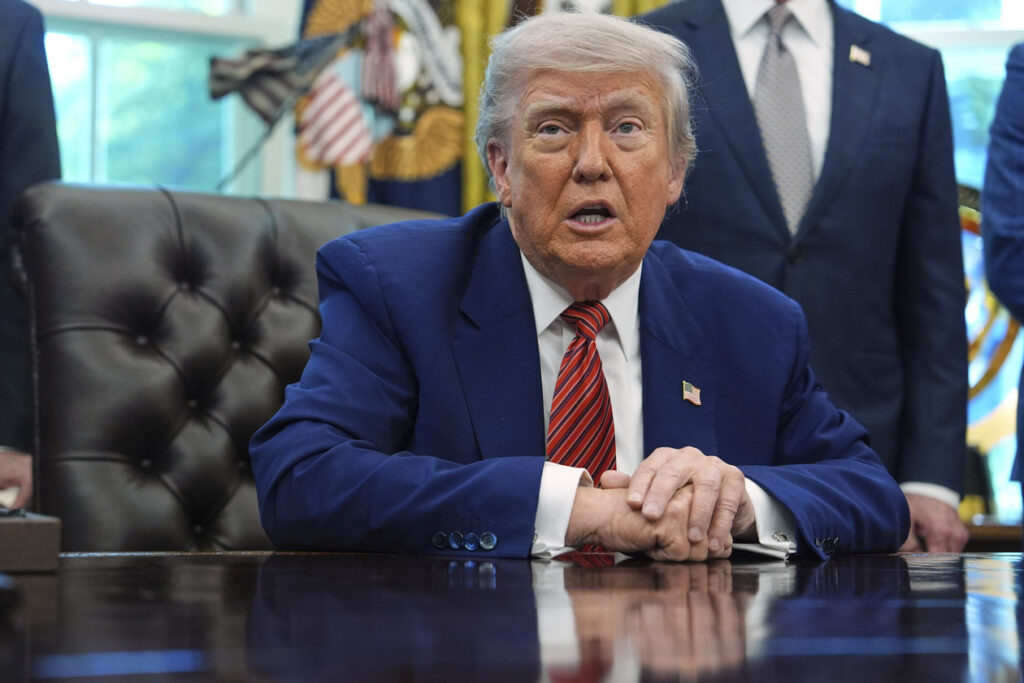
His death is an inflection point for the future of American politics. Kirk built a political empire in Turning Point USA (TPUSA), founding it at just 18 years old. In the 13years since, TPUSA became the foremost political organization for young people, despite the conventional wisdom that the youth tend to swing left en masse. In 2024, Kirk’s organization (and Kirk himself) played a prominent role in Donald Trump’s re-election to the White House. 

Tragically, his horrific assassination came at the height of his career, with his event at Utah Valley University being the first of many stops of the American Comeback Tour, organized in reflection ofTrump’s first months of the presidency — the presidency Kirk helped facilitate. Like Kirk’s other events, he dialogued with students on campus under a tent reading “Prove Me Wrong,” the name of a style of online content that emerged in the Trump era where conservative influencers debate left-leaning  college students over controversial political topics. It is a scene that came to Tech’s campus just two years ago, as conservative activist Candace Owens debated with students during the Live Free Tour. The style of debate has become ubiquitous over many American campuses over the last decade. 

I witnessed one of these events myself last year. Two weeks before the presidential election, Kirk came to the University of Georgia (UGA), before I transferred to Tech. At that time, I served on the executive board for the Turning Point chapter at the university and assisted with the event. UGA drew the largest turnout for Kirk that season, a feat for which TPUSA rewarded us with the “Chapter of the Year” title. 

At AmericaFest, one of the two TPUSA national conferences, Kirk brought us on stage and recognized the UGA chapter himself. For these reasons, the killing was extremely unnerving and saddening to me.

What was equally repulsive as the tragedy was the unabashed celebration that erupted on social media not even an hour after his death. Glib remarks about gun control, controversial comments he made and the outright joy at the execution of arguably the most popular political pundit in the country frightened me existentially. 

Typically, one would expect only the fringe to celebrate political violence — and normally, that is what I have seen when such tragedies  occur. But upon seeing posts on X reading “me liking every post making fun of charlie kirk” and “well guess he lost the debate” attain over five hundred thousand and three hundred thousand likes respectively, clearly I was incorrect. 

For my own sake, I cut off four people who immediately used the tragedy to score political points by posting on their Instagram story before Kirk’s body turned cold. None of them — or so I thought — were particularly radical. I had grown up beside some of them in middle and high school, many of whom I considered friends. I simply cannot maintain any connection with people who hold such an antipathy toward human life as to immediately and shamelessly post an ironic comment he made in hindsight of his death, or some random quote (as if political opinions make one deserving of execution) to “own” conservatives.

If that was not enough for this new brand of political nihilism, many immediately began spreading blatant disinformation to opacify the shooter’s motive. Some circulated a photoshopped image of the suspect wearing a pro-Trump t-shirt, others claimed he was a registered Republican. Yet this misinformation — unlike most other facets of American civic life — spanned both sides of the political aisle. Some also claimed that the suspect was a member of the Democratic Socialists of America. Thousands of people online spread these baseless rumors, all attempting to exploit Kirk’s killing to embolden their own side and demonize the other.

However, this is not a Democrat versus. Republican issue. Many left-wingers such as California Governor Gavin Newsom and political commentator Cenk Ugyur denounced the assassination in the boldest terms. Younger liberal content creators like Dean Withers, whose debate style is reminiscent of Kirk’s, shed tears and sympathized with his family. Clearly, this tragedy transcends the hyper-partisanship that seemingly encompasses more and more of American life.

What must occur is a fundamental transformation of political dialogue in this country. “When people stop talking,” Kirk ominously stated, “that’s when you get violence.” The answer to this disaster must be more, not less, political discussion and debate. People must be able to discuss ideas, regardless of perceived controversiality, without the fear of being shot. That is the basis for a functioning democracy, and Kirk’s assasination puts that basic assumption into question — which cannot spell good for the future of this nation.

The post Charlie Kirk’s death casts a shadow over the future of political dialogue appeared first on Technique.

Posted in UncategorizedComments Off on Charlie Kirk’s death casts a shadow over the future of political dialogue

Striking Iran frustrates hope for a nuclear deal

In late June, the United States intervened in the recently-termed “Twelve Day War” between Israel and Iran, striking three key Iranian nuclear facilities attempting to halt uranium enrichment. Though the strikes’ effectiveness remains in question, they likely set Iran’s nuclear program back at least modestly. Recently, France and the United Kingdom (U.N. Security council measures) have initiated ”snapback sanctions” on Iran as pressures mount to strike a deal — proving this issue will continue to perplex the international stage. However, the  decision for U.S. intervention in the war set a dangerous precedent, reducing diplomatic negotiability while incentivizing Iran to expedite their nuclear program.

Though concerns over Iran’s nuclear program have transpired since the 1979 Revolution, Israel’s war in Gaza — decimating Iran-backed Hezbollah and Hamas — isolated the Islamic Republic as the only threat against Israeli hegemony in the Middle East, heightening fears of an Iranian bomb. In light of this, Iran rapidly increased uranium enrichment to weapons-grade levels, reportedly possessing just over 400 kilograms of 60% enriched uranium. Israel’s pre-emptive strikes came just two weeks after this revelation, disrupting concurrent U.S. negotiations over Iran’s nuclear program, culminating in the American airstrikes in early June. 

However, American involvement in the war — and perhaps the war itself — was not their only course of action. Prior to the outbreak, diplomats from the United States and Iran had met for negotiations on a new nuclear deal following American withdrawal from the original JCPOA (Joint Comprehensive Plan of Action, or the “Iran Nuclear Deal”). The two nations negotiated throughout the imposed 60-day deadline, with the U.S. reporting that the two nations were “close” to reaching a deal. Following the deadline’s passage, Israel struck Iran, disrupting the correspondence as Iran subsequently backed out from negotiations with the U.S. As American support for Israel’s strikes (and direct intervention) ensued, any hope for future negotiations became much more difficult as Iran could not trust the U.S. to operate in good faith.

As a nuclear Iran is against stated U.S. foreign policy — and given the cold history between the two countries — a deal allowing for any enrichment may serve as a launching pad for nuclear weapons, and thus the U.S. should give no leeway to the Islamic Republic regarding uranium enrichment. However, uranium enrichment is crucial for civilian nuclear infrastructure such as reactors, not only weapons. Iran — currently operating a reactor with another in construction — would not be able to operate future reactors, seriously harming their chances at nuclear power.  As nuclear power is poised to become a dominant energy source in the 21st century, a no-enrichment deal would hinder the Iranian economy arguably more than the “maximum pressure” campaign of sanctions currently imposed by the U.S. A deal allowing for zero enrichment is thus extremely unlikely to be accepted by Iran. 

Though limited enrichment carries the fundamental risk of being a launch pad for a nuclear weapons program in the future, it is more likely to be accepted by the Iranians and less dangerous than an Iran unbeholden to U.S. and international inspection. Such was the case under the previous Iran deal (JCPOA), which greenlighted limited, civilian-level enrichment in exchange for an increase in nuclear inspection by the International Atomic Energy Agency and limitations on their broader nuclear program and sanctions removal. President Donald Trump famously ended this deal after facing immense backlash from the Republican party,who at that time controlled the Oval Office and Congress. 

That deal was still preferable to no deal at all. If the national interest is peace, as Vice President J.D. Vance  (perhaps ironically) claimed following American airstrikes, then ensuring Iran remains under U.S. and European jurisdiction under a deal which may permit limited enrichment is far more efficient — especially when compared to the risk of  inversely pushing Iran towards a nuclear bomb through greenlighted Israeli strikes or strikes from the U.S. itself. Israel’s and the U.S.’ talk of “regime change” only pushes Iran closer to a weapon for the Ayatollah’s — and perhaps the nation as a whole’s — survival. 

Diplomacy with Iran since the end of the war has remained uncertain, yet it is apparent that the U.S.  is not in the leveraging position it once held prior to the war. It was extremely difficult to imagine an Iran entirely cease nuclear enrichment — seemingly non-negotiable for the U.S. — prior to American strikes, and with the inconstancy of Israeli or American attacks that likelihood has greatly diminished. As the aftermath of the attacks reveal only a modest-if-light setback to potential Iranian nuclear weapons, they are only incentivized further to pursue a nuclear weapon if future attacks remain possible. 

Despite their questionable effects on the Iranian nuclear program itself, the American strikes actually gave credence to Iran’s purported nuclear strategy. That strategy, known as “nuclear hedging,” is a method by which the Islamic State would maintain the ability to produce a nuclear weapon — via stockpiling enriched uranium — without doing so unless some existential threat to Iran or its regime were to make itself known. Calls for ‘regime change’ would classify as an existential threat, and the U.S. strikes on nuclear facilities have underscored many Iranians’ understandable fear of American firepower. Under nuclear hedging, strikes would seem to confirm the exact threat which would push Iran to actually pursue a bomb for its own survival. 

Some critics argue that any diplomacy with Iran is ill-fated. In their view, Iran is a “rogue state” wholly incapable of negotiation and is either a hotbed for terrorism or a terrorist state itself. Any allowance of uranium enrichment to the country notorious for chanting “death to America” would thus be disastrous foreign policy, and such chants — and sponsorship of terrorist groups Hamas and Hezbollah — entirely justify not only U.S. attacks on their nuclear program but even American-backed regime change akin to the the war in Iraq. 

This version of diplomacy (or lack thereof) is incredibly dangerous. The premature haste for full-scale war is particularly concerning, as American regime change wars — especially to prevent a nation from acquiring weapons of mass destruction (WMDs) — do not have a good track record. In Iraq, the goal of toppling Saddam and his WMD program facilitated the upbringing of ISIS and granted Iran greater hegemony over the region. Domestically, the war cost 4,500 American lives and upwards of $3 trillion. Americans, seeing these dramatic costs, are understandably hesitant of bombing (or entering an all-too-familiar war with) an Iran arguably more powerful than 2003 Iraq. 

Iran’s rogue state classification does not justify abandonment  of negotiation. Negotiations, as previously mentioned, did occur under the JCPOA successfully — it was only after U.S. withdrawal that Iran ceased compliance. 

It would not  have been wise to pursue a regime change war in 1946 against the rapidly nuclearizing USSR, whose leader had just insinuated that war with the U.S. was “inevitable.” It is not  worth causing death and harm to American forces for regime change based upon a potential for nuclearization, knowing that history shows the consequences are unpredictable. Iran’s sponsorship of terrorist organizations is indeed a reason to be hesitant of negotiations, but as previously mentioned, Hamas and Hezbollah have been thoroughly weakened and currently pose little threat to Israel’s security. 

The American strikes on Iran’s nuclear facilities have had only one clear effect: disrupting diplomacy and further reducing hope for a nuclear deal in the U.S.’ interest. They have made Iran all the more skeptical of the U.S. and reduced the already slim chance of the sought-after no-enrichment plan. The strikes’ uncertain damage to the facilities themselves has only pushed Iranian potential nuclearization back by a few years at most. Given American willingness to not only back Israel’s missile barrages but covertly bomb their facilities themselves, Iran has little reason to placate U.S. policy  that erratically switches between a deal-making facade and war-hawking. As tensions begin to heat up once again between Iran and Israel, the necessity for a new nuclear deal that can solidify peace becomes urgent— the U.S. strikes have only made this more implausible.

The post Striking Iran frustrates hope for a nuclear deal appeared first on Technique.

Posted in UncategorizedComments Off on Striking Iran frustrates hope for a nuclear deal

Running is a social savior

COVID-19 dealt a serious blow to social interaction for many. Though loneliness had risen previously — arguably from social media offshoring of social interaction online — 2020 expedited these grim trends. Among the means theorized to reverse this trend, there remains an unexpected activity that can potentially aid in restoring social capital: running.

Running as a form of social cohesion is admittedly counterintuitive. Typically, running is a uniquely solo sport, with a runner detached from the rest of the world with music or a podcast passing everyone in their way (and perhaps disrupting traffic). However, running need not be alone, and indeed often is not; local races serve as a prime example of social running, offering an outdoor venue for a friendly jog as well as competition for those seeking a challenge. These 5-kilometer races have increased more than eightfold in participation since the year 2000. Further, running clubs have exploded as a hub of social connection — particularly among young people — demonstrating the sport’s ability to draw together.

Those two trends illustrate the viability of running as a catalyst for cohesion, especially in the digital age where loneliness seems all too hard to avoid. Of course, running alone will not revitalize the decrepit institutions that constituted “American-ness,” but its rapid increase in popularity shows the potential for renewed civic interest. It provides a blueprint on how other American social staples can create the renewed interest necessary to combat the increased isolation of Generation Z.

This running boom is not unprecedented; the nation experienced a similar uptick in running 50 years ago, with nearly identical increases in social running and local races. However, that boom occurred in a nation only beginning to witness the slide in social interaction, unmarked by digital isolation. Arguably, the running boom half a century ago came most prominently as a result of increased awareness of fitness, whereas the one in effect comes from a desire for connection in a post-pandemic world. 

Running as the emergent form of social engagement is bizarre, and not merely for its solo nature. It is a tough sport, with a steep curve of improvement and many potential risks for injury. There are seemingly other (perhaps better) ways to initiate that renewal. However, given the circumstances which disincentivize social connection specifically in the younger generation, the surge in running popularity makes sense. 

A major reason for running’s popularity is its low cost. Inflation’s toll on American consumers rose significantly since the COVID-19 pandemic, and while the rate has declined, the cost of items nevertheless has not. Whereas other sports often require expensive equipment, running at its most simple only requires appropriate shoes and attire — the equipment is one’s legs.

Running’s other dominant strength is in its accessibility. Despite the United States’ inadequate infrastructure for foot traffic, running is mostly legal on American streets. Road running is thus a

The post Running is a social savior appeared first on Technique.

Posted in UncategorizedComments Off on Running is a social savior

Trump’s economic policy: worst of both worlds

President Donald Trump’s free-trade skepticism and affinity for tariffs catapulted him to the presidency in 2016 and played a significant role in his 2024 victory.  However, in practice, those tariffs are marked by erraticism and unwillingness of Trump to commit, plunging the economy into dire uncertainty— possibly the worst trade policy outcome.

Trump’s infamous “Liberation Day” caused the largest Dow point drop since 2020, as well as a bond market crash prompting him to alleviate (for 90 days, tantamount to permanent in the age of short-attention-span politics) his sweeping tariffs. Similarly, his trade war with China came to a truce, as Trump promised to reduce his 145% duty on their imports to 30%. In May, he again threatened EU tariffs, before backing off two days later. 

The president has dubbed this trade strategy as “negotiation,” though it remains to be seen the benefits Trump concedes from those countries– especially when he displays such willingness to back off shortly afterwards. The stock market, predictably, rises and falls with every tariff announcement and repeal. Insofar as the stock market may be used as a barometer for the general economy, this erratic tariff policy has yet to yield any other economic effect but uncertainty.

By nature, uncertainty ensures that investors hold their money as they have no idea what effect the economy will have on their investment. Unpredictability is arguably worse than predictable loss. As mentioned, trade policy drastically changes American markets, especially in the sweeping fashion that Trump is known for. With his revocations of now two dramatic changes to trade policy, increasing uncertainty and thereby decreasing investment, this indecisiveness has not  aided anyone. 

Trump surrogates often argue that these tariffs gave the U.S. leverage against an ascendant China as well as promoted domestic industries, but these effects cannot bear fruit if the tariffs are reversed and will only  inflict economic pain with no hope for future recovery. No sensible investor would put a dime into the American system if Trump continues not to commit to his own economic plans. 

Following his highly-publicized break from the President, Elon Musk said he believed  that Trump’s tariffs will result in a recession. The bond market, typically considered  less volatile than stocks, crashed alongside the stock market, causing deep economic pains from which the nation is still recovering. 

Is this not the very “short-term pain” that Trump surrogates understood would occur? Why, then, would he revoke his unilateral Liberation Day tariff — thereby negating the “long-term benefits” of tariffs which were promised? The White House has classified the reversal of the China trade war as “the Art of the Deal,” a phrase often used by Trump and his supporters to explain away every administrative flip-flop as a part of the plan. Such is a pertinent method used to assuage voters to maintain confidence in the president, thereby ensuring his political stature as a calculated leader.

What is this “Art of the Deal?” To plunge America into economic contraction via unneeded uncertainty? To scare off American investment with capricious trade policy, reassuring rightfully concerned constituents with ad-hoc politicking? Regardless of one’s personal views on tariffs, it is obvious that this administration’s lack of commitment to either side of the debate is causing economic anxiety (and thereby diminished investment) which need not occur. 

This is not to advocate for an unqualified anti-tariff position. Much debate is to be had about the efficacy of tariffs and trade barriers, but those meaningful debates matter little if Trump swings the tariff pendulum once again. This trade policy, insofar as it cannot commit to a single ‘camp’ of economic thought, has pigeonholed the nation into economic uncertainty, which Trump’s own alma mater believes may delay potential investment. Again, Trump advocates cite this as short-term pain for long-term growth. That claim should be studied, but it does not bear any investigation if Trump (as he has an affinity to do) backtracks on whatever tariff he announces. It matters little what the actual effects of permanent, unilateral tariffs are if no one can be sure if those tariffs will remain permanent or unilateral. 

In the four months of the President’s second term, tariffs have been used less as a basis for an economic system (in the style of William McKinley, whom President Trump often cites as an inspiration for his view on trade) and more so as punitive measures and negotiating tools which go awry the second their actual effects are felt in America and abroad. Impromptu tariffs by definition do not provide the arguable benefits of a long-term tariff strategy, especially when they are backtracked so willingly, but they nevertheless disrupt other sectors of the economy such as the stock and bond markets. Trump’s erraticism has only given the country that “short-term pain” of tariffs while ensuring the “long-term benefits” never come to fruition, leaving America in what is the worst of both worlds in trade policy.

The post Trump’s economic policy: worst of both worlds appeared first on Technique.

Posted in UncategorizedComments Off on Trump’s economic policy: worst of both worlds