Author Archives | Ava Karthikeyan

The internet’s cycle of repurposed misogyny

Like fashion and politics, the internet is a pendulum. Ideas swing in and out of style, and when they swing back, the past is rarely remembered. Purity culture, for example, has recently returned with force, reflecting a broader political culture of conservatism masked as morality. But what’s more surprising is self-proclaimed feminists getting snagged in the crosshairs, as they echo critiques which blur the line between genuine concern and recycled misogyny. 

The pop culture zeitgeist has always reflected and empowered cultural and political trends. Online standards on dating can often mirror misogynistic norms, and popular takes end up reinforcing old standards. The internet is bad at snuffing out misogyny in any format besides overt; the trad wife is mocked for obvious domestic docility, but not the spiritual influencer preaching “feminine energy.” The underlying message is the same: women are valuable when they are restrained, soft. 

Public controversies reveal how quickly the internet can slip into collective misogyny. 

In 2022, the “Depp v. Heard” trial consumed the internet. Depp filed a complaint of defamation against Heard, who had written an op-ed about Depp’s sexual violence and domestic abuse. But the internet quickly branded Heard a liar, and so the onslaught of misogyny was justifiable. After the chaos died down, many realized the hastiness of the overwhelming backlash Heard received, which was largely a result of a planned smear campaign.

In the 2024 lawsuit Blake Lively filed against Justin Baldoni, the firestorm started up again. Baldoni filed a $400 million defamation lawsuit against Lively, working with the same PR agency as Depp during his trial. While Lively is not particularly a likeable character, a woman’s unfavorable qualities are not enough to justify misogynistic backlash. While I am not claiming Lively was necessarily in the right, it’s interesting the quick conclusions audiences jump to, even with unclear information. The pendulum swung back, and everyone forgot the lessons of the Heard trial and began attacking Lively’s character based on press junkets.  

This is not to say that women do not deserve criticism for their actions. Women can engage in harmful actions which perpetuate violence and bigotry, but actions such as sexualization or dehumanization are never an appropriate response. Before you jump on internet bandwagons, think about the subtext. The internet is bad at snuffing out misogyny unless it is overt. Subtle, disguised versions often thrive in plain sight.

The post The internet’s cycle of repurposed misogyny appeared first on Technique.
Posted in UncategorizedComments Off on The internet’s cycle of repurposed misogyny

‘Long Story Short’ spins life lessons wrapped in comedy

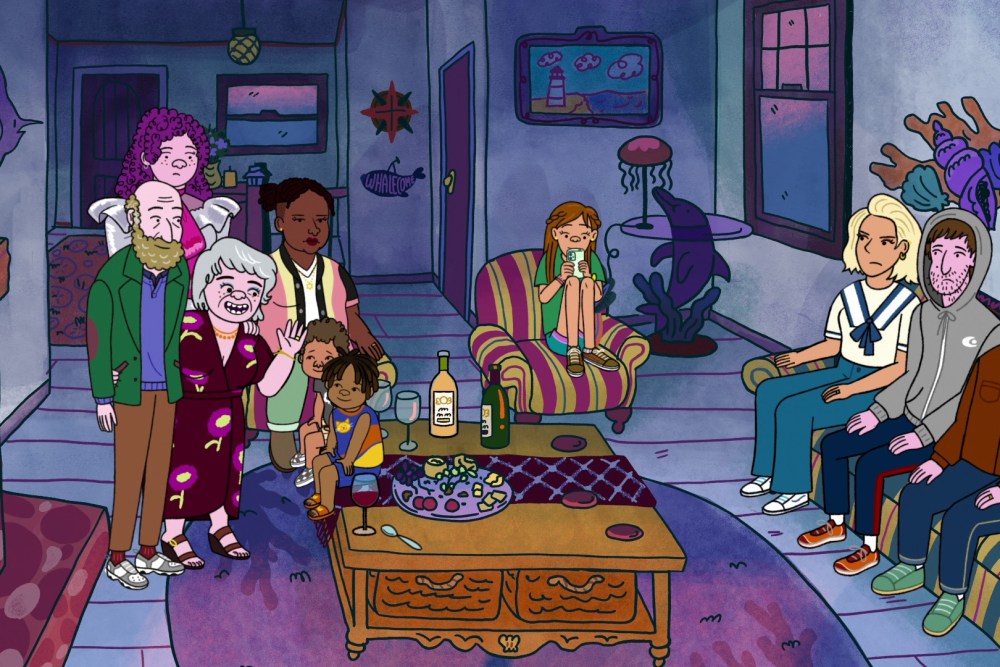
When it was announced that the creators of “Bojack Horseman” were working on a new project, many fans expected something of the same vein. But “Long Story Short” isn’t “Bojack,” to the disappointment of some; it is something else entirely. Told in a nonlinear sequence, the show unravels the lives of a Jewish American family in the San Francisco Bay Area, leaving the audience to piece together the gaps and unspoken emotions. The show was released on Aug. 22 — exactly 11 years after the first episode of “Bojack Horseman.” 

Opening with a montage of family photos, the series immediately feels like a peek into someone’s family album. The first episode begins with Avi bringing his new girlfriend, Jen, back home for his younger brother Yoshi’s bar mitzvah, plunging both Jen and the viewer into the Schwooper family’s life. The dysfunction is clear almost instantly. The following episode cuts ahead to 2014, with Avi and Shira at Avi’s daughter Hannah’s dance recital. It’s a bit of a whiplash, kids become parents, parents become strangers and the audience has to work to fill in the blanks. 

If the main hook of “Bojack Horseman” was the animal-human characters, “Long Story Short” finds its identity in its shifting timelines, from the 1950s all the way up to 2022. The show wrestles with unresolved grief, Jewish identity and most of all, family. There’s still humor, with Bojack-like quips and moments of suspended reality: a middle school overtaken with wolves that no one questions and the surreal cutthroat seriousness of BJ Banana Fingers, the children’s playplace where  Shira’s wife Kendra, works. 

However, it’s the relationships between the characters that ground the show. Avi and Shira’s knowing sibling banter, Avi’s bond with his daughter and most of all, the family’s complicated ties to their mother, Naomi. Naomi is the classic overbearing mother, smothering her children with affection but not truly listening to them.  

The family’s Jewish faith is a central part of the story. The creator, Raphael Bob-Waksberg states, “I wanted to tell a story about characters in transition as far as their identities go, and one track that takes is their relationships with religion. Over the course of the season, you see characters push religion away, and you see characters move towards religion because it is not a set thing in our lives, and it is possible to have different relationships with our heritage, with our culture, with our community, and there are different ways to come at it.” 

Each episode is a story within itself, centering on a specific character and peeling back the layers of their flaws. The show always circles back to Naomi and the children reckoning with their upbringing and personal lives. “Long Story Short” is the perfect show if you’re looking for something tender, messy and real.

The post ‘Long Story Short’ spins life lessons wrapped in comedy appeared first on Technique.

Posted in UncategorizedComments Off on ‘Long Story Short’ spins life lessons wrapped in comedy

The Weeknd stops in Atlanta on global ‘After Hours Till Dawn’ tour

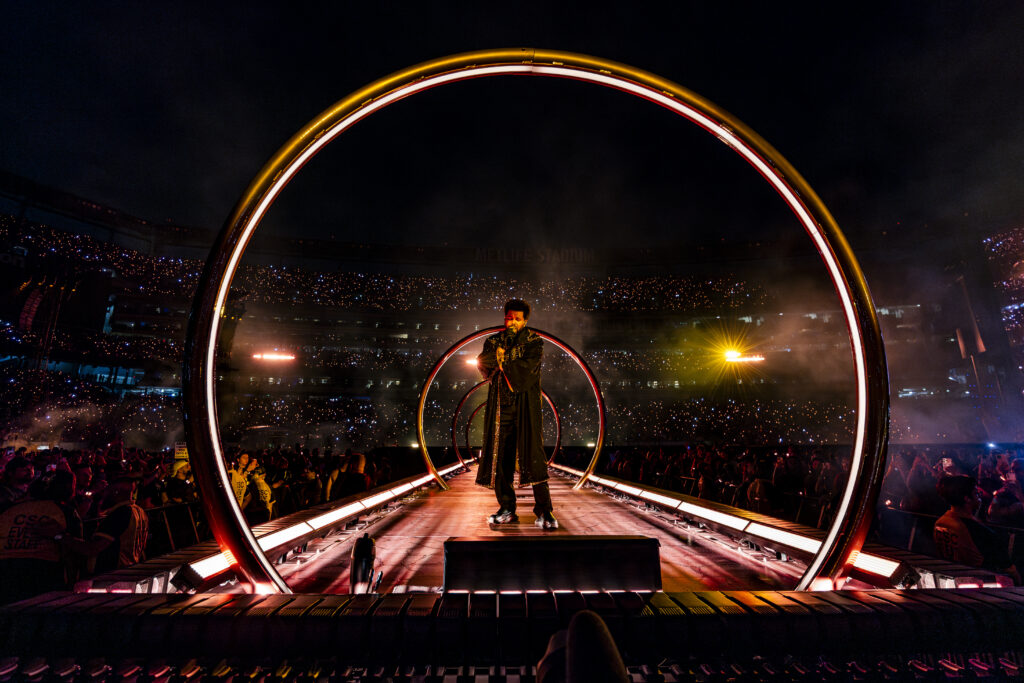
A rain-soaked Tuesday at Mercedes Benz Stadium may have been the last time Abel Tesfaye will grace Atlanta as The Weeknd. With rumors of the stage name’s retirement, the “After Hours Till Dawn” tour is seemingly an homage to The Weeknd’s evolution, reviving fan-favorite tracks from past albums. 

Beginning with a darker R&B sound, The Weeknd propelled to mainstream fame with his 2015 album “Beauty Behind the Madness,” featuring radio hits “The Hills” and “Can’t Feel My Face.” Since then, Abel Tesfaye, monikered The Weeknd, has cemented himself as a global face of pop. His sound seems crafted for a late night drive, R&B darkened with thrumming bass and sultry lyrics. His 2025 album “Hurry Up Tomorrow” is similar in sound, but with lyrics teetering on existentialism and self-awareness in its finality.  

The set, too, mirrored this discarded paradise. Cracked gold buildings framed the stage’s edges, a desert of opulence. A chrome statue of a naked woman, poised for flight, was perched at the end of the long runway.  

Finally at 9 p.m., a group of masked figures shrouded in red “Dune”-like costumes, glided onto stage. The opening piano of “The Abyss” echoed through the stadium, and the masked figures parted, revealing The Weeknd, masked in gold and blanketed by a black robe. Dystopian visuals flickered on the big screen: Tesfaye’s shadowy face flush against a red curtain, a blinking eye, a swirl of flames. “I’d rather leave somewhat of a legacy,” he sang earnestly. 

It was the throwbacks that really sparked the crowd. The telltale opening static of “Starboy” off his 2016 album of the same name, led into the song with Tesfaye’s vocals being indiscernible from the recorded version. Although the repeated yelling of “Atlanta!” was a little trite, his stage presence was undeniable. The energy in the stadium buzzed like a livewire. 

After “Heartless,” Tesfaye slowly and dramatically removed the gold mask, gesturing to the exhilarated crowd. During “The Hills,” Tesfaye walked down the aisle, through the arches encircling the stage. Bursts of fire warmed the stage, in time with the throbbing bass. “And it’s been controversial, you know, what is the craziest and loudest night on the entire tour,” Tesfaye remarked as the camera pans over the crowd. “But I think we know the answer.” 

Opener Playboi Carti returned for an energized performance of “Timeless,” and “Rather Lie,” both performers’ stage presence taking over the stadium. However, the crowd’s excitement truly peaked with Future’s surprise guest appearance during “Low Life.” Future had appeared as a guest in an earlier concert in Miami, so as the unexpected opening notes of “Low Life” began, the audience knew what was coming next. “Atlanta, this is your anthem,” Tesfaye said as the crowd met the first word of Future’s verse with deafening intensity. 

Although the entire performance was composed of a whopping 40 songs, there was never a dull moment. The songs flowed seamlessly from one to the next, as Tesfaye isolated his verses from fan-favorite collabs. A standout was “One of Your Girls,” a song written for Tesfaye’s 2023 show “The Idol,” which is probably the only decent thing to come out of his dip into acting. He gestured to the audience like a conductor, leading as the chorus of audience voices sang JENNIE’s part. 

At the end of the concert, The Weeknd played two songs off his debut mixtape “House of Balloons.” The projector glowed with a flaming V, like a rebirth, as the final song “Moth To a Flame” brought the audience back down to earth. His vocals were smooth and otherworldly, and his stage presence captured the audience, who reacted to his every gesture. It was a sensational, deafening performance, one that will certainly leave the crowd’s ears ringing. 

Although Tesfaye may be retiring The Weeknd, it’s unlikely his Atlanta fans will forget him anytime soon. 

The post The Weeknd stops in Atlanta on global ‘After Hours Till Dawn’ tour appeared first on Technique.

Posted in UncategorizedComments Off on The Weeknd stops in Atlanta on global ‘After Hours Till Dawn’ tour

Cirque du Soleil brings “OVO” to life

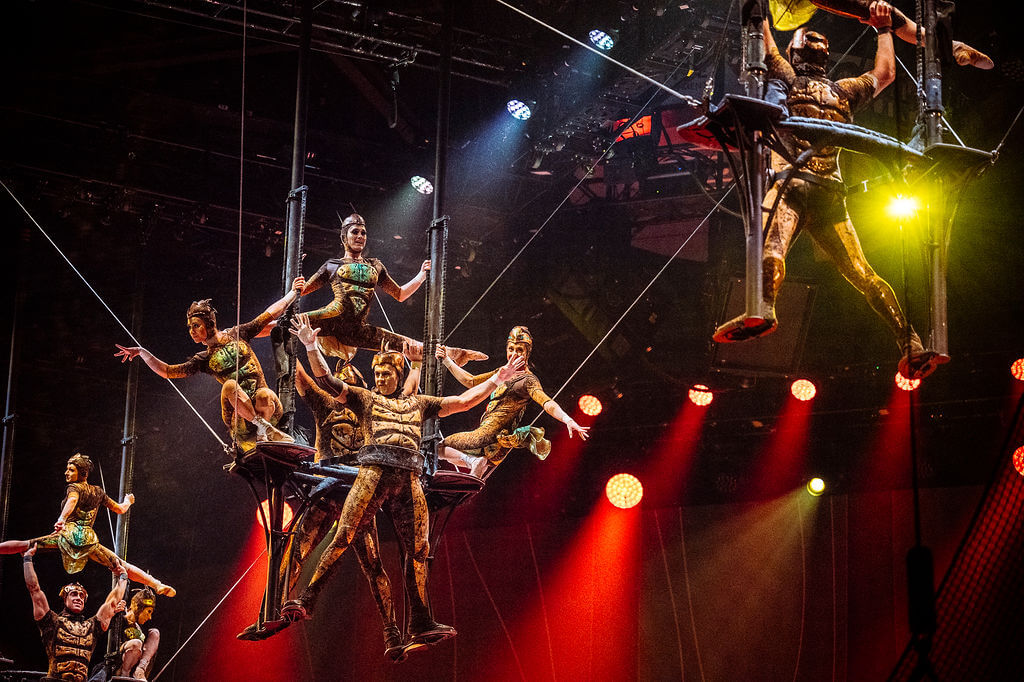
Opening with flashing lights and a rapturous bang, the onset of Cirque du Soleil’s “OVO” sets the stage for what’s to come. Just like past Cirque shows, performers fly, swing and jump — but this time, they’re clad in elaborate insect costumes. The performance follows a loose story that revolves around an egg introduced to the ecosystem, representing the circle of life. 

Written and directed by Deborah Colker, “OVO” first premiered in 2009 as a top show before being brought to the arena in 2016. “OVO” is the Portuguese word for egg, hinting at its Brazilian inspirations. This influence is also apparent through the set, flush with the colors of Brazil, from the deep pinks and purples of the budding flowers to the green of the stage. The music, too, is alive and bright, loud and surrounding as musicians perform from underneath the stage.

Throughout the 125 minute performance, the audience traverses through “OVO”’s environment of colorful storytelling and acrobatic performances. Each segment brings new and exciting stunts, such as ants juggling with their feet and catapulting through the air.

Even though most of the performances are fun and energetic, there are slower, more emotional moments as well. In an aerial silks set, Caitlyn Quinn and Ernesto Lea Place convey a story of love between two butterflies. In an interview with the Technique, they describe their performance and mutual trust. 

Lea Place says, “We have a background in ballet, and we do bring a sense of storytelling to our acrobatics, so even though we are very safe and keep it under control, we try to keep the emotional side of it and the connection.” 

Quinn, who is from Warner Robins, Ga., also expresses her excitement to perform in her home state. 

There are a few acrobatics common in many Cirque du Soleil shows, including trapeze artists and aerial performances. The more unique acts include a dramatic slackline act and jumping grasshoppers onto a rock wall. One of the highlights is a flexible spider that balanced her entire body with just her teeth.

Each performer also has a unique handmade costume design complementing their act. Comedy also enhances the show by breaking up the performances, chronicling a love story between a fly and a ladybug that involves some audience participation. 

With attention-captivating acrobatics, the show is enjoyable for all ages. Lea Place says, “A lot of people walk away really giddy, feeling joyful and having a good time. It’s a super colorful show with music, acrobatics all over the place . . . you see at the very end when we do our last dance, everyone gets excited and they start dancing with us.” “OVO” premiered at Gas South Arena on Aug. 7 and ran until Aug. 10.

The post Cirque du Soleil brings “OVO” to life appeared first on Technique.

Posted in UncategorizedComments Off on Cirque du Soleil brings “OVO” to life

Film review: “Oh, Hi!” is a fun commentary on modern dating

In the world of dating apps and situationships, genuine connection seems harder than ever. With the release of “Materialists” just last month, the tribulations of modern dating have been reintroduced to the silver screen. In  “Oh, Hi!” director Sophie Brooks straddles the line between rom-com and screwball horror. Her co-writer, Molly Gordon, known for her role in “Theater Camp” and “Booksmart,” is also no stranger to comedies, and her contributions shine through the film’s wry humor. 

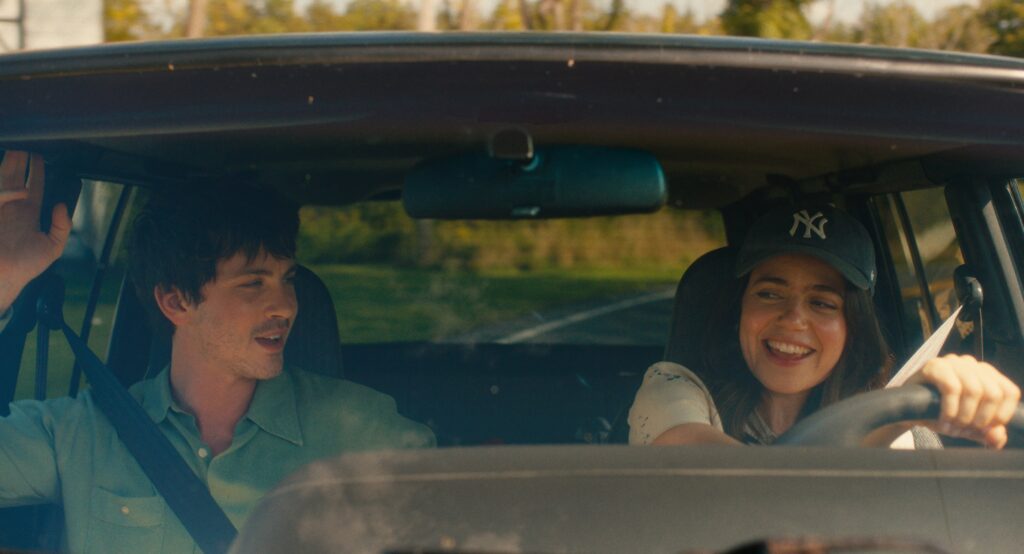
Cold opening with a haunting scene of Gordon’s character Iris pleading for help, the film cuts to Iris and Issac’s romantic drive to High Falls. Even at the film’s onset, there are subtleties of disagreements and trouble with Isaac’s wandering eye. The two actors seem to have a natural compatibility explored on screen, and the film successfully resists the cliché montage that plagues many modern rom-coms. 

The writers don’t skimp out on the duo’s conversations, and the audience gets to spend time learning about these characters, perhaps to make their actions later in the movie more sympathetic. They have their classic rom-com moments: belting Dolly Parton in the car, soft conversations over candlelit dinners and lounging at the lake. 

However, after discovering handcuffs left by the house’s owners, the couple decides to have some fun — until Issac reveals that he doesn’t want a relationship. At that, Iris refuses to remove the handcuffs, and instead, asks him to give her 12 hours to convince him why they would be perfect together. 

The screenplay’s focus on confinement relates to its conception during the COVID-19 pandemic; Brooks’ agent suggested she create a storyline that could be filmed with the COVID restrictions. It’s a modern dating take on the cabin in the woods, a Hollywood classic of both romantic getaways and masked killers. 

The film’s quiet moments are what create understanding for Iris and her desire to be loved. An extended scene of Iris unsettlingly coating slices of bread in milk as she mumbles to herself, trying to recall whether Isaac likes French toast offers brief glimpses of humorous relatability. 

Gordon’s performance compels the audience to empathize with her character. It would have been easy to reduce Iris to the crazy girlfriend archetype, but Gordon brings nuance to the role, inviting the audience to connect with her and the raw vulnerability that comes with rejection.

The movie dissects visceral human impulses and offers some thoughtful insights on the current nature of relationships and situationship culture. Unfortunately, the ending is a bit messy and inconsequential. Iris’ antics slide a little too far into the screwball comedy, and the film’s ending lacks the meaning and social commentary promised by the initial scenes. 

Despite this, the movie remains an entertaining, irreverent comedy. If you’re looking for a campy, relatable film, go see “Oh, Hi!” in theaters July 25.

The post Film review: “Oh, Hi!” is a fun commentary on modern dating appeared first on Technique.

Posted in UncategorizedComments Off on Film review: “Oh, Hi!” is a fun commentary on modern dating

Pride Month Book Recommendations

Literature has long been an outlet for marginalized voices. Although queer stories have existed since ancient mythology, they have been subjected to censorship and erasure, often being rewritten, silenced or excluded. It’s important, not only during Pride Month, but every month, to share and uplift LGBTQIA+ voices. Here are a few to begin with:

“Sunburn” by Chloe Michelle Howarth

Set in the belly of a small Irish town, “Sunburn” bites into summer’s raw heat. In the early 1990’s, Lucy grapples with her infatuation with her friend Susannah, and what begins as a quiet flirtation quickly spirals into all-consuming love. Lucy must confront the realities of the life expected of her: marrying her best friend, Martin, and becoming another generation of women mired in Crossmore. Through it all, she withstands the internal and external shame of being queer in her Catholic town. 

Haworth’s book began to take shape during the pandemic, and she described writing it as a “way of keeping in touch with [her] queerness”. Although it’s her debut novel, “Sunburn” has captured the attention of both readers and critics alike. The prose is heavy and languid, fluidly melding desire and reverence into something else entirely. Grappling with religion, family and friendship, “Sunburn” is not your average beach read; it’s a story of diverging choices and bitter truths. If you’re looking for a realistic, moving novel with devastating lines, this book is for you.   

“Notes of a Crocodile” by Qiu Miaojin, translated by Bonnie Huie 

In the throes of 1980’s Taiwan, the nameless protagonist, nicknamed Lazi, narrates self-exploration and heartbreak found in her early 20s. Although haunted by the shadow of the author’s abrupt suicide at age 26, “Notes of a Crocodile” is exalted as a significant work of both Taiwanese and queer literature. 

Traversing through eight diaries, the narrative interchanges between Lazi’s story and the perspective of an anthropomorphic crocodile forced to assume a human suit. A mix of musings and vignettes, the novel plunges the reader into Lazi’s intimate thoughts and philosophical abstractions, with the crocodile encompassing the lonely, splintering nature of queer identity in an unaccepting society. The prose is cyclical and vicious as Lazi rips deep into the shame entangled with her lesbian identity and fear of rejection. Punctuated with wry commentary on gender, adolescence and societal expectations, the novel is a thought-provoking read. This book is perfect for anyone amidst the intensity and loneliness of new adulthood.     

“On a Sunbeam” by Tillie Walden

“On a Sunbeam” traverses both space and identity through a haze of deep blues and purples. Originally a webcomic, the graphic novel follows Mia, the newest crew member on the spaceship Aktis, as she floats adrift in her own life. But in this future of conquered space, flying from planet to planet for repair jobs, Mia finds both a community and reconciles with her past. The blue-tinged flashbacks reveal Mia’s childhood at boarding school and the abrupt end of her first love, which ultimately collides with the present. The book doesn’t expound on the struggles many queer people grapple with; instead, being queer is an accepted part of the world. 

“On a Sunbeam” is beyond a love story. It’s about found family and discovering your place, all narrated through the tint of Walden’s color, distinctive and brimming with nostalgia. It’s about finding yourself, even when lost in space, and returning home through the people that define it. This book is a perfect late-night read, tender and uplifting all at once.  

“The Year of Blue Water” by Yanyi

In “The Year of Blue Water,” identity isn’t singular. A seamless weaving between prose and poetry, Yanyi deftly tackles queerness in intersection with family, immigration and mental illness. In 2018, the collection received the Yale Series of Younger Poets Prize and was a finalist for the Lambda Literary Award for Transgender Poetry. 

There’s no question that Yanyi’s personal experiences have shaped the intimacy of his writing. It’s a confessional, skinned, narrating denial of both the body and the intangible that rests deeper within it. The journey for identity isn’t confined to the author’s transness; it’s just a sliver of the whole picture. The continuous mention of his friends, whose names echo throughout the poems without introduction, lets the reader slide gently into Yanyi’s thoughts like a trusted confidant. Although his work broaches difficult subject matters, Yanyi’s faith in his community and in his friends offers blistering relief. “The Year of Blue Water” is perfect for readers searching for a poetry collection that is both lyrical and fiercely honest.  

The post Pride Month Book Recommendations appeared first on Technique.

Posted in UncategorizedComments Off on Pride Month Book Recommendations