
Author Archives | Ava Epley, Staff Writer

Blondshell’s Delmar Hall set confirms her rising momentum

With lights dimming and a full crowd buzzing with anticipation, Sabrina Mae Teitelbaum, known to fans as Blondshell, stepped onto the Delmar Hall stage on Tuesday, Nov. 18 to continue her “If You Asked For A Picture” tour. The venue was packed wall to wall, filled with fans of all ages, from teens in band tees to longtime indie listeners eager for a night of rock. As the first notes of “23’s a Baby” rang out, the room erupted in roars. The crowd didn’t just cheer. They shouted every word back at Teitelbaum, which set the tone for a night driven by emotional intensity and total audience immersion.

Blondshell arrived just days after the release of “Another Picture” on Nov. 14, and the excitement surrounding the new album was palpable. Every lyric delivered by Teitelbaum, every chord struck by the band, carried a rawness that the audience fed off of. Previously under the stage name of “BAUM”, Teitelbaum’s current, more confident identity found in the name “Blondshell” felt especially powerful in a live setting, as she commanded the space with a new level of assuredness.

The setlist moved quickly into “Toy” and “Docket,” two fan favorites that showcased the band’s skill and chemistry. The musicianship was tight and impressive, as three guitarists and one drummer filled the room with layered, textured sound. Their presence was loud without being overwhelming and polished without losing the grit that defines Blondshell’s music.

By the time they reached “Sepsis,” the crowd reached a new level of intensity. Teitelbaum leaned into the audience’s energy, with the microphone pointing out to the crowd screaming “my sepsis!” in unison. This moment quickly became one of the most electric points of the night.

The Blondshell banner hangs above the stage as fans fill Delmar Hall ahead of the bands performance on Nov. 18, 2025, in St. Louis. (Ava Epley)

The stage lights casted the band in warm yellows and reds as they transitioned into songs like “Veronica Mars,” “Arms,” and “T&A.” Each track maintained the emotional thread of vulnerability and catharsis that Blondshell is known for, but the live versions carried a slight edge with sharper guitars, heavier drums and Teitelbaum’s voice cutting through with striking clarity.

Midway through the show, the band shifted into deeper cuts like “Berlin TV Tower” and “Change,” before surprising the audience with a cover of Addison Rae’s “Diet Pepsi,” which earned laughs, cheers and dancing. The cover served as a playful moment in an otherwise emotionally dense set.

The final stretch of “Olympus,” “Tarmac,” “He Wants Me,” and the explosive closer “Kiss City” showcased Blondshell at her best. Her stage presence remained confident and grounded, constantly interacting with fans, gesturing into the pit, and building off their energy. The crowd responded in kind, singing loudly, dancing and never losing momentum.

“Kiss City” wrapped the night with a final burst of energy, earning one of the loudest reactions of the evening. As the house lights came on, the full venue slowly emptied, still charged with excitement. Blondshell delivered a confident, emotionally resonant performance marked by strong vocals, tight instrumentation and undeniable crowd engagement. Her show at Delmar Hall proved her growing momentum and how Blondshell’s music resonates with everyone.

Posted in UncategorizedComments Off on Blondshell’s Delmar Hall set confirms her rising momentum

Blondshell’s Delmar Hall set confirms her rising momentum

With lights dimming and a full crowd buzzing with anticipation, Sabrina Mae Teitelbaum, known to fans as Blondshell, stepped onto the Delmar Hall stage on Tuesday, Nov. 18 to continue her “If You Asked For A Picture” tour. The venue was packed wall to wall, filled with fans of all ages, from teens in band tees to longtime indie listeners eager for a night of rock. As the first notes of “23’s a Baby” rang out, the room erupted in roars. The crowd didn’t just cheer. They shouted every word back at Teitelbaum, which set the tone for a night driven by emotional intensity and total audience immersion.

Blondshell arrived just days after the release of “Another Picture” on Nov. 14, and the excitement surrounding the new album was palpable. Every lyric delivered by Teitelbaum, every chord struck by the band, carried a rawness that the audience fed off of. Previously under the stage name of “BAUM”, Teitelbaum’s current, more confident identity found in the name “Blondshell” felt especially powerful in a live setting, as she commanded the space with a new level of assuredness.

The setlist moved quickly into “Toy” and “Docket,” two fan favorites that showcased the band’s skill and chemistry. The musicianship was tight and impressive, as three guitarists and one drummer filled the room with layered, textured sound. Their presence was loud without being overwhelming and polished without losing the grit that defines Blondshell’s music.

By the time they reached “Sepsis,” the crowd reached a new level of intensity. Teitelbaum leaned into the audience’s energy, with the microphone pointing out to the crowd screaming “my sepsis!” in unison. This moment quickly became one of the most electric points of the night.

The Blondshell banner hangs above the stage as fans fill Delmar Hall ahead of the bands performance on Nov. 18, 2025, in St. Louis. (Ava Epley)

The stage lights casted the band in warm yellows and reds as they transitioned into songs like “Veronica Mars,” “Arms,” and “T&A.” Each track maintained the emotional thread of vulnerability and catharsis that Blondshell is known for, but the live versions carried a slight edge with sharper guitars, heavier drums and Teitelbaum’s voice cutting through with striking clarity.

Midway through the show, the band shifted into deeper cuts like “Berlin TV Tower” and “Change,” before surprising the audience with a cover of Addison Rae’s “Diet Pepsi,” which earned laughs, cheers and dancing. The cover served as a playful moment in an otherwise emotionally dense set.

The final stretch of “Olympus,” “Tarmac,” “He Wants Me,” and the explosive closer “Kiss City” showcased Blondshell at her best. Her stage presence remained confident and grounded, constantly interacting with fans, gesturing into the pit, and building off their energy. The crowd responded in kind, singing loudly, dancing and never losing momentum.

“Kiss City” wrapped the night with a final burst of energy, earning one of the loudest reactions of the evening. As the house lights came on, the full venue slowly emptied, still charged with excitement. Blondshell delivered a confident, emotionally resonant performance marked by strong vocals, tight instrumentation and undeniable crowd engagement. Her show at Delmar Hall proved her growing momentum and how Blondshell’s music resonates with everyone.
Posted in UncategorizedComments Off on Blondshell’s Delmar Hall set confirms her rising momentum

Students join call to protest execution of Missouri death row inmate

As Missouri awaited Gov. Mike Kehoe’s decision on whether to halt the execution of death row inmate Lance Shockley, students at Saint Louis University joined Missourians to Abolish the Death Penalty, the only statewide organization dedicated solely to ending capital punishment in Missouri, in calling for clemency and raising awareness about wrongful convictions. 

Shockley was convicted in 2005 of killing Missouri State Highway Patrol Sgt. Carl Graham Jr. near Van Buren, Missouri. He has maintained his innocence for nearly two decades. 

Advocates note that no physical evidence tied Shockley to the crime, and the request for DNA testing of 16 pieces of evidence has not been granted.

In the week leading up to Shockley’s scheduled Oct. 14 execution, around 12 SLU students participated in petition drives, planned vigils and collaborated with MADP to urge state officials to reconsider the case.

Dr. Heidi Moore, executive director of MADP, an alumna and SLU employee of nearly 10 years, said the university’s Jesuit mission made it a natural partner for outreach efforts.

“SLU has been my family. It was natural for me to reach out to the SLU community first. The Jesuit and Ignatian principles align with not killing citizens, even state-sanctioned,” Moore said.

MADP held its St. Louis vigil at St. Francis Xavier College Church on Oct. 14, marking a return to campus after several years of off-campus events. Moore said public engagement events like these are central to achieving the organization’s mission.

“Our vigils used to be at College Church for every execution. I pushed to bring them back because SLU students are more likely to get involved if it’s visible, right where they walk by every day,” Moore said. “We’re raising awareness with events like this across the state. Even among people who support the death penalty, there’s growing discomfort when there’s doubt about a person’s guilt.”

Despite calls across the state, Kehoe declined to grant clemency, and Shockley was executed by lethal injection at the state prison in Bonne Terre, Missouri, on Oct. 14, according to the Missouri Department of Corrections.

Zachary Geller, a junior involved with the criminal justice policy pod at SLU, worked closely with MADP to petition for Shockley. 

“I was extremely disappointed and saddened that he was denied clemency, especially knowing that it was his last chance,” Geller said. “After the fact, I attended the vigil held at the university church and paid my respects.”

Shockley’s execution was one of six scheduled nationwide between Oct. 10 and Oct. 17, part of what Death Penalty Action described as the highest pace of executions in the U.S. in more than a decade. 

Dr. Kenya Brumfield-Young, a SLU criminal justice professor who works closely with the Midwest Innocence Project (MIP), said the Shockley case helps students understand the realities of systemic failure.

“When students study wrongful convictions, they learn not just what happened, but how it happened. They start to see that wrongful convictions aren’t always the result of malicious intent, [but] they can come from systemic failures, faulty evidence or forensics,” Brumfield-Young said.

Brumfield-Young said that challenges of wrongful conviction extend beyond the legal system, emphasizing who exactly is harmed in cases like Shockley’s.

Before leading MADP, Moore worked for the Missouri Department of Corrections, including a position at Potosi Correctional Center, where individuals sentenced to death are housed.

“I’ve seen firsthand how executions affect not just those sentenced, but the staff who walk them to their deaths,” Moore said.

According to Death Penalty Action, three people with October execution dates, including Shockley, have ongoing innocence claims. Nationwide, around 3,700 people have been exonerated since 1989, including 201 who were sentenced to death, according to the National Registry of Exonerations.

Missouri currently has 29 people on death row, according to data from the Death Penalty Information Center. Missouri, along with Indiana, is one of two states in which judges can unilaterally impose the death penalty when a jury cannot agree on whether the defendant should be sentenced to death. 

In most other states, a deadlocked jury results in a sentence of life without parole. In Shockley’s case, his jury of peers was deadlocked, resulting in the judge convicting him of first-degree murder. This decision was upheld by the Missouri Supreme Court, the federal district court, the 8th U.S. Circuit Court of Appeals and the Supreme Court.

Moore said cases like Shockley’s can be a starting point for public dialogue. 

“Lance’s case is the kind of case people should use to talk about the death penalty,” Moore said. “It’s a safe entry point. Even people who support capital punishment can look at this and say something feels wrong.” 

Although Shockley’s execution was not halted by the governor, both Moore and Brumfield-Young said the case reflects larger lessons about justice and engagement.

“Each case represents human life,” Brumfield-Young said. “It’s not about sensationalism. It’s about understanding that when the system fails, it fails real people. Student voices can push those conversations forward.”

Shockley’s execution proceeded as scheduled, despite calls from students and advocates. His case continues to be cited by anti-death penalty groups as an example of the risks of wrongful conviction and the human impact of capital punishment.

Moore said she hopes students will continue using their education and advocacy to influence policy.

“Students have power,” Moore said. “Even if they can’t change the whole world, they can change their part of it.”


Posted in UncategorizedComments Off on Students join call to protest execution of Missouri death row inmate

A night of melancholy and magic: Japanese Breakfast live at The Pageant

Bathed in amber light and a haze of smoke, Michelle Zauner stepped onto the stage at The Pageant on Monday, Oct. 6, holding a glowing lantern. The crowd fell silent as she moved toward a giant clamshell centerpiece, her silhouette flickering through the mist. Then, as the band struck its first notes, the spell was cast.

Japanese Breakfast transformed the St. Louis venue into a dreamlike world of melancholy and wonder during this stop on their tour for their newest record. The band’s fourth studio album, “For Melancholy Brunettes (& sad women),” was released on March 21, 2025. Each chord and shift of light drew the audience deeper into Zauner’s ethereal vision, setting the tone for a performance that felt as intimate as it was surreal.

Fronted by singer, guitarist and songwriter Michelle Zauner, Japanese Breakfast also features Peter Bradley (guitar), Deven Craige (bass), Craig Hendrix (drums and keyboards), violinist Lauren Baba and saxophonist Adam Schatz. The American indie-pop band was formed in 2013 after Zauner saw a GIF of a traditional Japanese breakfast and wanted to create a band name that would be “exotic” to Americans.

Once the show began, the stage transformed into a dreamlike scene. Smoke rolled across the floor beneath the open clamshell centerpiece, framed by a glowing sign that read “Melancholy Inn.” The band was equally dispersed across the stage, completing the hazy, surreal atmosphere.

With the stage glowing a yellowish hue, the band then jumped into “Here is Someone,” a song that artfully combines soft guitar, fantasy-like backing instrumentals and wistful lyrics. Followed by “Orlando in Love,” another melancholic track, the show opened strong with the iconic verses and sounds that fans recognized and enjoyed.

Midway through the show, what seemed like a technical malfunction turned into an artistic flourish. As red and white lights flickered and microphones crackled, Zauner and her band seamlessly turned the chaos into rhythm, diving into their energetic track “Honey Water.” The planned transition showcased their ability to blur performance and spectacle.

The band played both new and old hits throughout the show, including many of the band’s biggest hits. When the opening chords of “Boyish” rang out, the crowd erupted, with voices joining in on the melancholic chorus that has become a fan favorite since the 2017 album “Soft Sounds from Another Planet.” Among the others were “Kokomo, IN” from 2021’s Jubilee album and “My Baby (Got Nothing At All),” which was featured in the recent movie “The Materialists” starring Dakota Johnson, Pedro Pascal and Chris Evans.

The Pageant’s intimate layout enhanced the performance. Whether in the pit, seated on the tiered floor or watching from the balcony, fans were enveloped in the band’s sound. The acoustics carried every detail of Zauner’s voice, which matched her studio recordings almost perfectly. Along with that, the crowd ranged from young to old, reflecting how the band’s music resonates with a wide audience.

For the encore, the band closed with four songs: “Posing for Cars,” “Paprika,” “Diving Woman,” and “Be Sweet,” which is Japanese Breakfast’s highest-streamed song on Spotify. 

Japanese Breakfast’s performance at The Pageant was a stunning blend of artistry, emotion and showmanship. Zauner’s ethereal presence and connection with the audience elevated the night beyond a simple concert, as it became an immersive experience that reflected the beauty and melancholy found in her music. 

The band’s wide range of instruments, stage design and transitions created a dreamlike atmosphere that captivated fans from start to finish. Every detail, from the lighting to the setlist, felt intentional and expressive of Zauner’s creative vision. By the end of the night, The Pageant was transformed into a mystical atmosphere that lingered on well after the last song. Japanese Breakfast proved once again why they are one of the most compelling acts in indie music today.

Posted in UncategorizedComments Off on A night of melancholy and magic: Japanese Breakfast live at The Pageant

From lost demo to fame: An interview with Panchiko

In 1997, three teenagers in England recorded a handful of songs, never imagining that those demos would return decades later as the foundation of a cult phenomenon. Owen Davies, Andy Wright and Shaun Ferreday released the EP, “D>E>A>T>H>M>E>T>A>L,” under the band name “Panchiko.” With their fall tour in full swing, Davies, Wright and Ferreday reflect on Panchiko’s past, present and future.

As young friends, the three shared the desire to create music. With many bands to inspire them,like Radiohead, Super Furry Animals, Nirvana and Air, Panchiko was born. 

“I used to play sports and stuff, but then had a choice. [I] just felt like there’s always music coming out in the U.K. and America, and I really identify with that. I like that. I want to make that music,” Davies, the main vocalist, said. 

In their early years, Panchiko played covers in local pubs and in a “Battle of the Bands” before recording their first demo. Eventually, they created thirty CDs of their first demo, titled “D>E>A>T>H>M>E>T>A>L,” and passed them out to friends, family and a few record labels. With no luck  forming a record deal, the band disbanded and the members went on with their lives.

According to The Stony Brook Press, it was not until July 21, 2016, when a 4chan user posted that they had found “D>E>A>T>H>M>E>T>A>L” in a thrift shop and wanted to track down who made it. However, the only information that the CD contained was the members’ first names.

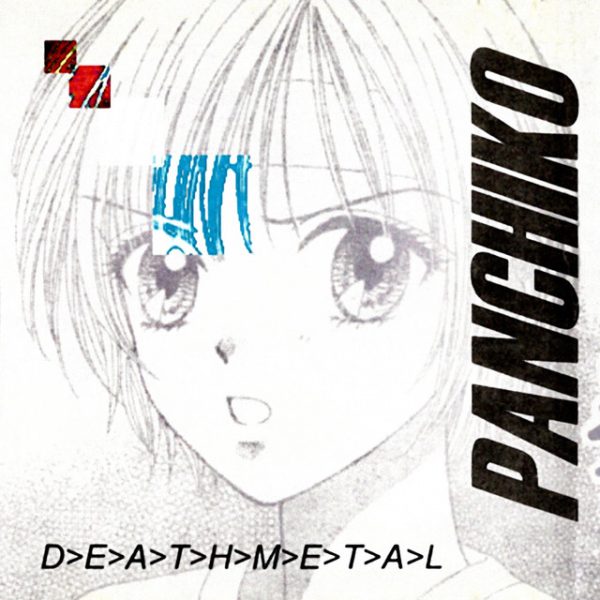
Panchinko’s famous EP cover, “D>E>A>T>H>M>E>T>A>L”. (Pachinko)

The next four years garnered over 200,000 views of the EP on Youtube and other sites, all unbeknownst to the band members, according to a previous interview done with Wayback Machine. Eventually, in 2020, Davies was found and contacted through Facebook, and Panchiko was reunited. 

When asked about their unique origin story, Wright, the band’s guitarist, said, “I suppose it could only happen like this, in this quite a small window, really, because we made those CDs, and there was no internet to upload. So, it’s really like the last bit of lost media.” 

Still new to fame, Panchiko navigates the difference between their early recordings and their current music. For some, creating new music could seem daunting, considering the discourse about their original EP, especially since the members have lived separately since their original disbandment. 

Ferreday clarified that while “D>E>A>T>H>M>E>T>A>L” remains their most popular release, the band does not feel confined by their past. “It’s inevitable that ‘D>E>A>T>H>M>E>T>A>L’ is going to be the thing that people gravitate towards initially,” he said. “But then I think, yeah, people get into the new stuff if they want to… We write songs we like.” 

Davies added that their approach involves honoring the spirit of their early music while incorporating new influences. “There’s an element of trying to hook into the feeling of what we were making, but then bringing our influences now, because there’s so many other things we like now. You can’t just go, oh, let’s try and sound like all those bands before this day. It can’t happen like that,” he said.

The band’s newest album cover, “Ginkgo”. (Panchiko)

With over fifteen stops on their United States fall tour to promote their new album “Ginkgo,” Panchiko revamps their unique noise while incorporating themes of change.“It wasn’t like we’ll make this album about the changes, but I think there was something hard to happen that needs to be addressed. Yeah, something needs to be addressed, and we’re the people to do it,” Davies said. Ginkgo trees are known to be a symbol of change, vitality and growth, which are themes highlighted in the album.

For old fans, the band hinted that new music is in the works. For new fans, Panchiko has a lengthy discography to discover and enjoy. And for young adults who are trying to hit it big, the one piece of advice given by the band members was to “just give it 25 years.”

Posted in UncategorizedComments Off on From lost demo to fame: An interview with Panchiko

Wilderado is set to bring “Talker” tour to Delmar Hall

Indie band Wilderado will stop in St. Louis on Oct. 5 at Delmar Hall as part of their fall “Talker” tour. The band’s signature indie-rock, Americana and alternative sound blends with Wilderado’s melodies and lyrics that express change and identity. The Tulsa-based group formed when members Max Rainer (lead vocals, guitar) and Tyler Wimpee (guitar, vocals) began writing songs together in college. That time of uncertainty and transition inspired their early sound that incorporated those same themes, which continues through their discography.

The band members of Wilderado. From left to right, Tyler Wimpee (guitarist, vocalist), Justin Kila (drummer) and Max Rainer (lead vocalist, guitarist). (The Syndicate)

The band recorded “Talker” in Norman, Oklahoma with producers Chad Copelin and James McAllister. After returning from 265 days on the road in 2022 with the band Flipturn, Rainer said the group questioned whether to continue, according to an interview with Atwood Magazine. “We were a bit more broken and fragile than any of us really understood,” Rainer said. He added that the band began the record by asking, “Do we want to do this anymore?” That reflection informed the making of “Talker,” which Rainer said “feels like home and weathers who we are.”

The band’s number one song on Spotify, “Surefire,” was inspired by Tabitha King’s poem “A Gradual Canticle for Augustine,” which highlights themes of resilience and identity that connect with listeners.

Wilderado has continued building a reputation for live performances over the course of the band’s career. The group has performed on Jimmy Kimmel Live and toured with artists such as Lindsey Buckingham, the Lumineers and Rainbow Kitten Surprise, adapting its sound for different audiences. 

For college students, Wilderado’s music offers a way to reflect on the strange early-adulthood stage of life where new experiences and growth are prominent. The upcoming show at Delmar Hall provides an opportunity for St. Louis and Saint Louis University fans alike to experience the band’s immersive sound.  

Doors open at 7 p.m. and the show begins at 8 p.m. Tickets start at $25 for advanced sales and $30 the day of the show.

Posted in UncategorizedComments Off on Wilderado is set to bring “Talker” tour to Delmar Hall