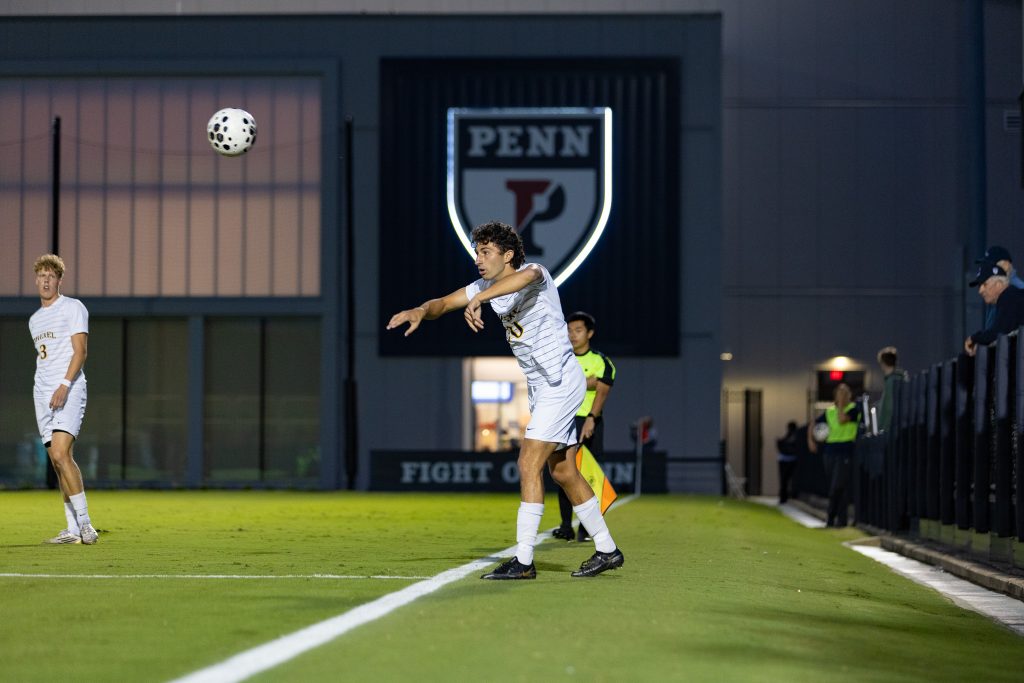
Early on Dec. 3, Drexel Athletic Director Maisha Kelly announced that Shannon Grogan had been named Head Coach of Drexel’s women’s soccer.
Grogan joins the Dragons from Coastal Athletic Association rival Stony Brook University, where she is an alumna and four-year starter for the Seawolves’ women’s soccer team. Grogan has been a member of the Stony Brook coaching staff since 2018, serving as an associate head coach. In addition, Grogan has been the recruiting coordinator for the program since 2022.
Stony Brook has been a strong soccer program for some time now, and, since joining the CAA in 2022, has finished in the top three of the conference standings twice and has won the 2024 CAA Championship.
Grogan replaces long-time head coach Ray Goon. Goon was the head coach of the program for 29 years, making him the only head coach of the program since it was re-established in 1996.
Grogan will need to bring that winning pedigree to West Philadelphia as the Drexel women’s soccer program has drifted into listlessness, making the CAA Tournament just one time in the last seven seasons.
In Drexel’s announcement, Kelly stated that, “Shannon brings an impressive blend of leadership, competitive vision, and student-athlete-centered values to Drexel.”
Kelly went on to cite Grogan’s time in the CAA and success in creating CAA champion caliber teams as other reasons for her confidence in Grogan as the next head coach.
In the same statement, Grogan stated, “Drexel University and the City of Philadelphia are places of opportunity. I am excited to bring new energy to the program and develop an environment committed to the pursuit of excellence on the field, in the classroom and in the community. Drexel is deeply committed to supporting the growth of their student-athletes, and together we will build a women’s soccer program that the university community can be proud of.”
Grogan will have an opportunity to revitalize this program, infusing a new energy and perspective into the program.
Posted in UncategorizedComments Off on Drexel women’s soccer hires new head coach
The Big 5 Classic is a basketball matchup between the big five Philadelphia schools. The Drexel Dragons are playing La Salle on Saturday, December 6th.
Saint Joseph’s vs Temple
If La Salle-Drexel is about toughness and survival, Temple-Saint Joseph’s is about identity. Both teams sit right around .500, both have played brutally tough stretches early, and both have numbers that say “we are better than what our record shows.” This game is a chance for each side to prove that their best version is the real one. On one side, Temple brings a hyper-efficient three-headed scoring attack and one of the best free-throw profiles in the city. On the other hand, Saint Joseph’s counters with strong guard-play, rebounding, and a relentless downhill mentality that lives at the rim.
Temple Owls:
The Temple offense operates through a balanced, highly efficient trio that is composed of Derrian Ford, Aiden Tobiason, and Jordan Mason – the engines behind the Owls’ 76.4 points per game. Ford leads the way with 16.3 points per game, attacking the rim relentlessly and converting at an excellent 83 percent clip from the free-throw line. Tobiason has been the model of efficiency, shooting 50 percent from the field and nearly 39 percent from three, while Mason provides steady scoring and playmaking, sitting second on the team with 29 assists.
What Temple does best is simple: they score efficiently and get to the free-throw line more than any Big 5 team. The Owls average a staggering 19 made free throws per game, creating offense even on nights when their perimeter shot is not falling. They also protect the ball exceptionally well, turning it over just 8.6 times per game, which allows them to control tempo and prevent opponents from generating transition points.
However, the Owls’ glaring weakness is on the defensive end. Opponents are shooting 47.5 percent from the field and nearly 38 percent from three – numbers far too high for Temple to survive against strong offensive teams. Their defensive inconsistency was on full display in their losses to Boston College, UC San Diego, and Villanova, where long stretches of poor coverage and slow rotations buried them early.
So what do the Owls need to do to win? First, they must defend the perimeter with purpose. Saint Joe’s is shooting just 25.6 percent from deep, but Temple cannot allow this to be a “get right” game for the Hawks’ shooters, who have the capability of being better than their current three-point percentage. Second, they need Ford and Tobiason attacking downhill, forcing the Saint Joe’s defense to collapse and opening opportunities for Gavin Griffiths and AJ Smith on the perimeter. Finally, controlling the glass is critical – Temple is even with opponents at 33 rebounds per game, and cannot afford to give the Hawks extra possessions.
If Temple plays disciplined defense and leans into their efficient scoring, they have the tools to come away with the win.
Saint Joseph’s Hawks:
Saint Joseph’s enters this matchup with one of the most balanced statistical profiles in the Big 5. The Hawks score 77 points per game, out-rebound opponents by four per game, and boast the best free-throw shooting mark in the city at 79.6 percent. Their offense is driven by Deuce Jones II, Derek Simpson, and Jaiden Glover-Toscano, a trio that combines for over 40 points per game and sets the tone with aggressive drives and physical play.
Jones has emerged as the primary scorer after transferring in from LaSalle, averaging 17 points per game while getting to the line at a high volume. Simpson has been one of the more efficient players on the team, shooting 50 percent from the field and adding 5.4 rebounds per game, an impressive number for a guard. Glover-Toscano provides shot creation on the wing and leads the team in three-point makes, despite the Hawks’ early-season struggles from beyond the arc.
SJU’s biggest strength, however, lies in its physicality and rim protection. The Hawks block 5.6 shots per game, led by Justice Ajogbor (two blocks a game). Their ability to use size to disrupt shots has masked their defensive weaknesses on the perimeter, where opponents are shooting 34 percent from three. SJU also boasts a deep arsenal of guards that they can rotate in and out, while still getting high production from the position.
But the Hawks’ flaws are significant. They turn the ball over 13.1 times per game, often due to playing too fast or making poor decisions. Their outside shooting – just 25.6 percent as a team – has put extra pressure on Jones and Simpson to manufacture offense in the paint. Against a Temple team that scores efficiently and protects the ball, Saint Joe’s cannot afford careless possessions.
So what does Saint Joe’s need to do to win? First, dominate the glass. Their 41.3 rebounds per game is one of their greatest strengths, and they must turn offensive rebounds into high-percentage second-chance points. Second, they need to attack Temple’s vulnerable defense, putting pressure on Ford and Mason to defend without fouling. Also, the Hawks must avoid long droughts caused by ill-advised threes, as their best offense comes when the ball touches the paint before finding shooters. Lastly, to pull out a win, the Hawks must lean on Deuce Jones to carry the offensive load.
If Saint Joe’s plays to its physical, fast, and aggressive identity, they will make life difficult for Temple on both ends.
This game has all the makings of a great matchup. Temple is the more efficient offensive team and excels at controlling possessions, while Saint Joseph’s has the rebounding edge and a defensive presence around the basket that Temple has struggled with this season.
In the end, it may come down to which weakness cracks first: Temple’s defense or Saint Joseph’s shooting.
Prediction: Saint Joseph’s pulls away late in a competitive battle, winning 78-74.
Villanova vs University of Pennsylvania
Villanova finds itself back in a familiar spot: playing like the top dog of the Big 5. At 6-1, with six straight wins and a series of comfortable margins, the Wildcats are starting to look more like the Villanova program everyone has come to know and expect – disciplined, efficient, and brutally physical on the glass. The Wildcats’ only loss this season came against BYU with top NBA prospect AJ Dybantsa. Penn, meanwhile, comes in at 5–3 with one of the most explosive offenses in the city, headlined by a star wing in Ethan Roberts and a do-everything forward in TJ Power. The Quakers already own wins over Saint Joseph’s, Drexel, and La Salle, and they have done it by putting points on the board in bunches. On paper, this is a clash between Villanova’s size, depth, and rebounding and Penn’s spacing and shot-making. In reality, it may come down to whether Penn can survive the Wildcats’ relentless physicality for a full 40 minutes.
Villanova Wildcats:
Villanova’s profile is as intimidating as it looks. The Wildcats average 82.0 points per game and outscore opponents by over 15 points per night, but it’s how they get there that makes them so hard to handle. They shoot 47.5 percent from the field, knock down over 10 threes a game at 36.4 percent, and share the ball at a high level with nearly 17 assists per contest. Just as important, they own the glass in a dominant fashion, posting 39.6 rebounds per game and a staggering +11.3 rebounding margin. Opponents are being held to just 28.3 boards a night, and that gap often breaks games open before halftime.
The offense is spearheaded by Bryce Lindsay, who has stepped into a leading role and thrived. Lindsay averages 18.1 points per game, shooting just under 50 percent from the field and a scorching 45.1 percent from three on high volume. Next to him, Acaden Lewis has emerged as the engine at guard, putting up 13.3 points and 5.6 assists per game while shooting over 51 percent from the floor. On the wing, Tyler Perkins adds 12.1 points and 5.0 rebounds, spacing the floor at a 40 percent clip from deep and providing a strong, physical presence on both ends.
The frontcourt is anchored by Duke Brennan, who may be the biggest matchup problem Penn faces. Brennan averages 10.8 points and an absurd 13.3 rebounds per game, cleaning up the glass on both ends and punishing smaller lineups. Matt Hodge chips in 11.1 points and 4.1 rebounds, giving Villanova another versatile forward who can stretch the floor and attack closeouts. From there, the Wildcats roll out waves: Devin Askew as an experienced scoring guard, Malachi Palmer and Tafara Gapare adding length and activity off the bench, as well as constant pressure on the rim and the glass.
Defensively, Villanova’s numbers are just as imposing. Opponents score only 66.9 points per game and, while they actually shoot a strong 41.2 percent from three, they struggle to generate enough total possessions or clean looks inside to keep pace. The Wildcats turn teams over 12.9 times per game, own a positive turnover margin, and rarely beat themselves. The one statistical crack is that three-point defense: teams are hitting from deep, and Penn is not the group you want to give clean looks to.
For Villanova to win this matchup, the formula is familiar. They need to pound the glass and force the Quakers to defend through multiple actions and bodies, wearing them down over time. Offensively, if Lindsay and Perkins establish themselves early, and Brennan controls the paint the way he has all season, Villanova can dictate tempo and force Penn into playing from behind -where the Wildcats’ discipline and half-court execution become overwhelming.
Penn Quakers:
Penn arrives with a very different but equally dangerous identity. The Quakers are averaging 81.9 points per game, outscoring opponents by around five a night and shooting 45.2 percent from the field and a blistering 39.8 percent from three. They hit eight threes per game, get to the line at a high clip, averaging 19.1 made free throws, and rebound well enough – 39.1 boards per game, with a small positive margin – to survive against bigger teams. When the offense is flowing, Penn looks like a team that can beat anyone in the building.
Everything starts with Ethan Roberts, who has made the leap into true star status. Roberts averages 20.3 points per game, shooting 42.0 percent from the field and a blistering 44.7 percent from three. He’s the primary scorer and late-clock option. Alongside him, TJ Power has been equally vital, putting up 15.6 points and a team-leading 7.9 rebounds per game, while knocking down 40 percent of his threes. Power’s ability to stretch the floor and still battle on the glass gives Penn the matchup flexibility it has not always had.
Around that core, the Quakers feature a deep supporting cast. Forward Michael Zanoni, who averages 10.6 points per game is a lethal shooter at 40.5 percent from three, and his gravity is essential to Penn’s spacing. Dalton Scantlebury brings physicality inside, averaging 8.1 points and 5.5 rebounds on 60.5 percent shooting, while Augustus Gerhart adds 5.9 points and 6.8 rebounds as another strong interior presence. Off the bench, Cam Thrower, who provides seven points per game, has shown efficient scoring and strong outside shooting, and AJ Levine has functioned as a connector with 28 assists, helping keep the offense organized.
Defensively, Penn has not been elite, but they have been good enough. Opponents score 77.1 points per game on 43.3 percent shooting, and while teams are only hitting 30.7 percent from three, they are scoring effectively enough inside to keep games tight. Penn’s turnover numbers are basically neutral – 12.4 per game, with opponents at 12.3 – and their assist-to-turnover ratio sits at 1.2:1, mirroring their opponents. What they do extremely well, however, is compete on the glass against bigger frontcourts, and they will need every bit of that toughness to handle Brennan, Perkins, Hodge, and Villanova’s relentless rebounding.
For Penn to have a real chance here, a few things have to go right. Roberts and Power need to play like the best duo in the gym, and not just on the stat sheet – that means efficient scoring, drawing fouls, and forcing Villanova’s defenders into tough decisions in space. The Quakers also have to win the three-point battle, both in accuracy and volume; if they can continue to shoot near 40 percent from deep while limiting Villanova’s rhythm from behind the arc, they can tilt the game in their favor. Just as importantly, Penn must hold their own on the boards. They do not have to win the rebounding battle outright, but they cannot afford to be crushed on the glass the way so many of Villanova’s opponents have been. Finally, they must protect the ball. Empty possessions – especially live-ball turnovers – will fuel Villanova’s transition and energize a Wildcats team that already has the crowd and momentum.
This matchup is a study in contrast: Villanova’s size, discipline, and interior dominance versus Penn’s shooting, spacing, and star-driven offense. The Quakers absolutely have the firepower to hang around and make this interesting, especially if Roberts and Power get loose early and force Villanova to chase on the perimeter. But over 40 minutes, the Wildcats’ advantages on the glass and their ability to create high-percentage looks possession after possession are hard to ignore.
Prediction: Villanova leans on its rebounding and depth to pull away late, taking this one 82–73.
The Big 5 Men’s Classic is this Saturday, Dec. 6 at the Xfinity Mobile Arena. The fifth-place game will begin at 2 pm where Drexel will take on La Salle. The third-place game will begin at 4:30 pm where St. Joe’s will take on Temple. And finally, the championship game will kick off at 7:30 pm, where Villanova will take on the University of Pennsylvania.
Posted in UncategorizedComments Off on Previewing the Big 5 Classic
Drexel’s men’s basketball team had no chance against Syracuse, which outplayed the Dragons in the second half and secured a dominant 80-50 win at the Xfinity Mobile Arena on Saturday afternoon.
In front of the eyes of ex-NBA superstar Carmelo Anthony, current Sixer VJ Edgecombe, and 5,768 visitors, the Dragons started well. The first half was fast-paced and physical, with no team being able to gain a major advantage. The Dragons were often close to tying or getting a lead.
Eli Beard was the best player for the Dragons. He finished the game with 13 points, four rebounds, and two assists. Beard played a huge role in keeping it a close game. Syracuse was up by five points, 37-32, at halftime.
However, the following 20 minutes turned into a nightmare for Drexel as a lot went wrong for Zack Spiker’s team. Drexel’s field goal percentage dropped from 50 to 20 percent, and the Dragons gave up too many turnovers against a strong Syracuse. The Orange scored 20 points off turnovers and made the second half look easy, winning the game with a 30-point difference.
The loss against Syracuse was Drexel’s third straight, leaving them 1-3. The Dragons haven’t beaten a Division 1 opponent yet. Drexel has the chance to turn the page when facing the New Jersey Institute of Technology on Tuesday night when returning to the Daskalakis Athletic Center.
A win would be important for Drexel. The Dragons want to go confidently into the prestigious Battle of 33rd Street and Big 5 matchup against the University of Pennsylvania on Friday night.
Drexel returns home for their next three games. They will face NJIT on Tuesday, Nov. 18th at 7 pm, Penn on Friday, Nov. 21st at 7 pm, and Old Dominion on Sunday, Nov. 23rd at 2 pm.
Posted in UncategorizedComments Off on No sensation on Broad: Drexel loses against Syracuse
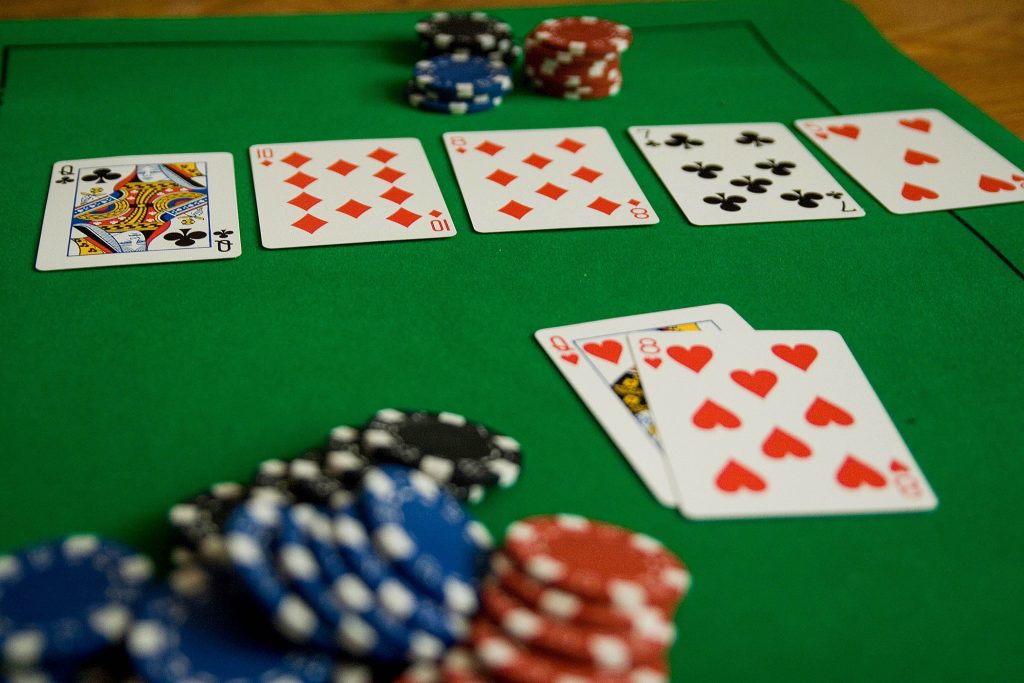
On Oct. 23, 2025, a sweeping federal crackdown rocked the NBA and its sports-betting connections. More than 30 individuals were indicted in two ongoing investigations by the Federal Bureau of Investigation, although many of these individuals remain unnamed. These investigations follow illegal gambling networks, including rigged underground poker matches and insider betting on NBA games.
One of the investigations centers on a highly organized network of poker fraud perpetrated by organized crime families, including the Bonannos, Genoveses, and Gambinos. According to prosecutors, the network ran high-stakes underground poker games across New York City, the Hamptons, Miami, and Las Vegas, using former NBA and NFL players as “face cards” to draw in wealthier targets, who were called “fish”.
High-tech cheating equipment was then allegedly used to fix games: pre-marked playing cards, rigged shuffling devices with card-readers, X-ray tables to ‘see’ cards from beneath the table felt, and special contact lenses for the conspirators. Information about hands was then relayed to an off-site operator, who then sent the information to a conspirator in the room with the game, who signaled the information to the “face cards”. Victims were reportedly defrauded out of millions of dollars.
At the same time, another investigation alleges misuse of insider NBA information for sports betting: one former player is accused of providing non-public injury and/or lineup data so bets could be placed ahead of official releases. One active player is alleged to have faked an injury to exit a game and purposefully underformed to enable under-betting on his own performances.
Individuals who have been charged and named include Chauncey Billups, a recent Hall of Famer (2024) and current head coach of the Portland Trail Blazers. Billups is linked to the rigged poker games as being one of the “face cards”. Another former NBA veteran, Damon Jones, allegedly used his connections within the league to distribute insider knowledge for various games, including the Lakers and Thunder (known games at this time). Jones was also said to have participated in the poker scheme.
Lastly, active NBA guard Terry Rozier of the Miami Heat is implicated in allegedly providing personal injury details and making bets tied to his performance, most of which were betting on him to have a bad game. In turn, Rozier would intentionally miss shots or turn the ball over. These allegations come just a year after Toronto Raptors forward Jontay Porter orchestrated a sports betting scandal, leaking his injury information to outside gamblers, who placed bets on him to underperform, and he intentionally left games early to ensure these bets won.
The scale of these cases has prompted the NBA to launch a comprehensive review of its sports-betting policies. A memo to all 30 teams outlined concerns that newer betting markets are especially vulnerable to manipulation. The league noted that as legalized sports betting becomes widespread in the U.S., the risk to integrity grows. For the Trailblazers and Billups specifically, the fallout is immediate: Billups has been placed on leave while legal proceedings play out, and the team is facing reputational damage. Rozier is also on leave from the Miami Heat.
This particular case showed the vulnerability that could exist between professional sports and organized gambling. When former players, coaches, or insiders are implicated in schemes that exploit both game outcomes and side-betting markets, the risk is not just financial but legal. This problem reaches well beyond the world of professional basketball, but all professional sporting organizations. This is a wake-up call for every league. It has become more important than ever to watch over both the world of sports betting as well as player conduct.
These arrests are only the beginning. Many of those indicted have not had their names made public in court filings. For the NBA and its community of stakeholders, the next level of engagement will include enforcement efforts as well as increased monitoring of both on-court activity, as well as off-court activity. For supporters and fans, this scandal serves as a reminder that these events can entertain us but remain susceptible to forces that can undermine their fundamentals. The coming months will show how effectively the NBA can restore integrity and accountability.
Posted in UncategorizedComments Off on Federal investigation of the NBA gambling ring
The 2025-2026 season marks another with a lot of unknowns that will determine the Dragons’ success. In the transfer portal era, Zach Spiker’s program has proven adept at filling the gaps left by outgoing transfers, churning out five straight winning seasons despite constant turnover in the starting lineup.
The leading scorer that Drexel returns is Shane Blakeney (7.5 ppg), an uber-talented combo guard who has battled consistency throughout his Drexel career. Blakeney was treated as Spiker’s “sixth starter” last season, averaging the fifth-most minutes per game on the team.
Much like Kobe MaGee last season, Blakeney has shown the requisite flashes of talent in a limited sample to believe in his ability to be “the guy” for this team, but the South Carolina native will have to prove that this season. Blakeney’s first public appearance as the leading man for the Dragons came in their Oct. 28th 73-65 exhibition win over Lafayette, dropping 12 points on 4-7 shooting.
The exhibition gave other indications of how the Dragons will take shape. There is an abundance of depth on this team, and few players have distinguished a concrete role for themselves yet.
One particular area of depth is at point guard, where Kevon Vanderhorst, Josh Reed, and Eli Beard all are natural fits. Vanderhorst and Reed are returners who bring dynamic athleticism and speed. Vanderhorst in particular stood out against Lafayette as he poured in 11 points in just 17 minutes.
Beard joins from Division III Mary Hardin-Baylor and earned a start in the exhibition.
“[Beard] brings some shotmaking to our program. He’s had some big shots in practices,” said Spiker. “You can tell he belongs out here in terms of foot speed and tenacity. What he gives up in height, he makes up for in full-court pressure.”
To complicate matters further, Spiker spoke about diverging from utilizing a traditional point guard as a ball carrier, something that was on display on Tuesday. After highlighting the three aforementioned players, Spiker went on to mention Blakeney, Villiam Garcia Adsten, and Victor Panov as other players who will be tasked with initiating offense.
Garcia Adsten has proven capable of carrying the ball up the floor when asked and has remarkable potential as a mobile 6’8” forward who has shown flashes of being able to dice up defenses by driving to the basket.
There is also depth in the frontcourt between two 7’ 1” big men in Martin de Laporterie and Ralph Akuta. The former presented very well in the exhibition as he collected five points, four rebounds, and three blocks in just under 11 minutes. Spiker highlighted the importance of the two centers as many conference opponents roster seven-footers of their own.
Two exciting incoming transfers to the roster are Dillon Tingler (Eastern Michigan University) and Moses Hipps (Boise State).
Tingler, a 6’7” guard, was a consensus three-star recruit out of high school, where he was also ranked the second-best player in his class from the state of West Virginia.
Hipps, also a three-star recruit, redshirted his freshman season at Boise State, so he brings four years of eligibility with him to Drexel.
This roster has a lot of unknowns, but its depth and athleticism merit a ton of intrigue. There may not be one central star figure as has been the case in previous seasons, but the coaching staff has a litany of athletes who impact the game in different ways and can give opposing coaches fits with their ability to mix and match playstyles.
Women’s Basketball
Another season, another opportunity for Amy Mallon to continue distinguishing her program as one of the premier mid-majors in basketball. Mallon says the goal for her program is to be “consistently great rather than remarkable once.” With two CAA championships in the past five years, the program has lived up to that motto and is positioned to once again be a premier contender to go dancing in March.
Rival coaches gave Mallon and Co. their due respect when they projected the Dragons as the second-best team in the CAA in the preseason coaches poll. The main reason to believe in the Dragons this season lies in graduate guard Amaris Baker. The All-CAA First Team member is one of, if not the, best players in the conference, and few players are able to drive an offense with as much success as Baker.
Baker made the commitment to remain at Drexel for her fifth and final year of college basketball, something Mallon called “a gift for the program,” and there should be a sense of urgency to get the most out of this roster for Baker’s final year.
The returning players that make up Baker’s supporting cast include Deja Evans, Grace O’Neill, Molly Lavin, and Laine McGurk.
O’Neill, a senior point guard, has been a favorite of the Drexel coaching staff since her first day on campus for her ability as a jack-of-all-trades. The Archbishop Caroll alumna is hard to take off the floor with all that she does well, but O’Neill has struggled to score since her freshman year, as she averages just over five points per game on 33 percent shooting.
McGurk is a talented athlete who Mallon expects to fulfill her potential in a larger role this year.
“I think you’re going to see a lot more scoring. She’s so dynamic as a player, so she can score multiple ways. I’m really looking forward to seeing her on the floor and impacting the floor this year a lot more for us all around,” said the coach.
Drexel returned nine players from the 2024-2025 season, meaning Mallon only brought in three additions to the roster. Julia Garcia Roig, the sole incoming transfer by way of Xavier University, is a junior who Mallon says will factor into the backcourt rotation.
The two freshmen joining the program are Bria Watkins and Molly Rullo.
Watkins joins her sister Mariah at Drexel, where they will reunite from their days playing together in high school.
“I saw them do a lot of damage as a duo in high school,” says Mallon. “They won the state title together. [Mariah and Bria] are two very dynamic, bigger guards.”
Molly Rullo, the daughter of Drexel basketball alumni, is another local product with a prolific scoring record in high school that Mallon sees making an impact on the floor from day one.
The Dragons look as dangerous as ever leading into this season, and there should be excitement and expectation for this team. The distance they go will be determined by how much support Baker receives as the centerpiece of this offense, but with even a modicum of secondary scoring, this team can easily be the class of the CAA.
Posted in UncategorizedComments Off on Looking ahead to the Drexel basketball season
During the 2024-2025 school year, Drexel spent $31 million on their athletic program, which fields 18 Division 1 teams. This is up from the 2023-2024 school year, when the department spent $28 million.
Every Oct. 15, the federal government mandates that universities that receive aid report financial data about their athletic programs. This law is known as the Equity in Athletics Disclosure Act. Drexel maintains their report on the athletics website.
Drexel’s EADA report covers information about overall expenses, operating expenses, athlete participation, coaching salaries, student aid, and recruiting. This information paints a clear picture of how the department spent money.
Here is a full breakdown of how the $31,054,724 was spent.
Total expenses are the largest cost, accounting for $22 million. This category includes operating expenses, student aid, coaching salaries, promotional activities, and other team-specific costs.
The five teams with the highest overall expenses are:
Men’s Basketball: $3,099,674
Women’s Basketball: $2,488,133
Men’s Lacrosse: $1,792,762
Men’s Rowing: $1,723,893
Women’s Lacrosse: $1,465,488
The five teams with the most expenses have not changed from last year’s EADA report, however, the costs for Women’s Basketball decreased by $524,000. Other notable changes from the previous year include Women’s Field Hockey ($221,000 increase), Men’s Rowing ($141,000 increase), and Men’s Swim and Dive ($234,000 increase).
Despite a considerable change in costs for specific teams, the overall spending for the men’s and women’s teams remained similar to the 2023-2024 school year. The nine men’s teams cost $11.7 million, and the nine women’s teams had $10.3 million in expenses.
Operating expenses are part of the total expenses at $3,049,525. These costs are related to athletes competing in events and include “lodging, meals, transportation, uniforms, equipment, and officials.” They are calculated by team, per person. The top five teams with the highest operating expenses are as follows:
Top five operating expenses per person:
Men’s Basketball: 14 participants, $38,755
Women’s Basketball: 24 participants, $18,197
Women’s Softball: 19 participants, $9,618
Men’s Golf: 11 participants, $9,257
Men’s Wrestling: 37 participants, $6,468
Top five operating expenses per team:
Men’s Basketball: $542,571
Women’s Basketball: $436,720
Men’s Lacrosse: $325,837
Men’s Wrestling: $239,320
Men’s Rowing: $211,198
Out of the five sports with the most costs per team, four teams had significant changes from last year. These include Women’s Basketball ($175,000 decrease), Men’s Lacrosse ($25,000 increase), Men’s Rowing ($72,000 increase), and Men’s Wrestling ($56,000 increase).
Additional notable differences from the previous year include Women’s Soccer ($119,000 decrease) and Women’s Rowing ($126,000 decrease). Both of these sports were in the top five operating expenses last year.
The biggest expense in the total expense category is student-athletes’ aid. The number of scholarships per sport is dictated by the NCAA, but it is up to Drexel to determine how much each player receives. Aid can vary from a few hundred dollars to a full scholarship.
The total amount of financial aid given to athletes was $11,955,492 which separates to $6,066,159 for the men’s teams and $5,899,333 for the women’s teams. The ratio breakdown is 51 and 49 percent, respectively.
Expenses unrelated to a specific sport are classified as not-allocated expenses. This includes costs for salaries of the athletic director, weight room trainers, and staff members. Other items in this category include NCAA and CAA fees and administration costs. Drexel spent $9,092,606 on not-allocated expenses, up almost $2.9 million from the previous year.
The last primary cost for the department is coaches’ salaries. Across all teams, there are 18 head coaches and 41 assistant coaches. For head coaches, the average salary is $139,440 for men’s teams and $112,511 for women’s teams. The average salary for assistant coaches is $47,531 for men’s teams and $47,069 for women’s teams.
Salaries for individual coaches are not part of this report. However, Drexel’s 2024 tax documents show that Zach Spiker, head coach of the Men’s Basketball team, made $467,242 last fiscal year. The full 2024-2025 EADA report is located on the Drexel Athletics website, and more information on last year’s report can be found on The Triangle.
Posted in UncategorizedComments Off on Breaking down how Drexel Athletics spent $31 million last year
Rivalries in sports have created some of the greatest moments in sports history. From the Yankees and Red Sox to the Green Bay Packers and Chicago Bears, famous rivalries build fan engagement, form team identities and raise competition levels. But when it comes to Drexel, the question remains: do the Dragons have a true rival to compete against?
In sports, good rivalries have specific factors that make them enjoyable to watch. For college athletics, rivalries often form around factors such as shared history, proximity and competitiveness. Proximity in particular is important to a rivalry because it usually means frequent competitions and more familiarity for students and fans.
Delaware
Delaware was once widely considered Drexel’s main rival, but after their departure from the CAA conference, this may no longer be the case. At the height of the Dragon-Blue Hen rivalry, every game was competitive and high-stakes.
Last season, men’s basketball narrowly beat Delaware 78-74. These games had implications for conference placement, and frequent competitions allowed for the rivalry to grow. Drexel’s rivalry with Delaware seems to have ended with Delaware’s move to Conference USA this season. Furthermore, men’s basketball is not scheduled to play the Blue Hens this season
Temple
A fellow Philadelphia school, Temple, has qualities that could make for a great rivalry. Both colleges are of similar sizes, and games between the two, especially in basketball, are competitive. Temple has some recent shared history with Drexel, as former president John Fry became Temple’s new president this year.
Despite these factors, infrequent competition has not allowed this rivalry to grow. Neither the men’s nor the women’s basketball teams are scheduled to play Temple this season. In addition to this, Temple’s presence in the AAC conference, which has strong competitors such as Tulane and the Navy, means that a potential Drexel rivalry is overshadowed.
Penn
With Drexel and Penn sharing campuses in University City, Penn seems like an obvious choice for a rival. However, the one caveat is that Penn is an Ivy League school, and the ‘academic prestige’ mindset translates over to athletics. Games against Penn are usually competitive, with both men’s and women’s soccer games ending in ties this season. Despite this, Drexel simply does not have enough prestige for Penn to consider the Dragons a rival.
Students at Princeton sum up Drexel’s problem clearly. Penn thinks that Princeton is their rival, but Princeton does not see Penn as a rival. In other words, many people at Drexel think Penn is the biggest rival, while Penn does not give Drexel much thought.
Monmouth/Towson
After the departure of Delaware, Monmouth (West Long Branch, NJ) and Towson (Towson, MD) are the two closest CAA colleges to Drexel, which account for the proximity factor needed in a rivalry. Both of these schools have similar demographics to Drexel and are also considered to be mid-major programs. Because all athletic teams play these schools at least once, it also creates a frequency factor. Towson, in particular, has the potential to be a big opponent in men’s basketball, as it won the conference last year.
The only thing that holds Monmouth and Towson back as clear rivals to Drexel is the lack of shared history. While games against the two schools usually hold playoff implications, there have not been any major sports moments against them in recent memory.
Within the five schools listed above, there is at least one factor in each of them that holds it back from being considered a big rival to Drexel. This lack of a clear rival seems to reflect the bigger difficulties the athletics program faces: it is a mid-major university. Too small to compete with large D1 colleges, little school spirit and not enough prestige on the national level. These challenges make it hard for rivalries to thrive on campus.
There may be a day that a true rival for Drexel emerges, but that does not seem to be coming anytime soon. For now, the search for a true rival continues. Whether it be a college in Philadelphia, a CAA university, or another regional school, the debate will continue.
Posted in UncategorizedComments Off on Does Drexel have a real rival?