Author Archives | Audrey Scott

“Girl Violence” erupts in Philadelphia

Photo courtesy of Conor Cunningham | Grandstand

King Princess came back to Philly and provided a beautiful queer safe space to frolic and slow dance in.

On Nov. 1, 2025, the Union Transfer was filled with lesbians, people dressed as cherries, and also the night before’s Halloween costumes — all because the singer King Princess came to town with her “Girl Violence” tour.

Opener Sasami hyped up the crowd with a carefully curated setlist, ending in her pop banger “Slugger,” which had everyone dancing and ready for the main act.

Before King Princess came out on stage, a massive wall featuring graffiti appeared on stage, which would later be used to spray the city’s name on it, like she has done on every stop on this tour so far. 

Her band came out before her, encouraging the crowd to cheer, and then she took the stage with her most recent single “Cherry,”  the namesake of the costume so many concert-goers wore that night. The song is clearly a fan favorite and served as a great introduction.

Then, she played the songs “Jaime” and “I Feel Pretty,” bringing out the electric guitar for the first time that night. 

For the next song, “The Bend,” she really put on an amazing vocal performance with the outro, singing the last chorus slower and almost acapella. 

The song “Girls” was played next, King Princess shredding the guitar once again and being her true, gay self with lyrics like “Girls bring me to my knees.” 

There were a couple of fun bits she did during the show, one of them right before the song “Pussy Is God.” Her drummer — who also controls the sound pads — has one that makes the ad-lib “pussy” and King Princess asked us to beg him to “please give us the pussy” before she started the song. It also featured some choreography, with her pretending to christen herself and then sliding her hands down her body during the line “I’ve been praying for hours.” 

After that, she played the title track “Girl Violence”  and the song “Cheap Queen,” which had a lot of people yelling the line “I can make grown men cry” with their full chest.

During “Alone Again,”  she asked the audience to slow dance, creating a calm, wholesome atmosphere.

Then it was time for a round of “Spin the dice,” a game where the spin of a massive dice with song titles on it decides the next song in the setlist: basically, a surprise song section.

The dice landed on “the crowd chooses,” and most people screamed for the song “Prophet.”

Another fan favorite was “Fantastic,” which King Princess wrote for the hit show “Arcane: League of Legends.” She said on stage that the show was one of the favorite things she has ever been a part of. That sentiment was definitely reciprocated by her fans; they cheered so loud when she played the song. Even online, every video someone posts about her concert has comments that ask if she played the song.

King Princess then went into “Origin,” “Cry Cry Cry,” and “Homegirl,”  which have a jazzy, soft rock sound and are a bit slower, before going into more up-tempo songs like “Hit The Back.”

She ended the regular set with her famous hit singles “Talia” and fan-favorite deep cuts like “Rip KP” before taking her final bow and then coming back out again after everyone screamed her name and sang the song that started it all, “1950.”

It was a notably gay show, and such a lovely, safe space where everyone was welcomed with open arms. 

King Princess is an amazing, skilled performer who puts on a fun, flirty show — getting up close to the audience numerous times and singing in people’s faces — and The Triangle definitely recommends her shows.

Note: King Princess is non-binary but does not care about what pronouns are used.

Posted in UncategorizedComments Off on “Girl Violence” erupts in Philadelphia

“Eternity:” two loves, one afterlife

Photo courtesy of Gage Skidmore | Flickr

With a vivid backdrop of painterly visuals that could only be described as serene, David Freyne delivered an incredibly heartfelt and intimate story with “Eternity.” Luckily, there was an advance screening on Nov. 5 in the Cinemark Theater located on 4012 Walnut Street. The Triangle got a chance to cover the film and see the winner of the 2025 Toronto International Film Fest. 

“Eternity” is ultimately a movie about moving on, a point made stronger with the limbo-esque setting in the bulk of the film. We follow Joan (Elizabeth Olsen), who is caught between the choice of spending the rest of her afterlife with the husband she died with, or the husband who died in her early years and waited over sixty years in the afterlife to be with her.

The movie approaches this conflict in a delicate manner that allows for all of the nuance and different perspectives one would expect from that more-than-difficult situation; depicting any kind of love triangle almost always is. This time it was between Callum Turner’s character, Luke, and a face that might be recognized from “Whiplash,” Miles Teller as Larry.

Through the deciding, just about every character goes through hardship while the film still manages to keep a lighthearted tone. This film balances serious and comedic elements quite equally without either side feeling overbearing. Freyne does a great job of turning the guides into characters that can stand on their own and command the screen. Especially with Anne, Larry’s spiritual guide, who offers a barrage of witty barbs throughout the film.

After hearing Luke’s story about waiting so long and dying a soldier, it seems almost unquestionable not to go with him. “Eternity” captures the complex nature of interpersonal relationships and feelings by forcing someone to consider ‘what is better’ in a situation that involves two of their beloved’s.

Who are viewers supposed to root for? Should they factor in looks? Who deserves her more?All these questions carry themselves throughout the film, with “is this really forever?” being the most present one.

Posted in UncategorizedComments Off on “Eternity:” two loves, one afterlife

Merry Shakemas! Shake Shack’s jolly winter selection

Photo by Bo Tornello | The Triangle

The start of the winter holiday season is a heavily debated topic amongst the American populace. Does the Christmas season start right after Halloween, or is it right to respect the humble autumn atmosphere of Thanksgiving? Thanksgiving remains the disregarded DMZ between the fan favorites of Halloween and Christmas. Where do you stand?

Too late! Shake Shack has decided for you. 

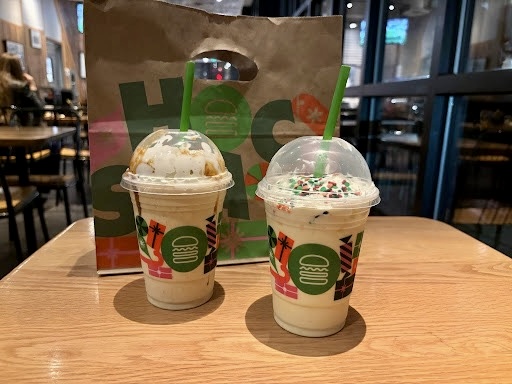
Shake Shack released their annual Christmas-time shakes at the beginning of November. This year, the flavors are Christmas Cookie and Sticky Toffee Pudding. This release is the third of the year, following the trio of shakes released in late May, a relatively large gap in new shakes for the brand. Between then and now, two new shakes made their way onto the menu: the limited edition Dubai Chocolate Pistachio Shake that departed earlier in the fall, and the newest addition to the permanent menu, the Coffee Shake. 

This release only entailed two shakes, different then the usual trend of releasing three at a time as seen in almost all seasonal releases in past years. Alongside the new shakes, a variety of limited-time offerings include the Big Shack burger, the French Onion Burger series, released in September, Onion Rings, and Parmesan Garlic Fries. But the main wintertime festivities on the menu come from the new holiday milkshakes.

The Christmas Cookie Shake is described as “Sugar cookie frozen custard topped with whipped cream and holiday sprinkles.” This shake is a returning classic, being a consistent staple of the holiday shake menu since its debut in 2016. The shake has been a fan favorite for years, but there is a noticeable difference this year. While other releases of the shake have contained crumbled shortbread, adding more cookie texture to the shake, this year, the shake is standing alone with its sugar cookie frozen custard. This shake tastes almost identical to the soft iced sugar cookies from the grocery store, also known as Lofthouse sugar cookies. 

Upon the very first sip, the consumer will be stuck with the taste of these cookies, as if they were mashed into a liquid form. The shake is extremely sweet, almost aggressively so, and it leaves a lasting sweetness in your mouth. The texture is smooth except for the very occasional crunch from the sprinkles on top. It is a relatively simple shake, sweet and thicker than other specialty shakes tend to be. It is important to note that this shake is fundamentally a different experience from the previous renditions of the shake with the same name, but a new twist on a fan favorite is not always a bad thing. The Christmas Cookie Shake gets 4.5 grocery store cookies out of 5.

The second shake is a new creation brought to the Shake Shack menu, the Sticky Toffee Pudding Shake. The shake is described as “Sticky toffee pudding cake hand-spun with vanilla frozen custard and caramelized brown sugar, topped with whipped cream and a drizzle of sticky toffee pudding sauce.” Sticky Toffee pudding is a classic British dessert, commonly eaten during the Christmas season. 

The shake is sweet, not as aggressively so as the Christmas Cookie Shake. The shake is a bit thinner than its counterpart, with some bits of sticky toffee cake mixed in. The flavor of the toffee is light, arguably too light, but it adds a slightly rich flavor to the drink, as well as adding a slight warm color. The toffee flavor is not the only thing a little too light in this drink; as the bits of toffee cake are few and far between, making the texture not the most consistent as you drink. The concept is pretty creative in the world of holiday flavors, where the landscape is highly repetitive. The shake’s flavor is good but leaves consumers wanting just a bit more, 3.5 Gordon Ramsays out of 5.

The holiday shakes usually do not last very long, so those interested in beginning the holiday season early alongside every retail establishment, or someone is just interested in trying these two new holiday shakes, make sure to stop by your nearest Shake Shack before they melt away in the spring.

Posted in UncategorizedComments Off on Merry Shakemas! Shake Shack’s jolly winter selection

Small Oven delivers big flavor

Photo by Sonya Kalianda | The Triangle

Tucked alongside Washington Avenue, Small Oven Pastry Shop proves that amazing treats can come from the smallest spaces. The award-winning walk-up pastry window has quickly become one of Philadelphia’s most beloved dessert destinations since opening in 2020. Every item is baked in small batches for peak freshness, and whether visitors crave something sweet or savory, there is a treat crafted with precision and packed with personality.  

Gray’s Ferry locals have fallen hard for this colorful, blue-and-white takeout window, which has earned praise from “Philadelphia Magazine” and “The Inquirer.” Most notably, its soft serve made the 2022 “Best of Philly” List, and for good reason! Flavors rotate weekly and tend to sell out fast, so early risers are rewarded. This weekend (Nov. 14-16), customers can swirl together Rum Raisin and Cinnamon, and if they wait for December, festive flavors like candy cane, nutmeg, and even eggnog will emerge. Do not forget the specialty toppings: cider donut crumbles, snickerdoodle crunch, and candy cake sprinkles. All tempting enough to trek for ice cream even as the temperatures drop! 

Of course, the fall pastry menu is just as irresistible. Seasonal treats like the pumpkin cheesecake Danish, pear spice cheesecake bar, caramel apple hand pie, and pumpkin chocolate chip crinkle cookie embody autumn in every bite. Visitors will also find returning favorites such as the cherry tahini cookie, raspberry morning bun, and kitchen sink cookie. Drexel University senior, Ajay Santiago, calls the latter his favorite. “The crunchiness of the nuts works well with the flavor and texture, [and this is coming] from someone who typically does not reach for nuts.” For those who lean savory, Small Oven is equally known for its caramelized onion croissant and leek and feta croissant. Both are buttery, flaky pastries that prove not all pastries need to be sweet to be comforting.  

But this quaint window offers far more than just pastries. Small Oven provides catering services, special holiday menus, and even custom cakes that showcase their artistry as much as their skill for baking. They are open Wednesday through Sunday, often drawing a cheerful crowd outside their bright storefront. The easiest route? Walk to Trader Joe’s at 22nd and Market St. and take the 7 bus, a short 8 minutes, to 23rd and Washington Ave. The crowd can be spotted and anticipation can be felt before the window is even seen. Bonus: the northbound 7 bus drops off right by Trader Joe’s for a convenient grocery run on the way back.  

To blow off the frigid weather, try one of their drinks made with homemade syrups in their detailed drink menu. Notable offerings include winter chai, lavender haze, blood orange, and brown butter syrup. For customers who end up falling in love, there is even an option buy an eight-ounce bottle to take home. Before fall ends, do not miss their spiced peach cider either, the perfect pairing for a crisp afternoon stroll. 

Perhaps the most heartwarming of all, Small Oven’s community spirit is just as rich as their desserts. When SNAP benefits were disrupted earlier this year, they teamed up with other Grays Ferry businesses to organize an emergency food drive for neighbors in need. It is this mix of commitment to quality, commitment to craftsmanship, and commitment to community that makes Small Oven quite so special.  

So, this holiday season, skip the supermarket sweets and head to Washington Avenue instead. Whether it is a soft-serve swirl or a freshly baked Danish, visitors will leave with hands full, and hearts a little bit warmer.  

Posted in UncategorizedComments Off on Small Oven delivers big flavor

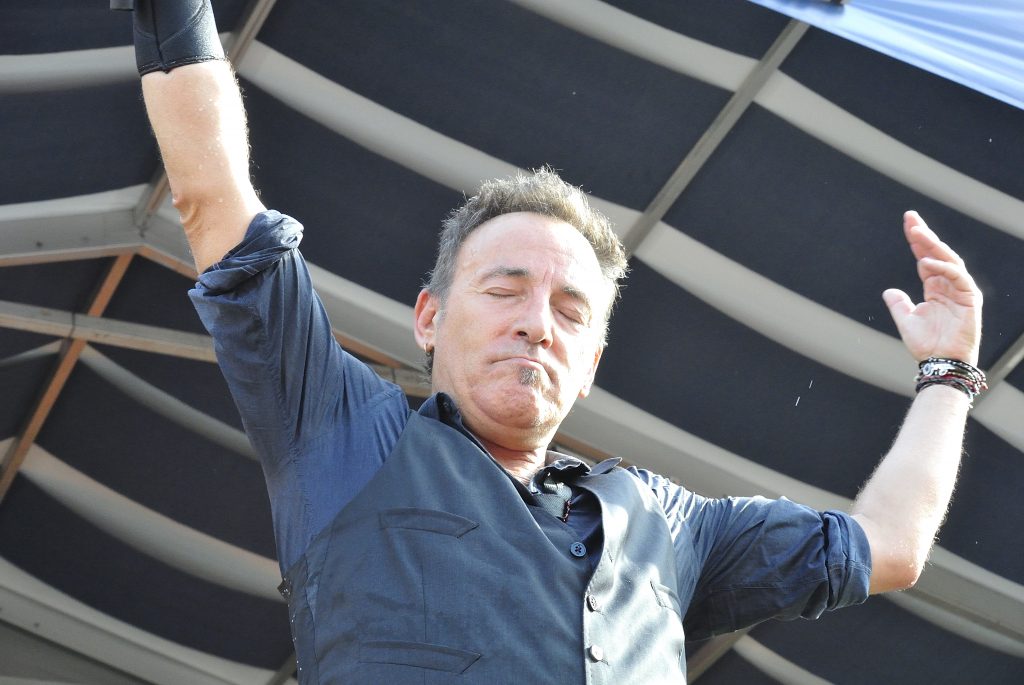
Springsteen gets a biopic but not a blockbuster

Photo courtesy of Takahiro Kyono | Flickr

If this decade were a film genre, it would be the biopic. It feels like every week, it is announced that another “white boy of the month” will star as an aged rockstar. In the last few years, Austin Butler as Elvis, Timothée Chalamet as Bob Dylan, and now, Jeremy Allen White as Bruce Springsteen. 

“Springsteen: Deliver Me From Nowhere,” released Oct. 24, 2025, follows Springsteen as he returns home from a world tour on the verge of stardom. At home, he faces flashbacks from his traumatic childhood and temptations to withdraw from the limelight. He meets Faye (Odessa Young) and quickly falls in love, but he does not let her in completely. Springsteen also faces pressure from his manager, Jon (Jeremy Strong), and his record label to create a hit single. Influenced by his rural surroundings, he works on the album “Nebraska,” a departure from his previous work with its folk sound and audio imperfections. 

The film is dark at times, with flashbacks to Springsteen’s childhood, where he faced abuse from his father. Springsteen’s complicated relationship with his father is a central conflict in the film as he is forced to support his aging father through a mental health crisis. Springsteen’s struggle with mental health is also addressed, although the film skips over many of the details of his depression, especially his recovery. The movie could have benefited from a more specific focus on Springsteen’s relationship with mental health. 

The highlight of the film is undoubtedly the music. From the demos recorded in his bedroom to the studio recording, the movie’s depiction of Springsteen’s writing process is great.. White’s impression of Springfield’s singing voice is spectacular, and it is hard to tell when White or Springsteen himself is singing. 

Although “Springsteen: Deliver Me From Nowhere” is an enjoyable movie, it received low box office numbers compared to other recent biopics like “A Complete Unknown,” starring Timothée Chalamet as Bob Dylan. This has to do with both Jeremy Allen White and Bruce Springsteen. While White certainly has star power, as shown in his breakout role in “The Bear,” he lacks the critical acclaim of an actor like Chalamet, who has multiple Oscar nominations. While White’s performance in the film is compelling and an accurate depiction of Springsteen, there are no moments from the film that feel worthy of an Oscar. Also, Springsteen lacks the intrigue that a figure like Dylan has. 

“Springsteen: Deliver Me From Nowhere,” despite a few hiccups, is all-around entertaining. If the plot is not of interest, at least it will have viewers dancing in their seats. 

Posted in UncategorizedComments Off on Springsteen gets a biopic but not a blockbuster

“Girl Violence” erupts in Philadelphia

Photo courtesy of Conor Cunningham | Grandstand

King Princess came back to Philly and provided a beautiful queer safe space to frolic and slow dance in.

On Nov. 1, 2025, the Union Transfer was filled with lesbians, people dressed as cherries, and also the night before’s Halloween costumes — all because the singer King Princess came to town with her “Girl Violence” tour.

Opener Sasami hyped up the crowd with a carefully curated setlist, ending in her pop banger “Slugger,” which had everyone dancing and ready for the main act.

Before King Princess came out on stage, a massive wall featuring graffiti appeared on stage, which would later be used to spray the city’s name on it, like she has done on every stop on this tour so far. 

Her band came out before her, encouraging the crowd to cheer, and then she took the stage with her most recent single “Cherry,”  the namesake of the costume so many concert-goers wore that night. The song is clearly a fan favorite and served as a great introduction.

Then, she played the songs “Jaime” and “I Feel Pretty,” bringing out the electric guitar for the first time that night. 

For the next song, “The Bend,” she really put on an amazing vocal performance with the outro, singing the last chorus slower and almost acapella. 

The song “Girls” was played next, King Princess shredding the guitar once again and being her true, gay self with lyrics like “Girls bring me to my knees.” 

There were a couple of fun bits she did during the show, one of them right before the song “Pussy Is God.” Her drummer — who also controls the sound pads — has one that makes the ad-lib “pussy” and King Princess asked us to beg him to “please give us the pussy” before she started the song. It also featured some choreography, with her pretending to christen herself and then sliding her hands down her body during the line “I’ve been praying for hours.” 

After that, she played the title track “Girl Violence”  and the song “Cheap Queen,” which had a lot of people yelling the line “I can make grown men cry” with their full chest.

During “Alone Again,”  she asked the audience to slow dance, creating a calm, wholesome atmosphere.

Then it was time for a round of “Spin the dice,” a game where the spin of a massive dice with song titles on it decides the next song in the setlist: basically, a surprise song section.

The dice landed on “the crowd chooses,” and most people screamed for the song “Prophet.”

Another fan favorite was “Fantastic,” which King Princess wrote for the hit show “Arcane: League of Legends.” She said on stage that the show was one of the favorite things she has ever been a part of. That sentiment was definitely reciprocated by her fans; they cheered so loud when she played the song. Even online, every video someone posts about her concert has comments that ask if she played the song.

King Princess then went into “Origin,” “Cry Cry Cry,” and “Homegirl,”  which have a jazzy, soft rock sound and are a bit slower, before going into more up-tempo songs like “Hit The Back.”

She ended the regular set with her famous hit singles “Talia” and fan-favorite deep cuts like “Rip KP” before taking her final bow and then coming back out again after everyone screamed her name and sang the song that started it all, “1950.”

It was a notably gay show, and such a lovely, safe space where everyone was welcomed with open arms. 

King Princess is an amazing, skilled performer who puts on a fun, flirty show — getting up close to the audience numerous times and singing in people’s faces — and The Triangle definitely recommends her shows.

Note: King Princess is non-binary but does not care about what pronouns are used.
Posted in UncategorizedComments Off on “Girl Violence” erupts in Philadelphia

“Chainsaw Man—The Movie” affirms animation

Photo by Lucas Tusinean | The Triangle

“Chainsaw Man—The Movie: Reze Arc” (2025), produced by Japanese anime Studio MAPPA, exploded into North American theaters last Thursday after several years of anticipation. The film adapts one of the most emotionally charged story arcs from Tatsuki Fujimoto’s manga of the same name. 

The film brings to life a story of violence, love, manipulation, and the yearning for a “normal” life in a world that guarantees anything but that. But beyond its appeal to fans, this film signals something larger: a chance to reconsider how viewers think about animation itself.

If animation is capable of portraying raw humanity with the same nuance as some widely-regarded masterpieces, why do we still treat it like a “genre” reserved for kids?

The Film: Reze Arc

In the world of “Chainsaw Man,” devils are given physical forms born of human fears. The main character, Denji — a teenager who spent his childhood working off his deceased father’s debt to the yakuza — merges with his pet Chainsaw Devil, Pochita, and becomes the titular “Chainsaw Man,” joining Japan’s Public Safety Devil Hunters.

After the numerous traumatic events of the first season, “Reze Arc” finds Denji entangled with Reze, a mysterious girl his own age, whose warmth seems to offer him an escape from his violent life. Both characters, stripped of ordinary childhoods, yearn for the normalcy of school, freedom, and first love—things neither ever got to experience. Yet, beneath the quiet tenderness lies something darker, as Denji finds himself falling even further into the surreal world he has been trapped in.

The film is more than its gorgeous visual spectacle. It explores the cost of being instrumentalized, how those who have gone through hell can find comfort in one another, and how the promise of love can coexist with manipulation. It is about the yearning for a life untouched by violence, and the tragedy of realizing that innocence may be irretrievable. The film’s treatment of Reze and Denji’s relationship reveals this story’s greatest strength: its empathy for broken people and its unflinching portrayal of how systems exploit them.

One might argue that if this film had been shot live-action (though it certainly would not have worked as well), critics might hail it as a searing, layered psychological drama. But because it is animated, it and works like it are often confined to a separate category of “animation” (or even just “anime”), a label that in Hollywood discourse still carries the assumption of immaturity or niche appeal.

The Growing Success of Animated Works

That assumption is collapsing fast. “Chainsaw Man – The Movie: Reze Arc” opened at number 1 at the North American box office, earning more than $18 million in its opening weekend, beating out widely marketed films such as “Regretting You,” “Black Phone 2,” and “Springsteen: Deliver Me from Nowhere.”

This surge of success of animated works comes amid a broader renaissance for animated cinema in East Asia. In 2020, the anime film “Demon Slayer: Mugen Train” (2020) became the highest-grossing film worldwide, beating out every live-action competitor during the pandemic year. This year, China’s “Ne Zha 2” quickly became the highest-grossing film of the year globally, and the fifth-highest-grossing film of all time.

These milestones may just sound like commercial trivia, but they show that audiences worldwide actually crave the scale, artistry, and emotional power animation delivers when treated seriously. And yet, Western award bodies and major studios have been slower to acknowledge this shift. Critics can praise movies like the Spider-Man “Spider-Verse” series for their innovation while overlooking the previously animated works that inspire them.

Overall, animation is too often siloed into a single category, treated as an immature “genre” rather than the medium it truly is. As renowned filmmaker Guillermo Del Toro said, “Animation is a medium, not a genre- nor an interest for kids & families only.”

Where Is the Recognition?

Despite this, there have been glimmers of change in recent times. Hayao Miyazaki’s “Spirited Away” (2001) won the Academy Award for Best Animated Feature in 2003, and his latest film, “The Boy and the Heron” (2023), took the same honor two decades later, a symbolic full circle for Studio Ghibli and for global animation. But recognition remains fragmented, and animated films continue to be judged against a live-action standard they were never meant to emulate.

What is often forgotten is just how profoundly animation has influenced Western cinema. The now-iconic “Akira slide,” a visual shorthand first seen in Katsuhiro Otomo’s “Akira” (1988), has appeared in countless Western works now considered action classics.

Darren Aronofsky has openly cited Satoshi Kon’s “Perfect Blue” (1997) as an influence on “Black Swan” (2010) and several of his other films, while many have claimed that Christopher Nolan’s “Inception” (2010) shows clear parallels that may have been drawn from Kon’s “Paprika” (2006).

This pattern reflects a broader problem: animation is celebrated only when it transcends its own medium. But why must it? Films like “Reze Arc” prove that animation does not need to “become” something else to matter. It already is cinema, just told through a different language, which should be allowed to become a part of the broader cinematic conversation.

Looking Forward

As more audiences embrace works like “Chainsaw Man,” the lines are beginning to blur. The conversation is shifting from “Can animation be serious?” to “Why did we ever think it could not?”

Perhaps that is “Chainsaw Man – The Movie: Reze Arc’s” quietest victory. Beneath the blood and heartbreak lies a deeply human story, one that proves animation is a medium of art like any other, capable of expressing the same emotional density as any great film. It represents a growing awareness that animation can even capture the human condition in ways live-action cannot.

Even though its theatrical run will fade, the discussion it sparks should not. Because every time a film like this breaks through, it brings us closer to seeing animation not as “other,” but as what it has always been: art.

And perhaps, someday soon, the rest of the industry will finally see it that way too.

Posted in UncategorizedComments Off on “Chainsaw Man—The Movie” affirms animation

“Black Phone 2” rings loudly, but not clearly

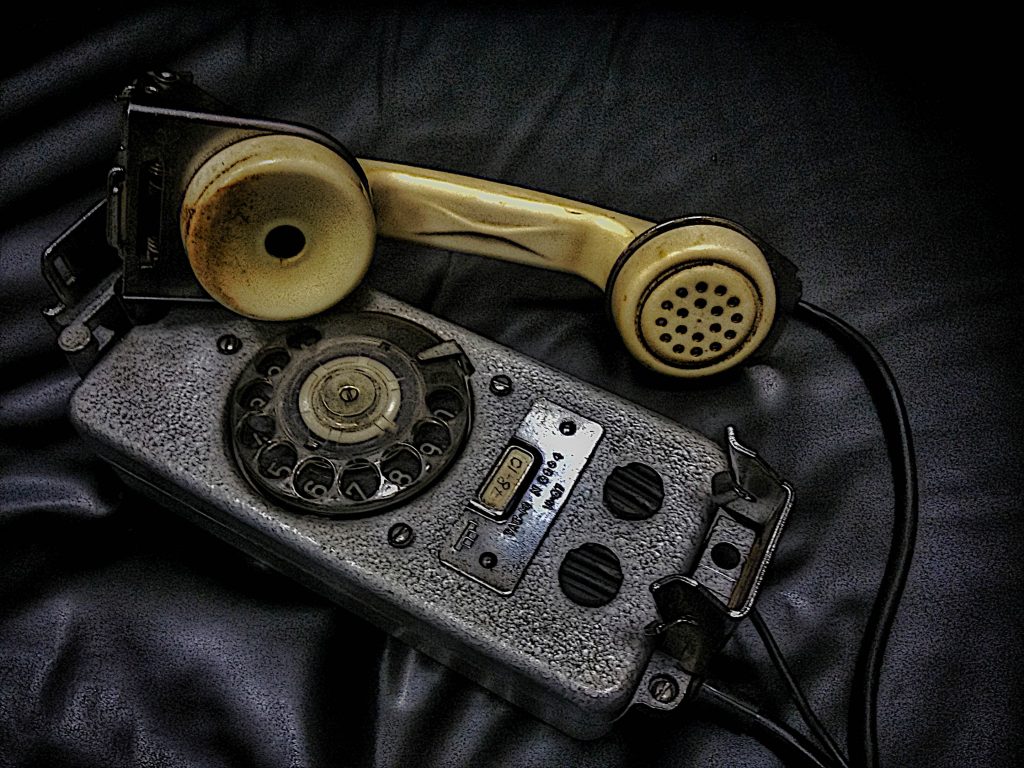
Photo courtesy of Sergei F | Flickr

Crafting a successful film sequel is far from a menial task. In addition to the challenges inherent to all modes of filmmaking, creators must walk the delicate line of honoring previous material while also providing a fresh experience for viewers. The horror genre is no stranger to such struggle, as very few sequels within this category manage to garner mass critical acclaim. Through this lens, Blumhouse Production’s “Black Phone 2” provides a fascinating case study. 2021’s “The Black Phone” stands as one of the most critically and financially successful horror films of the decade thus far, and is especially commendable given its stature as an unknown IP released in the midst of the COVID-19 pandemic. Then, naturally, the question arises of whether “Black Phone 2” can achieve a similarly unexpected feat by overcoming the aforementioned horror sequel curse and supplying a thoughtful, creatively emboldened extension of its predecessor. 

Set in 1982, four years after the events of the first film, “Black Phone 2” continues the story of Finney Blake (Mason Thames), a teenage boy with the ability to communicate with souls trapped in purgatory via telephone calls. Finney’s clairvoyant younger sister, Gwen (Madeleine McGraw), starts having visions of murders that occurred at a nearby lake camp over two decades prior. In an effort to expunge her troubling dreams, Gwen convinces Finney to accompany her in working for the camp with the underlying motive of uncovering the mystery surrounding the grounds. Upon the siblings’ arrival, things immediately go awry as the area becomes enveloped in a relentless snowstorm. To make matters worse, Finney receives a call from the scornful soul of the Grabber (Ethan Hawke), the masked serial killer whom Finney presumably put to rest in the first film. Held captive by the ongoing storm, Finney, Gwen, and the camp’s other attendants must survive the Grabber’s onslaught of vengeful violence and, in the process, unearth the truths of what happened at the camp all those years ago. 

Strikingly unafraid to revel in the supernatural aspects of its premise, “Black Phone 2” promptly distinguishes itself from the much more grounded, thriller-like approach of its predecessor. Shifting the narrative backdrop from the late 1970s to the early 80s, the film successfully creates a nightmarish atmosphere not unlike the slew of fantastical horror from the decade it is set within. The palpable sense of dread felt throughout is largely owed to the confidence imbued in Scott Derrickson’s direction, which sees a marked improvement over the admittedly stagnant, muddied greys of the prequel. Dynamic color grading, kinetic camerawork, and the mystique of the sequel’s wintry locale interweave seamlessly to more deeply entrench viewers in the film’s chilling outlandishness. The dream sequences are a particular highlight, differentiating themselves with cinematography that effectively mimics the charming imperfections of old-school cameras, complete with intense contrast, heavy film grain, shaky movement, and sporadic visual hiccups. 

Unfortunately, several other components of “Black Phone 2” are more of a mixed bag, mostly due to the shoddy writing underpinning it all. One of the less favorable continuums of the series so far, the screenplay by Derrickson and his long-time collaborator, C. Robert Cargill, leaves much to be desired. Dialogue is noticeably inconsistent, jumping from adequate to lifeless to just plain bizarre. The latter is especially true for the character of Gwen, accentuated by Madeleine McGraw’s occasionally awkward line delivery. Meanwhile, Mason Thames and Ethan Hawke’s respective performances as Finney and the Grabber are highlights, but are still notably dimmed by the script’s lack of character. By extension, the film exhibits a lackadaisical attitude towards adding depth to its limited cast. 

This attitude is most odd, considering the precedence the film places on psychological horror as opposed to visceral gore. There is an underlying theme of trauma encapsulated by the Blake siblings and their past experiences; Finney’s captivity under the Grabber in the first film has evidently left him scarred, while Gwen views herself as a mentally unstable outcast as a result of her psychic abilities. It does not take a brilliantly creative mind to imagine the wealth of character intrigue that could be derived from this setup, but the film seems rather disinterested in employing it. Similar negligence manifests in spurts throughout the entire screenplay, whether that be the clunky logic surrounding Gwen’s clairvoyance or the addition of characters that serve little to no narrative purpose. 

However flawed it may be, “Black Phone 2” makes a commendable effort to expand the series in a way that avoids simply retreading familiar territory. The film’s core is surging with conceptual creativity, but without a refined script, its artistic vision consistently finds itself muddled by an unbalanced foundation. The talent on display bears a level of competence that allows for momentary thrills, but not quite enough for the film to resonate long after the phone is hung up.

“Black Phone 2” is out now, only in theaters.

Posted in UncategorizedComments Off on “Black Phone 2” rings loudly, but not clearly