Author Archives | Anika Nallur

Matt Maltese brings melancholic romance to Atlanta’s Tabernacle

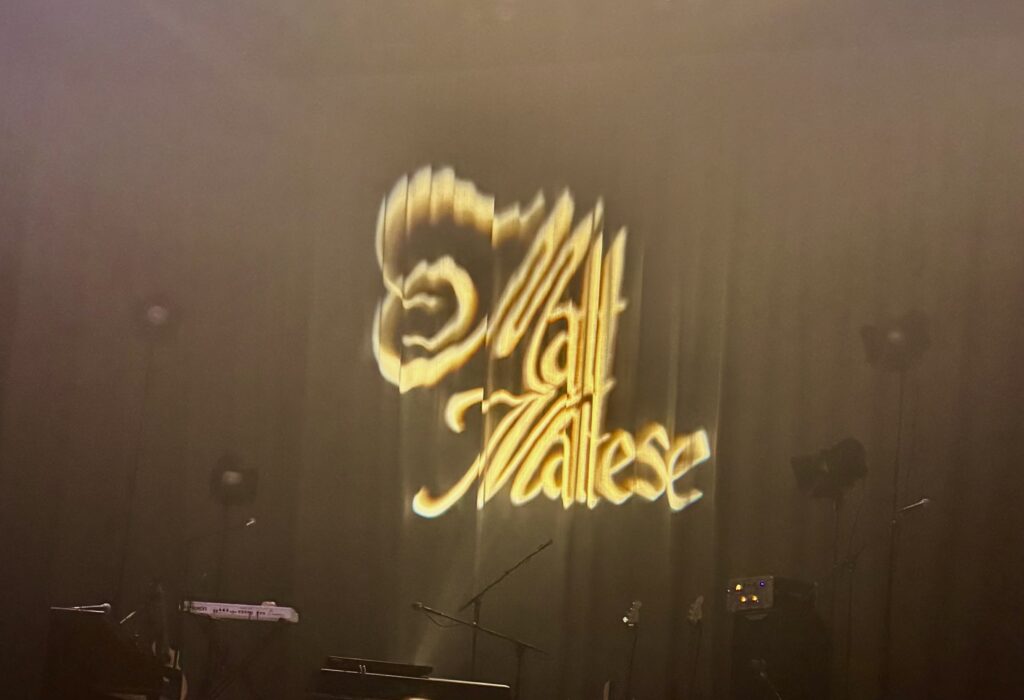
Following the release of his latest album, “Hers,” Matt Maltese graced the stage at the Tabernacle in downtown Atlanta on Sept. 17. On the second night of his tour, the British-Canadian songwriter touched the hearts of his audience through his slow, romantic setlist. Over the course of the night, he played iconic songs like “Nightclub Love,” “Everybody’s Just as Crazy As Me,” and arguably the most famous “As the World Caves In.” Fans were enchanted by his emotional and polished performance, dancing and singing along with him and his live band.

Cornelia Murr, a fellow British singer-songwriter, kicked off the night before Maltese began his performance. With her enchanting voice and demeanor, she set the expectations high for the rest of the show.

Maltese’s powerful entrance was accentuated by the audience’s sheer excitement as the sound of applause rippled through the venue. In a simple blue sweater, he graced the stage along with his talented live band, who effortlessly changed instruments between songs. The pleasant sound of the clarinet and the electric guitar charmed fans all across the venue.

After playing his iconic hits of “Nightclub Love,” “Everybody’s Just as Crazy as Me” and “Krystal,” an emotional ballad reflecting on a past love that he feels nearly destroyed him, he took a couple minutes to introduce the members of his band.

Not only did Maltese’s voice enthrall the audience, but his stage presence, the choreographed lighting and the skill of the band, ensured that it was a night that no fan would forget. During “Madhouse,” the light suddenly flipped to red in time with the climax of the song, alluring his fans once more.

With a strong Atlanta fanbase, the singer gave the city a special treat: a song he had not yet played on tour before. The introduction to “Wish You’d Ask Me” helped the audience fall in love with his voice yet again, as he sang his longing for a deeper emotional relationship.

Almost reading his listener’s minds, he brought Murr back on stage for a ravishing rendition of “Arthouse Cinema,” further emphasizing his emotions of intense romantic grief with lyrics like “They say that no one hears you scream out in space, well / At the pictures, no one hears you sob and sob / And sob.”

Maltese’s stage presence and connection with the audience were unmatched. He excitedly asked the audience if it was anyone’s birthday. A swarm of fans jumped up and down, hoping to be acknowledged by the star of the night. One lucky girl in the front row was selected to come up on stage, as he sang his iconic “Happy Birthday” to her. She sat on a regal chair with a crown, as the guitarist slyly surprised her with a slice of birthday cake, topped with a candle for her to blow out.

As he neared the end of his show, he announced that his last song would be the fan-favorite “As the World Caves In” that carries a theme of connection and intimacy, even in the face of world destruction.

The crowd was doleful as his band exited the stage to leave for the night. After a few minutes, a domino of “Encore! Encore! Encore!” revitalized the audience, as they yelled for his reentrance.

Ultimately, he came back on, ready to close out the emotional night with two more hits: “Cure for Emptiness” and “Everyone Adores You.” This time, the crowd listened with even more passion than before, knowing that it was truly going to be the end of a night to remember.

In just his second night of his tour, Maltese raised the standards for the rest of the run. His soulful renditions of his classics not only resonate with his fanbase, but also truly cement him as a master of his craft.

The post Matt Maltese brings melancholic romance to Atlanta’s Tabernacle appeared first on Technique.
Posted in UncategorizedComments Off on Matt Maltese brings melancholic romance to Atlanta’s Tabernacle

Matt Maltese brings melancholic romance to Atlanta’s Tabernacle

Following the release of his latest album, “Hers,” Matt Maltese graced the stage at the Tabernacle in downtown Atlanta on Sept. 17. On the second night of his tour, the British-Canadian songwriter touched the hearts of his audience through his slow, romantic setlist. Over the course of the night, he played iconic songs like “Nightclub Love,” “Everybody’s Just as Crazy As Me,” and arguably the most famous “As the World Caves In.” Fans were enchanted by his emotional and polished performance, dancing and singing along with him and his live band.

Cornelia Murr, a fellow British singer-songwriter, kicked off the night before Maltese began his performance. With her enchanting voice and demeanor, she set the expectations high for the rest of the show.

Maltese’s powerful entrance was accentuated by the audience’s sheer excitement as the sound of applause rippled through the venue. In a simple blue sweater, he graced the stage along with his talented live band, who effortlessly changed instruments between songs. The pleasant sound of the clarinet and the electric guitar charmed fans all across the venue.

After playing his iconic hits of “Nightclub Love,” “Everybody’s Just as Crazy as Me” and “Krystal,” an emotional ballad reflecting on a past love that he feels nearly destroyed him, he took a couple minutes to introduce the members of his band.

Not only did Maltese’s voice enthrall the audience, but his stage presence, the choreographed lighting and the skill of the band, ensured that it was a night that no fan would forget. During “Madhouse,” the light suddenly flipped to red in time with the climax of the song, alluring his fans once more.

With a strong Atlanta fanbase, the singer gave the city a special treat: a song he had not yet played on tour before. The introduction to “Wish You’d Ask Me” helped the audience fall in love with his voice yet again, as he sang his longing for a deeper emotional relationship.

Almost reading his listener’s minds, he brought Murr back on stage for a ravishing rendition of “Arthouse Cinema,” further emphasizing his emotions of intense romantic grief with lyrics like “They say that no one hears you scream out in space, well / At the pictures, no one hears you sob and sob / And sob.”

Maltese’s stage presence and connection with the audience were unmatched. He excitedly asked the audience if it was anyone’s birthday. A swarm of fans jumped up and down, hoping to be acknowledged by the star of the night. One lucky girl in the front row was selected to come up on stage, as he sang his iconic “Happy Birthday” to her. She sat on a regal chair with a crown, as the guitarist slyly surprised her with a slice of birthday cake, topped with a candle for her to blow out.

As he neared the end of his show, he announced that his last song would be the fan-favorite “As the World Caves In” that carries a theme of connection and intimacy, even in the face of world destruction.

The crowd was doleful as his band exited the stage to leave for the night. After a few minutes, a domino of “Encore! Encore! Encore!” revitalized the audience, as they yelled for his reentrance.

Ultimately, he came back on, ready to close out the emotional night with two more hits: “Cure for Emptiness” and “Everyone Adores You.” This time, the crowd listened with even more passion than before, knowing that it was truly going to be the end of a night to remember.

In just his second night of his tour, Maltese raised the standards for the rest of the run. His soulful renditions of his classics not only resonate with his fanbase, but also truly cement him as a master of his craft.

The post Matt Maltese brings melancholic romance to Atlanta’s Tabernacle appeared first on Technique.
Posted in UncategorizedComments Off on Matt Maltese brings melancholic romance to Atlanta’s Tabernacle

From Grant Field to Glory: The Legacy of Bobby Dodd Stadium

Nestled in the heart of Tech’s campus, Bobby Dodd Stadium at Hyundai Field has served as a landmark for the student body for nearly 120 years. As the oldest on-campus stadium in NCAA Division I-A, the stadium’s profound history has been enthralling since its first football game in 1905. While most of its transformation can be seen by the public, a deeper story lies underneath the stands.

Built primarily by Tech students in 1913, the original concrete West Stands seated over 5,500 people. The eventual horseshoe-shaped stadium, which seated about 30,000, was not completed until 1925, with the addition of the East and South Stands.

The stadium has gradually undergone renovations since its birth. The reconstruction of the West Stands in 1947 allowed for a maximum capacity of 40,000 and the addition of the new press box, which was the largest in the south at the time.

The renowned stadium that students know today is radically different from the first iteration of the grounds. In 2023, the stadium boasted a whopping 55,000 seats until the 2024 construction of the new Thomas A. Fanning Student-Athlete building on the northeast corner of the stadium began, which entailed the removal of a portion of section 217 and a complete removal of sections 218 and 219.

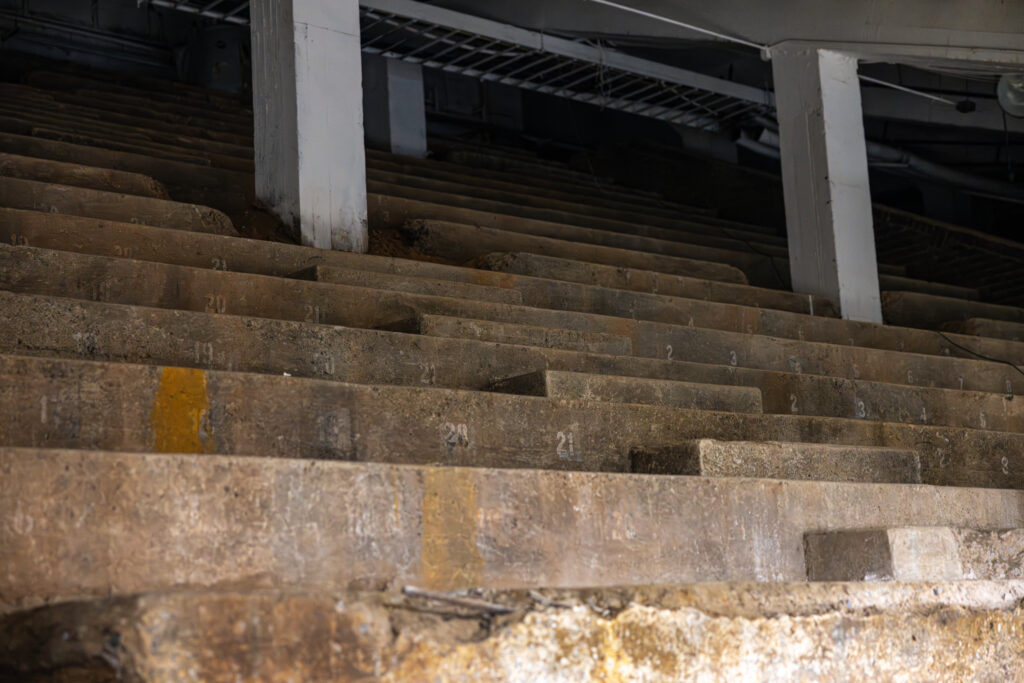
Unknowingly, the audience sits directly above a vital piece of the origins of football at Tech: the original West Stands built in 1913. Entering underneath today’s west stands, the original bleachers that seated the student body of 1913 remain as timeless symbols of Tech’s rich football history. While both bleachers have served the same purpose, a stark contrast can be seen from today’s and the ones from over a century ago.

The slabs of concrete create staggered, thick rectangular blocks. White seat numbers are seen on every row. Some areas even contain the original brick outline. Undoubtedly, the very essence of the beginning of football at Tech gracefully fuses with its growth.

Although an enriching experience, there are currently no plans to create viewings of the stands to the public. Mike Flynn, the Assistant Athletics Director for Communications and Public Relations, explained that the challenges of this plan stem from the many duties that keep the athletic department preoccupied. In addition to continued maintenance and upkeep, personnel would also be required to open the site up to the public.

Regardless, Bobby Dodd Stadium continues to grow, with plans for a new student-athlete development building in Spring 2026. Flynn says the new establishment is dedicated to nutrition, sports medicine and weight training.

Currently, these spaces are scattered throughout campus. Flynn explained that it would be a big advantage for athletes to have everything in the same place. Furthermore, the Institute can expect significant changes in the stadium’s look. 

“In between the 2026 and 2027 seasons, the stadium is going to take a really different look. There are going to be chair backs in the entire stadium except the student section, where we will leave the bleachers. All the suites and premium spaces are going to be redone. A new scoreboard is going to run the length of [Wardlaw] up there, and there is going to be another scoreboard in the corner, ” Flynn said.

Exciting changes are underway for the Institute’s treasured stadium, but the ever-changing look of Bobby Dodd adds to its allure and makes it an integral part of Tech’s enthusiastic football scene.

The post From Grant Field to Glory: The Legacy of Bobby Dodd Stadium appeared first on Technique.

Posted in UncategorizedComments Off on From Grant Field to Glory: The Legacy of Bobby Dodd Stadium

Library Media Arts Day showcases art and AI

The Georgia Tech Library and Interdisciplinary Media Arts Center presented Media Arts Day 2025 on Thursday, Jan. 23. The event consisted of various activities that took place in different locations throughout the library. Co-sponsored by the Ivan Allen College of Liberal Arts, organizers intended to celebrate new and unique ways of creating art that intersects with technology.

Preparing for the Media Arts Day event is a complex process. Charlie Bennett, Public Engagement Librarian and originator of the event, explained that his work concentrates on ways to communicate research or rarified information across disciplinary lines and outside the Institute.

Bennet initially put out a call for proposals for the first panel of the event. Both Dr. Sophie Landrieux Kartochian and Jelani Liddell responded to the institute-wide proposal. Seeing that both of the initial cold proposals were about AI, Bennett felt it was fitting to reach out to Emily Weigel, who had been involved with Bennett’s radio show, Lost in the Stacks, before. With the addition of Weigel, they decided to focus on the pattern of AI throughout media arts. 

“We are trying to de-silo Georgia Tech. We want people to be able to collaborate and communicate their work to their colleagues, who maybe have not had as much experience with this discourse,” Bennet said.

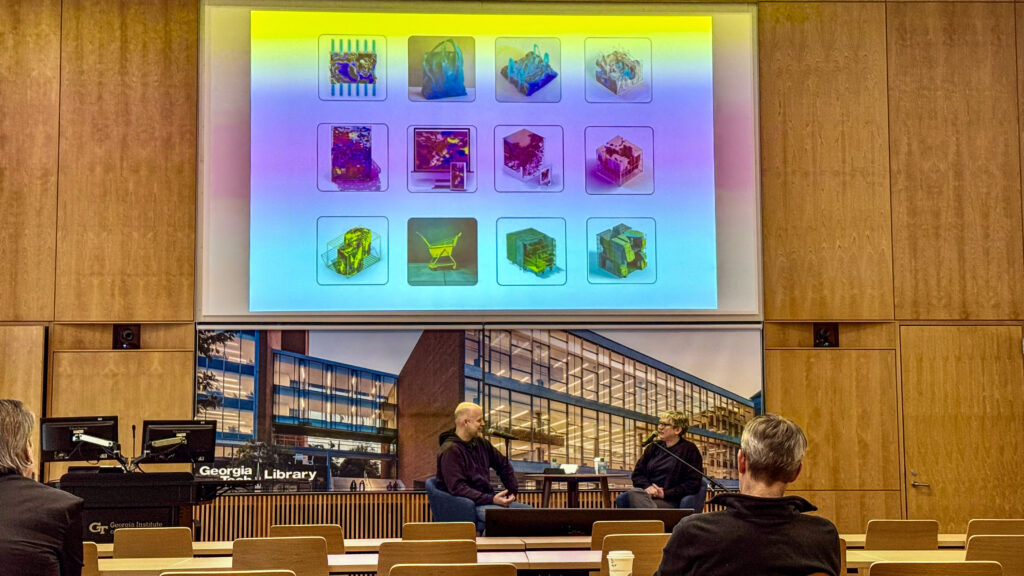
The challenge for Media Arts Day 2025 was finding people within media arts and picking a topic that intersected with all of their specialties, which turned out to be AI as a tool in ongoing practices. Fred Rasco, Lost in the Stacks co-host, served as moderator with Bennett for the first event of the day, the Creative and Academic Engagement with AI Tools panel. 

“AI is the spice that is the same in each of these dishes but with different ingredients,” Bennett noted after seeing how people were using AI in their fields. “I was very pleased to be able to gather some of my colleagues and some people that had interesting work and just let them do their thing.”

After the panel, Alison Valk demonstrated how her team leveraged virtual reality (VR) goggles to create a virtual reality archive for a  Vertically Integrated Project (VIP), that she worked on.

Later that afternoon, the “Lost in the Stacks Interview: How To Trick Your Algorithm” program featured a live podcast recording for the Lost in the Stacks podcast, where Bennett interviewed Professor Christina Shivers about her current research project, “How To Trick Your Algorithm.”

On the podcast, Bennett inquired about the potential of AI in terms of development within architecture and the process of utilizing it creatively. In the end, there was an opportunity for viewers to ask questions about Shivers’s work.

The last event of the day featured Jason Wright, who demonstrated the uses of the new Interactive Media Zone in the library located on the bottom floor of Price Gilbert next to Blue Donkey. This zone allows users to interact with the screen and experience video in novel ways. 

Bennett brought up the idea for this event about two semesters ago to the Event Coordinator team, which included Nathan Dodson, event coordinator at the library, who played a key role in the planning and execution of Media Arts Day. He explained that planning must be done as far in advance as possible to avoid any potential obstacles.

“When they [the library] want to do big events like this, they basically need to get started two semesters in advance, based on the availability of the panelists they want to have, availability of the rooms they want to reserve, and people’s calendars. Really, the main obstacle is getting it all planned far enough in advance to accommodate for any last-minute hiccups and make sure we are not planning it at the last second,” said Dodson.

Despite the detailed planning, the week’s inclement weather was an unfortunate obstacle. Bennett said he knows from the success of last year’s event that there was a dip in attendance this year.

Nonetheless, Media Arts Day 2025 was a success. The variety of AI-focused events allowed attendees to have a unique experience.

The post Library Media Arts Day showcases art and AI appeared first on Technique.

Posted in UncategorizedComments Off on Library Media Arts Day showcases art and AI

Margaret Glaspy transcends Center Stage Vinyl

Margaret Glaspy, an accomplished American singer-songwriter, has been touring alongside fellow artist Bridget Kearny. Glaspy, with her commanding presence and a guitar in hand, took to Atlanta’s Center
Stage Vinyl on Oct. 11.

Bridget Kearny started off the night before Glaspy began her set. Through her demeanor and stage presence, Kearny set the tone for the rest of the awaited evening. 

An excited audience cheered and clapped as Glaspy’s vocals began to fill the empty air. A well-lit stage illuminated Glaspy while she sang in unison to her drummer and bass player. Beneath her stood the audience in an intimate community. The lighting was dim, yet colorful. 

Glaspy drew her set list from her acclaimed albums, “Emotions and Math,” “Devotion” and “Echo the Diamond.” She even graced the audience with a captivating cover of Alanis Morisette’s “You Learn.”  In doing so, the audience understood the respect Glaspy has for her fellow artists.   

With her strong vocals and stage presence, Glaspy invoked a sense of reflection in the audience. Her vulnerable lyrics, coupled with strong rock elements, set the atmosphere on fire with themes of contemplation and thoughtfulness. 

A sense of nostalgia was especially evident through the way she presented her music. This feeling was clearly shared as multiple audience members got emotional over her performance.  

Not only is Glaspy’s passion noticeable through her connection with her instrumentalists, she also establishes a strong connection  with the audience. Eye contact and strong smiles matched with her emphasis on certain words, making each person feel as though they were on stage with her.  

Glaspy effortlessly created an intimate experience that transcended the stage. As she arrived at the height of her performance with an emotional and passionate rendition of “Get Back” from her album “Echo the Diamond,” the audience applauded with excitement.  

Glaspy left an indelible mark at Center Stage Vinyl. Each of her lyrics imbued a sense of sincerity, allowing her to create an emotional current that surged through the crowd.  

The combined efforts of all instrumentalists, fusion of powerful vocals and an engaged audience culminated in a performance that excelled in the confines of Center Stage Vinyl.  

Live music has a completely different effect than listening to music online, as it allows for a more personal and intimate connection with the artist. Its power is transformative and fosters unforgettable memories and connections, as experienced by many at Glaspy’s recent performance.  

Her concert was nothing short of a musical odyssey. With her masterful talent and artistry, she was able to formulate a series of emotions and experiences that left an unforgettable mark on all of those who were fortunate enough to bear witness.  

The overall experience of her concert could only be described as ideal and unforgettable. She was able to take her recorded music and elevate it to an unexpected level through her live voice.

Her underrated music needs to be heard by many more. As an alternative artist, Glaspy’s music is an invitation to delve into a world of introspection and raw emotion — an invitation that should not be passed up.  

The post Margaret Glaspy transcends Center Stage Vinyl appeared first on Technique.

Posted in UncategorizedComments Off on Margaret Glaspy transcends Center Stage Vinyl

‘IKKAI means once’ brings us together

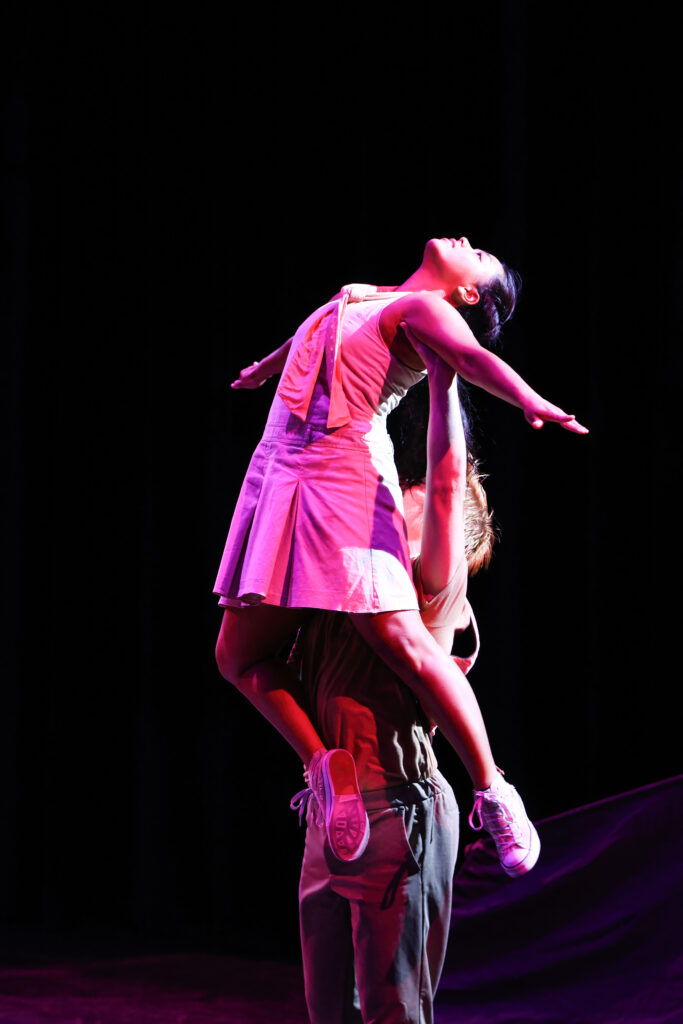
On Sept. 16, “IKKAI means once: a transplanted pilgrimage,” was performed in the Ferst Center for the Arts as a way of communicating the history of the Japanese American people. The performance is the first installment of “Sankei,” a three-pronged multi-dimensional project reflecting on Japanese American internment during World War II and the cultural continuation of their communities today.

A 45-minute performance, though it felt much shorter, invoked an emotional experience for the audience. The show first began with Yayoi Kambara, artistic director and choreographer, providing a background on genocidal assimilation, Japanese American history and her connection to the piece.  

The project itself was commissioned by the San Jose Japanese American Citizens League, the country’s oldest and largest Asian American civil rights organization. Sharon Uyeda, co-president of the chapter, also attended the event.   

“[The performance] gives the audience another perspective on the incarceration and that period of history that the Japanese Americans experienced in World War II. It’s very creative,” Uyeda said. 

The show ranged from unique music, poetry by Janice Mirikitani, light changes and the dance itself, all conveying the creativity involved behind the scenes.

“There’s been a lot of different productions, more in documentary, filming and so forth — matter of fact, we have an immersive film sort of like this, where we have some music and some readings done, as well as a film on the different Japanese American regimen and American groups that fought in the war. It is called ‘Defining Courage,’” Uyeda said.  

Uyeda spoke on the background work, continuing, “I really have supported this venture. They came out for a week and rehearsed in our facility. It wasn’t a theater; it was a gymnasium. They kind of transformed it. Using just limited scenery and props, the performers and dancers share different aspects,” describing the theatrics and creativity involved in sharing this piece of history.

Uyeda also spoke about the type of dance involved in the performance to come. “This is more interpretive. It’s not like LA or Japanese classical dancing. Matter of fact, at the end of the program, everyone will be invited to participate in a folk dance. Audience participation will occur. One of the performers is retired, but she is one of the co-directors of our TAIKO drum group in San Jose. She’ll be part of the performance, she’s like the spirit. She’ll be drumming at the end of this folk dance,” Uyeda said. 

One critical part of the show was the fact that the audience sat on the stage, along with the performers themselves. At the beginning of the performance, the introducers explained the interactive portion that would take place at the end of the dance. They taught six simple movements: digging, picking, gathering, sweating, turning the wheel and throwing the net into the sea.  

Once the performance started, the dancers began moving slowly to the quiet music and laying out the props.

Kambara, the director and choreographer of the show,  gave the audience a bit of her own background. “I was born in Japan. I moved to the States when I was seven; I also moved to England, but as an adult, I have lived in the United States. All my friends are third or fourth-generation Japanese Americans. My grandparents were incarcerated,” Kambara said. 

“I just had this weird thing, where I benefited from being Japanese American, you know people who helped me and my kids, like the Asian community. I realized, as a dancer, that none of the stories I had told had to do with things in our life,” Kambara said, sharing her motivation for highlighting her community through the performance. 

Kambara shared a pilgrimage she took to Manzanar in the Eastern Sierras when she began thinking about this piece. “Sharon took me,” Kambara said. 

“It was her and her organization that took [me] to Manzanar. It’s not just important to Japanese people, it’s a part of American history too. I think it helps us recognize that even though there are more white people in other places, I think we are all diasporic unless you’re native, and we need to remember that,” Kambara said.  

The dance concluded with all audience members being invited on stage, dancing the six simple movements in a circle dance, following the guidance of the performers. The overwhelming recognition this performance received is undoubtedly deserved by its emotional story and journey. 

With the first installment of “Sankei” complete, the trilogy will continue with the release of the dance film “Out of the Dust” and XR installations from “NI DO TO” in the Ferst Center starting Monday, Oct. 2.

Posted in UncategorizedComments Off on ‘IKKAI means once’ brings us together

Humans vs. Zombies battle it out at Tech

The largest game on Tech’s campus, Humans vs. Zombies (HvZ), took place from Sept. 18 to 23. According to Lorelei Linkel, the Head Admin of the game, “Humans vs. Zombies is a multi-day, campus-wide game of tag. [They] start on Wednesday morning and play through Friday, 7 a.m. to 11 p.m., with a finale on Saturday. One group plays as Humans and the other as Zombies.” Linkel went on to explain the game’s goals, player roles and mechanics.

“The objective of a Human is to make it to and survive the finale, and the objective of the Zombies is to turn all of the Humans. If Zombies win, everyone wins. If a Human is tagged by a Zombie, they become a Zombie. Humans are allowed to stun Zombies for a designated period of time using admin-approved stunning implements, like rolled-up clean sock balls or Nerf blasters,” Linkel said. 

Some techniques are even employed to help with inspiring more competition among players. 

“To encourage faction interaction and gameplay, we also hold missions throughout the week. Humans must attend three missions to make it to the finale. We also have achievements, which players can collect through various challenges,” Linkel said. 

The first ever game of HvZ dates back to 2005, and the first official Tech game took place in fall of 2009 with 200 players.  Linkel elaborates, “our numbers peaked at about 600 players in Spring 2012 and have since gone back down. The most recent game was our 28th, and we ended up with around 50 active players. We would always love to have more though!”  

While the game comes with some safety risks, the team has taken the proper safety measures to ensure all players are safe. Players are made aware of the dangers of the game when they decide to join. Additionally, they are required to fill out a rules quiz and a waiver before they sign up.  

In spring 2018, the HvZ team spoke with the Georgia Tech Police Department (GTPD) and Dean of Students to ensure safety precautions adhere to Institute policies. Players are allowed to use Nerf Blasters, which are checked for pain tolerance before they are registered. GTPD is aware of the rules and are updated
semesterly on any changes.  

Furthermore, they implemented a zoning system to indicate where gameplay is allowed. Areas outside on campus are generally “in-play.” Players are not allowed to play tag within buildings, but they are allowed
to interact with the game.  

In the future, they plan to develop a third zone, known as “slow play” or “caution” zones, which would be places like stairs and parking lots to caution players.  

Linkel’s general advice to future players is to, “drink lots of water, talk to the other players and enjoy yourself! Life only happens once, but HvZ happens every semester.”  

She also spoke about one of her favorite memories when playing the game. 

“As a joke for our players, we had one of our alumni come back as an unstunnable Zombie and sprint at them, stopping before actually tagging anyone. Needless to say, it was very funny. The players enjoyed it too after they stopped being so scared,” Linkel said.

There are many reasons students would play HvZ at Tech. It can be a great opportunity for players to destress, meet others with similar interests and simply explore campus. Linkel cites the game as one with
a strong community.  

“HvZ at Tech is a community and in my experience, an extremely supportive one. We certainly don’t have as large of a player base as we used to, but the players we do have are incredibly engaged and kind. The game week itself is really an opportunity for us to run around campus, hang out with our friends, and have fun,” Linkel said.

This was Linkel’s fifth semester with HvZ. She started as a zombie and has been an admin every semester since then. She explained how valuable her experience has been as the Head Administrator. 

“Working as an admin, too, has taught me a lot about managing a large event, properly scheduling my time and making calls under pressure. It’s a bit stressful at times and certainly gets tiring, but I love the community, and I love the game,” Linkel said. 

Humans vs. Zombies is an elaborate and enjoyable game played by many students on campus every semester. It is a fun way to meet people, making it an incredible and fruitful experience for Jackets. 

Posted in UncategorizedComments Off on Humans vs. Zombies battle it out at Tech