Author Archives | Alex Nagy

How to find the perfect campus study spots

Photograph courtesy of Drexel University.

It’s another late weekday night. Your roommate is going to be hanging out in the room all night with music blasting out of the big Bluetooth speaker, and you’ve got some required reading to do for class in the morning.


This scenario will end up happening more often than you may think, and even if your roommate doesn’t have a Bluetooth speaker, they will still distract you. Sometimes your room isn’t always going to be the best place for you to get work done, and since you’re a freshman you will almost certainly have a roommate that you’re going to have to deal with. It’s just part of the college experience.


I learned fairly early on where some of the best locations for studying are, but I only found some of these little nuggets of goodness by having people tell me about them. Some of them can really fly under the radar, and you can easily miss them if you aren’t paying attention to your surroundings.


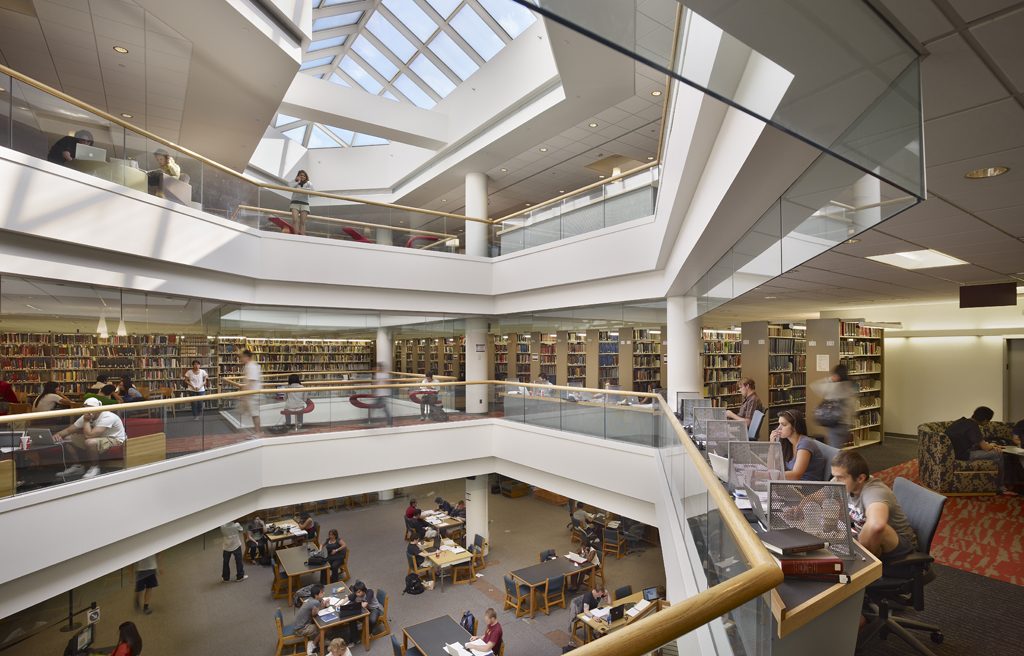
One of the best places on campus is the bottom floor of the W.W. Hagerty Library. It may seem like an obvious one, but I’ve taken multiple friends of mine to the bottom floor and many of them didn’t even know it existed. Most people just head straight for the cafe area inside the library without taking a moment to look at a map of the building.


Don’t let any preconceptions that you have about libraries keep you from going there. The library doesn’t care what major you are — if you need a place to get work done, it has your back. For group work, the library also has group study rooms, but these have to be reserved by going to the library’s website. There’s even a quiet room on the bottom floor if you need absolute silence.


Another good spot is the study room inside of The Summit. This one is a bit trickier to get access to because you need someone who lives at The Summit to sign you in.


The study room in The Summit sees quite a bit of traffic and some people just go there to hangout. It’s surprisingly spacious — from the outside you can’t really see how big it actually is. There are a couple of tables with chairs, and some with booths, so you’ve got some good variety in that sense. The study room also has collaboration rooms for group work. Unlike the library, these rooms don’t have to be reserved, and that’s both a pro and a con. On one hand you can go and use them whenever you want, but on the other hand you don’t know when they’re unoccupied. Imagine making a trip across campus with the group that you have for a class project, having your friend sign all of you in, and then getting to the study room only to find that all the collaboration rooms are taken. Yeah, fun stuff.


The LeBow College of Business building is also a very solid choice for getting work done. If you’re on a solo mission, there’s a Starbucks inside the building and a large lounge area right next to it that contains an array of chairs, tables and couches for your use. Be careful though — because there’s a Starbucks present, the lounge area gets an incredible amount of traffic throughout the day, so if you’re going to study there it’s a good idea to have a backup location in the event that there are no places to sit.


There’s a small lounge area right next to the one near the Starbucks, and this one is located in the center of the building on the main floor. It doesn’t have the most comfortable seats in my opinion, but they get the job done. I wouldn’t recommend using this particular location for a study session that will take you multiple hours to complete. I use it when I need to bust out a few discussion board posts, and then use the library or The Summit when I need to write a long essay.


The LeBow building also has some very nice collaboration rooms on the second floor of the business building. You can make a reservation for this room by going to Lebow’s website. However, remember how I said the library doesn’t care what major you are? Well, LeBow cares to a degree, because these rooms are only open to LeBow students and those enrolled in a LeBow course.


This being the case, you will need to go through some extra work to get access to the rooms. There are so many students majoring in a Lebow program, and there are even more who are enrolled in a business course, so making a friend that fits one of these two criteria isn’t hard at all. Once you’ve passed that step, you can use the rooms for any class work that you want.


There are a few other good spots that you can go to on campus to study. The small room located in MacAlister Hall between the Writer’s Room and the Barnes and Noble, the two Saxbys on campus, the open space located at the end of the hall on the fourth floor of Lincoln University City — the list goes on.


You’ll slowly discover good locations as you get more familiar with the campus, or you will make friends with some sophomores, juniors or seniors that will already know the good spots and just show them to you. Either way, take the knowledge I’ve given you and put it to good use. The usage, or lack thereof, of these study spots could have an effect on how well you’re able to study.

Posted in UncategorizedComments Off on How to find the perfect campus study spots

Unemployment doesn’t always equal unhappiness

Photograph courtesy of Flazingo Photos at Flickr

Some days I’m full. Some days I’m an empty vessel. These have been my feelings since transitioning from my twenty-year career at my former employer to the life of unemployment. Although I have no regrets of leaving, I am anxious to land a job and feel fulfilled.

What I’m learning is this: making an extremely life-altering decision in one’s life takes grit and patience. There will be days when you second guess and doubt your decision, but ultimately you must embrace the fact that to get to the other side of prosperity. You must have faith in your journey whatever that may look and feel like.

I began my career in my early 20s when I had no clue of who I was or where my life was headed. Over the years, I’ve learned more about myself and what I have to offer to the world. Being a writer gives me a sense of freedom and fills a void that I think only other writers can truly understand and relate to. Moreover, I’ve learned that one of my purposes in life is to be of service to others by being a servant leader in my community and an aspiring fundraising professional.

My last day at my former job was back in March and since then I have for the most part enjoyed my days of waking up and going to bed as I please. I also enjoy going out during the day alone and just grabbing a cup of tea to relax and be with my thoughts. That’s one advantage of unemployment — being able to reflect and having the time to really think about where I see myself in the next phase of my life.

Over the course of my professional and academic life, I’ve had the opportunity to experience the beauty of living and growing. I’ve held several roles in my career, and met extraordinary people who helped shape my life, all while figuring out my strengths and areas of improvement.

As a new Drexel graduate student, I’m excited about the possibilities for my academic and professional life. I plan to become involved on campus, attend networking events, meet new people and give back to my community.

While I search for employment, continuing as a writer, student, and active member in my community has been both fulfilling and eye-opening. I now know that my career’s purpose isn’t merely for me, but for those who I will serve. For the lives I will touch. For the impact I will make as a Drexel Dragon!

Posted in UncategorizedComments Off on Unemployment doesn’t always equal unhappiness

South African farm land seizures are totalitarian

Photograph courtesy of Kate Holt/AusAID at Wikimedia Commons

Outrage has sparked over the new government decisions made by the South African government to confiscate land illegally from white farm owners and to redistribute it to the black community. Unsurprisingly, this has not been covered on mainstream news sources.


South Africa is largely self-sufficient when it comes to trading and food. The many great farmlands have been enough to keep the nation as satisfied as possible, with the percent of population experiencing hunger steadily declining over the past decade (from 30 percent of all individuals in 2002 to seven percent in 2014). This is good — South Africa is not like some of its neighbors who sport large numbers of people living in starvation and dying from lack of food.


However, a government audit in 2017 found white people own 72 percent of the private farmland. It is unknown exactly of how long the families have owned the farms, but it is speculated that some trace back to the original Dutch colonization of the Cape. Out of the whole South African population, 8.9 percent of people are white, according to a 2011 census. Thus, a minority of people own the majority of the farmland.


The farm owners are feeding the people of South Africa, offering prices that are steadily making the food more readily available to the people who desperately need it. However, this is not enough. In 1994, the South African government passed the 25th amendment to their constitution to allow the redistribution of land in a fair manner due to past oppression. It reads, “the right to property, limited in that property may only be expropriated under a law of general application (not arbitrarily), for a public purpose and with the payment of compensation.”

This was an amendment to allow the redistribution of farmland on a “willing seller, willing buyer” motto with the cost as the market price of the land. This is disputable, but not harmful or immoral. Now, the South African government has a grand scheme to take land from white farm owners, regardless of the law. A list of almost 200 farms to be seized was released, with the first of the farms already being attempted at seizure. In April, the government came to take the land of a farm owner, offering $2.3 million for a property worth more than $20 million. This is directly against the constitution and is just the beginning of the land seizures.

The African National Congress Chairman, Gwede Mantashe, is heading the political activism for the farm seizures. He states, “You shouldn’t own more than 25,000 acres of land. … Therefore if you own more it should be taken without compensation.”

This is totalitarianism at its finest. When Zimbabwe tried the same act in the 1980s, of forcibly removing farmers from their properties, many people starved and the economy was ruined for decades. Mao tried the same thing in China with his Great Leap Forward campaign. He took the land away from successful farm owners, under the presupposition that they were only rich because the landowners stole from the poor. The land was redistributed to the people, who did not have the knowledge the old farmers held. This directly led to a food shortage and tens of millions of people died of starvation. The reason farm owners stay rich is because they are successful. Removing them removes the food, leading straight to starvation and death. History proves that this is not only economically infeasible but also morally despicable as it results in many millions of people starving to death.

Mantashe says that if they can’t do it legally now, they will make it legal in the future.


After all, if the government makes it legal, it is automatically moral. That is not how it works. Despite this, parties need a two-thirds vote to make a new amendment, and people speculate that the ANC along with some other parties can do it. Mantashe said, “This is why we say, to give you the tools, to revisit the constitution so that you have a legal tool to do it”

The process is in the works. It can happen, and people are scared that it will.

When the government turns to totalitarian practices it is proven that thousands, if not millions, of people will die, as seen in Mao’s China and countless other regimes. This is what is happening in South Africa, and I fear for the people living there. How many times can this mistake be made before it is universally realized that this form of government power is indisputably evil? Do we need another wake up call, or is it early enough to stop it?

Posted in UncategorizedComments Off on South African farm land seizures are totalitarian

Stick to traditional media instead of digital

Photograph courtesy of Sony Dsir A-300 at Max Pixel

Technology has advanced so much that traditional forms of media such as television, radio, newspapers, newsletters, magazines and other print publications have declined over the years. Print newspapers have especially gone down in popularity, as the vast majority of news companies have gone digital.


This is an unfortunate change, as print media has many benefits over digital media, such as being easier on the eyes. Some studies have even shown that reading on paper increases retention of what is being read.


According to an article on Business Insider, three studies were done to see how students performed when it came to reading on paper and screens. The focus of the studies was on how well the students could understand the material that they were reading. The students were assigned three tasks: to describe the main idea in each of the texts, list specific points in the readings and give other relevant information that they could remember. The texts were different in terms of content, but the results provided some interesting findings on reading pertaining to digital and print media.


The students preferred to read the texts digitally, and reading digitally was faster than reading on paper. The students also believed that their comprehension was better when reading digitally, but the study found that overall comprehension was better with the students reading on paper. There wasn’t too much difference when it came to understanding the broader concepts of the texts, but when very specific questions were asked, the students who read on print showed better comprehension than the students who read digitally.


An article in The Guardian talks about another study presented in Italy at a conference, in which 50 readers were assigned the same 28-page short story to read. One half of the readers read the story on a Kindle while the other half read a paperback version. One of the lead researchers on the study, Anne Mangen of Norway Stavanger University, said, “The Kindle readers performed significantly worse on the plot reconstruction measure, i.e., when they were asked to place 14 events in the correct order.”


Mangen also brought up a paper published in 2013, where 72 Norwegian tenth graders were given print and digital versions of texts to read. The students were given a comprehension test, and the test showed Mangen and other researchers involved that “students who read texts in print scored significantly better on the reading comprehension test than students who read the texts digitally.”


These studies are just two of many that share the same theme of improved retention when reading on paper. Personally, reading on paper is far more accurate than reading digitally. Whenever I have to proofread my own work, or read a fellow classmate’s work, I print it out and make the edits with a pen. Going line by line on a screen is just harder for me than it is on paper. I’ve even noticed that when I read aloud from a screen I make mistakes and trip over my words more often than when I read on paper.


Based on my own experience, as well as the numerous studies, I do think that there should be heavier emphasis on using print instead of digital when it comes to reading, especially for academic purposes. Students would more likely see an improvement in their grades if they studied from physical textbooks instead of digital ones. Even if you aren’t in school you should still give traditional media a chance — you may be surprised by what you find.

Posted in UncategorizedComments Off on Stick to traditional media instead of digital

Business planning is key

Photograph courtesy of 742680 at Pixabay.

I recently decided to research what the world thinks about the value of business planning, because I’ve completed three projects this year that involved it. My three clients have all greatly appreciated what I have done for them, but I have never written a formal business plan for any of my businesses. After roughly 20 hours of research, I concluded that evidence overwhelmingly supports the value of business planning, to the extent that I enthusiastically recommend it, both to aspiring entrepreneurs and to myself.

McKinsey & Co. devotes a page on its web site discussing the value of corporate strategy, and it claims to have executed “More than 5,000 strategy projects in the past 5 years.” It also published an article in its August 2007 McKinsey Quarterly on “how to improve strategic planning,” which concluded that formal business planning processes led to materially greater satisfaction with corporate strategy development among 800 corporate executives surveyed.

“Fifty-one percent of the respondents whose companies had no formal process were dissatisfied with their approach to the development of strategy, against only 20 percent of those at companies with a formal process,” the article said.   

Second, credible articles from Small Business Trends and Entrepreneur Magazine support the value of business planning for younger firms. A 2016 article by Rieva Lesonsky for Small Business Trends reports on a study by Palo Alto Software showing that although 65 percent of entrepreneurs surveyed had not completed business plans, the ones who had were twice as likely to have secured funding for their businesses.

The December 2008 issue of Entrepreneur Magazine also included an article about the value of business plans. The article explained that despite existing research questioning the efficacy of business plans, other research indicated that entrepreneurs who create business plans are two to two-and-a-half times as likely to get into business. “People who write business plans also do more stuff,” Clemson University entrepreneurship professor William Gartner said.

However, a common argument against business planning is that famous companies worth many billions apiece supposedly never used business plans. Most of these were financed by venture capital firms, and many of them eventually went public. In reality, these companies must have had business plans at some point for the two following reasons: first, soliciting venture capital involves business planning. The founders of these companies likely created financial projections and outlined strategic paths. Second, going public involves business planning. Underwriters employ research analysts creating financial forecasts based upon business planning. Firms purchasing and holding shares in newly public companies create forecasts based upon business planning.

Finally, my own professional experience supports the value of business planning. I estimate that I require around 150-200 man-hours per round of financing to raise capital for an early-stage venture. I also estimate that I require 25-200 man-hours to construct a detailed business plan I feel comfortable sharing with others. Business planning could therefore offer anywhere from a 100 percent to 4,000 percent return on time invested.

Thus I enthusiastically recommend business planning both to aspiring entrepreneurs and to myself. I am now committed to formalizing business plans for one or two of my current businesses, or to abandoning them by year-end. Drexel students aspiring to be entrepreneurs may consider enrolling in some entrepreneurship courses in the Charles D. Close School of Entrepreneurship.


Posted in UncategorizedComments Off on Business planning is key

Don’t overlook the homeless

Photograph courtesy of rduta at Flickr.

The number of homeless people living on Philadelphia streets continues to rise along with the opioid epidemic. In places like Kensington and Center City, where the homeless live outside, it’s evident that there is a serious crisis that needs to be addressed. Families make up about half of this population and when shelters are full to their capacity, many turn to the streets.

As the CEO and founder of For Her Sake Foundation, Inc, which is a non-profit organization that delivers toiletries and food to the homeless, we are on a mission to combat this crisis that has plagued our city for far too long.

Every other Friday when we set out to deliver food and toiletries, I’m always amazed by the overwhelming amount of homeless people that live on our streets. Many are over-looked, stepped over and not given a second thought. When they see us coming with water and sandwiches in hand, I see the light in their eyes. They appreciate what many of us take for granted. That one sandwich and water is a blessing they didn’t expect that day. This work has made me more humble and grateful for what I have and one of my goals is to pass this initiative on to my children so they too can make a difference in their generation.

For the women, we offer toiletries such as sanitary napkins. While speaking to one of the ladies a few weeks ago, she advised that she battles with drugs and no longer gets a period. She refused to take the sanitary napkins. That was one lesson I learned that day — never assume. Always ask the question.

Since the inception of For Her Sake, I’ve learned a great deal about the perils of homelessness and the need for organizations like mine to exist. Through this work, I’ve been inspired to research hunger on college campuses as well. As a new student at Drexel University, I’m passionate about creating a food and toiletry pantry on campus if one doesn’t already exist. It would be a place where students can go and receive food and toiletries free from judgement or costs.

We can all make a difference in the world. We must first look within ourselves and see what we are most passionate about and begin to take the necessary steps towards it.

As a former shelter resident, I knew I had to do more once I got back on my feet. I wanted to make an impact besides writing a check. That was easy. The real work came when I saw a need in my city and took action towards helping to change it.

Homelessness, hunger and the opioid crisis will not end overnight, but I believe if we all make strides to do our part, these issues will slowly become the exception and not the norm.

Posted in UncategorizedComments Off on Don’t overlook the homeless

Sarah Jeong hiring is shocking

Photograph courtesy of Joe Shlabotnik at Flickr.

Recently, the New York Times hired tech journalist Sarah Jeong to their editorial board. For those who do not know of Jeong, she is a very good journalist who has performed well on her jobs in the past. However, there is one caveat — her controversial tweets.


From 2013 to 2015, Sarah Jeong tweeted multiple discriminatory tweets against white people. She says that these tweets were in jest, but this is simply not the case. Below are just a few of her tweets. If you do not think they are racist, replace the word “white” with “black”. If the tweets are now racist, they were before, and you simply didn’t notice.


The tweets included: “oh man it’s kind of sick how much joy I get out of being cruel to old white men,” “white men are bulls—,” “#CancelWhitePeople” and “W people have stopped breeding. You’ll all go extinct soon. That was my plan all along.”


These are merely a few of the tweets in question. Remember, if you replace “white” with “black” and the tweet magically becomes racist, you must acknowledge the fact that racism can apply to white people as well. The Oxford definition of racism is “prejudice, discrimination, or antagonism directed against someone of a different race based on the belief that one’s own race is superior.” Anyone is a victim of racism when they are discriminated against based on the color of their skin. White people can, in fact, be the victims of racism.


However, lets throw aside the context of the tweets for a second and ask a more important question: should the New York Times take Jeong’s tweets into consideration now that she is hired? It is my belief that employers can do their due diligence before hiring the person. If I run a company, and I find one of the applicants for a job to be racist, then I can choose not to hire them. But, once I hire that person, it is unfair of me to fire them for something that happened in the past. In a free market, employers should only hire and fire based on the employees direct impact of business. How the employee conducts themselves outside of work is of no concern unless it directly impacts the company. This is the important dilemma on the hiring of Jeong.


The New York Times knew about the tweets before hiring her. The Times said that they do not condone Jeong’s tweets and that there had been a conversation about her social media history as part of the hiring process. This is crucial information. The New York Times knew that the person they hired to be a member of the board is a racist and bigot against whites. Regardless of what you think about Sarah Jeong, you know exactly where the New York Times lies. If someone tweeted “#cancelblackpeople,” they would not be able to find a job. But since the person in question is discriminatory against whites, it is magically okay.


The message The New York Times sent to the world upon knowing about the tweets and hiring Jeong anyway is that they discriminate against white people; or are at least OK with that sort of discrimination.

I actually agree with them keeping Jeong on since they hired her. The Times knew what they were getting into with hiring her, and the newspaper can suffer the consequences of such an action.


Posted in UncategorizedComments Off on Sarah Jeong hiring is shocking

Making the transition from classes to co-op

Photograph courtesy of Goumbik at Pixabay.

The long-awaited co-op season is fast approaching, and I’m still not entirely certain of what to expect once it arrives. Six months of working instead of taking classes sounds nice at first, but the more I think about it, the less certain I am of just how nice it actually is going to be.

Co-op is something I’ve heard many mixed opinions about during my time at Drexel. Some people like it, some hate it and some sit in between those two opinions. Regardless of that variation, the general consensus seems to be that it’s a learning experience, if nothing else. Many people come to Drexel University specifically because of the co-op program. While I personally am not one of those people, I can certainly see the logic behind their thinking. Having the chance to work at a job that is directly related to your field of study is an opportunity not many students get in college.

I’m simply not sure if I’m ready for the shift because it’s a bit daunting. I’ve gotten very comfortable in the past 23 months that I’ve spent at Drexel. The life of a student can admittedly be chaotic at times, but there’s a sense of order to this chaotic routine with classes and homework. With each new quarter comes a new set of classes and usually a new set of professors with their own parameters and rules that I have to adhere to, but there is still a strong sense of familiarity in that I kind of know what to expect. Weeks one, two, three and four are a build-up to the chaos of midterms; weeks five and six are the climax of that build-up; weeks seven, eight, nine and 10 are mostly the same as the first four; and finals week is another climax. Now, that is a bit of an oversimplification, but it shows the somewhat repetitive nature of each quarter.

Co-op is going to break this cycle, which is almost always brought up when I speak to people about co-op. They talk about the difficulty of having to go from classes to co-op and then from co-op to classes. It’s a shift that can be rather challenging to adjust to, and I am not exactly looking forward to it. Everyone’s transition is different, though, and some people may have an easier time than others. I’m fairly certain that after the first couple of weeks I’ll be just fine, but the first week or two will no doubt feel strange.

Not having to attend class and not having to stay up until 2 a.m.working on homework assignments is still a novel idea to me because that’s all I’ve known since I arrived at Drexel. And I’m sure that once I return to regular classes I will be complaining again about having to stay up until 2 a.m. doing homework and wishing that I were still on co-op.

Posted in UncategorizedComments Off on Making the transition from classes to co-op

Getting the facts straight on the Russia and U.S. meeting

Photograph courtesy of Nikolsky Alexei/TASS

It is the ultimate task of the journalist, whether it be a small and independent source as myself, or a large and diverse source as The New York Times or CNN, to not only present the facts to the public, but also interpret them in a way that is understandable.


Now, there are moments in the news that can be confusing, granted that many major news stories never break at once, with one story beginning the cycle and followed by many others. However, our job is to break through the gobbledygook and show the public what’s really going on behind the curtain.


So, I’m going to attempt to do that by talking about a summit between the leaders of two superpowers: Russia and the United States. In this case, there is information that is certain, and others issues that are not so clear-cut. So, I’ll begin with the facts.


Over the course of almost two decades, Russian President Vladimir Putin has risen to power, but with much scrutiny, as he has tried to bring Russia back to its glory days in the Soviet Union, with very severe consequences internationally. One of these actions includes the annexation of Crimea from Ukraine, during which a passenger plane was shot down by Russian forces, although he and the Russian government attempted to cover up the information.


Another thing the Russians did, as confirmed by American intelligence, was interfere in the 2016 U.S. presidential election, hindering the campaigns of Hillary Clinton, Bernie Sanders, and Jill Stein. This was done to not only assure a Donald Trump presidency, but also create political instability within the United States.


Ever since the election and the proven Russian involvement, Donald Trump and his administration have maintained that Russia was never involved, a claim believed by his supporters, as incorrect as it may be. However, that certainty within not only his followers but also the world changed within the course of two days, beginning on July 16 and ending, for now, on July 18.


On July 16, Presidents Trump and Putin held a joint news conference in Helsinki, in part about  claims that Russia had interfered in the American election, skewing the votes to Trump’s favor. While Putin outright denied involvement, even going so far as to blame the Democrats, Trump, who had long been steadfast in Russia’s lack of involvement seemed less sure of himself now that the President of Russia was standing right next to him. He deflected the question by saying, “It’s a shame that there can even be a little bit of a cloud over it [his election victory].”


For the first time ever, Donald Trump or any member of his administration showed doubt over their earlier line, despite the fact that many fellow Republicans have outright disagreed with Trump and the administration (excluding his intelligence officials) — referring to the investigations done within the U.S. government, as well as the word of the Director of National Intelligence.


The next day, former President Barack Obama, giving a speech at the 16th annual Nelson Mandela Lecture, warned Trump of the dangers of “strongman politics,” saying, “Whereby elections and some pretense of democracy are maintained, the form of it, but those in power seek to undermine every institution or norm that gives democracy meaning.”


Within hours of that speech, Trump, reading from a script, finally admitted to Russia being involved with election interference. However, it was clear that he truly did not believe it.


And then, the next day, he was asked whether or not Putin was involved. Trump then personally but indirectly blamed Putin due to his being the President of Russia.


It is clear that there is a “he said, she said” moment in Washington, as we hear multiple narratives. Now, the news has done a great job at capturing it all, but one thing is for sure: it is time for every politician in Washington to get on the same page, figure out the truth, stick with it, and show accountability for their actions. That is what adults do, and, at the moment, no one in the Trump administration is acting like an adult.


If they don’t start, they’ll have another two years to look for a new line of work.

Posted in UncategorizedComments Off on Getting the facts straight on the Russia and U.S. meeting

The pros and cons of online classes

Photograph courtesy of Angel Canton at Wikimedia Commons

Online courses at universities have become more widely taken advantage of recently, with the quick advancement of technology, which has allowed people to access the internet in the most remote areas. It is largely because those courses work so well if you are busy with various other aspects of life. Taking a course online gives you all kinds of flexibility and freedom to choose when to do your work as long as you get it all completed by the deadline.


On top of that, if you’re fully online, it means you don’t have to deal with travel costs, such as gas and other vehicle ownership costs or public transit fare. Of course, with that, you don’t have to worry about traffic jams or parking, which are huge hassles that eat up your time, along with finding your classroom.


On public transit, you might not need to worry about parking, but the travel is still equally as unpredictable. If you’re taking the bus or trolley, you’re subject to the same traffic conditions. If you’re taking the subway or commuter train, you aren’t subject to the traffic conditions, but the equipment you’re riding develops problems and your train needs to stop at signals, yielding the right-of-way to other ones oncoming.


Generally, traditional classes can be frustrating as students feel they are giving up their own way of life as it works for them. However, online courses do not work the same way for all students, as some may struggle with freedom. The lack of structure can make the learning atmosphere seem difficult to follow and engage in, and students cannot find the motivation to get themselves to work.


It is often difficult to decide whether to take a course online or in-person if you do not know what to expect in the course. If the material is something you are familiar with and interested in, you might not require a lot of guidance. However, when you find yourself struggling with the material in an online course, you might end up wishing the course was offered in person.


Additionally, you might feel less motivated with online material, because it is not a legitimate means of communication. When you have time at your own disposal, it becomes easier to give into temptation and become distracted from what actually needs to get done. With the voice and direction of the professor around, you have an oral explanation of what is going on in the course and what is expected of you.


In general, taking a course online works very well if your living and commuting situations make taking traditional classes difficult. However, if commuting hassles don’t bother you much, you might prefer tradition because you’ll have a more coherent way of communicating.

Posted in UncategorizedComments Off on The pros and cons of online classes