Author Archives | Alex Nagy

Indifference is worse than hate, according to “The Lorax”

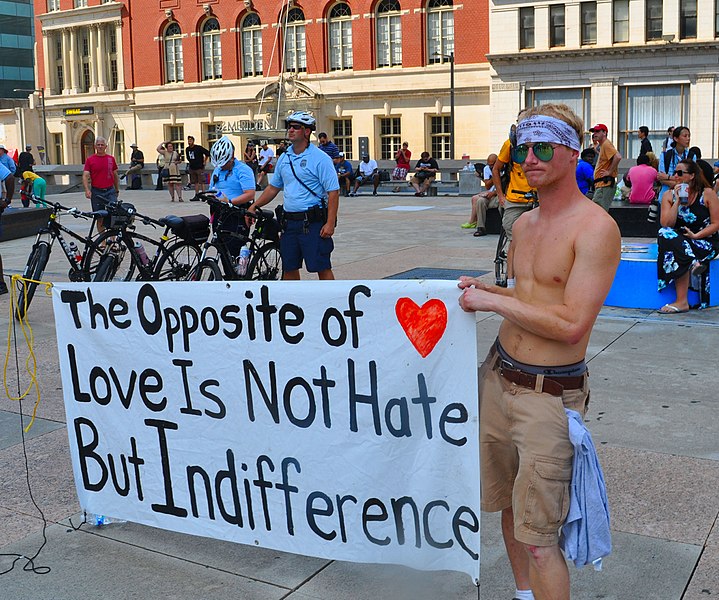
Photograph courtesy of Edward Kimmel at Wikimedia Commons.

I recently watched “The Lorax” again from an adult perspective and I found that it’s more than just a movie about a squishy little creature saving trees.


For those of you who are not familiar with the 1971 book or the adaption of the story in the 2012 animated movie, “The Lorax” is about the Once-ler who tells a boy from a nearby town about a spunky creature named the Lorax who stands up for the environment. The Once-ler then encourages the boy to convince people to care about the environment and save his town from a greedy businessman.


The movie is sweet, funny and evidently quite quotable. Cynics would say it’s far too idealistic. Capitalists would say that it unfairly criticizes industry. Environmentalists would say it portrayed their agenda quite well to the youngest members of society.


But despite the differences of these groups of people, they all had one thing in common: they all had an opinion about the issue. Whether or not their opinion is right by any standard is irrelevant. Having an opinion means caring about an issue. And as long as you care, that issue is still relevant enough to incite change.


While the environmental stance of this movie was commendable and inspirational, I think the real message is that indifference is what stagnates and degrades quality of life, not necessarily hate.


Indifference is cold. It’s the distant cousin that refuses to come to family gatherings. It’s the blunt rejection letter from a college that does not care who you are as a person. It’s the feeling of being overlooked, so insignificant that not even a single thought could be spared thinking about you.


It’s what causes all the issues in the world.


Indifference is what makes people okay with people dying of starvation in countries that offer no capitalistic value. Indifference is what makes people okay with hate crimes being committed to people of different races or sexual orientations. Indifference is what creates a society of non-voters despite living in a democratic form of government. Indifference is people saying: “If it doesn’t affect me, then why should I even care?”


The only antidote to the disease that is indifference is empathy. To be empathetic means to put yourself in someone else’s position, to feel their feelings as your own. It means caring about LGBTQ issues even if you’re not a part of the community; supporting women’s rights movements despite being a man; grieving for the kids in school shootings despite the fact that your kids are safe at home.


I’m not saying that everyone needs to care about every issue. That would be overload — people have only a certain capacity to care about things. Otherwise we would go crazy. But it should be recognized that having opinions about issues is the only way to create any change in the world.


Whether you’re liberal or conservative, democrat or republican, anti-establishment or completely conformist, have an opinion about something. Care about something.


Because like the Lorax said: “Unless someone like you cares a whole awful lot, nothing is going to get better. It’s not.”


Posted in UncategorizedComments Off on Indifference is worse than hate, according to “The Lorax”

Turn your phone off so you can sleep

Photograph courtesy of Skotpic at Pexels.

To think that there was indeed a time where electronics did not exist is still somewhat foreign to me. Technology has become such a hallmark of the times that it’s nearly impossible to get away from, and while it does have many uses, too much of it can be a bad thing — the same principle can be applied to many things in life.

Out of all the ways that using electronics can affect a person’s health, sleep is arguably one of the most important ones. We don’t really think much of it when we’re on our phones before we go to sleep. I usually give myself anywhere between one to two hours to either watch videos on my phone or read a book before bed to help put me to sleep.

However, the light from a phone can mess up your circadian rhythm, which is a cycle that goes for around 24 hours, and is a physiological process of living creatures. To put it more simply, if you’ve ever wondered why you tend to feel full of energy and completely tired around roughly the same times every day, it’s because of your circadian rhythm. It may be harder to notice if you’re a college student that has an extremely inconsistent sleep schedule like myself, but it’s still apparent enough when you look for it.

According to an article on Sleep.org, the light that is emitted from cell phone screens affect the production of melatonin, which is the hormone that controls your circadian rhythm. The less melatonin produced, the more difficult it is to fall asleep and stay asleep. I’ve noticed this very often when I try to go to bed early to go to the gym in the morning. I’ll go to bed at 10 p.m., wake up either just before or right after midnight, and then not be able to fall back asleep until close to 2 a.m. and in some cases I don’t fall back asleep until it’s time to go work out.

It should also be noted that doing something on your phone is not relaxing and it actually makes you more alert. Even though watching videos on my phone does successfully put me to sleep, it takes significantly longer than when I read a book. When I read a book my eyes tend to get heavy within 30 minutes, whereas it takes about an hour on the phone before I begin to feel sleep creeping up on me.


Being on your phone before bed also affects how you will feel the following day. An article on PsychologyToday.com by Susan Biali mentions that you will tend to feel more groggy than usual when you wake up if you spent the previous night before bed on your phone. This is another thing that I can attest to, as when I wake up at 9 a.m. to go to work, I don’t usually fully wake up until I start my commute. Getting out of bed can sometimes be a serious struggle, almost like a war between two sides of my brain. One advocates that I get up and start getting ready to leave and the other demands that I hit the snooze button and go back to sleep.


Personally, I don’t mind it all that much on the weekend when I have ample amounts of time to sleep, but on the weekdays, it can be a real problem sometimes. And I must admit that it’s rather difficult to not be on your phone before you go to bed, especially if you’re someone like myself who likes to check social media before I call it a night.


Biali suggests finding other bedtime routines to break your habit of using your phone before lights out, and I think that this tactic can work very well if you can find some way to entertain yourself that doesn’t involve a screen. In the article, she also says that she usually goes to bed between 10:30 and 11 p.m. and that she sets an alarm to go off at 9 p.m. to remind her to not use any screens before she goes to bed. This can also be a good deterrent to keep yourself from being tempted to pick up your phone if you keep it on a nightstand next to your bed.


My advice would be to just stop using your electronics before you go to bed, but I realize that for some people that may not be an option. In that case, I would advise you to give yourself an extra two or three hours of sleep to balance out the time you will spend waking up in the middle of the night.

Posted in UncategorizedComments Off on Turn your phone off so you can sleep

Going vegetarian for the sake of the environment

Photograph courtesy of Alisdare Hickson at Flickr.

Let’s make something clear: I absolutely hate vegetarian diets.

I don’t get that moral overdose, that holier-than-thou-art ego boost some people get from eating salads and dry veggie burgers from the Handschumacher Dining Center every day. I mean, I used to have some pretty intense arguments with my friends over what burger joint made the best patty. My only restriction on what I ate for dinner was how much I had eaten for lunch. Everything about eating vegetarian would be absolute hell for me.

That being said, I’ve been a vegetarian for over a month now.

So why am I forcing (and believe me when I say forcing) myself to do this? I mean, I’m a pretty healthy, athletic person. This isn’t for health, and it sure isn’t for kicks.

The simple fact is that when it comes to big-picture issues, I’m tired of not being able to do anything. Problems like climate change and environmental impacts are important, but as an 18-year-old college student who can’t exactly afford to drive a Tesla, there really aren’t too many actions I can take to stop the systematic destruction of an entire biosphere.

In reality, there aren’t too many actions individuals can take. According to the Environmental Protection Agency, only 28.5 percent of all greenhouse gas emissions in the United States come from transportation-related fuel use, and only 11 percent come from sources such as the heating system in buildings and landfill fumes. What this means is that the other almost four billion metric tons of carbon dioxide equivalent released by the U.S. come from agriculture (which includes meat production), industry and energy generation, making them largely out of our control.

This is, in my opinion, why climate change is still such a big problem. Complain about diesel cars all you want, but even if every person in the country was rich enough to afford electric, that electricity would still be generated by fossil fuels. As a population, we can’t just march to the gates of the local power plant and berate them for polluting our Earth. That’s a job for government-scale regulation and reform.

At this point, you’re probably bored. You’ve probably heard the argument before that our tacky reusable shopping bags are, shockingly, not enough to stop the ice from melting. This isn’t that big of a revelation, and I’m pretty sure deep down everyone knew it anyway.

Besides, wasn’t this an article about being vegetarian?

But, fortunately, this isn’t about me doing something I hate, even though it’s futile. This is about me doing something that I really, really hate, even though it’s futile, because staying positive in the face of insurmountable problems is the only way we will fix them. No, as mere citizens we can’t directly fix the climate, but as the foundation of this country’s government we can stress the importance of it. Elected officials will, hopefully, pass regulations to stop the collapse of all life on our planet, but if you read about how it’s all industry’s fault, and then sit back and feel justified about your new coal-burning space heater, you’ve only passed the blame to someone else and ignored the problem.

My dietary lifestyle isn’t because I honestly think that eating quinoa will tear the meatpacking industry up from the roots and magically solve all our problems. I do this because it makes me feel better. I know I am actually making a difference, even if it is only miniscule. If you give up — if you feel like nothing you do can fix this — it’s easy to become overwhelmed. Find something that makes you satisfied, like picking up a bit of trash on the street, or passing up the chili corn dog, or using those reusable shopping bags.

After that? Don’t stop fighting.

Posted in UncategorizedComments Off on Going vegetarian for the sake of the environment

The fall of the Democratic party

Photograph courtesy of Irfan Khan at Tribune News Services.

When Barack Obama was elected as the 44th president of the United States Nov. 4, 2008, it would have been difficult to predict how much the country would change. Within the eight years he held the position, not only would healthcare become more accessible to more members of the public, not only would people within the LGBTQ community have more equal rights, including the right to marry, but also, the image and views of the two dominant political parties would be drastically altered, especially that of the Republican Party.


It is difficult to pinpoint when exactly that change began. Some say it could have been the result of former Texas Rep. Ron Paul’s failed 2008 presidential bid, others say it was truly set on fire when Obama was elected as the first African-American president. However, one thing is clear: the Tea Party began as an understandable movement of hostility to an environment that was not exactly the best towards middle-class America, to say nothing of lower-class America led by Republicans, supposedly due to the Democrats controlling both the House and Senate at the time.


At that time, the Dow Jones and the U.S. economy had been experiencing the worst recession in its history since the stock market crash in 1929, the unemployment rate was increasing, companies were shutting down and executives were making money while cheating their customers through tax loopholes. Understandable and justifiable.


However, as the Tea Party movement grew and the problems of those involved became more obvious, the Republicans were going to try and stack the deck against Obama, thus starting the radicalization of the modern-day Republican Party with that of the silent minority of neo-Nazis and Ku Klux Klan members who usually vote as Republicans.


From the 2010 midterms to 2016, when Donald Trump was elected, the Tea Party was able to get more of their endorsed candidates to replace some members in Congress. These candidates include Scott Brown as a Massachusetts senator, Mike Lee as a senator in Utah, and Tim Scott, who would become a representative of South Carolina. However, there would be no truly central voice that would lead the movement for some time, which was the biggest hurdle in trying to replace Obama with Mitt Romney.


Even conservative media such as Fox News, which had been still palatable by many, began to follow suit, with an increase of calling President Obama a fascist, blaming him instead of a divided House and Senate for why nothing was getting done, when fundamental policies were being passed, and giving unlimited positive coverage to the members of the Tea Party, rather than a “fair and balanced” view on Washington.


As the years went by, and the longer Obama was in office, the more the country seemed to be headed toward a red wave, which eventually came with the election of Trump and what has happened since.


While this change has been happening within the Republicans, even if most people have failed to notice, or have just tried to ignore it, a very similar change has been occuring within the Democratic Party, in particular with the Democrat’s progressive movement which can be classified as the far-left or alt-left, depending on how you see it.


They were responding to bad trends within the Republican Party that had tried to block Obama from making even bigger changes and tried cutting him at the knees, as well as the rising leadership that was sexist, racist, misogynistic, xenophobic and nationalistic.


The election of Trump just made things much worse, as the Democrats had no definitive leadership, and, as such, went with those who came after Trump the most such as Elizabeth Warren, Cory Booker, Keith Ellison and Bernie Sanders, all of whom pushed for strong economic reform that would break up the big banks and potentially financially devastate America in the long term. However, it appealed to a new generation of millenials, who, after watching Hillary Clinton win in the primaries, would either decide to vote third-party or not at all.


Now, we have CNN who has been focusing more on Trump’s numerous errors and lies than on actually reporting the news, apart from a few reporters such as Anderson Cooper and Christiane Amanpour. And now, in the midterms Nov. 6, we have, primarily progressivist candidates who have followed in the shadow of Bernie Sanders and Elizabeth Warren to the point where they are campaigning for them.


Is the pattern clear? The Democrats have created their own version of the Tea Party, however, they have moved in the opposite direction, going to the left instead of right, rather than staying in the center. If they follow this trend, too, Donald Trump will be elected for a second term, as there is no true definitive voice in the Democratic camp, and, as such, they would get run over by Trump, who, despite his faults, will still go down as a somewhat-successful president due to economic and job growth. Then, in 2024, the president will become a left-leaning Democrat who will end up pushing this country further into the brink of destruction.


However, I’m getting ahead of myself. The point is, this is a trend that needs to not only be recognized, but stopped immediately. Politics has always worked best when the political parties are closer to the center than at opposite ends of the spectrum. If nothing is done now, when there is still time, it just may be too late.

Posted in UncategorizedComments Off on The fall of the Democratic party

Be appropriate without appropriating

Photograph courtesy of Michael Robinson Chavez at Los Angeles Times/TNS

“I have to give you a fair warning: I’m a little fired up over Halloween costumes this morning. I mean truly, political correctness has gone amuck. There are strict rules on what you may or may not wear issued by someone who thinks they are the boss of you.” These were the words of Megyn Kelly as she opened her segment on the Today show last Oct. 23. Kelly went on to question the appropriateness of various Halloween costumes and accessories, from sombreros to headdresses to blackface.

“But what is racist?” Kelly questioned, “Because you do get in trouble if you are a white person who puts on blackface on Halloween, or a black person who puts on whiteface for Halloween. Back when I was a kid that was OK, as long as you were dressing up as, like, a character.” Now Megyn, I must admit, you’ve got me a little fired up over the things you and your friends had to say.

Nowadays, I find many people annoyed with this idea of “PC culture,” frustrated that crazy leftists are simply too sensitive. Cultural appropriation is always an issue brought up annually this time of year, as well as festival season, of course. Every year passionate liberals preach, and receive thousands of eye rolls in return. Every year, people cross the line, as if no consequences are attached to their costume, always promising they aren’t racist. But at a time when Latinos are being held in detention centers at the border, the poverty rate of Native Americans is doubling the national average and the criminalization of African-Americans is at its most severe, Halloween should not be the opportunity to make a character out of any such group.

At its core, cultural appropriation is defined as the act of taking or using things from a culture or group that you don’t belong to, especially without understanding or respecting the culture. Examples of such include the costumes Kelly mocked, but it doesn’t stop there. Geisha outfits, bindis, tribal paint, hula skirts, afros and burkas — all fall under the umbrella of appropriation. While there is a time and place for appreciation, Oct. 31 definitely isn’t it.

This may seem trivial to those who don’t mean to be offensive, but cultural appropriation contributes to the bigger picture of racism as a system of oppression. It aids a hierarchy in which members of a dominant culture are able to take elements from a systematically oppressed group of people. Groups that were forced to strip themselves of their own culture out of conquest, colonization and survival. When Muslim women are ridiculed for wearing hijabs, when black women don’t get jobs or are mistreated at school due to their natural hair, when Asian women are sexualized and fetishized in the media, it is absolutely unfair for someone else to be able to make a caricature out of their identity. There is neither honor nor celebration in dominant cultures cherry picking what they deem as impressive, fashionable or worthy from the groups they marginalize while still maintaining power.

Cultural appropriation isn’t about political correctness — it boils down to basic human respect. Acknowledging violent historical oppression rather than trivializing it. Recognizing racist stereotypes instead of perpetuating them. Our skin is not a trend, Ms. Kelly. It is our history, it is our reality and it is not yours to borrow for a night of trick or treat.

At the end of the day, you might not agree with this respectful notion titled political correctness. You might cite the First Amendment, name drop your friends of color, go on about donning your grills and continue to promise you aren’t racist. Yet in doing so, you now know you might be offending a group of people. And hey, that might not make you racist, but at the very least, it does make you a d—.

Posted in UncategorizedComments Off on Be appropriate without appropriating

Learning the difficult balance of working in college

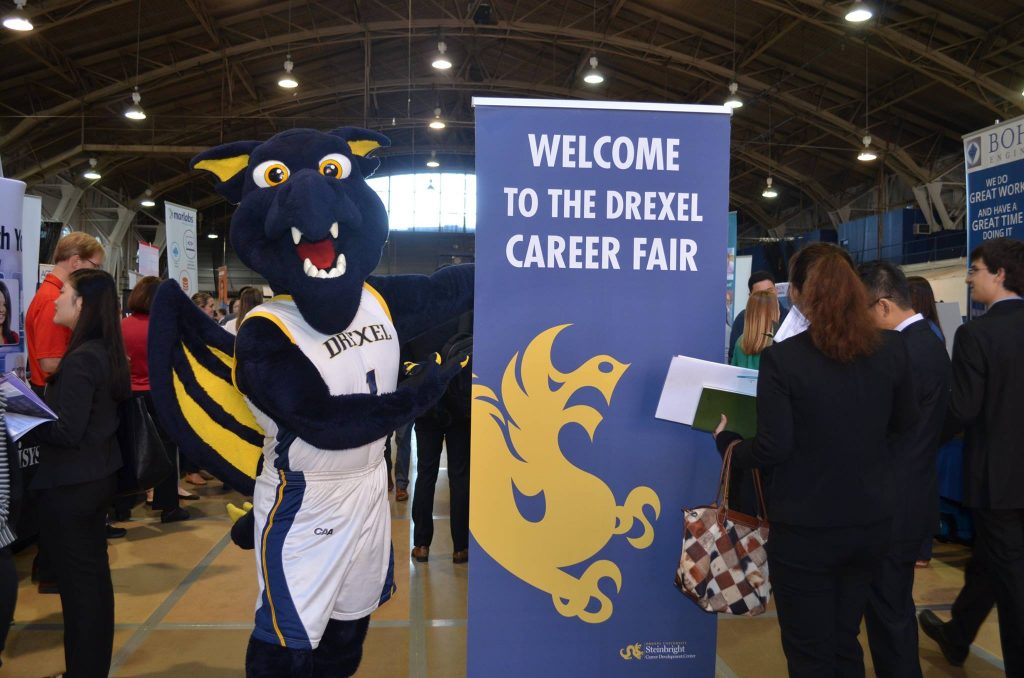
Photograph courtesy of Drexel University Steinbright Career Development Center

If there’s one thing we can all agree on, it’s that college is expensive.

Usually, it’d be easier to avoid the things in life that cost too much, but for some reason there is no avoiding college — not when it’s a necessity for one to pursue the career path they want. So a majority of students end up turning to student loans. Currently, 70 percent of college students graduate with a significant amount of loans to repay and the average student loan borrower is at least $37,172 in debt. In the long run, this leaves students paying off their debts for around two decades after graduating.

To lessen the blow of student loan debts, many students opt for the most obvious solution: a job. Although a logical solution, it isn’t the easiest one.

Having a job while in college means you now have to find a way to balance an already hectic schedule. Picture for a moment that for each week you’re in classes for 15 hours collectively and at work for another 15 hours. Next, add the average 12 hours spent studying and completing homework assignments and the 56 hours you’re supposed to sleep each week. Finally, try to factor in extracurricular activities, socializing, staying connected with family members and old friends and somehow maintaining healthy eating and self-care habits. It’s overwhelming and an immense amount of students are struggling to handle it all.

College in itself requires substantial work and having to add a job to the mix in order to afford it causes a strain on the lives of students.

For freshmen, one of the main problems faced is adjustment. Several students might’ve had jobs while in high school, but the workload in college isn’t the same; it’s more intensive. Trying to manage it all can quickly become exhaustive and a number of students find themselves drowning in coursework.

It’s a major issue for students to have to somehow split their attention between their education and finding a way to pay for it.

Education is essential, without it we wouldn’t have any of the advances we’ve had as a society. Education should be one of our number one priorities. So why is the barrier of rising tuition rates restricting students from obtaining the education they seek?

Education doesn’t need to be completely free and it’s not realistic to think it would be; it merely needs to be affordable. With affordability, students would be able to focus more on learning the material necessary to succeed in their field rather than getting in more hours at work.

Preaching time management skills to college students isn’t cutting it anymore. The fact of the matter is, juggling a schedule that’s crammed with classes, jobs and other daily activities will be extremely difficult. There aren’t enough hours in a day or days in a week to fit it all in without it being too stressful.

Our future shouldn’t be at such a high cost that we have to burn ourselves out with student loans and jobs to afford it; it should be within our grasp and we shouldn’t have to empty our wallets to get a hold of it.

Posted in UncategorizedComments Off on Learning the difficult balance of working in college

Stop studying where you sleep

I have always had a lot of trouble finding the perfect spot to study or do homework. Whether your environment has distractions or is just uncomfortable, it can be difficult to complete assignments when the space around you is badly lit, noisy, cold or all of the above.

Finding the study habits that work for you can be difficult, but knowing the habits that don’t is easy. Everyone has their own different places and ways they study most efficiently but for me, I cannot study or do homework in bed.

Don’t get me wrong, doing school work in bed seems like the ideal situation. It is comfy, you do not have to move and if you’re doing homework at night, it is very easy to just go to sleep right after. I used to be the kind of student who got home from school and would hop into bed to do homework and then just go to sleep. I only discovered this was not the best way to go about doing homework towards the end of junior year of high school. I noticed that when I studied in bed, I would have a lot of trouble focusing because all I could think about was how tired I was. I would also do the bare minimum and study a lot less than if I studied at a desk or in the library. Even when I would do the bare minimum, it would still take me a long time to finish because I was tired. I would also have trouble falling asleep because there was no transition from work to sleep.

A study conducted at the University of Southern California shows that standing up increases brain power.

“Our data suggest that simply standing up causes a heart-rate increase of about 10 beats per minute and an increase in neural stimulation-resulting in improved cognitive functions,” Max Vercruyssen, an ergonomist and assistant professor at USC, said. Although this doesn’t have much to do with studying in bed, it does show that standing up, even for a short time, improves thinking. Lying in bed for hours doing homework, and then hours after sleeping cannot be good for your body or focus. From personal experience, studying at a desk, on the floor or in a chair allows me to be more efficient with my time, and separates the place for sleeping from the place for homework.

I like to compare being in bed while doing homework to eating while watching television. If you are doing homework in the place associated with sleeping, then being tired is perfectly explainable. If you eat when you watch television, then every time you watch it you will want to eat. Of course I am not telling you to give up the popcorn and snacks during a movie or television show, but when I stopped doing homework in bed and started using my desk and going to the library, I put in more effort into my assignments, I was able to focus better and, overall, I attained a better sleep schedule.

If you are like I was and study in bed, try to find another spot to study. It might help your academic performance and improve your sleep schedule.

Posted in UncategorizedComments Off on Stop studying where you sleep

Letter from John A. Fry

Photograph by Yuki Smith for The Triangle

To the Editor,

I appreciate the strong support our men’s and women’s basketball programs have received from our alumni and students, and can assure everyone that no one wants to “Pack the DAC” more than me.

In fact, the Daskalakis Athletic Center made history last season when the Drexel men’s basketball team mounted the greatest comeback in college hoops ever by beating the University of Delaware after trailing by 34 points. The amazing comeback was the talk of ESPN, Sports Illustrated, USA Today and other national media. The men’s team also beat city-rival LaSalle University last season and upset the University of Houston at the Paradise Jam in 2017.

The DAC was rocking throughout last season when the Drexel women’s basketball team went undefeated at home, won the regular season Colonial Athletic Association title and hosted the tournament championship. Since Coach Denise Dillion took over in 2003, the team has had 12 winning seasons and has been to the postseason Women’s National Invitation Tournament tournament the last five years in a row.

While some years the teams win more games than others, just as at other universities, my support for our basketball program has never wavered. The same goes for Drexel trustees.

Indeed, thanks to millions of dollars of University investment — and generous support by many donors — the DAC has been upgraded dramatically over the years to give our teams the best setting in which to succeed. The improvements include state-of-the art locker rooms, renovated offices, refurbished media room, VIP suites and chair backs for fans. At the same time, attending basketball games at the DAC remains accessible and affordable.

While it is always great to win, I am most proud of the fact that our basketball program — indeed, all our athletic teams — competes at the Division I level the right way. Our student-athletes are successful on the court and in the classroom. Our 10-year graduation rate of 91 percent exceeds the national average.

I look forward to the upcoming season for our women’s and men’s teams. Coach Dillon has turned our women’s basketball team into a perennial conference powerhouse that is looking to return to the CAA championship and finish with a title this year.

The men’s team is coming off a summer exhibition trip to Australia as Coach Zach Spiker continues to build on his early success after coming here in 2016 from Army, where he tied for second with former Coach Bob Knight for the most wins at West Point and led the team to its first postseason since Mike Krzyzewski was the coach.

I appreciate the support of the DAC Pack and all the fans who support men’s and women’s basketball.

John Fry

President

Posted in UncategorizedComments Off on Letter from John A. Fry

Letter to the editor

Photograph by Ben Ahrens for The Triangle.

Dear Editorial Board:

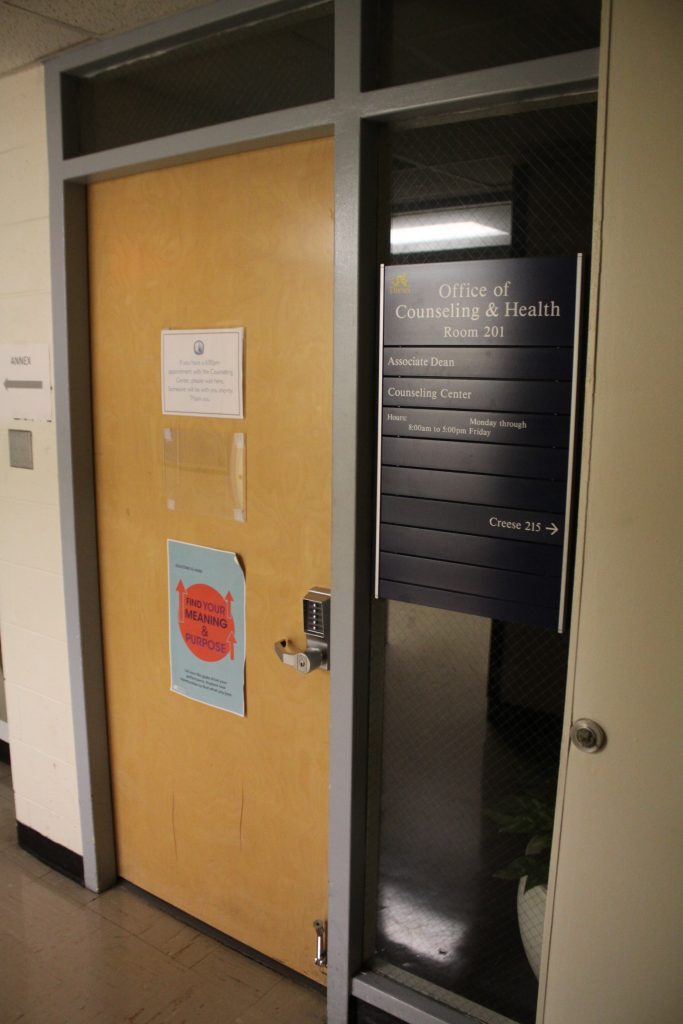
Thank you for highlighting the issues college counseling centers face in attempting to manage the mental health needs of our students. And thank you for your endorsement of all that we do, we appreciate the shout-out!

Yes, this is a difficult time and the Drexel University Counseling Center struggles with challenging circumstances. We are a relatively small center given our population, but as my colleagues, those responsible for college counseling, note: “we cannot staff our way out of this…”

There are several strategies we have employed to allow us to better manage our students’ needs. We have adjusted the way we provide care by employing a type of stepped care model. When a student comes in they are seen by a therapist who will work with the student to understand their issues and determine best course of treatment. At that point, a student may be referred to one of the many groups we offer which, as students report, can be extremely helpful in identifying and working through issues; or they may be seen by a therapist for individual counseling. Since we do follow a short-term model, if extended care with psychiatric support is requested or indicated, students will be referred to our case manager who can assist them in finding an appropriate provider.

There are exceptions where we will provide continued care. In the least we provide bridge services until the student is successfully transitioned to an external provider. We do not necessarily refer students for continued care once treatment with us is concluded since that may not be warranted or desired. We let students decide for themselves knowing that they are always welcomed to return to us if circumstances change.

Our job, as most counseling centers are beginning to recognize, is not only to provide direct care but to do all that we can to elevate mental health on campus. That means working with our colleagues across campus to promote and support wellness, to teach skills that will benefit students as they move through Drexel and embark on a career, and to educate faculty and staff in ways to assist students, so as to better manage some of the challenges they face as they progress through their years at Drexel.

Creating a culture that supports wellbeing and positive mental health is a campus undertaking. We have the support of our administration and many colleagues across campus. It’s very encouraging to have our upper administration, academic colleagues and all of the Office of Student Life work with us to address our students’ needs.

We will continue to do all we can and deliver the highest quality of care as dictated by our APA Accreditation standards. But ultimately, a health-focused campus culture is the only way we can hope to be successful in managing the crisis of care.

Posted in UncategorizedComments Off on Letter to the editor

Basketball can be a driving force for the Drexel community

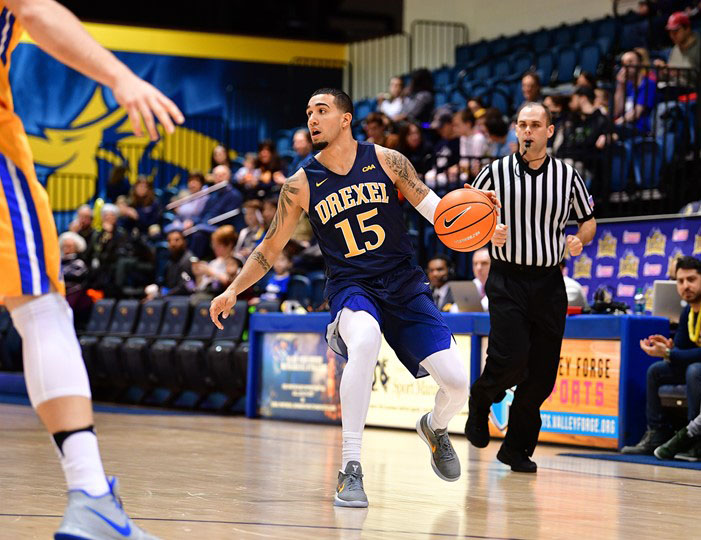
Photograph courtesy of Greg Carroccio.

As we reach the final days before tip-off of a new year of college basketball, fans across the country begin looking ahead to the upcoming season. Some fanbases look forward to seeing their team defend a conference championship or earn another bid to the NCAA tournament. Others anticipate building on momentum carried forward from the previous season even if they didn’t ultimately meet their goal in March. For fans of Drexel University basketball, however, the run up to the new season has been the least anticipated in over a decade.

Several years ago, President John A. Fry wrote to the Wall Street Journal.

“College sports can foster community and build allegiance and visibility for the institution,” he said.

We agree wholeheartedly. All of us co-signed are former leaders of the DAC Pack dating back to the group’s early days. We have seen first-hand how basketball can do exactly the things Fry mentioned.

From the mid-2000s to the early 2010s both the men’s and women’s basketball programs fielded teams that were among the best in the school’s history. We used the phrase #PackTheDAC and for most games it was indeed full. And loud. Really, really loud. Students were having fun. We’d march down 33rd Street and take over the Palestra. We had multiple busses taking students down to the conference tournaments. ESPN would televise games from the Daskalakis Athletic Center. The DAC Pack was ranked as one of the best student sections in the nation. It’s not an exaggeration to say that most of the alumni who follow the program came through Drexel during those years and were standing and cheering night in and night out.

Unfortunately, that atmosphere and goodwill toward the program has mostly vanished. Alumni are choosing to save their hard-earned money instead of putting it toward season tickets. Last season, men’s basketball attendance fell to its lowest point in 25 years — last in the city and in the conference. But don’t get it wrong, alumni still care and follow the program. Several alumni-run fan sites, blogs, social media accounts and other initiatives have maintained strong readership and engagement. When the men’s team set an NCAA record for the largest comeback in a game against rival Delaware, people popped out of the woodwork to text about it or share it on Facebook. When the women’s team was in the CAA Championship game at the DAC in March, the building was full with the best atmosphere in years. There is definitely still a desire among the university community for a thriving Drexel basketball program.

If D1 hoops is to be the nexus of pride that it is on so many campuses, and as it once was at Drexel, then President Fry and the university at-large must lean into that desire. Where are the TV games to garner interest from lapsed fans? Where are the billboards on Philadelphia’s major highways to drive awareness about the renovated DAC? Where is the strategy for driving ticket sales within the 75,000 alumni living in the Philadelphia region? Where is the on-campus branding and support?

The name of that Wall Street Journal piece Fry wrote was “We’re Glad We Say No to College Football.” The majority of Drexel’s most diehard sports fans would agree with his opinion that we should not pursue that sport. We had hoped that it meant he would care about the sport that has the most potential visibility and where success can fuel growth of all athletic programs and the university as a whole. We didn’t realize his follow up actions as Drexel’s president would be eagerly saying “yes” to squash at what appears to be the expense of institutional support for, and promotion of, Drexel Dragons basketball.

The announcement of the Armory conversion to the Arlen Specter U.S. Squash Center drummed up a lot of attention among the alumni base and it was overwhelmingly negative, matching the anger, dismay and general questioning of the university’s motives that students shared in a Sept. 28 article from The Triangle titled “Armory to become new U.S. Squash National Center.”

At its core, the issue isn’t that the dream of the Armory as a basketball arena and convocation center is officially dead. No, the underlying issue is that the university apparently has the resources to give the Armory and its multipurpose use away to an outside organization while committing capital toward an alternative space for students, all while our most prominent sport is seemingly an afterthought. It’s not unfair to say that squash has limited appeal as a sport people will watch or come together as a university community to support.

Drexel already has a sport that can do those things. Those of us that are still committed to the idea of a strong Drexel basketball program aren’t going to let it die. We’ve adopted #TakeBackTheDAC as our new motto. If President Fry still cares about what he wrote a few years ago, hopefully he and the university will join us in making that happen. Those of us co-signed, with the help from the university, made it happen for more than a decade. We’d welcome a chance to meet with President Fry before, during or after the season to discuss how to do it again.

Written and/or co-signed by the following former executives of the DAC Pack,

Mike Wychulis 2004

Nick Intrierri 2005

Dan Crain 2006

Tino Cerimele 2007

Japkeerat Singh Bindra 2008

Rob Falcone 2009

Bill Torr 2010

Marshall Fleming 2011

Anthony D’Angelo 2012

Matt Morabito 2013


Posted in UncategorizedComments Off on Basketball can be a driving force for the Drexel community