Author Archives | admin

Dia de los Muertos celebration brings together community, cultural pride


UH held a Dia de los Muertos celebration on Oct. 27 from 11:30 a.m. to 2 p.m. in the Student Center South Houston room. The event, in partnership with the Council for Cultural Activities, Somos UH and UH MAES, featured sugar skull painting, a live DJ and foods including empanadas and pan de muerto.

“The decoration is really colorful, which is kind of reminiscent of the Mexican colors, and there’s music, so it’s really encapsulating and there’s food and painting,” said strategic communications senior Mikayla Ouellette. “It’s a good time.”

Ouellette, who is Mexican-American, said the event helps branch between different cultures. 

Though Dia de los Muertos is a holiday traditionally celebrated in Mexico, the event was open to the entire UH student body.

“We love to connect with all the students that are learning about the culture and we love to share with them bits and pieces of our cultures: this pan de muerto, the Jarritos, the empanadas, all of that which I grew up with and some people haven’t had the opportunity to experience,” said President of UH MAES Patrick Ortega.

UH MAES: Latinos in Science and Engineering, has been a part of Dia de los Muertos for the event’s entire history, according to Ortega.

While tabling at the event, Ortega reflected that the organization’s mission of advancing representation of Latinos in leadership has endured even through the pandemic.

“Part of our culture is resiliency, and especially in the years of 2020, where a lot of student organizations took a very large hit in their membership, I think the reason why we were able to be resilient is deeply ingrained in our own culture within the organization,” Ortega said. “Because we believe in what we’re doing, there’s nothing we won’t stop at to make sure that we continue doing it.”

Somos UH also tabled at the event. Vice President Renzo Biassi said their main mission is to unite students and grow their community, especially by meeting new people and socializing with interested students.

“New students, freshmen especially, a lot of times they come on campus and they don’t have a strong network established yet,” Biassi said. “So we exist to help them build the foundations to that network to have a safety net to fall back on, where they can interact with people that are similar to them, and welcome them in with open arms in events like this.”

The Council of Cultural Activities promoted its event, Cultural Explosion, which will be on Nov. 19. CCA helps fund the Dia de los Muertos celebration.

“We want to help promote and make sure all cultures are included inside of the University of Houston,” said CCA council liaison Ammara Hussain.

The opportunity to combine tradition with art and beauty was not lost on fine arts fifth-year Nathalia Trejo, who painted her face in the style of a Catrina, an iconic female skeleton. 

“It’s a caricature because Mexico suffered from a lot of colonialism, so an artist created La Catrina,” Trejo said. “Because a lot of Hispanics, even to this day, have this shame of being indigenous, he created this skeleton with a very vibrant European fashion. It was to basically call out the culture, basically saying, you can dress all white, all European, but you’re still indigenous.”

For Trejo, representation is key.

“To get out and to celebrate cultures, it goes a big way,” Trejo said.

news@thedailycougar.com

—
“Dia de los Muertos celebration brings together community, cultural pride” was originally posted on The Cougar

Posted in NewsComments Off on Dia de los Muertos celebration brings together community, cultural pride

Sex sells, no one can opt out

.flex_cell.av-2pzueej6-9f576ccfcaf6b16013520a3bd35296e6{
vertical-align:top;
}

Sex sells, no one can opt out

The attention economy has turned sexual visibility into an unavoidable commercial trap.

#top .hr.hr-invisible.av-2hyt1n0y-19023994569e4046d007d524b3e2806e{
height:10px;
}

By HANNA DIOP

#top .hr.hr-invisible.av-23p5wwuq-bbdef91db6cb1962c75b23865e659c97{
height:10px;
}

.avia-image-container.av-mw048fiw-4f08e91ceafad92f0ae3210e05abb54d img.avia_image{
box-shadow:none;
}
.avia-image-container.av-mw048fiw-4f08e91ceafad92f0ae3210e05abb54d .av-image-caption-overlay-center{
color:#ffffff;
}

(Rachel Gonzalez / Daily Trojan)

.flex_cell.av-1y1k9ggi-8690753c041a5d05c05e885f29a87383{
vertical-align:top;
}

.flex_cell.av-1qb9wg5u-5c23960e2d4cf1a99b128ad512fd9b88{
vertical-align:top;
}

Modern dating reveals that things have changed, and quite drastically. What used to be platforms to give participants a chance to find “the one” have become spaces built for social media and prioritize virality and clicks above all else. The vehicle driving this new shift is the age-old method of “sex sells” —  how it precisely sells, however, has changed. 

On YouTube blind-dating shows and reality TV hits like “Love Island,” content is optimized for “clip farming”: engineering isolated moments of graphic disclosure or sexual performance designed to be chopped up for short-form videos. 

When contestants enter these spaces not just to date, but to build micro-celebrity status that routes traffic to larger follower bases, it begs a fundamental question: Are these platforms actually trying to sell human connection, or are they just monetizing sex? 


Daily headlines, sent straight to your inbox.

Subscribe to our newsletter to keep up with the latest at and around USC.

There’s nothing wrong with platforming sex, but the clip-farming and attention-grabbing strategies used to attract eyes aren’t championing sexual openness or liberation — it’s just profitable. 

Society has certainly made strides. We live in an era where people can engage with sexuality far more openly than in previous generations. On social media, netizens demystify taboo subjects, share access to sexual health information and foster discourse on relationships and boundaries. Sexual freedom exists on a broad spectrum, and people have the right to express their sexuality — or maintain their privacy — without being derogatorily labeled loose or uptight.  

Yet, acknowledging this progress exposes a critical paradox: Society’s greater comfort with sexual visibility doesn’t mean it has developed a healthier or more emotionally grounded understanding of sex itself. 

Sex captures attention, and in an attention economy, that makes it an unbeatable commercial product. Engagement with sexually provocative content turns attention into increasing visibility and revenue, creating a structural incentive to hypersexualize online products. 

But this dynamic is no longer confined to reality television or viral dating shows; it’s expanded rapidly through advertising. With the rise of generative artificial intelligence, suggestive imagery and sexually charged ads can be produced cheaply and endlessly. The result is an ecosystem that floods social media feeds with hyper-sexualized clickbait that decouples sexual imagery from personhood simply to keep eyes on screens. 

What we see now is the attention economy at work in damaging ways. Sexuality becomes hollow when the individual disappears behind a performance made solely for engagement. Under this framework, distinct identities — whether framed as goth, coquette or the girl next door — are flattened into recognizable sexual market categories. Even women who don’t subscribe to these aesthetics find their personal expression flattened into consumable tropes beyond their control. 

Because shock generates engagement, content creators and producers may feel pressure to become more explicit or provocative to maintain visibility. A recent example is Sydney Sweeney’s campaign for Novig, a sports betting platform, that relied on the imagery of a woman covering her naked body with sports gear — two completely unrelated concepts linked only by the marketability of female exposure. 

The core issue isn’t individual women expressing or monetizing their likeness but a system whose incentives flatten identities for engagement. 

In this conversation, we also overlook a major segment of this space: children and general audiences. Today, users of all ages occupy the same feeds and public digital platforms without consenting to continuous sexual exposure. 

Sexual destigmatization doesn’t require the total erasure of boundaries between adult and general-audience spaces. True autonomy requires the ability to choose, and people cannot meaningfully opt out when sexualized advertisements and algorithmic recommendations appear in utterly unrelated contexts. 

Sexual liberation includes the freedom to not perform. Platforms must take responsibility for where sexualized content is amplified and who is forced to encounter it. Content producers and advertisers should question whether sexuality serves an expressive purpose or merely functions as clickbait. And audiences, with their autonomy, also need to examine what they reward through clicks, shares and outrage. 

If sexual liberation was meant to expand our human choices, the attention economy has twisted it into one inescapable default: mandatory exposure. 

#top .hr.hr-invisible.av-1dvjc3o2-4064c87489125adc87ed574b775cd334{
height:20px;
}

.flex_cell.av-eo0o1zm-c12ed4661c55adb10871aeb0068ad406{
vertical-align:top;
}

The post Sex sells, no one can opt out appeared first on Daily Trojan.

Posted in NewsComments Off on Sex sells, no one can opt out

Candidate Profile: Michele Tafoya for U.S. Senate

Candidate Profile: 

Party: Republican

Age: 61

Previous Experience: Sports broadcaster for ABC, CBS, ESPN, NBC, and others (1993-2022); political podcaster (2022-2026)

Campaign Priorities: Addressing fraud, tackling crime, cutting costs and taxes 


Like other Minnesota news outlets, including the Minnesota Star Tribune and MPR, the Minnesota Daily has repeatedly requested an interview with U.S. Senate candidate Michele Tafoya, but neither she nor her office responded for comment. Her GOP gubernatorial counterpart, Lisa Demuth, did not reply either. 

Demuth has a long track record as an elected official. When she names hot-button issues of the day on her campaign site, it is possible to trace her rhetoric there back to her real-life decisions and actions as Minnesota Speaker of the House. 

Tafoya, on the other hand, holds a very different background. Her previous work experience centers around sports casting and, since 2022, she has maintained a career as a political podcaster whose guest list is a who’s who of conservative politicians and social media personalities. 

Tafoya’s campaign site does name her priority issues. Some are broad umbrellas, like her “Bring Back Courage and Common Sense” priority, while others focus on more finite issues, such as a commitment to keep men out of women’s sports and locker rooms, a promise to fight for the SAVE Act and a belief that parents must have a bigger voice in school decisions.


Affordability

Throughout her campaign, Tafoya has campaigned on ideas of affordability and managing prices as a prospective legislator. Controlling energy prices and cracking down on fraud are chief goals of her pitch to voters as November’s midterm elections near. In a Monday interview with WDIO, a Duluth-based news station, Tafoya said one of her biggest concerns will be managing gas prices across the country.

“We can produce that right here and help bring down prices at the gas pump, which always brings down prices everywhere else,” Tafoya told WDIO. 


Traditional values

Alongside affordability, Tafoya has made a name for her focus on issues that permeate among conservative voters. Being tough on crime, she believes, will bring safer neighborhoods and peace to Minnesota, and cracking down on illegal immigration will secure the American border. These values extend beyond crime, though. Tafoya also aims to “bring back common sense” through enforcing bans on transgender athletes, expanding parental rights in schools and adding additional safeguards to voting processes. 

“Minnesota has a crisis of leadership,” Tafoya’s campaign website states. “Some of the career politicians who run and represent our state are crazy, some are cowards and some are both.” 


A high-stakes election for University of Minnesota students

For students, Tafoya’s aims remain unclear. Food and housing insecurity have risen some time among Minnesota college communities. The 2025 passage of the Trump Administration’s One Big Big Beautiful Bill Act not only restricted access to benefits such as the Supplemental Nutrition Assistance Program, but also reduced access to Pell Grants and financial aid for many students.

Regardless, affordability struggles continue to plague students and University community members, an area of modern American life Tafoya promises to improve.

“I’m going to Washington to work with everyone, and stand up to anyone to deliver for Minnesota. I’ve said from the get go, I’ll go and the first thing I will do is knock on all 99 doors of the other senators, introduce myself and say, ‘How can we work together?’” Tafoya told KVRR. 


The race is tightening 

The gap between Republican-endorsed Tafoya and DFL-endorsed Peggy Flanagan has been closing over the past several weeks. Recent polling by RealClear Polling shows Flanagan ahead by an average of 3.4%, and Cook Political Report has adjusted its rating from “Likely Democrat” to “Leans Democrat.”

The post Candidate Profile: Michele Tafoya for U.S. Senate appeared first on The Minnesota Daily.

Posted in NewsComments Off on Candidate Profile: Michele Tafoya for U.S. Senate

Feel you’ve lost your way? ‘Wildwood’ is the magical answer

“We come to this place for magic,” says Nicole Kidman. As an avid movie-goer, I can quote her entire AMC Theatres monologue by heart. “Wildwood” must’ve been the magic she was talking about — the film is a masterpiece in every department.

“Wildwood” is the sixth film from animated stop-motion studio Laika, best known for the film “Coraline.” Based on the 2011 middle-grade novel of the same name, “Wildwood” follows Prue McKeel and her classmate Curtis as they travel into a forbidden, enchanted forest known as the Impassable Wilderness just outside Portland, Oregon to save Prue’s infant brother Mac after he is abducted by a murder of crows. 

At first glance, the plot seems like a fairy-tale version of the 1986 Jim Henson film “Labyrinth” — a movie that I genuinely don’t know why I sat through — in a format suitable for children of this age. Within the first two minutes of “Wildwood,” it’s clear that this film earned its PG-13 rating with its darker themes and concepts of suicide and grief. Although definitely not for younger children, this film appeals to many demographics with its engaging plot and stunning animation. 

“Modern cinema generally tends to talk down to young audiences. But young people experience loss. They know what it’s like to feel afraid,” director Travis Knight told The New York Times about the film’s themes. 

Stop-motion films are known for their intricacy, but this film takes it to a new level. Described as the studio’s magnum opus by reviewers and cast members alike, the film took 16 years to make and is the longest stop-motion film ever made at a runtime of 2 hours,12 minutes. The production required 132 sets and 230 hand-controlled puppets shot frame by frame. Yet, in certain scenes I almost forgot it was stop-motion with how smooth movements were. To not only do that for “normal” characters but for magical beings and special effects is quite the journey.  

Within its first week in the box office, “Wildwood” earned a 99% score on Rotten Tomatoes, an average rating of 4.4 out of 5 on Letterboxd and a 8.7/10 on IMDb. Yet, the film only grossed about 12% of its estimated budget in its opening weekend at the domestic box office. 

Laika movies have cost between $60 million and $100 million to make, which is an exceptionally high number for independent stop-motion. The films also have darker, more mature themes included, which can confuse viewers on the target audience. However, because they have strong financial backing from billionaire Phil Knight — co-founder of Nike and father of president, CEO and director Travis Knight — they are able to function as an artistic passion project rather than a profit-driven company.

During the closing credits, I had to sit for a moment and process what I just saw. The cast brought these stunning animations to life, with Peyton Elizabeth Lee as Prue, Jacob Tremblay as Curtis and Carey Mulligan voicing Alexandra. The film featured music only at pivotal points, impacting audiences differently. The closing credits track was a song titled “The Better Part of Bravery” by The Decemberists, whose frontman Colin Meloy wrote the original “Wildwood” book series. Easter eggs for other Laika films can be found throughout the movie. 

Every choice the creators made just add to the effect of thee human-made art masterpiece that is “Wildwood.” In a few years, as we get a new crop of young entertainers and filmmakers, they will cite “Wildwood” as the life-changing film that brought them into the industry.

Posted in NewsComments Off on Feel you’ve lost your way? ‘Wildwood’ is the magical answer

Pac-12 Championship Race: 6 Things CSU Students Should Watch in November

Source

November brings important questions to Fort Collins, Colorado, as Colorado State approaches the final stretch of its first season in the rebuilt Pac-12. For CSU students, the remaining games offer more than football results. They offer a chance to assess the Rams’ development under Jim Mora, watch emerging players, and face key conference matchups.

With considerable roster changes and several demanding opponents, CSU faces questions about consistency, chemistry, and execution. Six storylines deserve particular attention as the Rams approach the final stages of their regular-season schedule and conference championship race.

1. Quarterback Chemistry Under the Lights

Colorado State’s quarterback situation remains a key storyline heading into November. Hauss Hejny started the season before a hamstring injury opened the door for K’saan Farrar, who took over for three games. With Hejny expected to return, the coaching staff must decide how to manage both quarterbacks during the remaining conference schedule.

Quarterback stability can influence how a team performs against conference opponents, particularly in close games. It is also one factor students can consider when following conference championship odds, alongside team records and upcoming matchups.

The immediate question concerns whether Mora’s staff establishes a clear starter or continues rotating quarterbacks. Consistent playing time can help develop timing with receivers, improve communication, and strengthen execution near the end zone.

November provides an opportunity to assess that progress. Watch how confidently the quarterback operates under pressure and whether passing combinations appear increasingly coordinated. A settled offensive approach could help CSU build momentum. However, quarterback development is only one part of a broader challenge involving a heavily rebuilt roster.

2. Is CSU’s Rebuilt Roster Finally Coming Together?

Colorado State entered the season with substantial roster changes, creating a challenge for Mora and his coaching staff. Establishing consistency across such a different squad requires more than individual performances.

By November, players have spent months learning assignments, developing relationships, and adapting to unfamiliar teammates. The remaining games offer a chance to see whether those adjustments have produced a more coordinated team.

Students should watch for communication before plays, reactions after mistakes, and how teammates support each other during difficult sequences. These details can reveal developing cohesion that conventional statistics rarely capture.

The bigger question concerns whether CSU has established a foundation for future improvement. Stronger collective performances would suggest that new personnel have begun working effectively together. Continued confusion could indicate further adjustments are necessary. Chemistry becomes especially important along the offensive line, where coordinated execution supports the running game.

3. Building a Ground Identity Behind an Evolving Line

Colorado State entered the season with expectations of a more physical rushing approach. November offers a chance to see whether that anticipated identity has emerged through consistent execution.

Running backs Durell Robinson and Cedric Ross provide options in the backfield. Their ability to gain positive yardage depends partly on finding space behind an offensive line that continues to develop its combinations.

Students should watch how the Rams approach short-yardage situations. Third-and-short possessions show whether the offensive front can create reliable running lanes when opponents expect a run.

Fourth-quarter drives provide another useful measure. Maintaining possession late in competitive games requires disciplined blocking, decisive running, and effective communication. A dependable ground attack could also create opportunities through the passing game. That connection makes CSU’s receiving threats especially important as November progresses.

4. Getting Juice Vereen and Tommy Maher Involved

Colorado State’s receiving options provide another important measure of offensive development. Tight end Juice Vereen arrived from UConn after recording 310 receiving yards and five touchdowns in 2025, giving the Rams an experienced target in the passing game.

Tommy Maher adds another receiving threat, giving the Rams more options when attacking opposing secondaries. Their contrasting strengths could help CSU create more varied passing combinations.

Students should examine how frequently both players feature in planned offensive sequences. Early targets, movement across formations, and downfield opportunities can show whether the coaching staff is using their abilities effectively.

The relationship between quarterback execution and receiver involvement will be especially important against stronger opponents. Consistent connections can sustain possessions and create opportunities beyond short-passing situations. CSU’s ability to involve these playmakers will be closely tested when Boise State visits Canvas Stadium.

5. The Canvas Stadium Showdown Against Boise State

Colorado State vs. Boise State

Date: November 7

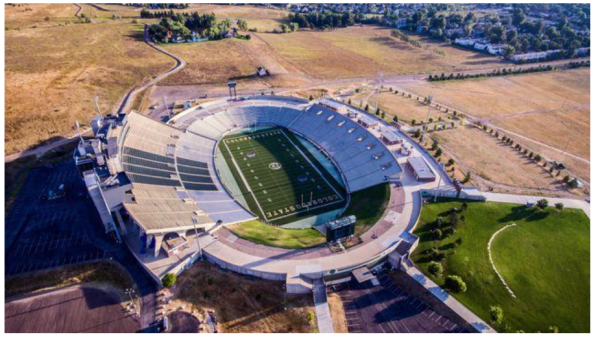
Venue: Sonny Lubick Field at Canvas Stadium, Fort Collins, Colorado

Boise State’s November 7 visit to Canvas Stadium represents one of Colorado State’s most prominent home fixtures. The matchup gives the Rams a chance to measure themselves against an established conference opponent.

For students, the occasion extends beyond the football field. Tailgating, campus gatherings, and the atmosphere around a major home game shape the experience of supporting CSU in Fort Collins.

On the field, attention should turn toward how the Rams handle Boise State’s physical approach. Offensive consistency, defensive discipline, and execution on key possessions could show how far CSU has progressed.

The result will provide another reference point for evaluating the team’s development under Mora. Equally important will be whether Colorado State remains competitive throughout the contest. Whatever happens at Canvas Stadium, the Rams must quickly prepare for a different challenge: taking their performances into a demanding road environment.

6. The Late-Night Road Test at Washington State

Colorado State vs. Washington State

Date: November 14

Venue: Martin Stadium, Pullman, Washington

Colorado State’s November 14 trip to Washington State presents a demanding late-season assignment. Playing in Pullman introduces unfamiliar surroundings, considerable travel, and potentially challenging November weather.

The evening setting adds another dimension. A vocal home crowd can make communication difficult, especially when offenses must coordinate assignments before key plays.

Students should observe how CSU responds to those conditions. Penalties, missed assignments, and reactions after difficult possessions can show whether the Rams have developed the discipline needed for tough road contests.

This matchup also offers an opportunity to compare home and away performances. Maintaining similar standards across different environments would indicate meaningful progress. CSU then visits Fresno State on November 21 for its final game that counts toward the Pac-12 standings. The conference’s top two eligible teams advance to the December 4 championship, while the November 28 flex game does not affect those standings.

November Will Reveal CSU’s Direction

Colorado State’s November schedule provides several opportunities to evaluate its progress under Mora. Quarterback stability, roster cohesion, rushing consistency, and receiver involvement remain important indicators of offensive development.

The Boise State and Washington State matchups will test those improvements against demanding conference opposition.

For CSU students, following these storylines adds context to every possession and result. Beyond the championship standings, November offers a clearer picture of the Rams’ current strengths, remaining challenges, and the foundation they are building for future seasons.


The post Pac-12 Championship Race: 6 Things CSU Students Should Watch in November appeared first on The Rocky Mountain Collegian.

Posted in NewsComments Off on Pac-12 Championship Race: 6 Things CSU Students Should Watch in November

Ducks down Hawkeyes in spectacular sweep

Ahead of their biggest game of the year versus No. 2 Nebraska, the No. 7 Oregon Ducks took care of the Iowa Hawkeyes in three sets. 

The Ducks (19-3, 10-2 Big Ten) went home early in the afternoon, taking the sets 25-23, 25-22, and 25-15 from Iowa (13-3, 2-10 Big Ten). Sets one and two may have been closer than Oregon head coach Trent Kersten would have wanted, but the Ducks secured the victory regardless.

“I thought we had to bounce back, just some serious pressure in set one,” Kersten said.

The first set was all opposite hitter Alanah Clemente. The sophomore snagged six of the Ducks’ 16 kills and went on to record 18 on the night. However, it wasn’t an easy set win, with the Hawkeyes recording four points in a row to cut the Ducks’ lead to 14-13. The tight contest ended in a 25-23 win for the Ducks.

“I’m always proud of my team and how hard we push through because during practice we love to work hard and practice getting through these tough moments,” Clemente said.

The Ducks had to fight back in the second, starting the set down 4-1. The tides turned when the Ducks recorded six straight points, going from down 7-8 to up 13-8. It all changed again with the set eventually becoming 20-20 and the Ducks trailing multiple times. 

Sjakkie Donkers had a rough night overall but especially in the second set, recording three of her four errors in the second and making it a tough battle for the squad. However, Donkers got the final point to win the set 25-22 with a brilliant attack that hit off a Hawkeye and bounced out.

“Sjakkie had a little bit of a rough night, but we were able to absorb that,” Kersten said. “I just have full faith in Sjakkie to bounce back from however she’s playing — she’s just a great volleyball player.”

After fighting hard for the first two sets, the Ducks went on cruise control for the third, winning 25-15. 

The sweep made it two on the weekend for the Ducks after dispatching Maryland on Oct. 30. 

“I’m so happy that we had such a good weekend, just staying together and producing,” Clemente said.

Despite not being a ranked opponent, the win over Iowa was a great sign for the Ducks coming into their matchup against Nebraska. Before losing to No. 16 Penn State on Oct. 23, the Ducks had been on a seven-game winning streak with four against ranked opponents. Now Oregon finds itself on four straight wins before hosting the Cornhuskers.

“I thought Alanah was great, I think we’re going to have a bounce-back performance from Sjakkie. I thought (Valentina Vaulet) looks more and more like herself and has taken some really quality swings,” Kersten said in preparation for the match against Nebraska. 

“We need to find a little more production in the middle, then stress some out in some of those areas,” Kersten said. “We need to pass a little bit better, but again, it’s a great weekend for the team. Now we just have an off day and get back to work on Tuesday.”

Setter Marina Crownover had a fabulous night, creating 36 of the Ducks’ 41 assists. The fifth-year added four kills on seven attacks for a .429 hitting percentage.

“Marina has such great communication, like that’s the biggest thing,” Clemente said. “We have such a good connection on and off the court. I think that definitely helps a lot, but I love Marina, and she loves me and trusts me, and I really appreciate her for that.”

During a tough battle through the first two sets, the Ducks ultimately put another win in the record books and advanced their home record on the season to 10-0. 

“I love the fans, I love the crowd and the community that we built. I remember like the first time I came here, my freshman year, I didn’t know if we were going to have any support, any fans because we were a brand new team and to see how many people came out and then [watch] our community grow as we continue the season is just super special,” Clemente said.

“I hope this weekend that we have more green than red,” she said before mumbling “50/50” and giggling in reference to Nebraska’s strong, traveling fanbase. “But yeah, I just love the fans, and I’m so happy that they love to watch us and want to support us, so thank you to the fans.”

The Ducks take on the Cornhuskers Saturday, Nov. 7, at Matthew Knight Arena, starting at 7 p.m.

The post Ducks down Hawkeyes in spectacular sweep appeared first on Daily Emerald.

Posted in NewsComments Off on Ducks down Hawkeyes in spectacular sweep

Classifieds – November 2, 2026

The Daily Trojan features Classified advertising in each day’s edition.  Here you can read, search, and even print out each day’s edition of the Classifieds.

Click the Classifieds icon to download the PDF of today’s Classifieds:

Click to Download the Classifieds as a PDF

To place an ad, please contact an ad representative:

(213) 740-2707

USC Student Publications Student Union – Room 402

Los Angeles, CA 90089-0895

https://dailytrojan.com/ads

The post Classifieds – November 2, 2026 appeared first on Daily Trojan.

Posted in NewsComments Off on Classifieds – November 2, 2026

Video: DFL Get Out The Vote tour makes stop at The University of Minnesota

DFL Candidates kicked off their Get Out The Vote tour Thursday before the Nov. 3 election. They stopped at the University of Minnesota to talk with students and speak about their platform.

Recorded, edited and produced by Oscar Carabell. Reported and voiced by Lucas Vasquez.

The post Video: DFL Get Out The Vote tour makes stop at The University of Minnesota appeared first on The Minnesota Daily.

Posted in NewsComments Off on Video: DFL Get Out The Vote tour makes stop at The University of Minnesota

Guest Opinion: Not having an ID is a death sentence


Not having an ID can be deadly. For someone with an opioid use disorder, lacking a state-issued ID can prevent them from receiving life-saving medicine. Buprenorphine, commonly known by the brand name Suboxone, reduces withdrawal symptoms and cravings and is used to treat opioid use disorder. But treatment works only when people can access it.

When people don’t have proper state-issued identification, accessing treatment can become incredibly difficult. Because of the importance of buprenorphine, Utah needs to make state-issued IDs more accessible to stop preventable deaths.

The identification trap 

Trying to get an ID can become a vicious cycle. Without identification, it can be difficult to access treatment, but lacking stable housing, transportation, or other resources, it can be difficult to obtain the identification needed to access that treatment.

For someone who is homeless or recently released from incarceration, replacing a state-issued ID can be its own bureaucratic maze. According to the U.S. Government Accountability Office, people experiencing homelessness often lose important documents through theft, bad weather, or encampment sweeps. Obtaining a birth certificate may require identification, while proving an address can require a lease or utility bill. Each requirement depends on another document that a person may not have.

This is where our approach to addiction treatment needs to change. Preventing medication diversion matters. Pharmacies and regulators have legitimate reasons to verify prescriptions and protect controlled medications. However, we should also ask whether some of these protections are creating the risk of making it harder for people with opioid use disorder to access legitimate treatment.

From the counter to the streets 

Buprenorphine has been FDA-approved to treat opioid use disorder in the United States for more than two decades. It is called a “partial opioid agonist,” meaning it reduces withdrawal and cravings and has a “ceiling effect” on respiratory depression. This effect is what helps prevent overdose, or an increased “high” if additional opioids are used.

When treatment access becomes difficult, many people turn to illegal forms of obtaining buprenorphine. Research published in Drug and Alcohol Dependence found that most people who used non-prescribed buprenorphine were trying to prevent withdrawal, manage cravings, and reduce opioid use. This does not make buying medication on the street safe or legal, nor does it eliminate concerns about selling it illegally. It does challenge the assumption that everyone seeking buprenorphine outside the healthcare system is seeking a high.

That distinction matters. Research published in the Harm Reduction Journal has also raised concerns that eliminating access to diverted buprenorphine could have unintended consequences, including possibly increasing overdose deaths. The point isn’t to eliminate protection; it is to highlight that these protections don’t address why people seek medication outside the healthcare system in the first place. When treatment is difficult to reach, people find other ways to manage.

Utah needs safeguards, not barriers

The current system creates barriers for people who are already struggling to navigate health care. Easing those barriers doesn’t mean abandoning safeguards. It means giving people who have lost their ID another way to access care, so that a missing card doesn’t cause preventable death.

State legislative boards and healthcare systems should create trauma-informed alternatives for verifying the identity of patients who have lost their identification. Primary care clinics or treatment programs could help confirm a patient’s identity, and pharmacists could receive clearer legal guidance on when alternative confirmation is appropriate.

We can protect against illegal drug abuse while still recognizing that addiction treatment is not effective if people cannot obtain it.

A missing ID should not erase someone’s identity as a patient or become the reason they return to an illicit drug market. If someone has made it to the pharmacy counter seeking treatment, that should be a moment to help them move toward recovery and not another barrier that pushes them away.


The post Guest Opinion: Not having an ID is a death sentence appeared first on The Daily Utah Chronicle.

Posted in NewsComments Off on Guest Opinion: Not having an ID is a death sentence

Sunday Mini Crossword #64 – Who’s That Musician??

The post Sunday Mini Crossword #64 – Who’s That Musician?? appeared first on Daily Emerald.

Posted in NewsComments Off on Sunday Mini Crossword #64 – Who’s That Musician??