Author Archives | Aditya Gunturu, Staff Writer

Upcoming cinema: 2026 films worth watching

2025 was a year loaded with top films, directors and talent. Horror had a strong resurgence with “Weapons,” “Sinners” and “The Black Phone” captivating audiences. There were also many biopics in 2025, including “The Smashing Machine,” “Springsteen: Deliver Me From Nowhere,” “Song Sung Blue” and “Blue Moon.” The year closed strong with “Wake Up Dead Man,” “Avatar: Fire and Ash” and “Marty Supreme” all coming out in December. 


Looking back at last year’s films, it’s exciting to see what is in store for audiences in 2026. From long-awaited sequels and superhero films to epic dramas and sci-fi adaptations, there is something for every kind of movie fan in the new year. 
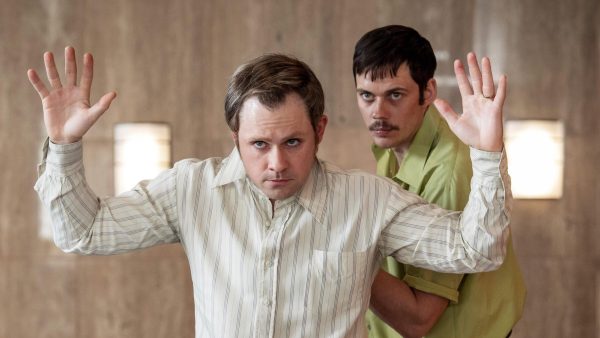
Dacre Montgomery and Bill Skarsgard in “Dead Man’s Wire”. (New York Times)

“Dead Man’s Wire” – Jan. 16

The newest film from Gus Van Sant, award-winning director of “Good Will Hunting,” is “Dead Man’s Wire,” which tells the real-life story of 1970s kidnapper Tony Kiritsis. Kiritsis rose to fame when he took his bank mortgagor hostage, only asking for money and an apology. Kiritsis is played by experienced character actor Bill Skarsgaard, and he is joined by a loaded ensemble including Dacre Montgomery, Colman Domingo and Al Pacino. 


The film had a limited release at the 82nd Venice Film Festival in 2024, where Van Sant won an award for outstanding direction. Early reviewers found it equally hilarious and intense, hosting a similar vibe to films like “Dog Day Afternoon.” Deadline’s Pete Hammond wrote that the film is “pretty impressive for an indie scale and low budget.” Fans of offbeat comedies and fantastical true stories will surely find the film delightful. 

 

Margot Robbie as Catherine Earnshaw in “Wuthering Heights” directed by Emerald Fennel. (The Swarthmore Phoenix)

“Wuthering Heights” – Feb. 13

Another extreme romantic tale for director Emerald Fennell, “Wuthering Heights” follows the intense and destructive love story of Catherine Earnshaw and Heathcliff in the 19th-century hills of England. Based on the novel by Emily Brontë, the piece has been adapted multiple times, each time with a new director and cast delivering a different take on the book. 


Alongside Emerald Fennell, Jacob Elordi and Margot Robbie are playing the leading couple. Charli XCX, Grammy-winning artist, has also joined the production team to produce new music for the soundtrack, helping to give the film an even more unique image. These aspects are sure to deliver a fascinating picture in the coming year. 
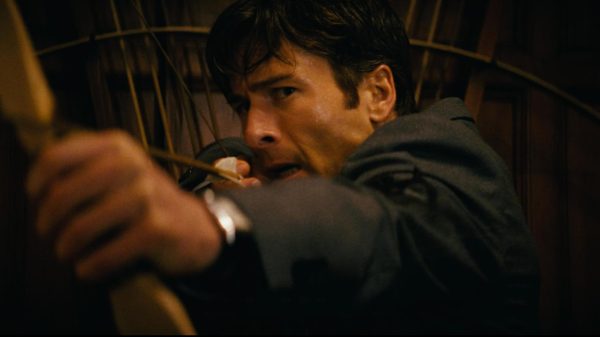
Glen Powell in “How to Make a Killing” directed by John Patton Ford. (IMDb)

“How to Make A Killing” – Feb. 20

Another film in Glen Powell’s recent stacked catalogue, “How to Make A Killing,” comes from director John Patton Ford in his sophomore directorial outing. After the black sheep of a rich family is ostracized, her son attempts to regain his place in the will, killing anyone higher in the order. Powell plays the determined killer and is joined by a strong ensemble cast including Margaret Qualley, Jessica Henwick, Topher Grace and Zach Woods. 


Early trailers are giving the film a similar vibe to Park Chan Wook’s recent hit, “No Other Choice.” This is a similar kill fantasy focused on job ascension but “How To Make A Killing” will focus much more on a revenge aspect. If this film can similarly toe the line between drama and comedy, Powell may have another certified success. 
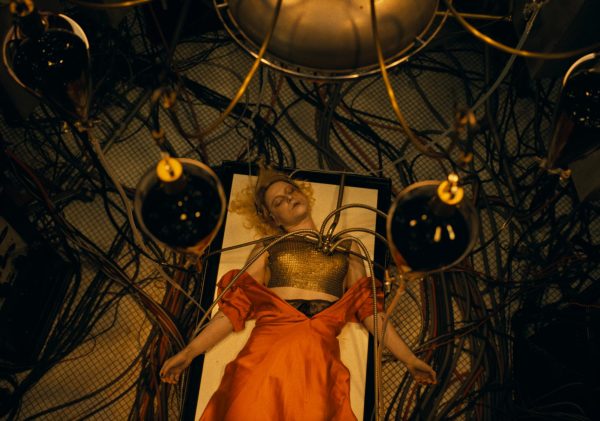
Jessie Buckley as The Bride of Frankenstein in “The Bride!”. (IMDb)

“The Bride!” – March 6

The story of Victor Frankenstein has been a mainstay in today’s popular culture, with a new movie releasing every year like clockwork. Continuing the trend started by “Lisa Frankenstein” in 2024 and Guillermo Del Toro’s “Frankenstein” in 2025, “The Bride!” comes out in 2026. As Maggie Gyllenhaal’s sophomore film, this movie tells the story of Frankenstein from the perspective of Frankenstein’s monster’s bride. 


Starring Christian Bale as the aforementioned monster and Jessie Buckley as his undead bride, “The Bride!” has a stacked ensemble including Peter Sarsgaard, Annette Bening and Jake Gyllenhaal. The film takes heavy inspiration from the 1935 Boris Karloff film “Bride of Frankenstein,” similarly taking place in 1930s Chicago. 

Ryan Gosling as biology teacher-turned astronaut Ryland Grace in “Project Hail Mary”. (IMDb)

“Project Hail Mary” – March 20

The third space-based novel and second film adaptation from Andy Weir, “Project Hail Mary,” follows a science teacher, Ryland Grace, who is launched on an interstellar mission in order to solve a mystery behind why the sun is going dark. Fighting against a ticking clock and encountering exciting new creatures on his journey, amateur astronaut Grace, played by Ryan Reynolds, is humanity’s last hope. 


“Project Hail Mary” is the latest film from directorial duo Phil Lord and Christopher Miller, the same creative minds behind “Spider-man: Into the Spiderverse” and “The Lego Movie.” The production team also includes the writing of Andy Weir, whose previous novel “The Martian” was also adapted into an award-winning film. A large portion of the film will be a solo journey for Gosling, so the story’s importance will largely rest on his performance. 

Zendaya and Robert Pattinson as the leads in the new film “The Drama”. (Hollywood Reporter)

“The Drama” – April 3

Weddings are complicated and always have been. Filled with emotional people, tense moments and eclectic guests, weddings are all focused on the big “I Do” moment at the end of the aisle. Every minute demands chaos, so a drama film surrounding one seems fitting, especially one including two of the strongest young actors of this generation, Zendaya and Robert Pattinson.


“The Drama” is directed by Kristoffer Borgli, creator of the films “Sick of Myself” and “Dream Scenario,” known for their strange comedy and uncomfortable performances. These trends are sure to continue, especially with the acting prowess of its leads. 
Jaafar Jackson playing his uncle Michael Jackson in “Michael” directed by Antoine Fuqua. (IMDb)

“Michael” – April 24

Michael Jackson, the King of Pop, has had a history of epic proportions. A film focusing on him has been in development since 2019, but is finally releasing with Jackson’s nephew, Jaafar Jackson in the leading role. The film will be directed by Antoine Fuqua, who also made “Training Day” and “The Equalizer.” While “Michael” will be a very different kind of movie for Fuqua, he is joined by an experienced cast including Colman Domingo, Nia Long and Miles Teller. 


Unfortunately, the production has stated that they will not cover his later years, filled with lawsuits and allegations. This plan has been met with divided opinions online, with many finding the film incomplete by not covering the struggles near the end of his life. 

Milly Alcock as Kara Zor-El in “Supergirl” by Craig Gillespie. (IMDb)

“Supergirl” – June 26

The next movie in James Gunn’s new DC franchise is releasing this summer, and will be the first film not directed by the head of the studio. Director Craig Gillespie will be adapting the award-winning story “Supergirl: Woman of Tomorrow,” which focuses on Superman’s cousin, Kara Zor-El as she struggles to adapt to a world beyond Krypton. Having a very different experience from Clark Kent, this film will follow Kara as she travels from planet to planet, picking up strays and fights wherever she can. 


The film will be written by Tom King, the same writer of the original story, and will star Milly Alcock, best known for her role in the award-winning show, “House of the Dragon.” The film will also see the return of Jason Momoa in a DC property, but playing a completely different character, the crazed spacebounty hunter Lobo. Only the second film in the new DC universe, it will set a trend for the studio’s future projects. 

Matt Damon as Odysseus and Zendaya as Athena in Christopher Nolan’s “The Odyssey”. (IMDb)

“The Odyssey” – July 17

The latest work from the esteemed Christopher Nolan sees the award-winning director adapting Homer’s great Greek epic, “The Odyssey.” The film will follow the Greek warrior Odysseus as he takes a 10-year journey home following the Trojan War. 


Matt Damon will be playing the titular explorer in his first lead role for Nolan. Damon is joined by several pedigreed actors, including Anne Hathaway, Tom Holland, Robert Pattinson and Zendaya. 


Nolan has also attached several actors such as Mia Goth and Lupita Nyong’o. Beyond the star-studded ensemble cast, “The Odyssey” will feature original music by Ludwig Goransson and cinematography from Hoyte van Hoytema, two experienced collaborators who will hopefully capture the same magic as Nolan’s past films. 

Ranbir Kapoor playing Rama in Nitesh Tiwari’s “Ramayana”. (IMDb)

“The Ramayana” – Nov. 8

One of the biggest stories in Hindu mythology is getting a film adaptation, with plenty of star power attached. The Ramayana tells one of Hinduism’s oldest epics about the battle between good and evil, and is being adapted by award-winning director Nitesh Tiwari and writer Namit Malhotra. Most surprisingly, in a never-before-seen move, Hans Zimmer will be joining the duo to provide music with A. R. Rahman. 


Bollywood has not had the best track record with adapting religious stories, turning them into superhero films and CGI-war fests without respecting the historical texts properly. This film has the opportunity to change that pattern by providing a depth of nuance to these stories that have already been cemented into the lives of billions.
Posted in UncategorizedComments Off on Upcoming cinema: 2026 films worth watching

Loud and proud: SLU teams compete at national a cappella quarterfinals in Missouri

Astha, Bare Naked Statues, Beyond All Reason and Decadence are four very different a capella teams, each with a storied history, but united by one competitive circuit. 


Each team competed in the International Championship of Collegiate A Cappella on Jan. 31 and Feb. 14. ICCA is open to college teams from multiple countries across nine regions. 


This year’s competition was quite different for one of SLU’s teams. The co-ed Christian group, Six-Eight, did not compete at this year’s Midwest qualifiers. The remaining four teams were split between two rounds, with Decadence, BNS and BAR competing at Washington University on Jan. 31. 


Astha A Cappella competed on their own this past weekend, Feb. 14, at Missouri State University. Though this was the first competition of the year for many of the teams, preparation actually began all the way back in September. Junior neuroscience student Aahil Abdul Nazeer said they’ve been practicing every week since the competition’s date was announced. 

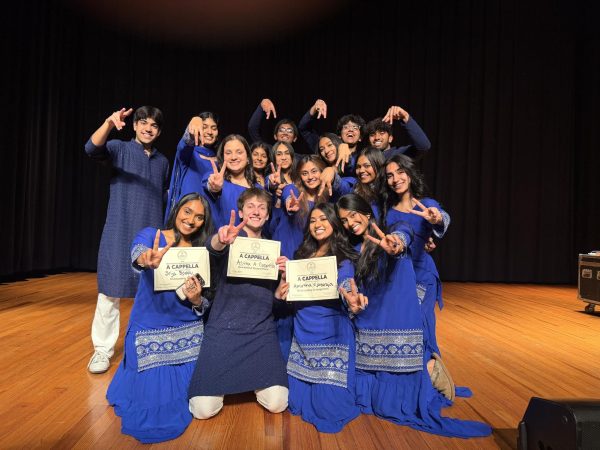
Astha Acapella posing for a photo after winning at ICCA Midwest Quarterfinals at Missouri State University on February 14th. (Meghana Gangireddy)

“Right around September, our [musical directors] arrange and create our competition piece for the season, and then we have our newbies work on their skills over the semester, day by day,” said Nazeer, the group’s lead vocal percussionist.


Each team was asked to submit an audition tape highlighting their music and overall abilities. Avery Cornelius, the music director for BAR, explained that the tapes need to be well put together to qualify for competitions.


 “We try to take everyone’s ideas and put it into the audition video,” Cornelius said. ”We want everyone to be proud of what we send in.”


Many teams also have a “boot camp” where everyone will come back from winter break early and spend entire days working on their competition pieces. Nazeer said these informal meetings were a space to receive final critiques and feedback. 


“We all get together and refine and retune everything, we’ll have alumni come and judge us,” Nazeer said. “Just everything to be ready for the competitions.”


The WashU competition took place less than a month after the spring semester started, meaning teams had a short turnaround to get any themes established and choreography finalized. Rose Moll, a sophomore studying physical therapy and a new member of BAR, said the whole process can be intense. 


“It was definitely more stressful, and everyone’s attention can run a bit high sometimes, but [rehearsing] definitely helps us feel more confident and closer as a group,” Moll said. 


Many teams like to choose a theme because it provides a central story that can strengthen their music choices and transitions. These themes can be used in various ways and Astha’s music director and resident, Amirtha Vijay, wanted to highlight individual talents. 


“Since we have the talent of carnatic singers this year, we really wanted to showcase that,” Vijay, a public health senior, said. ”We had one of our singers, Srija, a great carnatic singer, showcase her talents … and keep the audience captivated going into our next songs.”


Carnatic music is a centuries-old style of South Indian singing stylized by heavy vocal structures and shifts.


Alternatively, Jackson Gurnsey, president of BNS and senior political science student, said their theme formed around the idea of romance, with songs like “Run To You” by Whitney Houston and “Love Me Now” by John Legend. 


“We were going for a kind of lovers type story,” Gurnsey said. ”It starts with a ‘love me’ idea, and then you’re trying to get the girl back.”


BAR similarly used the songs “Eleanor Rigby” by The Beatles and “Situations” by Escape the Fate to discuss the ideas of romantic isolation. 


Astha was massively successful at the Missouri State competition, placing second overall and winning Outstanding Arrangement by Amirtha Vijay and Best Soloist for alto Srija Boddu. 


Junior health management major and Astha logistics captain Meghana Gangireddy said the win was a perfect capstone to a year of hard work. 


“Placing this year felt worth every second because of Astha’s dedication, and [our bond] made it a truly unforgettable experience,” Gangireddy said. 


Astha is unique from other teams as they sing a combination of American and Indian music. Given this, they compete on two separate circuits, both ICCA and the Association of South-Asian A Cappella. Because of this unique circumstance, they had to compete in three different competitions back-to-back. 


Despite this challenge, Vijay said she was thrilled with the progress the group made.


 “It’s very satisfying when we can put all our work together and go out on stage,” Vijay said.”Even if we’re not feeling happy or comfortable, we’re still able to put out a piece we can be proud of.”


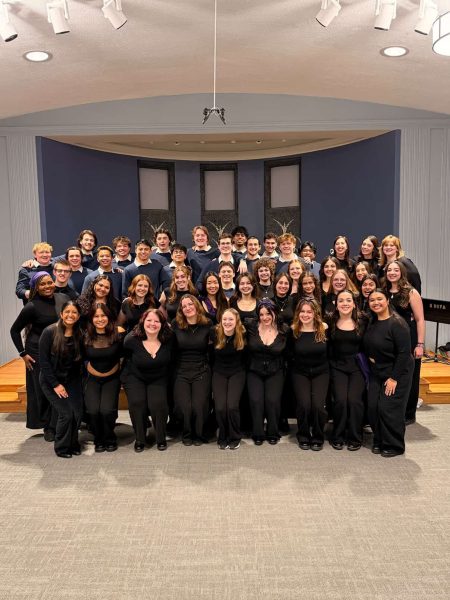
SLU a capella teams Bare Naked Statues, Beyond All Reason, and Decadence standing for a group photo at ICCA Midwest Quarterfinals at Washington University on January 31st.

None of the teams at the WashU competition placed and advanced to the next round. Despite this, every group still came out of the competition feeling strong and united. Speech Language Junior and Decadence music director Pearle Bramlett said that she was thankful for her team’s camaraderie all throughout the year.   


“I was just filled with so much gratitude … for everyone who was just showing up to rehearsal and showing up with a smile on their face,” Bramlett said. “We definitely felt good looking back at our performance, which is what’s most important, you know?”

Posted in UncategorizedComments Off on Loud and proud: SLU teams compete at national a cappella quarterfinals in Missouri

Netflix’s acquisition of Warner Brothers spells doom for cinema

In the field of film production, Netflix is a rather non-traditional and confusing company. Since creating their first original film in 2015, they have been on a massive crusade to create and acquire the next big thing. 


In the past decade, they have been nominated for 168 Academy Awards, winning 26. They have also had award-winning and extremely popular films like “Roma,” “The Irishman” and “Emilia Perez.” But despite the billions of dollars they have put into production across their large filmography, they have yet to win a Best Picture. This is especially unfortunate as Apple TV+, which made its first original series in 2019, has already earned the award with “CODA.” 


Netflix today has adopted a corporate mentality and strategy similar to the oil barons of old. By owning every aspect of the film production process, they can inflate their status to a serious industry definer. They can hire their own directors and actors on exclusive contracts, use their own production facilities, and release on their own subscription-based services. 


The very same vertical integration strategies Rockefeller and Carnegie used in the early 1900s are now being used by co-CEOs Ted Sarandos and Greg Peters to make billions. As of recent times, however, this approach does not appear to be as fruitful and consistent as it once was. 


Some of Netflix’s recent major project choices reflect this notion. Other than the massive success that was “KPop Demon Hunters,” they have been unable to keep consistent viewership and streaming numbers on any of their other major original series. In an engagement report released by the company, Netflix shared that “KPop Demon Hunters” stayed in the top 10 charts for 31 weeks, while their next most popular film, “Back In Action,” could barely stay for six. 


Things could not be more different for Warner Bros. Discovery, which previously dominated Netflix in the field of full-length film production and had one of the most successful years ever in the industry in 2025. Starting with “The Minecraft Movie” in April, the production company saw seven back-to-back hits in theaters, each collecting over $100 million at the global box office, an achievement no other company in the industry has been able to achieve. This made them the first studio to hit four billion dollars in box office gross by September. Their films have had massive success with both audiences and critics. Many hits like “Superman,” “Sinners” and “Weapons” have been nominated, and won, at big Hollywood award competitions.


Despite this, Warner Bros. Discovery had already been open to acquisition before the successful year. The studio had already agreed to a potential sale to Paramount-Skydance in July of 2025, which had also been recently purchased by David Ellison, the son of tech billionaire Larry Ellison. However, thanks to the massive box office returns and an 11% rise in stock share price, Warner Bros. Discovery CEO David Zaslav backed out. 


After months of back and forth, Netflix joined negotiations with a huge deal, valued at $72 billion. This led to massive hostility from Paramount and even threats of a lawsuit. Despite Paramount’s attempts, Netflix has emerged as the frontrunner and most likely future owner of the massive studio. 


Netflix has already revealed some ideas they have for their new conglomeration, with a strong focus on cutting in-person theaters out of the equation. Early reports show that the streaming giant plans to limit the theatrical runs of many future Warner Bros. Discovery films, with some reports saying major releases could run for only 17 days. Large theater companies have stated that they need major movie releases to stay in theaters for a minimum of 45 days to turn a profit for all parties.


This especially harms smaller and local theaters, which play a limited number of screens every day, and are already struggling to keep seats filled. This plan would essentially destroy the bargaining power of these theaters, which would also be forced to massively raise costs on the consumers to stay open. Netflix has also stated that they plan to move all HBO Max content to their service, which will certainly raise costs for more consumers. 


Monopolies are bad in any sector. They destroy innovation, reduce competition and leave consumers stuck with one bad option. There is a reason the rivalry between Coca-Cola and Pepsi still exists. Boeing vs Airbus, McDonalds vs Burger King, Nike vs Adidas. 


Competition is required to bring a good product to audiences, which Netflix is getting rid of with this deal. Their once cutting-edge streaming service is starting to resemble obsolete cable television packages, exorbitantly priced and filled with unnecessary junk. They are currently being sued for this very issue. 


The lawsuit focuses on the fact that this deal stands to only harm consumers, who will incur price hikes and a likely decrease in overall media quality from Netflix. While the act of buying another movie studio is nothing new — Disney has been doing this for two decades with Marvel and 20th Century Fox — this is the first time that a streaming-based company is outright purchasing its competition. 


Democratic senator Elizabeth Warren has even asked the Justice Department to look at the purchase, saying that this deal should be “completed fairly and transparently.” The landmark nature of this case requires that a harmful precedent not be set for similar future deals. 


This allocation news also comes on the heels of “Stranger Things” Season 5’s release, which could not have come out at a worse time for the company. While the final season was viewed as mediocre by audiences and critics, the real bombshells were revealed in a behind-the-scenes documentary of “Stranger Things” and the once well-respected directors, Matt and Ross Duffer. 


Instead of showing the Duffer brothers as genius filmmakers, audiences pointed to serious production issues. Most episodes were shot without a completed script. Dialogue and character actions did not make any sense, and actors were left confused. Some keen-eyed fans also alleged that the Duffers were using ChatGPT because they could not remember their own convoluted story. 


If serious, original and legacy content is handled with the same carelessness demonstrated there in one of Netflix’s most-watched shows, the company will truly become a sort of death row for art in the film medium.  


Netflix was once touted as the next big thing in entertainment, a way for people around the world to easily share their stories and experience cinema in their own living rooms, all for a great monthly price. How the mighty have truly fallen.

Posted in UncategorizedComments Off on Netflix’s acquisition of Warner Brothers spells doom for cinema

‘The Smashing Machine’ is a contemplative character study from an unexpected star

A big man with a “live loud” personality and a stacked wrestling background, Dwayne “The Rock” Johnson has never been one for subtlety. Since he joined the film industry, he has often preferred the loud, good-guy role, with no room for real nuance or complexity in his characters. While he has delivered billions in box office returns across his long career, he has never delivered a truly profound performance until his most recent film “The Smashing Machine” from director Benny Safdie.


The film follows the real-life story and struggle of former MMA fighter Mark Kerr, who dealt with substance abuse while being at the top of the fighting world in the early 2000s. His meteoric rise and subsequent fall have been a point of constant discussion within the MMA community for the past few decades, even spurring a well-received HBO documentary in 2002 also named “The Smashing Machine.” 


At its core, the film is a relationship drama, following the lives and interactions of two explosive personalities as they attempt to stay together, despite their obvious issues and incompatibilities. Mark Kerr and his girlfriend Dawn Staples, played by Emily Blunt, go through this time together as he becomes increasingly more famous in the wrestling community. We see how Kerr’s struggles change the duo’s already rocky relationship. Their fights reflect Kerr’s fights inside the ring, as we see them land metaphorical jabs at one another, ending each interaction with one loser and one winner. 


The film is carried by the performances of Johnson and Blunt, who portray the desperation and anger of these two complex people in a compelling manner. Both characters are flawed, and they prefer to fight one another rather than actually talk. But beneath all their anger, the pair clearly love one another, which makes their story gripping.


A shocking aspect of this film is that Johnson’s persona truly does disappear into his role as Kerr. Johnson comes from a similar background, originally being a wrestler before pivoting to entertainment, something that clearly shines through in his performance. 

Johnson truly became Kerr for this film, adopting his mannerisms and generally depicting him as a gentle yet conflicted giant, kind to all around him but harboring immense pain. The audience sees how Kerr attempts to hide his internal fear and anxiety with success and positivity.  


Viewers will no longer see “The Rock,” but simply a complex character played by a talented actor. And thanks to some extremely well-done prosthetics, he even looks like Kerr.


Outside of the core duo, however, the film is rather lacking. It is clear that Josh and Benny Safdie, brothers and frequent film collaborators, create their best work together, as the solo work from Benny here feels like it is missing something. 


A lot of the film feels rather one-note, with the same speeches and interactions happening over and over again, with no actual plot development occurring. While this may be an attempt at depicting the repetitive cycles those who experience substance abuse or endure toxic relationships live through, the idea is executed poorly. 


Benny Safdie attempted to make this film extremely realistic to the sport and era, portraying the wrestling community as it was decades ago by employing several real wrestlers and using the storylines of Pride Wrestling in the 2000s, the pinnacle of fighting in Japan. 


This does, however, backfire with the casting of character Mark Coleman, widely considered one of the most notable MMA figures of all time. Safdie’s selection of Ryan Bader, another former professional wrestler, did not pan out well. Bader, unfortunately, doesn’t possess much acting prowess, more often delivering his lines like a robot, making the scenes that include him rather difficult to watch. However, it does have the unexpected effect of showing how well Johnson’s acting has come along. He commands nearly all of the scenes that the two share. 


Another issue is that the plot feels finished at several points, but the film continues beyond what could’ve been a conclusion and goes in a different direction. Rather than setting up different problems at the beginning of a film and systematically resolving them, “The Smashing Machine” tries to focus on a single issue and solve it again and again, to an unnecessary and redundant extent. 


Despite the messy plot, the film’s soundtrack stands strong and is very well suited to both the film’s overall vibe and the development of its plot. Safdie includes a plethora of needle drops, placing several songs throughout the film that add beautifully to their scenes. 


Channeling a 70s and 80s vibe, the music helps to inform the audience on the environment in which the characters actually lived and what songs they grew up on. 


While this film is in no way an Oscar’s Best Picture winner, it is still a deep and contemplative character study on one of the early pioneers of MMA fighting. Despite the film’s broader issues,  Johnson truly deserves his flowers for depicting Mark Kerr with nuance and complex emotions, producing something truly beautiful.


Posted in UncategorizedComments Off on ‘The Smashing Machine’ is a contemplative character study from an unexpected star

SLU HSC hosts a Diwali celebration filled with dancing and fireworks

SLU’s Hindu Students Community held its annual Diwali celebration on November 9th for hundreds of students and club members. The event featured several dance and musical acts from various SLU groups. Aasta Acapella performed mashups of various American and Indian songs. Competitive dance teams, Omkara and Shakti, performed Indian classical and fusion style dances, respectively. There were also some solo acts and a special dance from the HSC executive board. 

The night ended with a classic Indian dinner menu, including butter paneer and gulab jamun, and lighting firecrackers outside the Busch Student Center. The event also included informative portions, where emcee Niveta Sharma explained some of the history and traditions of Diwali and how people can celebrate. Overall, the function was a big success for the organization, which will be hosting more events in the upcoming semester. To stay informed of upcoming events, follow HSC on Instagram at @sluhsc.


Posted in UncategorizedComments Off on SLU HSC hosts a Diwali celebration filled with dancing and fireworks

‘One Battle After Another’ is Paul Thomas Anderson’s most high-energy film yet

Paul Thomas Anderson has always tried to tackle the true evils of society. He depicted a ruthless oil baron exploiting his son for money in “There Will Be Blood.” He addressed the evils of cults like Scientology in “The Master.” And in his latest film, he gives a voice to all the frustrated revolutionaries of today, fighting against the atrocities in modern society. 


“One Battle After Another” follows two revolutionaries, Perfidia Beverly Hills (Teyana Taylor) and Pat Calhoun (Leonardo DiCaprio), who face off against an insane military officer, Lockjaw (Sean Penn). After a series of close encounters, Calhoun is forced to go into hiding with his newborn daughter, Willa, until 15 years later, when Lockjaw’s hunt for the anarchist couple reignites. Our heroes travel the countryside, fighting corruption and evil in any way they can while attempting to reunite with their loved ones. 


The movie examines modern society, exploring loneliness and the endless feeling of desperation that can come with navigating the American government. The film’s name itself, “One Battle After Another,” connects to the idea that revolution and fighting for what is right is a never-ending war, people simply move from one battle to the next. 


This idea is also expressed through the film’s pacing. While the movie runs for almost three hours, the plot moves very fast, using punchy dialogue and montages to deliver large amounts of information early on in the plot. While these elements could rush the plot, Anderson allows for slow scenes mixed with well-written conversations to help balance the runtime. 


At the same time, the film itself often feels like a timed explosion waiting to go off. Each of the three acts begins by throwing the heroes and villains in different locales. The audience must watch as they desperately scramble to survive, waiting for the proverbial shoe to drop at each of their encounters. The final set-piece of the film especially exemplifies this tension, with viewers hoping their expectations do not become reality. 


These moments, however, would not be as strong if not for the villain, the psychotic Lockjaw. Penn delivers another Oscar-worthy performance in this film, acting as the main antagonist. He plays an extremely self-serious military officer with so much shame, hiding dark, depraved secrets he would hate his superiors to know, all while treating them like gods, kissing their metaphorical feet at all times. 


Juxtaposing Lockjaw is the unfiltered, chaotic and wayward Calhoun. This film is DiCaprio at peak insanity, bringing moments of extreme chaos to tense and urgent scenes. When he is not screaming utter nonsense, he is jumping around, perpetually lost in this world of rebellion he left decades ago. He acts as the audience’s conduit, feeling the same sense of disorientation and desperation as he attempts to return to his daughter, the one piece of his family he has left. 


Chase Infiniti gives another stellar performance as Willa Ferguson, the daughter of Taylor and DiCaprio’s revolutionary couple. Growing up in a post-rebellion world, she is forced to deal with the unknown consequences of her parents’ actions. As the film progresses, she slowly becomes the main protagonist, fighting the villains of her family’s past and coming into her own as a young rebel. 


Oftentimes, children in these kinds of dramatic films have no agency and act as objects for the heroes and villains to fight for. Infiniti excels in breaking this stereotype, delivering a complex performance of an angry, lost, but still compassionate young woman. By the end of the movie, she is able to hold her own against her family’s enemies and become her own person beyond her father. 


In a sea of stellar performances, Taylor’s portrayal of Hills stands out. Her name is the least interesting thing about her, as Taylor portrays a dynamic, loud and chaotic personality. Her motivations to become a rebel seep into every facet of her life, guiding her on a path that keeps audiences entirely focused on her. She commands every single moment that she is on screen, leading every conversation, ruling every fight and entrancing every viewer with her persona. Though her time in the film is short, every minute makes it more beautiful. 


The film’s composer, lead keyboardist of Radiohead and frequent collaborator of Anderson, Jonny Greenwood, employs a range of eclectic instruments, like a xylophone and a marimba, giving the story a chaotic yet gripping sound. 


“One Battle After Another” is a powerful and emotionally-charged character study, letting viewers see the realities of rebellion in today’s world. While it may seem extremely difficult at times, feeling like a never-ending war, the film shows that there are always those willing to fight, willing to pass their stories on, and willing to help one another.


Posted in UncategorizedComments Off on ‘One Battle After Another’ is Paul Thomas Anderson’s most high-energy film yet

The ‘Blue Wave’ and a sign of hope in the Democratic Party

Hope in politics often sounds like an oxymoron. There is often no way to describe this constant and pervasive part of many people’s daily lives. Since the 2024 presidential election, many Americans have felt very demoralized by the government at all levels. People can not open their phones without seeing another example of an exorbitant waste of government funding: Whether it be another welfare program being cut or another clearly racist policy being heralded as “good for all.” That is, until the end of October. 


The past few weeks have presented a massive shift for the Democratic Party. In the recent country-wide elections, Democrats had massive wins in key locations, making big impacts during contentious state elections. 


In Virginia, Democrat Abigail Spanberger beat Republican Winston Earle-Sears to become the state’s first female governor. In the New Jersey Gubernatorial election, Democrat Mikie Sherill defeated Trump-endorsed candidate Jack Ciattarelli. California voters passed Prop 50, which will give them more Democratic seats in Congress through a new redistricting map. And in New York City, Democrat Zohran Mamdani crushed Independent Andrew Cuomo, whom he had already defeated in the city’s Democratic primary. All of these wins for Democrats across the country signified the people’s thirst for a real change in government.


The phrase “Blue Wave” references the massive gains that were made for the Democrats on Nov. 4. It describes the large influx of votes for left-leaning politicians, which is a large difference from the Trump-Harris election last year. Many of the shifting votes have been because of two main reasons: dissatisfaction amongst Trump voters following his inauguration and overall disappointment with the Democratic Party. 


Election exit polls have shown that Republican officials have fumbled the first year of the Trump administration in a big way. While many voters were aware of the sweeping changes Donald Trump would present once elected, even more have been on the receiving end of these changes, which have only increased the strength of his critics. So many have lost important benefits, and the entire country is reeling from his insane tariff plan. Having promised cheaper groceries months ago, many are dealing with large cost increases instead. 


Discussions online show that recent elections have felt very different from many in the past. For years, voters have been focused on choosing “the lesser of two evils,” as both candidates have felt like they would spell doom in different ways. The latest races have felt very different, with candidates appealing to people on both sides of the aisle. Many voters are focused on real issues that affect everyone, and simply want politicians who can deliver results.


These feelings took effect in the voting booth, as shown through the large lead shifts scored by Democrats. In Jersey, where Kamala beat Trump by 5 percentage points, Sherill beat Ciatrelli by almost 14 points. There was a similar reaction in Virginia, where Spanberger beat Earle-Sears by 15 points compared to Kamala’s 5% lead in the state the previous year. These dramatic movements are indicative of the necessary changes people want to see in government. But an even more apparent shift was what happened in New York City. 


Zohran Mamdani is an outspoken Democratic Socialist. He wants to make transportation and pre-K free for millions of New Yorkers in one of the busiest cities in the world. He wants to offer transparency to voters and not use any PAC or billionaire funding. The current political state feels like centrists vs conservatives, with no real space for real liberal ideas. This is a campaign that just should not work in American politics, but miraculously, it did. Mamdani’s campaign began a year ago and captured the attention of the entire world. This is because his candidacy and win mean so much more than a stronger NYC. They mean that new voices can and will be heard. 


While the recent events have been very fortunate for the Democrats, Americans still have a ways to go before attempting to fix the many issues introduced by the Trump administration. These recent elections can introduce massive growth, but the country as a whole is still facing massive issues, including the longest government shutdown on record. This was just ended at the cost of massive Affordable Care Act cuts and an overall loss for the Democratic Party. 


Grocery prices are still on the rise. Our president is still running around causing chaos on the world stage. And the Epstein files still have not been released. It is important to celebrate the wins, but it is equally important to remember the work that still needs to be done. 

Our Republican president is 79 years old, but the average House Democrat is 58 years old and the average Senate Democrat is 65 years old. These are career politicians who have spent decades in government, unfortunately taking spots away from the newer generations. 


Following the November special elections, California Representative Nancy Pelosi announced she would not seek re-election following 39 years in government. Saikat Chakrabati, a potential frontrunner for Pelosi’s seat, shared in a campaign video, “Thank you, Speaker Emerita Pelosi … for doing something truly rare in Washington: making room for the next one.” Chakrabarti here echoes a common sentiment amongst younger Democrats: the party has gotten too old and needs to step aside for new voices and ideas.


The former Speaker of the House must have seen the writing on the wall, unlike many of her fellow congressmen and representatives. She has moved aside to make space for younger, more passionate politicians. There are currently 66 millennials and only one Gen-Z member in Congress. More and more Gen-Z are getting to voting age, and they want their ideas reflected in their elected officials. 


For things to change, the burden is on us. Gen-Z desperately needs to be in the voting booth, and not just for the presidential elections. Every state, every city and every county has issues that impact them specifically, and these issues can not be addressed if their own citizens do not make an effort to bring about change. Nov. 4 was only the beginning, and it is up to us to keep this wave flowing.


Posted in UncategorizedComments Off on The ‘Blue Wave’ and a sign of hope in the Democratic Party

“After The Hunt” is Luca Guadagnino’s most relevant film, but not his best

Coming off the success of “Challengers” and “Queer,” Luca Guadagnino’s most recent film, “After The Hunt,” propels his stories into the modern day. 

The film focuses on two Yale University philosophy professors, Alma (Julia Roberts), Hank (Andrew Garfield) and their graduate student Maggie (Ayo Ebediri). After Maggie accuses Hank of sexual assault, Alma is unsure whose side to choose, either her flirtatious co-worker or her protege. The film follows Alma as she struggles to understand the situation while harboring long-held secrets.

The chemistry between the three leads of the film is off the charts. A key aspect of this film is the discussions between these philosophical giants, all with their own strong wills and rigid opinions of the world. While their monologues can tend to be grandiose, seeing the world in their own steadfast views, their banter is very fun to watch. Throughout the film, every interaction is a game of tug-of-war, with each character winning an argument, slowly pulling the story one way or another, constantly keeping audience members on their toes. 

The college setting of the film also helped strengthen the tone throughout, with Yale giving the audience a clearer sense of the characters. In a roundtable interview with the cast and crew of “After the Hunt,” the screenwriter Nora Garrett shared how the campus helps tie the story together. 

“Yale is a storied institution that offers and promises a lot of privilege and contains a lot of privilege,” Garrett said. Through the mannerisms and the lines delivered by the cast, this sentiment is largely apparent. 

Another stellar performance was Michael Stuhlbarg as Frederik, Alma’s doting husband. The film spends a lot of time shrouded in mystery, so Frederik works as the audience’s conduit. He constantly spends his time outside of the main three, never truly knowing what is happening. 

Stuhlbarg’s performance dances around this line of feeling immense love for his wife, while also harboring a large level of resentment for always being on the outskirts. He also adds some of the only comedic moments in the film, helping to give the story reprieve at times of hardship. 

However, outside of the main cast, the script was quite lacking, relying on rigid language that didn’t always serve the story. Whenever Robert’s character is lecturing to other students or speaking with other professors, they are unable to match Robert’s performance, which makes their acting feel amateur. 

Tension is an important aspect of the film. Often, characters will simply speak to one another, ignoring the world around them, almost as if it pauses for them. In “After the Hunt,” every interaction has a random interruption, which breaks the flow of the moment. These interruptions force the audience and the actors to hold their emotions during times of extreme stress, making them feel even more real. 

Andrew Garfield and Julia Roberts explained that Luca Guadagnino’s lack of excessive takes forced everyone to stay extremely focused throughout these scenes of high pressure. 

“Luca doesn’t like a lot of takes,” Garfield joked. 

For the soundtrack, Guadagnino employed frequent collaborators Trent Reznor and Atticus Ross of industrial rock band Nine Inch Nails. They utilize a large variety of wind and percussion instruments to give the film an air of suspense. This score feels connected to every moment of the film, with the instruments changing as different situations arise. The music rises as tensions amplify through each snide comment or intellectual jab, helping to move the plot forward. 

Although the music often is not enough to support the film’s pacing issues. After a tense opening act, the movie begins to crawl at a snail’s pace. The characters bounce from place to place, repeatedly explaining the plot from different people’s perspectives. The film’s pace doesn’t pick up until the last 30 minutes. 

The film itself is very compelling, but it is even more powerful in today’s world. Throughout the film, there are connections to ideas of online culture and social relationships, referencing real pop culture issues like the #MeToo movement and the rise of virtue signaling. 

The characters are fleshed out and feel real, operating on a real college campus and addressing real issues of today, especially when focused on the topic of sexual assault. In the end, the three leads of the film shine in the backdrop of a more basic plot, turning it into a tense and strong drama.

Posted in UncategorizedComments Off on “After The Hunt” is Luca Guadagnino’s most relevant film, but not his best