
This is the second installment of the Herald Opinion’s new series, “Stomping Grounds: The Stories That Will Define the Election.”
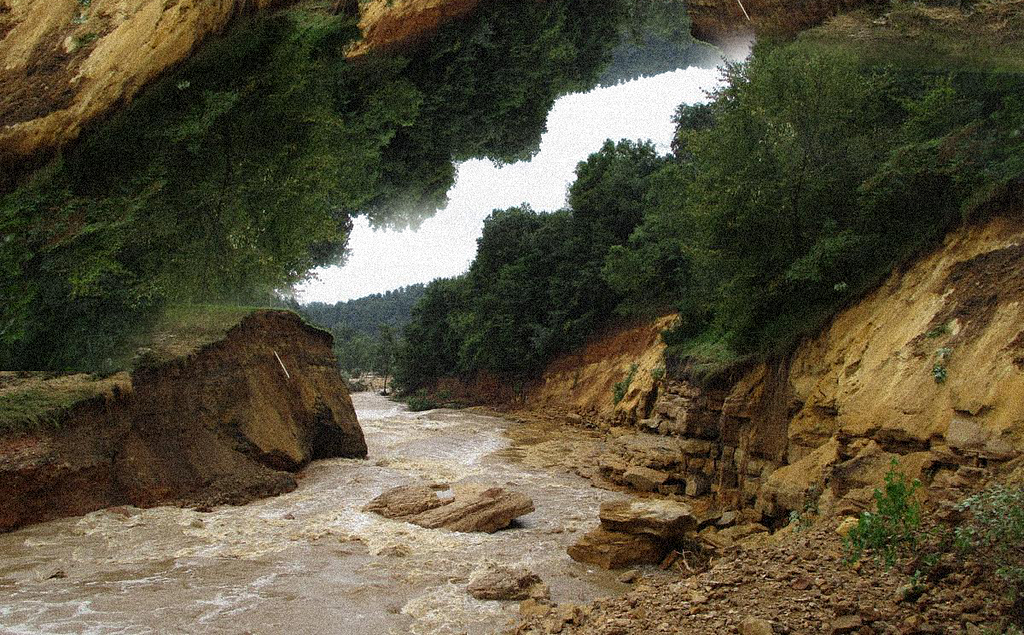
When my family left suburban Minnesota in 2011 and bought a farm outside of Viroqua, Wisconsin, a rural town of 4,389 people in the state’s Driftless region, we were enchanted by the unglaciated valley that cradled our farm and the stream that ran through it. This stream, we were warned, had spilled over a few years ago and forced the farm’s previous owners to hike over the ridge to escape. Our realtor assured us that this was unusual — a ten- or one hundred-year flood. In the six years my family farmed that land, we experienced a flood of that size nearly every year. This year’s flood surpassed all in recent memory. In a few short days of heavy August rain, members of my community lost an entire year’s income, their homes, and their livelihoods as crops were washed away and layers of sand replaced carefully cultivated topsoil. Moreover, over the last few decades, many people in my community have seen their town, in the form they recognize, wash away before them in a wave of cultural and economic displacement.
Stuck in New Haven, I was reduced to spectatorship as corn cribs drowned in murky water, living rooms filled with mud, and white sheep stranded on a broken earthen dam flooded my Facebook feed. On the photo of sheep stranded atop the broken Jersey Valley dam, one man’s comment stuck with me. He mentioned another dam, one that never got the chance to break because it was never fully built. Decades ago, a neighboring town announced plans to build a colossal concrete dam that would create a recreational lake. In an area where ties to land mean ties to tradition and livelihood, the government tore families from the fields they had farmed for generations. Environmentalists later found that the valley was critical habitat for an endangered species, and construction ended. The land, too far gone to farm, was vacant for decades before becoming a nature reserve.
The La Farge Dam was only the beginning of the displacement of families in Viroqua. As farming machinery advances, conglomerate, industrial farms have left independent farms in the dust, unable to compete with multimillion dollar equipment. The Midwestern promise of a stable farm — and way of life — is fading. However, while these old farms fade, my town has been inundated with people who have moved from cities and opened small, organic, and successful farms. These farms feed the growing group of people who have moved to Viroqua for this organic lifestyle. Many old guard farmers, attached to ways of the past, are reluctant to make the switch to organic. Beyond the land itself, they have mourned the loss of the way of life they have cultivated.
Newcomers have brought with them more than organic crops. Culturally, the “old Viroqua” — the one some of my classmates’ parents, and grandparents, and great-grandparents knew — is disappearing. While the evidence is splashed along Main Street, this death is seen most strikingly and most literally in “the Ark.” The Ark was once a church, but only the outside would be recognizable to its former parishioners. In the last decade, the interior has been transformed by three transplant artists into a community arts center. Walls have been knocked out, and the octagonal room that once served as a nave now holds a stage for performances more stirring than the sermons it once enclosed. The walls, floors, ceilings of the winding basement hallways are completely covered by the bright, bizarre, and beautiful musings of local artists — hardly the hallowed halls of a Protestant church.
The most recent manifestation of this cultural change has been political. This spring, Viroqua elected a new, liberal mayor to replace the man who had been in office for 20 years. Liberal Justice Rebecca Dallet also won our county by more than 1,000 votes, which is a large margin in Vernon County. This is especially interesting in light of the 2016 election in which my town, for the first time in decades, voted for a Republican — Donald Trump. I had spent my afternoons phone banking at the county’s Democratic headquarters. The day of the election, I finished a few calls and they told me to go home early. The next day, I listened as NPR commentators told me that my efforts to increase voter turnout had done the opposite of what I had hoped they would. Higher turnout usually means liberal gains, but my phone banking had reached a separate demographic. Those who picked up the phone were a group of people who usually don’t turn out, a group that resonated with Trump’s message that both the reality they have known and the certain future they have counted on are disappearing. Perhaps the 2016 election was the old Viroqua — a town that depended on tobacco barns and dairy farms, imbued with all the trappings of rural America — giving its last breath.
When the Jersey Valley dam failed, one woman who had worked on its construction explained how the structural integrity of the dam had never been strong. The focus was not on the water that broke this dam, but the structures that made it unstable. Maybe the traditional structure of small town America just doesn’t hold up anymore, and maybe it is time to change and adapt. Viroqua’s growing pains are revelatory of the change that is sweeping over many of America’s small towns. Understanding the emotional attachment people have to their homes, their ways of life, and their identity is crucial to understanding why perceived threats to those things sting so badly.
Uprooted in Driftless Wisconsin was originally published in The Yale Herald on Medium, where people are continuing the conversation by highlighting and responding to this story.